
In recent years, the sight of three or more rings clustered on a single finger has transitioned from an eccentric accessory choice to a mainstream fashion statement. Whether worn on the index, middle, or ring finger, stacked rings have taken over social media feeds, red carpets, and everyday streetwear. But what’s driving this surge in popularity? Beyond aesthetics, ring stacking carries layers of personal expression, cultural resonance, and evolving jewelry design trends. This article explores the reasons behind the phenomenon, offering insights into its historical roots, psychological appeal, and practical styling techniques that make it more than just a fleeting fad.
The Evolution of Ring Stacking: From Ancient Symbolism to Modern Minimalism
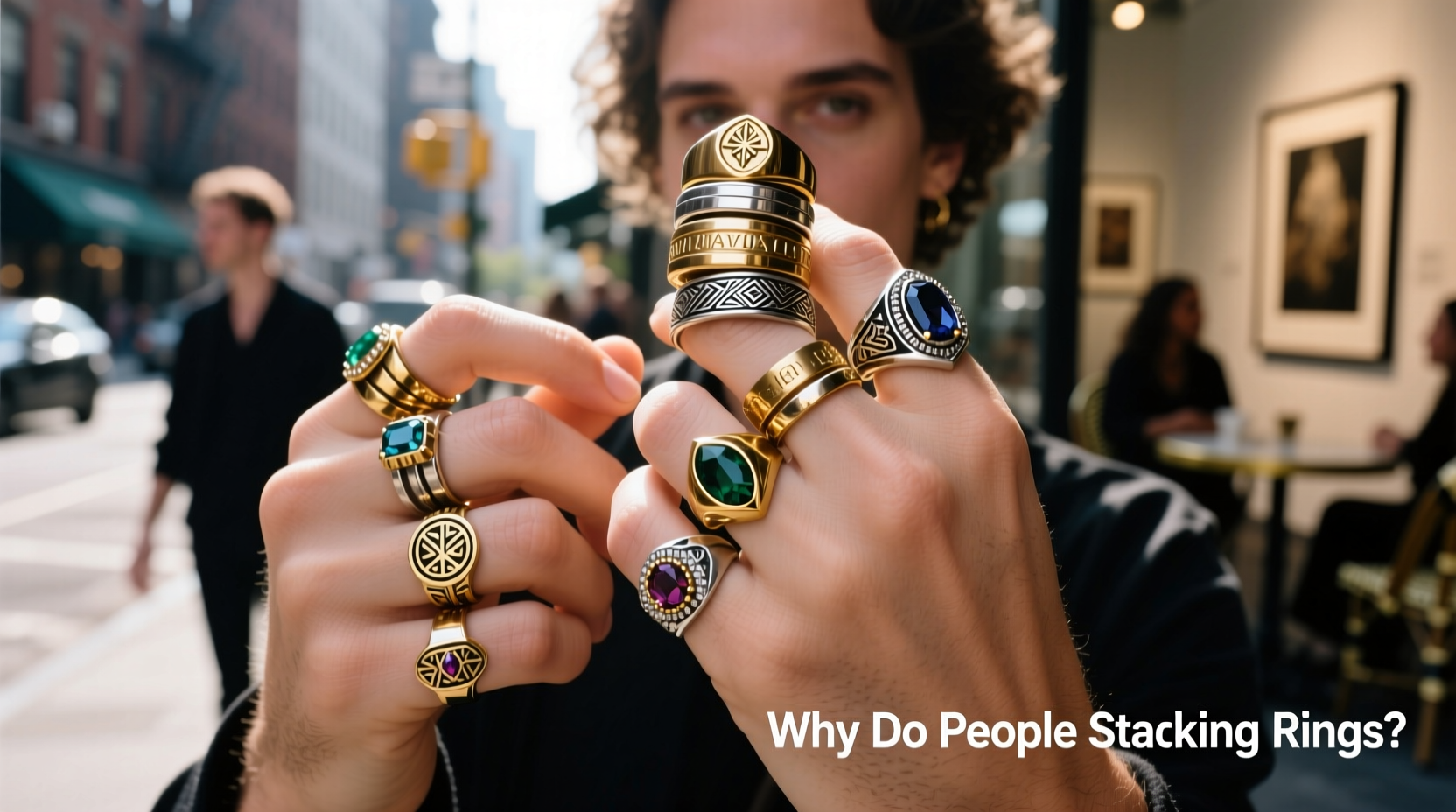
Rings have long held symbolic meaning across civilizations. In ancient Egypt, they represented eternity due to their circular shape. Romans used them as legal tokens of betrothal, while Indian traditions incorporated elaborate finger adornments as signs of marital status and prosperity. However, the idea of wearing multiple rings on one finger isn’t entirely new. Archaeological evidence shows that Mesopotamian elites wore layered signet rings for both function and display.
Fast forward to the 20th century, where individual rings were typically reserved for specific meanings—wedding bands, class rings, or religious symbols. The shift toward stacking began in the 1970s with bohemian and countercultural movements embracing eclectic layering. It wasn't until the 2010s, however, that stacking gained widespread traction, thanks to minimalist Scandinavian design, celebrity influence, and the rise of e-commerce platforms like Etsy and Mejuri that catered to personalized jewelry.
Today’s version of ring stacking blends old-world symbolism with contemporary self-expression. Instead of adhering to strict rules about which finger gets which ring, wearers curate combinations that reflect mood, identity, or aesthetic harmony.
Psychological Appeal: Why We’re Drawn to Layered Jewelry
Jewelry functions as an extension of personality. Wearing multiple rings on one finger allows individuals to communicate complexity without words. Psychologists note that accessories serve as “identity signals”—non-verbal cues that convey values, affiliations, or emotional states.
Stacking provides a canvas for storytelling. A person might combine a family heirloom band with a modern geometric piece and a tiny engraved initial ring, each representing a different chapter of life. This tactile form of narrative is especially appealing in a digital age where authenticity and individuality are highly valued.
“Layered rings act as wearable journals. Each piece holds memory, intention, or aspiration.” — Dr. Lena Torres, Cultural Anthropologist specializing in adornment practices
Additionally, the physical sensation of wearing several rings can be grounding. Some users report that touching or adjusting their stacks serves as a subtle mindfulness practice, similar to using worry stones or fidget tools.
The Influence of Celebrities and Social Media Trends
No discussion of modern ring stacking would be complete without acknowledging the role of influencers and celebrities. Stars like Rihanna, Hailey Bieber, and Harry Styles regularly appear with curated stacks featuring mixed metals, textures, and gemstones. Their looks are quickly replicated by fans seeking to emulate their effortless cool.
Instagram and Pinterest have amplified this trend exponentially. Hashtags like #ringstack, #knucklestack, and #minimalistjewelry boast millions of posts showcasing creative arrangements. Algorithms favor visually cohesive content, making symmetrical or artistic ring groupings highly shareable.
Fashion brands have responded by launching dedicated stacking collections. Pandora introduced modular charm rings designed specifically for layering, while smaller designers offer “stack starter kits” with three complementary bands. These sets lower the barrier to entry, allowing even novice jewelry wearers to experiment confidently.
How to Style Multiple Rings on One Finger: A Practical Guide
While the trend encourages creativity, certain principles help avoid a cluttered look. Thoughtful stacking balances proportion, metal tones, and finger anatomy.
Step-by-Step Guide to Building Your Stack
- Choose Your Finger: Index and ring fingers are most popular. The middle finger offers drama; pinky stacks feel playful.
- Select a Focal Point: Decide if you want one standout ring (e.g., a solitaire or textured band) or an even distribution of attention.
- Mix Metals Strategically: Combine rose gold, yellow gold, and silver only if your skin tone complements them. Stick to two metals max for cohesion.
- Vary Widths: Alternate thin (<1mm), medium (2–3mm), and wide (4mm+) bands to create rhythm.
- Consider Spacing: Leave small gaps between rings or let them touch—both styles work depending on desired effect.
- Test Mobility: Ensure you can still bend your finger comfortably. Overcrowding causes discomfort and potential skin irritation.
- Balance Across Hands: If stacking heavily on one hand, consider symmetry or intentional contrast on the other.
Do’s and Don’ts of Ring Stacking
| Do’s | Don’ts |
|---|---|
| Start with 2–3 rings before expanding | Stack too many thick bands together |
| Match your stack to your outfit’s vibe (e.g., edgy vs. romantic) | Ignore comfort—rings shouldn’t pinch or slide off |
| Use adjustable open-ended rings for easy customization | Forget skin tone when choosing metal colors |
| Rotate stacks seasonally or per occasion | Assume all fingers suit heavy stacking—slender fingers may get overwhelmed |
Real-Life Example: Emma’s Signature Stack
Emma, a 29-year-old graphic designer in Portland, uses her ring stack as a daily mood tracker. On Mondays, she wears three matte black titanium bands symbolizing focus and structure. By Friday, she swaps in a delicate rose gold ring with a tiny moonstone—her signal for relaxation and creativity. She keeps a small box of interchangeable rings at her desk and changes them during lunch breaks.
“It’s like changing my mindset with a gesture,” she says. “People notice and often ask about the rings. It starts conversations I wouldn’t normally have.” Her approach highlights how stacking transcends decoration—it becomes ritualistic and relational.
Cultural and Spiritual Dimensions of Finger Adornment
Beyond fashion, certain cultures assign energetic significance to fingers. In Ayurvedic tradition, each digit connects to a planetary influence:
- Thumb: Willpower and logic (associated with Mars)
- Index: Authority and ambition (Jupiter)
- Middle: Responsibility and balance (Saturn)
- Ring: Creativity and emotion (Sun)
- Pinky: Communication and intuition (Mercury)
Some wellness enthusiasts stack rings on specific fingers to amplify these energies. For example, wearing a copper band on the ring finger is believed to enhance vitality, while silver on the pinky supports clearer communication.
In Western astrology, stacking birthstone rings across fingers corresponding to ruling planets adds another layer of personalization. Though not scientifically proven, these practices resonate with those seeking mindful living through symbolic objects.
Tips for Meaningful Stacking
FAQ: Common Questions About Ring Stacking
Can ring stacking damage my fingers?
When done responsibly, no. Avoid overly tight fits or excessive weight on one joint. Remove stacks before sleeping, exercising, or washing hands to prevent swelling or snagging. Watch for signs of restricted circulation like numbness or discoloration.
Which fingers are best for stacking?
The ring and index fingers are most commonly used because they offer enough surface area without interfering with grip. The middle finger works for bold statements, while the pinky suits subtle, whimsical arrangements. Ultimately, choose based on comfort and personal style.
How do I clean and maintain stacked rings?
Clean them weekly with a soft toothbrush and mild soapy water. Dry thoroughly before re-wearing. Store separately when not in use to prevent scratching. For delicate pieces, professional ultrasonic cleaning every 6–12 months helps preserve shine and integrity.
Conclusion: Make the Trend Your Own
The popularity of stacking multiple rings on one finger reflects deeper shifts in how we relate to personal style. It’s no longer about following rigid rules but crafting narratives through wearable art. Whether driven by nostalgia, spiritual belief, or pure aesthetic joy, ring stacking empowers individuals to express nuance in a world that often demands simplicity.
This trend invites experimentation—not perfection. There’s no single right way to stack. What matters is how the rings make you feel when you glance at your hand: seen, grounded, or creatively alive.




 浙公网安备
33010002000092号
浙公网安备
33010002000092号 浙B2-20120091-4
Comments
No comments yet. Why don't you start the discussion?