
Rings have long been more than just decorative accessories—they carry meaning, signal status, express identity, and reflect personal style. In recent years, stacking multiple rings on a single finger has evolved from a niche trend into a mainstream fashion statement. From minimalist gold bands to bold signet styles, the art of ring stacking allows individuals to craft unique narratives through jewelry. But what drives this phenomenon? And how can you style stacked rings with intention and elegance rather than clutter? This guide explores the cultural, aesthetic, and psychological reasons behind multi-ring stacking and provides practical rules for thoughtful curation.
The Rise of Ring Stacking: Why People Wear Multiple Rings on One Finger
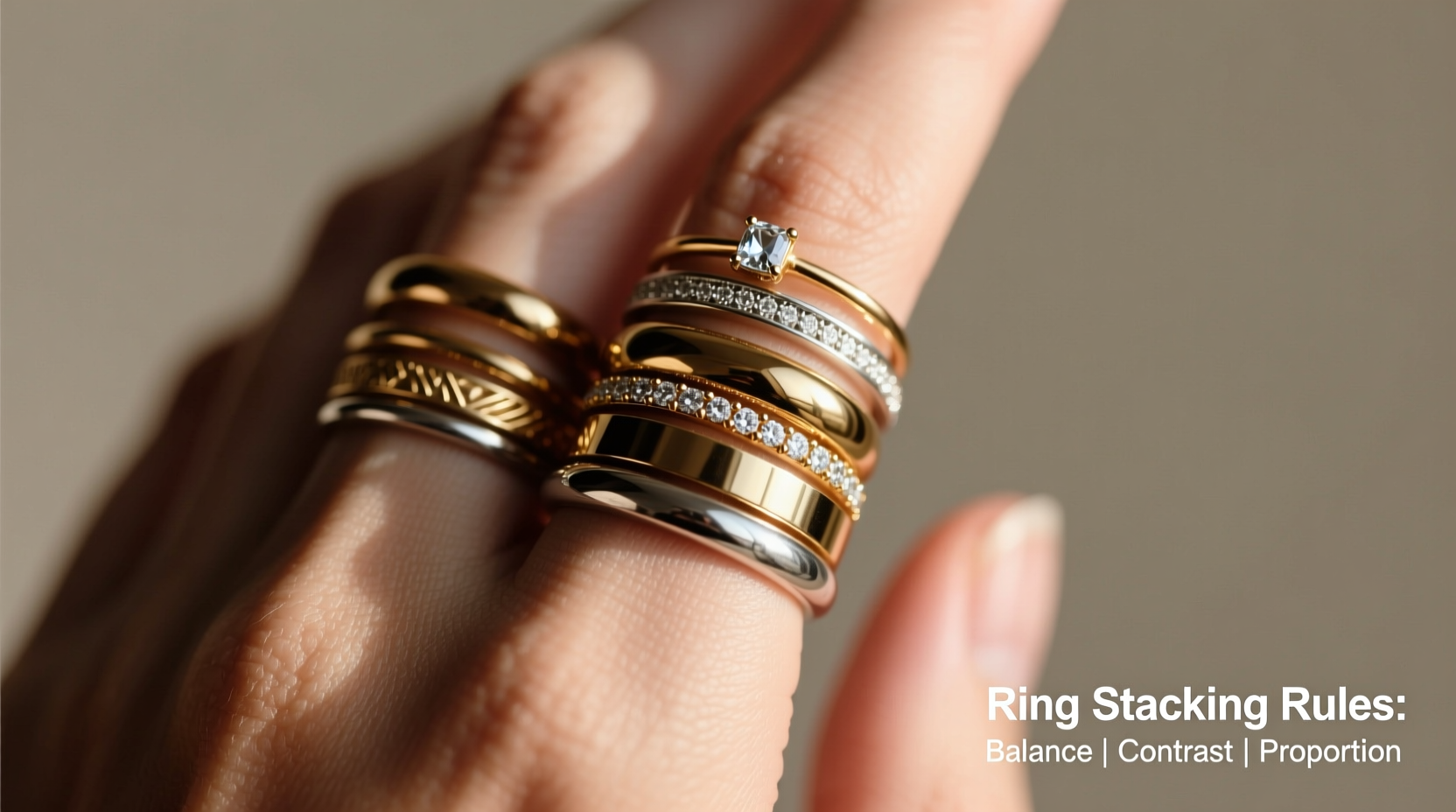
Ring stacking isn’t a new concept—ancient Egyptians and Romans used layered rings to denote wealth and social standing—but its modern revival is rooted in self-expression and individuality. Today’s wearers are less bound by tradition and more inspired by creativity. The index finger, pinky, or ring finger might host three or more bands, each chosen for its symbolism, texture, or design.
One major reason people stack rings is to tell a story. A vintage heirloom band paired with a sleek contemporary piece can represent a bridge between past and present. Others use stacking to highlight symmetry and balance across both hands, creating visual harmony. Fashion influencers and celebrities have amplified the trend, often seen layering delicate bands with chunkier pieces for contrast.
Psychologically, stacking offers a sense of control over personal aesthetics. In an age where digital life dominates, tangible accessories like rings provide grounding—a way to feel adorned without excess. Jewelry designer Ana Khouri notes, “Stacking is about building a language of adornment that feels intimate and intentional.”
“Stacking isn’t chaos—it’s curation. Each ring should earn its place on the finger.” — Lena Park, Contemporary Jewelry Stylist
Styling Rules for Curating a Cohesive Ring Stack
While stacking rings may seem spontaneous, the most polished looks follow deliberate principles. Understanding proportion, metal compatibility, and spacing ensures your stack enhances your hand rather than overwhelms it.
1. Balance Proportions Across Fingers
A common mistake is overcrowding one finger while leaving others bare. Instead, distribute visual weight evenly. If you're stacking three rings on the ring finger, consider wearing at least one or two on adjacent fingers to maintain equilibrium. For petite hands, opt for thinner bands (1–2mm) to avoid making fingers appear shorter.
2. Mix Metals Thoughtfully
Gone are the days when matching metals were mandatory. Today, mixing yellow gold, white gold, and rose gold adds dimension. However, limit yourself to two or three metal tones per hand to prevent a disjointed look. Use one dominant metal as the base and introduce accents sparingly.
3. Vary Band Widths and Textures
Contrast is key. Combine smooth plain bands with textured ones—hammered, braided, or engraved—for depth. Try a sequence like: thin plain band → wider patterned ring → thin diamond-pave band. This creates rhythm, much like musical notes in a melody.
4. Respect Negative Space
Don’t glue rings together. Leave small gaps—about 1–2mm—between bands to let each piece breathe. Overcrowding mutes individual details and can cause discomfort. Spacing also makes resizing or removing a single ring easier.
5. Align Centerpieces Strategically
If including a statement ring—like a solitaire or signet—place it centrally within the stack or as an anchor (e.g., the middle ring on the middle finger). Surround it with simpler bands to draw attention without competition.
Ring Stacking Checklist: Your Curation Roadmap
- ✅ Assess your hand shape and size before selecting band widths
- ✅ Choose a dominant metal tone for consistency
- ✅ Limit stacks to 3–4 rings per finger for comfort and clarity
- ✅ Alternate textures and finishes to add visual interest
- ✅ Leave slight space between rings for breathability
- ✅ Anchor your stack with one standout piece
- ✅ Test mobility—can you bend your finger comfortably?
- ✅ Coordinate with other hand jewelry (bracelets, watches)
Do’s and Don’ts of Multi-Ring Styling
| Do | Don't |
|---|---|
| Mix metals if finishes are consistent | Combine too many different finishes (e.g., brushed, polished, hammered) |
| Use asymmetry across hands for dynamic balance | Stack heavily on one hand and leave the other bare |
| Incorporate meaningful rings (birthstones, initials) | Include more than five rings per hand |
| Adjust stack based on occasion (minimalist for work, bolder for events) | Wear thick stacks during physical activity or sleep |
| Clean rings weekly to maintain luster | Neglect skin hygiene under rings—clean regularly to prevent buildup |
Real-Life Example: Building a Signature Stack
Sophie, a 32-year-old graphic designer in Portland, wanted to create a daily ring stack that reflected her artistic personality and Scandinavian heritage. She started with a thin, matte-finish recycled silver band passed down from her grandmother. To complement it, she added a narrow geometric gold ring symbolizing creativity and a tiny sapphire-accented band representing her birth month.
She experimented with placement: first placing the heirloom ring at the base, then in the center. After trying both, she found the central position gave it more prominence. She left small gaps between each ring and wore a single slim band on her index finger to mirror the energy on the opposite hand. Her final stack felt personal, balanced, and professional enough for client meetings.
This example illustrates how thoughtful selection and arrangement transform simple accessories into a signature style. Sophie didn’t need expensive pieces—just intentionality and awareness of proportion.
Step-by-Step Guide to Creating Your First Ring Stack
- Inventory Your Collection: Lay out all your rings and group them by metal, width, and style.
- Choose a Base Finger: Start with the ring finger or pinky—the most common stacking zones.
- Select a Focal Point: Pick one ring to be the centerpiece (e.g., a gemstone or engraved band).
- Build Around It: Add two complementary bands—one thinner, one with texture—to flank the centerpiece.
- Test Comfort and Mobility: Put the stack on and make a fist. Adjust spacing if needed.
- Balance the Other Hand: Mirror the weight with at least one ring on the opposite hand.
- Refine for Occasion: Create variations—simple for work, elaborate for evenings.
- Maintain Regularly: Clean rings weekly and check for loose stones or wear.
Frequently Asked Questions
Can I stack rings on any finger?
Yes, but some fingers are more practical than others. The ring and pinky fingers are most popular due to their natural curve and visibility. The middle finger works well for bold stacks, while the index finger suits signet or power rings. The thumb can accommodate one wide band but rarely supports multiple rings comfortably.
How do I keep my stacked rings from slipping or rotating?
Ensure proper sizing. If rings spin, consider having a jeweler add a subtle inner ridge or switch to slightly tapered bands that grip the finger better. Alternatively, use ring guards—small silicone or metal clips that sit between bands to stabilize them.
Is it okay to mix fine jewelry with fashion rings?
Absolutely, as long as the overall aesthetic aligns. Pair a high-karat gold band with a well-made stainless steel ring if the design language matches (e.g., minimalist lines). Avoid combining tarnished fashion pieces with precious metals, as it can cheapen the look.
Conclusion: Craft a Look That Speaks for You
Stacking multiple rings on one finger is more than a trend—it's a form of wearable storytelling. Whether you're honoring family heritage, celebrating milestones, or simply enjoying the interplay of light on metal, your ring collection can become a deeply personal extension of your identity. The key lies not in quantity, but in curation. By following styling principles like proportion control, metal harmony, and strategic spacing, you elevate your stack from random accumulation to intentional artistry.
Your hands are always in motion, always visible. Let them carry a message that’s uniquely yours. Start small, experiment boldly, and refine over time. With care and vision, your rings won’t just decorate—they’ll communicate.




 浙公网安备
33010002000092号
浙公网安备
33010002000092号 浙B2-20120091-4
Comments
No comments yet. Why don't you start the discussion?