
In modern holiday and year-round interior styling, a growing trend has captured the attention of designers and homeowners alike: stacking two artificial or live trees of differing heights and widths to create a cohesive, balanced centerpiece. At first glance, the pairing may seem arbitrary—why not use one large tree? But beneath the surface lies a deliberate application of design principles that elevate both aesthetic appeal and spatial harmony. This practice, often seen in living rooms, entryways, and even commercial spaces, leverages contrast, rhythm, and proportion to achieve what a single tree cannot—dynamic symmetry.
Symmetry in decor does not always mean mirroring identical objects. In fact, true visual balance often emerges from asymmetrical arrangements that feel “right” to the eye. Stacking two trees—one taller and slimmer, the other shorter and fuller—creates a layered effect that draws attention while maintaining equilibrium. The result is a focal point that feels intentional, curated, and rich with dimension.
The Psychology of Visual Balance
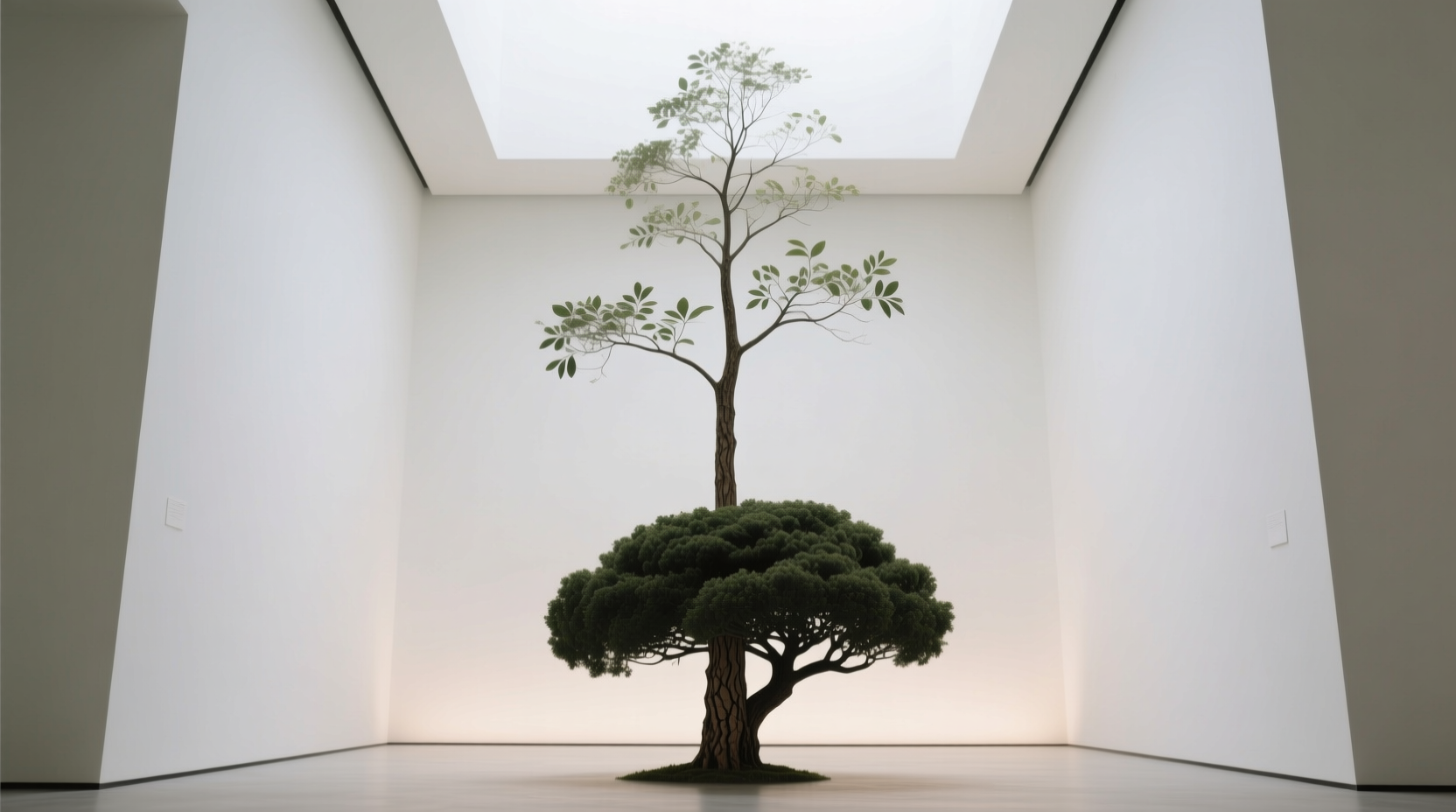
Human perception is wired to seek order and harmony. When we enter a room, our eyes naturally scan for patterns, contrasts, and points of interest. A single Christmas tree, no matter how beautifully decorated, presents a singular vertical form. While striking, it can dominate a space without offering much variation in texture or scale. Introducing a second tree breaks monotony and creates a dialogue between forms.
This dual-tree arrangement plays into the concept of asymmetrical symmetry—a design principle where unequal elements are balanced through visual weight rather than exact replication. For example, a tall, narrow 7-foot spruce paired with a short, wide 4-foot fir may differ in size, but their combined mass, color, and ornamentation distribute visual energy evenly across the space.
Interior designer Mara Lennox explains:
“People don’t just decorate with objects—they decorate with emotion. Two trees allow for storytelling. One might carry family heirlooms, the other modern minimalist ornaments. Together, they reflect layers of identity.” — Mara Lennox, Interior Stylist & Author of *Layered Living*
This emotional resonance amplifies the perceived balance. Even if the trees aren’t mathematically proportional, their thematic connection—through coordinated colors, lighting, or base materials—unites them into a single compositional unit.
Design Principles Behind the Dual-Tree Arrangement
Several foundational concepts in visual design explain why stacking trees of different sizes works so effectively:
- Scale and Proportion: Varying tree heights introduce hierarchy. The taller tree becomes the anchor; the shorter one provides support and context.
- Rhythm: Repeating tree shapes at different scales create a sense of movement, guiding the eye from one to the next.
- Depth: Placing trees at slightly different distances from the viewer (e.g., one behind the other) adds three-dimensionality to flat wall spaces.
- Contrast: Differences in fullness, branch angle, or color tone prevent visual fatigue and maintain interest.
These principles are not exclusive to holiday decor. They appear in landscape architecture, gallery installations, and retail displays. What makes the dual-tree setup unique is its domestic accessibility—anyone with floor space and a pair of compatible trees can apply professional-level design theory.
Practical Applications and Real-World Examples
A luxury boutique in Portland, Oregon, adopted the dual-tree display during its annual winter showcase. Instead of one massive tree, they installed a 9-foot noble fir near the front window and a 5-foot blue spruce by the checkout counter. Both were lit with warm white LEDs, but the smaller tree featured hand-blown glass ornaments in deep cobalt and copper, echoing the store’s branding.
Customers lingered longer near the register, drawn by the intimate scale of the smaller tree after being impressed by the grandeur of the larger one. Sales increased by 18% during the season compared to the previous year when only one tree was used. The owner credited the layout: “It created zones—a big wow moment, then a quieter, personal interaction with decor.”
Similarly, in residential settings, families use dual trees to separate functions. One tree may be dedicated to gifts and traditional decorations, while the second serves as an “ornament-only” display or a themed tree (e.g., rustic woodland, vintage silver). This division prevents clutter and allows each tree to shine in its role.
How to Choose and Arrange Your Pair
Selecting the right combination requires more than random selection. Consider these factors before purchasing or setting up:
- Determine the primary focal point. Decide whether you want the taller or fuller tree to dominate. Typically, height commands attention first.
- Maintain a consistent color palette. Even if styles differ, shared hues (e.g., gold, ivory, forest green) unify the look.
- Vary textures, not themes. Avoid clashing styles unless intentionally curated. A glam tree next to a farmhouse-style one can work—but only if linked by common elements like ribbon, light type, or skirt material.
- Respect spatial limits. Ensure there's at least 18–24 inches between trees to avoid crowding. Allow clear walking paths.
- Light them cohesively. Use the same bulb color temperature across both trees. Mismatched lighting (warm vs. cool white) disrupts harmony.
| Factor | Do | Don’t |
|---|---|---|
| Height Ratio | Aim for a 2:3 or 3:4 ratio (e.g., 6 ft + 9 ft) | Use trees too close in height (e.g., 7 ft + 8 ft) |
| Fullness | Pair slim with full for contrast | Combine two sparse or two overly bushy trees |
| Placement | Angle slightly toward each other or align along a central axis | Place haphazardly or block traffic flow |
| Ornamentation | Repeat key elements (e.g., ribbon, star topper) | Over-decorate one and under-decorate the other |
Step-by-Step Guide to Creating a Balanced Dual-Tree Display
Follow this timeline to install your own professionally styled dual-tree arrangement:
- Week 1: Plan and Measure
Sketch your room layout. Mark where each tree will go. Note ceiling height, furniture placement, and electrical outlets. - Week 2: Select Trees
Purchase based on your plan. Consider pre-lit models for consistency. Test lights before assembly. - Week 3: Assemble and Position
Set up both trees in their intended spots. Adjust stands for stability. Step back frequently to assess sightlines. - Week 4: Decorate Strategically
Start with lights, then garlands, then ornaments. Work from top to bottom. Use a ladder for even distribution. - Final Day: Fine-Tune
Adjust branches for fullness. Add final touches like tree skirts, presents, or surrounding decor (e.g., lanterns, stools).
Common Mistakes and How to Avoid Them
Even well-intentioned setups can fall short. Here are frequent errors and their fixes:
- Mistake: Trees are too far apart.
Solution: Keep them within visual conversation—usually no more than 6 feet apart unless separated by architectural features. - Mistake: One tree is significantly brighter.
Solution: Count light strands per foot. Aim for similar density (e.g., 100 bulbs per foot of height). - Mistake: Conflicting color schemes.
Solution: Limit dominant colors to three. Use one as the bridge (e.g., white ornaments on both trees). - Mistake: Ignoring ceiling lines.
Solution: Ensure the tallest tree leaves at least 12 inches between its tip and the ceiling.
Frequently Asked Questions
Can I mix real and artificial trees?
Yes, but manage expectations. A live tree will shed needles and dry out, while an artificial one remains static. If combining, place the real tree in a high-humidity area and keep it watered. Match needle color and sheen as closely as possible for cohesion.
Do both trees need to have gifts under them?
No. In fact, concentrating presents under one tree often improves visual clarity. Use the second tree as a decorative accent or memory display (e.g., childhood ornaments, pet-themed decor).
Is this trend suitable for small spaces?
With careful planning, yes. Opt for a tall, narrow tree (like a pencil pine) paired with a tabletop version (2–3 feet). Place them adjacent to each other on a console or flanking a mirror to simulate depth without sacrificing floor space.
Checklist: Building Your Dual-Tree Display
Before finalizing your setup, run through this checklist:
- ☐ Measured room dimensions and door clearance
- ☐ Chosen tree heights with a clear visual hierarchy
- ☐ Selected a unified color scheme and lighting tone
- ☐ Confirmed electrical access for lights
- ☐ Purchased matching or complementary tree skirts
- ☐ Planned ornament distribution (avoid overcrowding one tree)
- ☐ Tested all lights and repaired any dead sections
- ☐ Allowed space for photography and guest movement
Conclusion: Elevate Your Space with Intentional Design
Stacking two trees of different sizes is more than a passing trend—it’s a thoughtful application of design fundamentals that brings sophistication and warmth to any environment. By embracing contrast, proportion, and emotional storytelling, this approach transforms a simple holiday tradition into a curated experience. Whether in a spacious home or a cozy apartment, the dual-tree method offers flexibility, creativity, and lasting visual impact.
You don’t need a decorator to get it right. With careful planning, attention to detail, and a willingness to experiment, you can create a display that feels balanced, personal, and memorable. Start small, observe how light and space interact, and refine over time. The goal isn’t perfection—it’s presence.




 浙公网安备
33010002000092号
浙公网安备
33010002000092号 浙B2-20120091-4
Comments
No comments yet. Why don't you start the discussion?