
In an era dominated by digital convenience, where e-readers fit thousands of books into a device lighter than a sandwich, one might assume printed books would fade into obscurity. Yet, brick-and-mortar bookstores remain bustling, independent publishers thrive, and readers continue to stack hardcovers on nightstands and line shelves with well-worn paperbacks. The persistence of physical books isn't nostalgia alone—it's rooted in deep psychological, emotional, and cultural values that digital formats struggle to replicate. Among these, sentimental value stands as a powerful force, anchoring the physical book as more than just a vessel for words, but as a meaningful artifact in people’s lives.
The Emotional Weight of Holding a Book
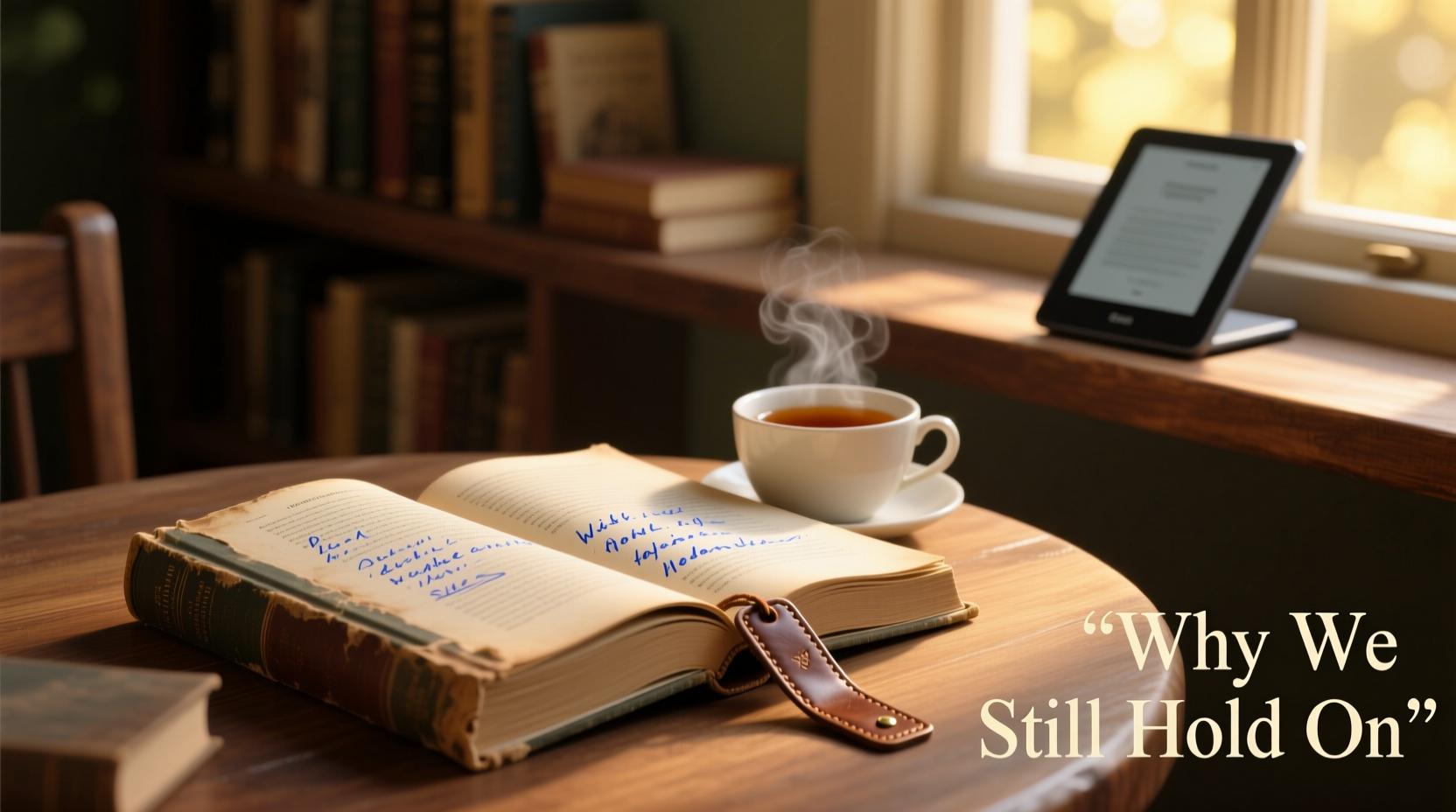
Physical books engage more than the mind—they activate memory, emotion, and identity through touch, smell, and sight. The weight of a novel in your hands, the crackle of a first page turn, the scent of aged paper or fresh ink—all contribute to a multisensory experience that fosters deeper cognitive and emotional engagement.
Psychological studies suggest that tactile interaction enhances memory retention and comprehension. A 2014 study published in *The Guardian* found that readers using physical books were better at recalling plot sequences and character details than those reading digitally. But beyond cognition, there’s an emotional resonance: many readers report feeling “more present” when reading a printed book, as if the ritual of opening a cover creates a boundary between the real world and the story within.
Sentimental Value: Books as Keepsakes and Heirlooms
Unlike e-books, which exist as files on a screen, physical books can be inscribed, gifted, passed down, and displayed. They become part of personal history. A dog-eared copy of *To Kill a Mockingbird* from high school carries not just lessons about justice, but memories of late-night study sessions and a teacher’s encouraging note on the inside cover. A novel gifted by a grandparent becomes a tangible piece of their presence long after they’re gone.
This transformation from object to heirloom is unique to physical media. As author Neil Gaiman observed:
“Google can bring you back 100,000 answers, but a librarian can bring you back the right one.” — Neil Gaiman
Similarly, while a tablet can store every book ever written, only a physical volume can carry a handwritten dedication, a pressed flower, or a coffee stain from a rainy afternoon spent reading under a tree. These imperfections aren’t flaws—they are markers of lived experience.
Mini Case Study: The Library of a Lifetime
Consider Maria Thompson, a retired English teacher from Portland, Oregon. Her home library spans three walls of her living room, housing over 800 books. When asked why she never switched to an e-reader, she replied, “Each of these books has a story. This copy of *Pride and Prejudice* was my mother’s. My son read it when he was twelve. His notes are in the margins. How could I digitize that?”
Maria’s collection isn’t just a reading list—it’s a timeline of her family’s intellectual and emotional journey. She now reads some books digitally for travel, but insists on keeping physical copies of anything she plans to revisit or share. For her, the bookshelf is a living archive.
The Ritual of Reading: Why Print Enhances Focus and Intention
In a world of endless notifications and rapid scrolling, reading a physical book demands intention. There are no pop-ups, no hyperlinks, no algorithmic distractions. The act of choosing a book, placing it on a table, and turning pages becomes a ritual—a small rebellion against digital overload.
This deliberate pace fosters mindfulness. Many readers report that physical books help them disconnect from screens and enter a state of deep focus often referred to as “flow.” In contrast, digital reading is frequently fragmented, associated with multitasking and shorter attention spans.
Moreover, the physicality of progress—seeing how far you’ve come by the thickness of unread pages versus read ones—provides a subtle sense of accomplishment. It’s a visual cue absent in e-readers, where completion is marked by a percentage bar.
Checklist: Building a Meaningful Physical Book Collection
- Choose books that resonate emotionally, not just intellectually
- Keep space for annotation—use pencils or sticky notes to capture thoughts
- Display books you’re currently reading to invite daily engagement
- Gift used books with personal notes to pass on stories and sentiment
- Preserve special editions or signed copies in protective covers
- Organize shelves thematically or chronologically to reflect personal growth
- Donate or lend thoughtfully—knowing where your books go adds meaning
Books as Identity Markers and Social Objects
A bookshelf is rarely just storage—it’s a curated expression of self. What we choose to display says something about who we are, what we value, and how we see the world. In homes, offices, and even dating profiles, book collections serve as conversation starters and identity signals.
Unlike e-book libraries, which remain private and invisible, physical books are inherently social. Seeing a friend’s well-loved copy of *The Great Gatsby* invites discussion. Spotting a rare edition on a colleague’s desk sparks curiosity. These interactions build connections that transcend the text itself.
Publishers have capitalized on this by producing visually striking editions—foiled covers, illustrated interiors, premium bindings—that appeal not just to readers but to collectors and gift-givers. The resurgence of independent bookstores and subscription box services like Book of the Month underscores a market hungry for beauty, uniqueness, and tactile pleasure.
| Feature | Physical Books | E-Readers |
|---|---|---|
| Tactile Experience | High – texture, weight, smell | Low – uniform smooth surface |
| Sentimental Potential | High – gifts, inscriptions, marginalia | Low – no physical trace of use |
| Visual Presence | Strong – decorative, identity-signaling | None – hidden in devices |
| Durability | Moderate – subject to wear, but long-lasting | High – but dependent on tech lifespan |
| Portability | Low – limited by space and weight | High – thousands of books in one device |
| Environmental Impact | Mixed – paper sourcing vs. longevity | Mixed – energy use, e-waste, production |
The Role of Nostalgia and Tradition
Nostalgia plays a significant role in the continued appeal of physical books. For many, the earliest memories of reading involve bedtime stories with parents, school library visits, or summer reading challenges. These formative experiences imprint positive associations with the look and feel of books.
Tradition also matters. Graduations, birthdays, and holidays often include gifting books—especially classics or beautifully bound editions. Receiving a physical book feels more ceremonial than downloading a file. The act of wrapping, presenting, and unwrapping enhances emotional significance.
Even in education, many teachers and parents prefer physical books for children. Research suggests that young readers comprehend better from print, and educators emphasize the importance of developing a relationship with books as objects—something harder to achieve on a screen.
Expert Insight: The Psychology of Possession
Dr. Laura Mitchell, a cognitive psychologist specializing in material culture, explains:
“Objects that carry personal history become extensions of the self. A book isn’t just read—it’s inhabited. Marginal notes, coffee stains, even bent corners tell a story about the reader as much as the text. Digital formats lack this biography.” — Dr. Laura Mitchell, University of Edinburgh
This concept, known as “object-person integration,” helps explain why people form attachments to physical books. They’re not merely containers of information; they’re co-authors of personal narratives.
FAQ: Common Questions About Physical Books in the Digital Age
Don’t physical books waste resources compared to e-books?
While paper production has environmental costs, so does e-reader manufacturing and digital infrastructure. E-readers require rare earth metals, energy-intensive production, and eventual disposal. A single e-reader takes years of heavy reading to offset its carbon footprint compared to printed books. Sustainable forestry, recycling, and secondhand markets help reduce print’s impact.
Can’t I get sentimental value from digital books too?
To some extent—yes, especially if you annotate or organize your library carefully. However, digital sentiment lacks tangibility. You can’t pass down a Kindle with your notes intact in the same way you can hand a child your annotated copy of *The Little Prince*. The emotional resonance is weaker without physical continuity.
Are younger generations still buying physical books?
Surprisingly, yes. Studies show Gen Z and Millennials are among the most active buyers of physical books, particularly indie titles, poetry, and aesthetically pleasing editions. Platforms like TikTok (via #BookTok) have fueled a resurgence in print, driven by community, recommendation, and the desire to own beautiful objects.
Conclusion: The Enduring Power of the Printed Page
The survival of physical books in the digital age isn’t defiance—it’s affirmation. People don’t buy print editions because they reject technology, but because they seek meaning, connection, and permanence in a transient world. Sentimental value transforms books from disposable content into lasting companions.
Whether it’s a childhood favorite tucked in a drawer, a novel shared between lovers, or a family Bible passed through generations, the physical book endures as a vessel of memory, identity, and love. In a time when so much of life exists in the cloud, holding a book offers something irreplaceable: the comfort of something real.




 浙公网安备
33010002000092号
浙公网安备
33010002000092号 浙B2-20120091-4
Comments
No comments yet. Why don't you start the discussion?