
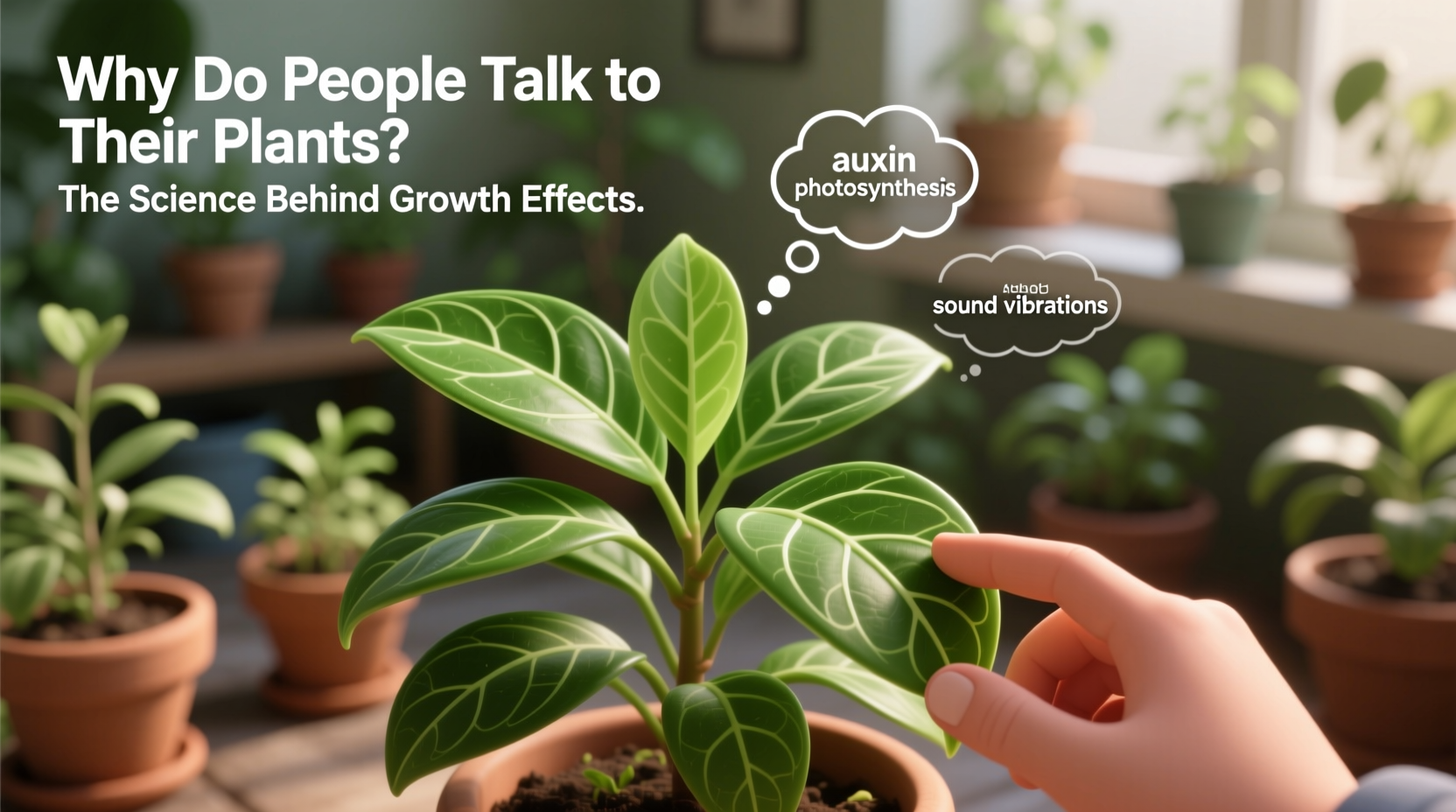
It might seem eccentric to some—talking to a potted fern or whispering encouragement to a tomato seedling—but countless gardeners swear by it. From Victorian-era botanists to modern houseplant enthusiasts, the practice of speaking to plants has persisted across generations. While it may appear whimsical, emerging scientific evidence suggests that human interaction, including voice and touch, could play a subtle yet measurable role in plant development. This article explores the psychology, biology, and acoustics behind why people talk to their plants—and whether those conversations actually influence growth.
The Historical Roots of Talking to Plants
The idea that plants respond to human presence isn’t new. In the 19th century, Indian scientist Sir Jagadish Chandra Bose conducted pioneering experiments showing that plants react to stimuli such as light, temperature, and even injury. He argued that plants possess a form of “nervous system” capable of perceiving environmental changes. Though his theories were controversial at the time, they laid the groundwork for future studies on plant sensitivity.
In the 1970s, author Christopher Bird and physicist Cleve Backster popularized the notion of plant sentience with their book *The Secret Life of Plants*. They claimed plants could \"feel\" emotions and respond to human thoughts and intentions. While many of their experiments lacked scientific rigor and were later discredited, they sparked public interest in plant perception.
Today, while we don’t attribute consciousness to plants, researchers acknowledge that they are highly responsive organisms. They detect vibrations, chemicals, light gradients, and even airborne signals from neighboring plants under stress. This awareness raises an intriguing question: Could the sound of a human voice be another signal they perceive?
Can Sound Influence Plant Growth?
Plants lack ears and auditory systems, but they are sensitive to mechanical vibrations transmitted through air and soil. Sound waves cause tiny oscillations that plant cells can detect via mechanoreceptors—proteins that respond to physical pressure or movement.
A number of controlled studies have explored the impact of sound on plant physiology:
- South Korean Study (2008): Researchers at National Institute of Agricultural Biotechnology found that certain genes in rice plants (such as RA1 and RA2) were activated when exposed to sound waves at 125 Hz and 250 Hz. These frequencies resemble human speech patterns.
- India’s Annamalai University (2014): A study reported that mung bean sprouts exposed to classical music grew faster and taller than control groups. Conversely, noise like heavy metal or random static had neutral or slightly negative effects.
- Tel Aviv University (2023): Scientists discovered that flowering plants emit ultrasonic “clicks” when stressed and may also respond to external sounds, suggesting a broader acoustic environment than previously assumed.
These findings don’t prove that plants understand language, but they indicate that vibrational energy—including human speech—can trigger biological responses. The key factor may not be meaning, but frequency, duration, and consistency.
“Plants are exquisitely tuned to their physical environment. If sound alters cellular activity—even slightly—it’s worth studying as part of ecological signaling.” — Dr. Monica Gagliano, Evolutionary Ecologist, University of Western Australia
Potential Mechanisms: How Might Voice Affect Plants?
While no single mechanism fully explains how talking benefits plants, several plausible theories exist:
1. Carbon Dioxide Enrichment
When you speak near a plant, you exhale carbon dioxide (CO₂), which is essential for photosynthesis. In enclosed spaces like greenhouses or indoor rooms, localized CO₂ levels can rise slightly during prolonged conversation. Even small increases in CO₂ concentration can enhance photosynthetic efficiency, especially in low-light conditions.
2. Vibrational Stimulation
Mechanical vibrations from speech may stimulate cell division and nutrient transport. Some researchers believe low-frequency sounds (between 125–250 Hz, typical of adult voices) resonate with plant tissues, potentially enhancing membrane permeability and enzyme activity.
3. Improved Care Through Attention
This is perhaps the most significant indirect effect. People who talk to their plants tend to observe them more closely. They notice early signs of distress—yellowing leaves, dry soil, insect infestations—and intervene promptly. Regular verbal interaction often correlates with better watering habits, proper lighting adjustments, and overall attentive care.
4. Humidity and Air Movement
Breath contains moisture and creates minor air currents. In dry environments, this micro-humidification can benefit foliage, particularly tropical species like calatheas or ferns that thrive in humid conditions.
What Type of Sound Is Most Beneficial?
Not all sounds affect plants equally. Research suggests that tonal, rhythmic, and structured audio tends to yield better results than chaotic noise.
| Sound Type | Observed Effect on Plants | Notes |
|---|---|---|
| Classical Music | Enhanced germination & growth rates | Mozart and Bach frequently used; likely due to harmonic structure |
| Human Voice (calm tone) | Moderate improvement in biomass | Frequencies around 150–200 Hz show gene activation |
| Nature Sounds (birdsong, rain) | Neutral to mildly positive | Possibly reduces environmental stress |
| Rock/Metal Music | No significant benefit or slight inhibition | High amplitude and irregular rhythms may act as stressor |
| Silence (control) | Baseline growth | Standard for comparison in most studies |
Interestingly, gendered vocal differences have also been studied. A 2010 experiment by the Royal Horticultural Society found that tomato plants exposed to female voices grew slightly faster than those hearing male voices, though the difference was marginal and possibly linked to pitch rather than gender itself.
Real Example: The Office Plant Experiment
In 2018, a team at a London-based tech startup decided to test the effects of interaction on office plants. They placed six identical spider plants (Chlorophytum comosum) in separate cubicles under similar lighting and watering schedules. Three were designated “treated” plants: employees were asked to speak to them daily for two minutes, comment on the weather, or read news aloud. The other three received no verbal interaction.
After eight weeks, the “talked-to” plants showed:
- 15% more leaf elongation
- Denser root development observed during repotting
- Fewer signs of spider mites, likely due to frequent inspection
While not a peer-reviewed study, the informal trial highlighted how behavioral changes in caretakers—not just sound—contributed to improved outcomes. Employees began watering more consistently and rotating plants for even light exposure simply because they formed a routine around speaking to them.
Actionable Steps: How to Use Sound to Support Plant Health
If you're intrigued by the idea of using sound to support your plants, here’s a practical guide based on current understanding:
- Choose Calm Frequencies: Speak in a soothing, mid-pitched tone. Avoid shouting or loud music nearby.
- Be Consistent: Spend 1–2 minutes daily near your plants, whether watering, pruning, or simply checking in.
- Combine With Care Routines: Use talking time to inspect leaves, wipe dust, and assess soil moisture.
- Play Gentle Background Audio: Soft classical music or ambient nature sounds for 1–3 hours a day may help, especially in quiet homes.
- Avoid Prolonged Noise Exposure: Keep plants away from TVs, loud speakers, or high-traffic areas with erratic sounds.
Common Myths vs. Scientific Reality
Despite growing interest, misconceptions persist. Let’s clarify a few:
- Myth: Plants understand words or emotions.
Reality: There’s no evidence plants process language or feelings. Responses are physiological, not cognitive. - Myth: Any music helps plants grow.
Reality: Structured, harmonious sounds perform better; harsh noise may hinder growth. - Myth: Talking replaces proper care.
Reality: Sound is a potential supplement, not a substitute for light, water, and nutrients.
FAQ: Your Questions Answered
Do plants really grow better when you talk to them?
Evidence suggests modest improvements in growth when plants are exposed to human voice, likely due to a combination of CO₂, vibrations, and enhanced caretaker attention. While not transformative, consistent interaction can contribute to healthier specimens.
How long should I talk to my plants each day?
One to two minutes daily is sufficient. The goal is routine engagement, not marathon monologues. Pair it with your existing plant care schedule for best results.
Is music better than talking?
Some studies show classical music produces stronger effects than speech, possibly due to richer harmonic content. However, talking offers the added advantage of personal bonding and observational benefits.
Conclusion: The Power of Presence
Talking to plants may never be proven as a miracle growth hack, but its value lies in what it represents: mindful, attentive stewardship. Whether through sound, breath, or simple presence, the act of engaging with greenery fosters a deeper connection between humans and nature. Science continues to uncover the subtle ways plants perceive their world—and our voices may indeed be part of that sensory landscape.
More importantly, the ritual of speaking to a plant encourages us to slow down, observe, and nurture. In doing so, we don’t just support plant health—we cultivate patience, awareness, and emotional well-being in ourselves.




 浙公网安备
33010002000092号
浙公网安备
33010002000092号 浙B2-20120091-4
Comments
No comments yet. Why don't you start the discussion?