
As the holiday season approaches, homes transform with festive decorations, twinkling lights, and the centerpiece of it all—the Christmas tree. While humans revel in the joy of this tradition, many pet owners notice something unusual: their cats and dogs behave differently around the lit tree. Some become hyper-vigilant, others unusually curious, and a few may even show signs of anxiety or fear. This shift isn't just whimsical holiday magic—it's rooted in biology, sensory perception, and instinct.
Pets perceive the world through senses far more acute than our own. The sudden introduction of bright, flickering lights, unfamiliar scents, strange objects on the floor, and disrupted routines can significantly alter their behavior. Understanding why pets react the way they do around lit Christmas trees allows owners to create a safer, more comfortable environment for their animals during the holidays.
The Sensory Overload of a Lit Christmas Tree
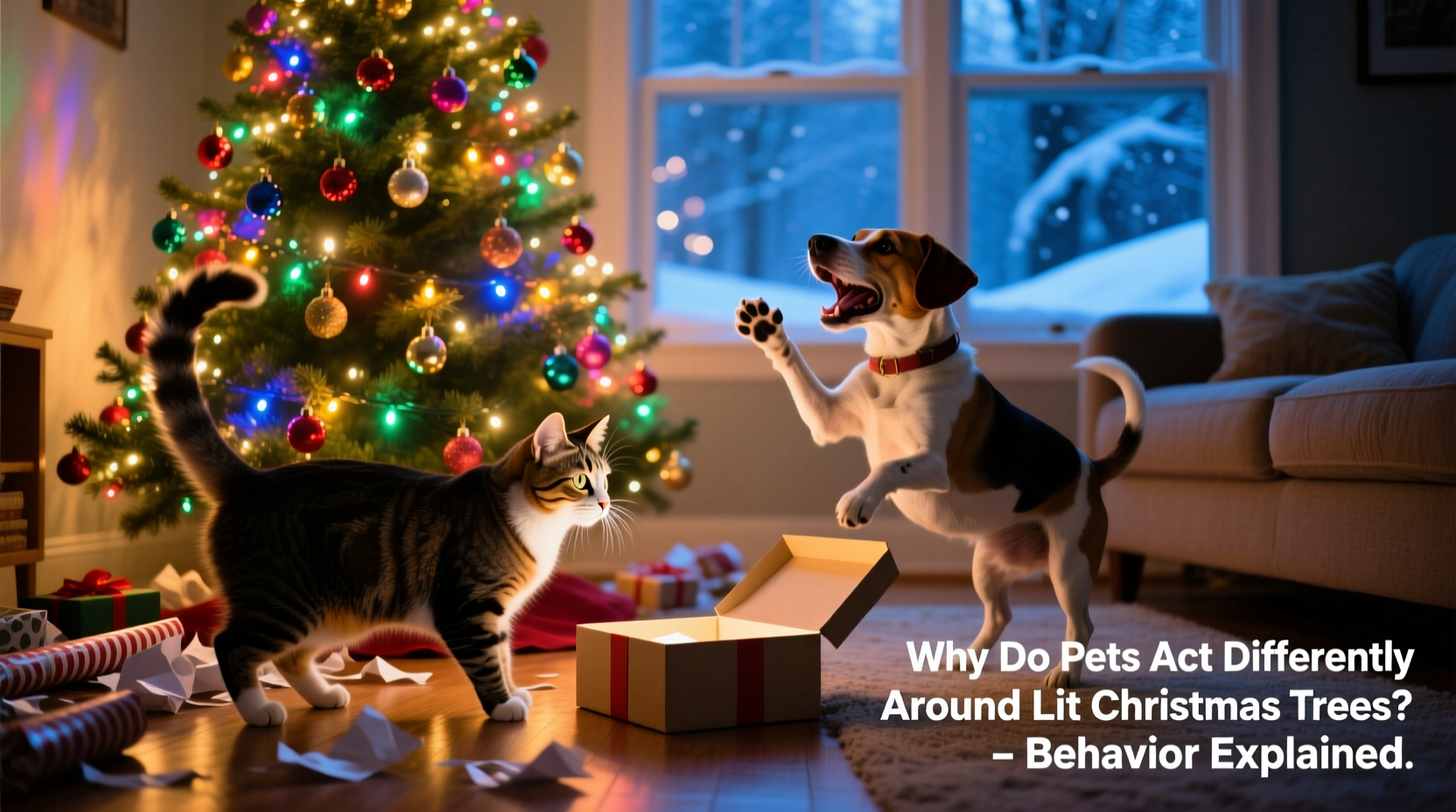
To a dog or cat, a decorated Christmas tree is not just a symbol of celebration—it’s a sensory event. The combination of visual stimuli, new smells, and auditory cues from ornaments clinking or timers clicking can overwhelm an animal accustomed to routine and predictability.
Flickering LED lights, especially those that twinkle or change color, mimic erratic movement. In nature, unpredictable motion often signals danger—such as a predator darting through underbrush or prey fleeing. Even though pets know their home environment, their instincts remain finely tuned. A blinking light at eye level may trigger alertness, fixation, or even predatory stalking behavior.
Cats, in particular, are highly sensitive to movement. Their retinas contain a high concentration of rod cells, which enhance low-light vision and motion detection. What looks like gentle shimmering to us may appear as rapid, darting flashes to a cat. This explains why some felines bat at lights, pounce near the base of the tree, or stare intently for extended periods.
Dogs, too, react strongly. Breeds with higher prey drives—like terriers or herding dogs—may view dangling ornaments as toys or targets. The sound of jingling bells or crackling electrical adapters can further heighten arousal. Combined with the scent of pine resin, tinsel, and gift wrap, the tree becomes a multi-sensory anomaly in their territory.
Instinctual Responses to Novel Objects
Pets are creatures of habit. Their sense of security relies heavily on environmental consistency. Introducing a large, foreign object—especially one that emits light and noise—disrupts their spatial mapping of the home.
In ethology (the study of animal behavior), this reaction is known as neophobia—the fear of new things. It’s an evolutionary adaptation that helps animals avoid potentially dangerous unknowns. For a dog, a towering evergreen covered in shiny spheres may seem like an unpredictable intruder. For a cat, it could resemble a giant, motion-filled bush teeming with invisible prey.
This novelty also affects territorial behaviors. Dogs may mark near the tree, circle it repeatedly, or guard it as if claiming it as part of their domain. Cats might rub against it to deposit scent from facial glands, asserting familiarity. Others may avoid the area entirely, especially if the tree occupies a space they normally use for resting or observing.
Dr. Karen Overall, a board-certified veterinary behaviorist, explains:
“Animals don’t experience holidays the way we do. To them, a Christmas tree is a sudden, unexplained alteration in their world. Their reactions—from curiosity to avoidance—are attempts to regain control and predictability.” — Dr. Karen Overall, Veterinary Behavioral Medicine Specialist
Common Behavioral Changes and What They Mean
Observing your pet’s behavior around the tree can provide insight into their emotional state. Here are some typical changes and their likely causes:
- Staring or tracking lights: Indicates heightened visual stimulation. Common in cats and visually driven dogs.
- Whining, barking, or meowing near the tree: May signal anxiety, excitement, or an attempt to alert you to a perceived threat.
- Trying to climb or knock over the tree: Often stems from play drive, territorial assertion, or frustration.
- Avoiding the room altogether: Suggests discomfort or stress due to sensory overload.
- Excessive grooming or licking paws near the tree: A displacement behavior indicating nervousness.
Some pets may even develop temporary compulsive behaviors, such as circling the tree repeatedly or pawing at reflections on ornaments. These actions typically subside once the novelty wears off—or when the tree is removed.
Mini Case Study: Luna the Anxious Cat
Luna, a 3-year-old domestic shorthair, had always been confident and social. But when her owners set up their lit Christmas tree in the living room—her favorite napping spot—she began hiding under the bed. She only emerged when the tree lights were turned off. Her owners noticed she would hiss softly when someone approached the tree while it was lit.
After consulting a veterinarian, they learned that Luna was reacting to the flickering blue-tinted LEDs, which created a strobe-like effect in her peripheral vision. Switching to warm-white, steady-glow bulbs and placing a physical barrier around the tree reduced her anxiety significantly. Within days, Luna resumed using the living room and even sat nearby—just out of direct line of sight of the lights.
Safety Risks and How to Mitigate Them
Beyond behavioral quirks, lit Christmas trees pose real dangers to pets. Tinsel, string lights, broken ornaments, and even tree water additives can be toxic or cause physical harm.
According to the ASPCA Animal Poison Control Center, calls related to pet exposures spike during December, with Christmas trees ranking among the top household hazards. Tinsel ingestion, for example, can lead to linear foreign body obstructions in cats—a life-threatening condition requiring surgery.
| Hazard | Risk to Pets | Prevention Strategy |
|---|---|---|
| Flickering lights | Overstimulation, anxiety, seizures in photosensitive animals | Use steady LEDs; limit daily lighting hours |
| Tinsel & ribbons | Intestinal blockage, especially in cats | Avoid metallic decor; use paper chains instead |
| Ornaments (glass, sharp) | Cuts, choking, internal injury | Decorate lower branches with pet-safe items |
| Tree water (additives, bacteria) | Poisoning from preservatives, mold, or pesticides | Cover water reservoir or use artificial tree |
| Electrical cords | Chewing risk leading to electrocution | Conceal cords with covers or cord organizers |
Step-by-Step Guide to Pet-Friendly Holiday Decorating
Making your Christmas tree safe and less disruptive for pets doesn’t mean sacrificing festivity. Follow this timeline to prepare gradually and minimize stress:
- Week 1: Introduce the tree undecorated. Set up the bare tree (real or artificial) without lights or ornaments. Let your pet investigate it at their own pace. Reward calm behavior with treats.
- Week 2: Add lights (off initially). String non-flickering LED lights. Leave them unplugged for a few days so your pet gets used to the appearance. Then turn them on for short periods—15 minutes at first—gradually increasing duration.
- Week 3: Decorate with pet-safe ornaments. Use soft, lightweight decorations made of felt, wood, or paper. Avoid glass, tinsel, and anything small enough to swallow. Keep breakables high up.
- Week 4: Monitor and adjust. Observe your pet’s reactions. If they show signs of stress (panting, hiding, aggression), consider relocating the tree or reducing lighting time. Use pheromone diffusers (like Feliway or Adaptil) to promote calmness.
- Ongoing: Supervise and reinforce boundaries. Never leave pets unattended with the tree. Use positive reinforcement when they respect barriers or ignore the tree.
FAQ: Common Questions About Pets and Christmas Trees
Can Christmas tree lights cause seizures in pets?
Yes, in rare cases. Pets with photosensitive epilepsy—more commonly seen in certain dog breeds like Border Collies or German Shepherds—can have seizures triggered by flashing or strobing lights. Steady, warm-white LEDs are safer than twinkling or multicolor options.
Why does my dog bark at the Christmas tree every night?
Your dog may perceive the lights or shadows as moving objects, triggering a guarding or alert barking response. Alternatively, the disruption of routine or scent changes may make them feel the need to “protect” their territory. Consistent training and environmental management can reduce this behavior.
Are artificial trees safer than real ones for pets?
Artificial trees eliminate risks like needle ingestion and toxic sap, but they often come with sharper edges and heavier bases. Real trees pose hazards from pesticides, fertilizers in water, and falling if not secured. Both types require supervision, but artificial trees offer more control over materials and stability.
Conclusion: Creating Harmony During the Holidays
The wonder of the holiday season should include every member of the family—even the four-legged ones. Recognizing that pets experience the lit Christmas tree not as a joyful symbol but as a complex environmental shift allows us to meet their needs with empathy and care. By minimizing sensory overload, removing hazards, and respecting their instincts, we can ensure that our companions feel secure amid the sparkle and song.
Remember, a calm pet is a happy pet. With thoughtful preparation and ongoing observation, you can enjoy a festive home that delights both humans and animals alike. This year, let your holiday spirit extend beyond decoration—it’s an opportunity to deepen your understanding of your pet’s world.




 浙公网安备
33010002000092号
浙公网安备
33010002000092号 浙B2-20120091-4
Comments
No comments yet. Why don't you start the discussion?