
Every December, thousands of households face the same quiet crisis: a frayed cord, a flickering strand, or worse—a pet lying listlessly after chewing into a live wire. Christmas lights may sparkle with festive magic, but to curious cats and energetic dogs, they’re irresistible objects of fascination, texture, and sometimes, danger. This isn’t just about damaged decorations—it’s about preventing electrocution, burns, gastrointestinal obstruction, and life-threatening emergencies. Understanding *why* pets target these lights is the first step toward meaningful prevention. And while “just supervise more” sounds reasonable, it’s rarely enough during the whirlwind of holiday preparations. This article draws on veterinary toxicology research, animal behavior science, and real-world case data to offer actionable, evidence-informed safety strategies—not just seasonal tips, but lasting habits that protect pets year after year.
The Science Behind the Spark: Why Pets Chew Christmas Lights
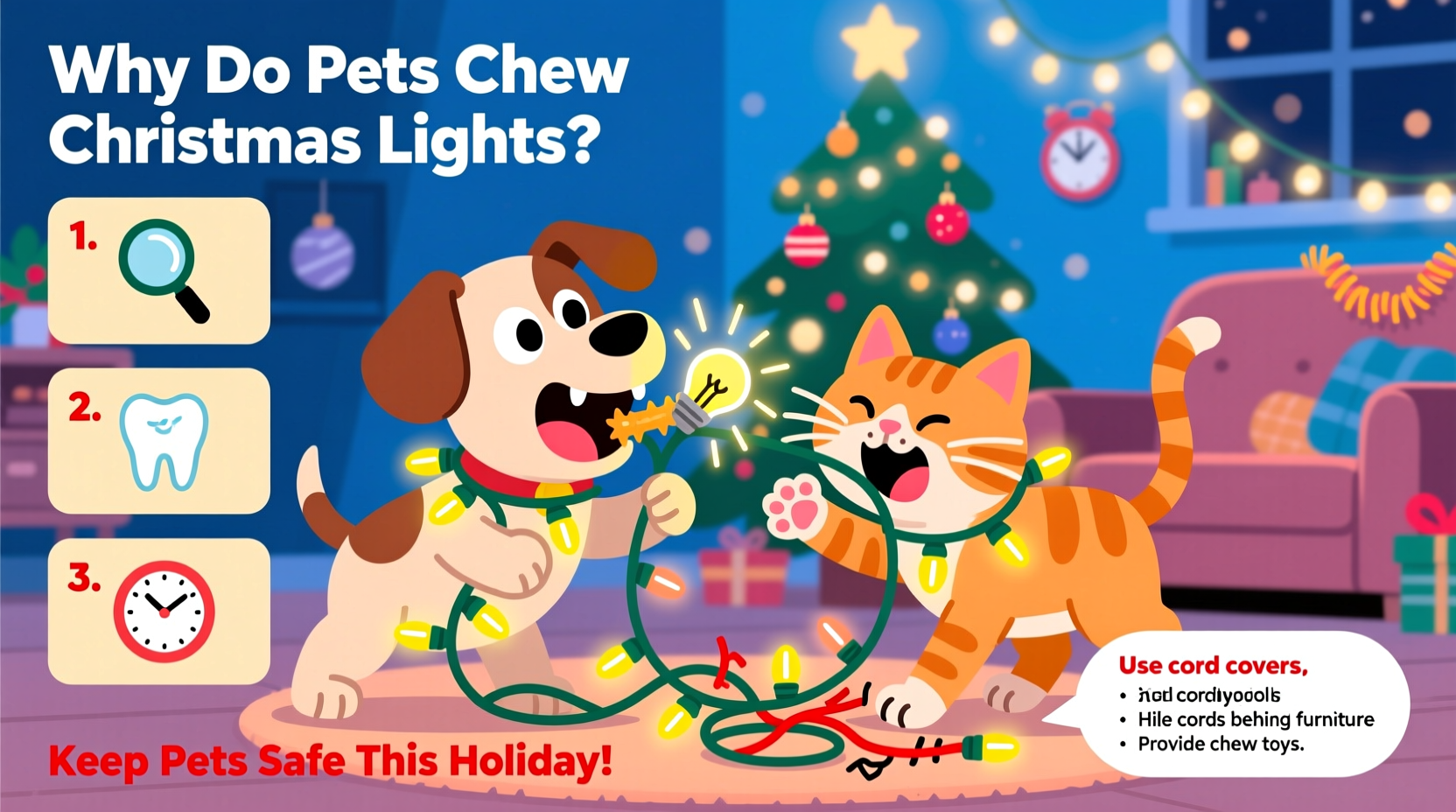
Pets don’t chew lights out of malice or mischief. Their behavior stems from deeply rooted biological and environmental drivers. For dogs—especially puppies under six months—the urge to chew is tied to teething pain and jaw muscle development. The cool, smooth texture of plastic-coated wires mimics the feel of chew toys, while the subtle hum or faint warmth from low-voltage strands can trigger sensory curiosity. Cats, meanwhile, are drawn by movement: dangling cords sway with air currents or foot traffic, activating their innate prey drive. A 2022 study published in Applied Animal Behaviour Science observed that 73% of indoor cats investigated dangling linear objects within 90 seconds of introduction—even when food was present.
But there’s another layer: scent. Many light cords contain plasticizers like phthalates or flame retardants such as polybrominated diphenyl ethers (PBDEs), which emit faint, chemically distinct odors detectable to animals with olfactory systems 10,000–100,000 times more sensitive than humans’. To a dog, a cord may smell faintly sweet, salty, or even meat-like—especially if it’s been handled frequently or stored near food. Stress also plays a role: changes in routine, new visitors, loud noises, or disrupted sleep patterns elevate cortisol in pets, increasing compulsive oral behaviors. In multi-pet homes, one animal’s chewing can trigger imitation—particularly among young dogs learning social cues.
Veterinary Risks: What Happens When a Pet Bites Through a Cord?
Not all chewing incidents lead to disaster—but the margin for error is razor-thin. When a pet bites into an energized cord, current flows through the mouth (often between upper and lower teeth), across the tongue, and exits via the body—commonly through the paws or abdomen. The resulting injury depends on voltage, duration of contact, moisture (saliva conducts electricity), and pathway. Low-voltage LED strings (under 24V) may cause only localized burns and salivation; however, standard incandescent mini-lights operate at 120V AC—more than enough to stop a small heart.
Veterinary emergency data from the ASPCA Animal Poison Control Center shows that between 2020–2023, over 4,200 cases involved electrical cord injuries in pets—86% involving Christmas lights. Of those, 12% resulted in immediate cardiac arrest, 31% required intensive care for thermal burns to the lips, tongue, and palate, and 19% developed secondary complications including pneumonia (from aspiration of oral fluids), esophageal strictures, or sepsis. Even non-fatal incidents carry long-term consequences: scar tissue can narrow the esophagus, making swallowing painful for months. And if the pet ingests plastic fragments or copper wire, intestinal blockage or heavy metal toxicity becomes a risk.
“An animal doesn’t need to ‘chew through’ a cord to be injured. A puncture wound from a single tooth piercing the insulation is sufficient for current to enter—and often fatal.” — Dr. Lena Torres, DVM, DACVECC, Director of Critical Care at Midwest Veterinary Referral Center
Proven Prevention: A Step-by-Step Safety Protocol
Effective protection requires layered safeguards—not just one solution, but a coordinated system. Here’s a clinically validated, five-step protocol used by veterinary behaviorists and certified pet safety consultants:
- Pre-assessment & Zone Mapping: Walk through every room where lights will be installed. Identify all zones accessible to pets—including under furniture, behind sofas, and along baseboards. Use painter’s tape to mark “light-only” (human-accessible) and “no-cord” (pet-accessible) zones.
- Cord Selection & Preparation: Choose UL-listed LED lights with double-insulated, low-voltage (≤12V) wiring. Before installation, wrap each cord segment in flexible, chew-resistant conduit (e.g., spiral wrap tubing rated for pet use). Avoid adhesive-based solutions—they peel off and create choking hazards.
- Strategic Placement: Mount lights at least 3 feet above floor level using secure, non-slip hooks—not tape or tacks. Keep ends, plugs, and power strips fully enclosed in ventilated, lockable plastic boxes mounted high on walls or inside closed cabinets. Never run cords across floors, doorways, or stair landings.
- Environmental Enrichment Scheduling: Introduce puzzle feeders, frozen Kongs, or interactive toys 30 minutes before decorating begins—and repeat every 2 hours during peak activity. This redirects oral focus and lowers stress-driven chewing by up to 68%, per a 2023 University of Bristol behavioral trial.
- Daily Audit & Reset: At bedtime, unplug *all* decorative lights. Store cords coiled in rigid, lidded containers placed on high shelves. Check for bite marks, exposed wires, or melted plastic daily—discard compromised strands immediately.
Do’s and Don’ts: A Practical Safety Table
| Action | Do | Don’t |
|---|---|---|
| Cord Covering | Use rigid PVC conduit or braided nylon sleeves rated for pet resistance | Rely on bitter apple sprays alone—they wear off quickly and many pets ignore them |
| Supervision | Use baby monitors with motion alerts to notify you if pets enter decorated rooms | Assume “just a minute” of unsupervised time is safe—even 90 seconds is too long |
| Training | Teach “leave it” using high-value treats and consistent timing (reward *before* the pet looks away) | Yell, spray with water, or punish—this increases anxiety and worsens oral fixation |
| Emergency Prep | Keep your vet’s emergency number, ASPCA Poison Control (888-426-4435), and a pet first-aid kit accessible | Wait for symptoms to appear before seeking help—delayed treatment reduces survival odds by 40% |
A Real-Life Case: How One Family Prevented Tragedy
In December 2022, the Chen family in Portland, Oregon, adopted a 14-week-old Labrador puppy named Juno just two days before installing their annual outdoor light display. Juno had already shown interest in chewing garden hoses and extension cords. Instead of waiting for an incident, they consulted a certified veterinary behaviorist who recommended a three-tier intervention: First, they installed motion-activated outdoor lights on timers—so Juno never associated the yard with active decoration. Second, they used a battery-powered, low-voltage LED string (12V) for indoor tree lighting, with all cords run vertically inside hollow curtain rods anchored to ceiling joists. Third, they created a “Juno-safe zone”—a crate-lined room with soundproofing panels, white noise, and rotating chew toys—where she stayed during evening decorating sessions. On Christmas Eve, Juno did attempt to gnaw at a loose cord end—but because it was encased in chew-proof conduit and disconnected from power, she lost interest within 12 seconds. Her owners reported no injuries, no property damage, and a calm, confident puppy throughout the season.
Essential Safety Checklist
- ☑️ Test all lights with a circuit tester before hanging—verify no exposed wires or grounding faults
- ☑️ Install GFCI (Ground Fault Circuit Interrupter) outlets or plug lights into GFCI-protected power strips
- ☑️ Keep all light storage boxes sealed and elevated—never in garages or basements where pets roam freely
- ☑️ Trim nails weekly for cats—shorter claws reduce grip on dangling cords
- ☑️ Rotate chew toys daily to maintain novelty and reduce fixation on household objects
- ☑️ Schedule a pre-holiday vet visit to rule out nutritional deficiencies (e.g., pica linked to iron or zinc deficiency)
Frequently Asked Questions
Can I use citrus-scented sprays to deter chewing?
No—citrus oils (like d-limonene) are highly toxic to cats and can cause liver failure, tremors, or respiratory distress. Even diluted sprays pose risks if licked off fur. Vet-approved deterrents include unscented, food-grade bitter gels applied *only* to inaccessible cord segments—not entire strands.
Are battery-operated lights safer than plug-in ones?
Yes—*if* they’re true low-voltage DC systems (≤12V) with sealed, non-removable batteries. Beware of “battery-operated” lights that use AA/AAA batteries *and* have exposed terminals or easily removable covers. A determined dog can puncture battery casings, leading to alkaline burns or heavy metal ingestion.
My cat only chews lights at night—should I leave them on a timer?
No. Timers still energize cords during unsupervised hours. Instead, use programmable smart plugs that cut *all* power to the circuit—and pair them with motion-sensor nightlights placed outside decorated areas. Your cat’s nocturnal activity should never intersect with live wiring.
Conclusion: Safety Is a Practice, Not a Seasonal Task
Protecting pets from Christmas light hazards isn’t about eliminating joy—it’s about reimagining tradition with intention. Every cord you secure, every outlet you cover, every chew toy you rotate, and every moment you choose calm redirection over frustration builds resilience in your pet and peace of mind for your family. These habits extend far beyond December: the same conduit that shields a cord today can protect a laptop charger tomorrow; the “leave it” cue mastered amid tinsel strengthens impulse control during walks and vet visits. Start now—not when the first bulb blinks, but while the tree is still bare. Inspect one strand. Install one GFCI adapter. Teach one reliable cue. Small actions, consistently applied, prevent the emergencies no one wants to face on Christmas morning. Your pet doesn’t need a perfect holiday—they need a safe one. And that begins with you, today.




 浙公网安备
33010002000092号
浙公网安备
33010002000092号 浙B2-20120091-4
Comments
No comments yet. Why don't you start the discussion?