
The arrival of a Christmas tree in the home marks the beginning of the holiday season for many families. While humans may delight in the scent of pine and the glow of twinkling lights, our pets often experience the same event very differently. Some dogs wag their tails cautiously around the new centerpiece, while others bark incessantly or attempt to knock it over. Cats might leap into the branches like jungle gyms, while others hide under the bed for days. These varied reactions aren’t random—they are deeply influenced by breed-specific traits rooted in genetics, instinct, and historical function.
Understanding why different breeds respond uniquely to Christmas trees isn't just about preventing chaos; it's about respecting your pet’s natural tendencies and creating a safe, stress-free environment during the holidays. From herding dogs with high alertness to independent felines bred for solitary hunting, each animal brings a distinct behavioral blueprint shaped by centuries of selective breeding.
Breed Genetics and Behavioral Instincts
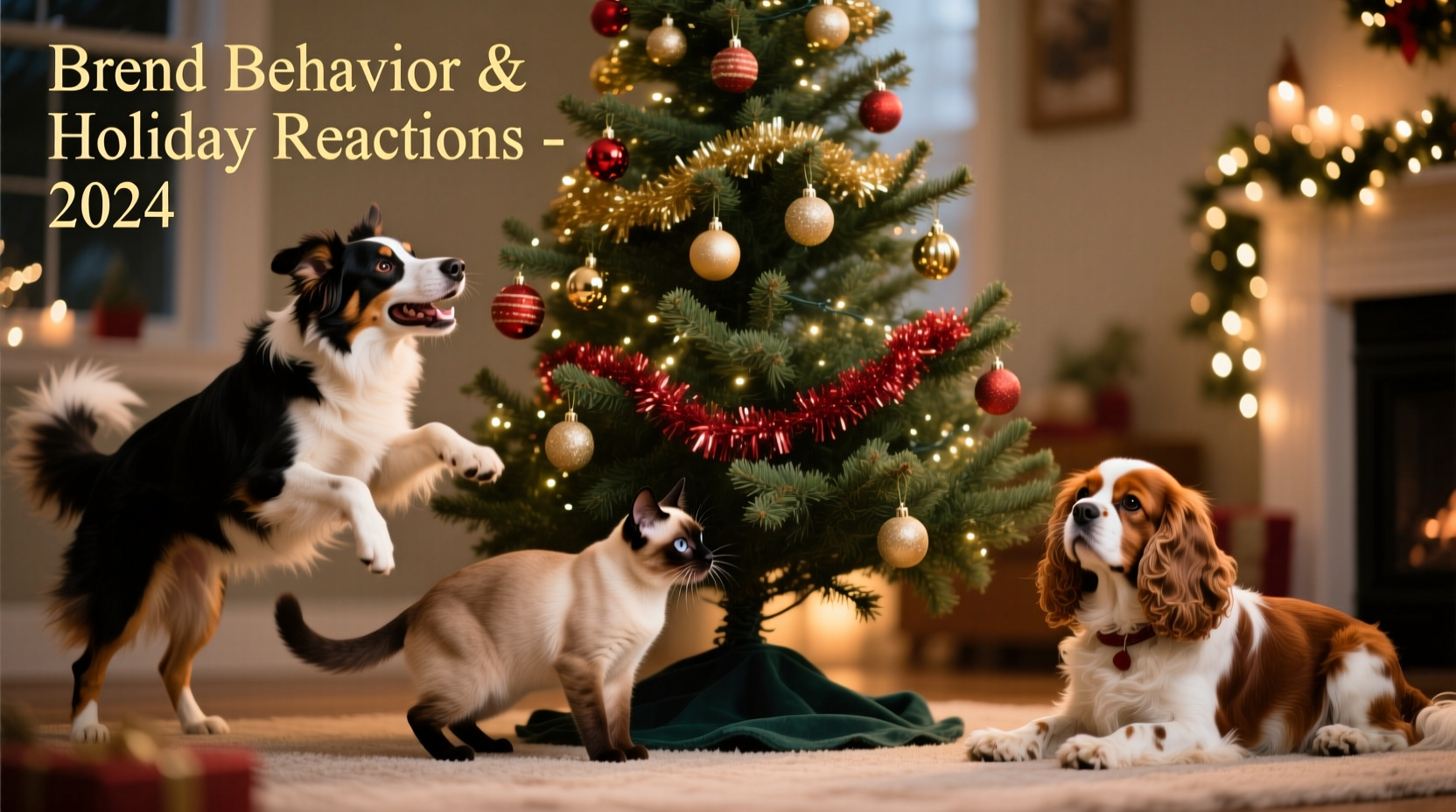
Dog and cat breeds were developed over generations for specific roles—herding, guarding, hunting, or companionship. These purposes left lasting imprints on their behavior patterns, which become evident when they encounter novel stimuli like a Christmas tree.
For example, terriers were originally bred to chase and eliminate vermin. Their instinct to pounce on movement makes dangling ornaments especially tempting. A Jack Russell Terrier may view a flickering light as prey, triggering an intense fixation or even a full-scale attack on the lower branches. In contrast, a Newfoundland, historically used for water rescue and draft work, tends to be calm and gentle, often approaching the tree with cautious curiosity rather than excitement.
Cats follow a similar pattern. Breeds like the Siamese, known for their vocal nature and high energy, are more likely to investigate, bat at ornaments, or climb the tree. On the other hand, Norwegian Forest Cats, though agile climbers, often display more restraint due to their reserved temperament and strong sense of territory.
“Breed-typical behaviors don’t just disappear in domestic settings—they adapt. When a Border Collie fixates on a spinning ornament, it’s not mischief; it’s instinct responding to motion.” — Dr. Lena Torres, Veterinary Ethologist
Sensory Sensitivity Across Breeds
The sensory impact of a Christmas tree varies dramatically between species and breeds. The combination of bright lights, unfamiliar scents, and rustling tinsel can overwhelm some animals more than others.
Dogs with heightened auditory sensitivity—such as German Shepherds or Belgian Malinois—may react strongly to soft jingles from ornaments or the hum of older-style string lights. These sounds, barely noticeable to humans, can trigger alertness or anxiety in breeds bred for guard or military work.
Similarly, scent plays a major role. Real pine trees emit strong volatile organic compounds (VOCs) that some pets find overwhelming. Breeds with superior olfactory capabilities—Bloodhounds, Basset Hounds, and Beagles—may sniff persistently around the base, sometimes leading to chewing or attempts to dig beneath it, mimicking denning or tracking behaviors.
Cats, with up to 200 million scent receptors (compared to 5 million in humans), can be particularly affected by artificial sprays, tree preservatives, or citrus-based deterrents. Breeds like the Sphynx, which are highly social and tactile, may approach the tree out of curiosity but retreat quickly if the smell is off-putting.
Temperament and Energy Levels by Breed
A pet’s general temperament—shaped significantly by breed—determines whether the Christmas tree becomes a source of fascination, fear, or frustration.
High-energy working breeds such as Australian Shepherds or Siberian Huskies may see the tree as an obstacle to be tested or overcome. Their need for mental stimulation can turn a decorated tree into a puzzle to solve—often ending in toppled stands or scattered tinsel. Without sufficient exercise and enrichment, these breeds are more prone to destructive interactions with holiday decor.
In contrast, low-energy companion breeds like Cavalier King Charles Spaniels or Ragdoll cats tend to observe from a distance. They may show mild interest but are less likely to engage physically. This doesn’t mean they’re unaffected—some may become anxious if the tree disrupts their preferred resting spot—but their responses are typically passive rather than active.
Independent breeds, including many Oriental cat types or Basenjis (a dog breed known for its cat-like aloofness), often assess novelty with detachment. They may circle the tree once and then ignore it entirely, prioritizing routine over exploration.
| Pet Type | Breed Example | Typical Reaction to Tree | Underlying Cause |
|---|---|---|---|
| Dog | Border Collie | Fixates on moving lights | Prey drive and herding instinct |
| Dog | Bulldog | Ignores or naps nearby | Low energy, calm temperament |
| Cat | Siamese | Climbs or bats at ornaments | High curiosity, social nature |
| Cat | Persian | Hides or avoids area | Sensitivity to noise and change |
| Dog | Beagle | Sniffs and digs at base | Strong scent drive and digging instinct |
Managing Reactions: A Breed-Specific Approach
One-size-fits-all solutions rarely work when managing pet behavior around Christmas trees. Instead, strategies should align with breed-specific needs and predispositions.
For high-drive breeds like Terriers or Retrievers, prevention is key. Use a sturdy metal stand, secure the tree to a wall anchor, and avoid low-hanging edible-looking ornaments. Motion-activated deterrents (like compressed air sprays) can discourage repeated approaches without causing harm.
For anxious or fearful breeds—such as Shih Tzus or Scottish Folds—maintain a predictable routine. Keep the tree lit during waking hours only, use warm white LED lights (which are less stimulating than blinking multicolor ones), and provide a quiet retreat space away from the living room.
Active supervision works best for exploratory breeds. If you have a Bengal cat or a Miniature Schnauzer, consider allowing brief, monitored interaction with the tree during decoration time to satisfy curiosity early. Pair this with positive reinforcement—treats and praise—for calm behavior.
“Understanding your pet’s breed background allows you to anticipate problems before they happen. It turns reactive management into proactive care.” — Dr. Marcus Lin, Animal Behavior Consultant
Step-by-Step: Introducing Your Pet to the Christmas Tree
- Start with the bare tree – Assemble the tree without decorations or lights. Allow your pet to investigate under supervision for 1–2 days.
- Add lighting gradually – Turn on the lights for short periods while you’re present. Watch for signs of stress (panting, hiding, excessive barking).
- Introduce one ornament at a time – Begin with large, non-reflective items placed high up. Monitor interactions closely.
- Secure the base – Use a heavy stand and consider placing a barrier (like a baby gate) if your pet shows persistent interest.
- Finalize setup only when behavior is consistent – Wait until your pet ignores or calmly passes the tree before completing decoration.
Real-Life Scenario: Managing a Multi-Pet Household
Sarah, a pet owner in Vermont, introduced a real Christmas tree to her home shared by three animals: a young Border Collie named Finn, a senior Pug named Daisy, and a rescue tabby cat named Milo. Within hours, Finn began circling the tree, fixating on the blinking red lights. Daisy avoided the living room altogether, while Milo scaled the tree twice, knocking over two ornaments.
After consulting a trainer, Sarah adjusted her approach based on breed needs. She replaced flashing lights with steady warm-white LEDs to reduce Finn’s arousal. She set up a cozy bed for Daisy in a quieter part of the house and used pheromone diffusers to ease her anxiety. For Milo, she installed a mesh tree skirt and placed his favorite perch nearby so he could observe without climbing.
Within four days, all three pets adapted. Finn learned to lie down on command near the tree, Daisy resumed using the living room, and Milo settled into watching from a distance. The key was recognizing that each animal responded according to their inherent traits—not defiance or confusion, but instinct.
Essential Checklist: Pet-Safe Christmas Tree Setup
- ✅ Choose a stable, weighted tree stand appropriate for your pet’s size and activity level
- ✅ Avoid tinsel, glass ornaments, and toxic plants (like mistletoe or poinsettia)
- ✅ Use shatterproof or soft decorations within reach
- ✅ Secure electrical cords with cord protectors or tape them flat against the wall
- ✅ Anchor the tree to a wall or ceiling with fishing line or a commercial stabilizer
- ✅ Provide alternative enrichment (toys, puzzles, perches) to redirect attention
- ✅ Supervise initial interactions and reinforce calm behavior with treats
- ✅ Consider temporary barriers for high-risk pets during unsupervised times
Frequently Asked Questions
Can I train my dog not to bother the Christmas tree?
Yes, but success depends on consistency and breed tendencies. Dogs with high prey or herding drives require more structured training. Use commands like “leave it” and “go to mat” paired with positive reinforcement. Practice these commands well before introducing the tree.
Are real trees more dangerous than artificial ones for pets?
Both have risks. Real trees pose hazards like needle ingestion, sap exposure, and water preservatives. Artificial trees may shed small parts or collapse if climbed. However, real trees emit stronger scents that may attract curious pets, especially scent-driven breeds.
My cat keeps climbing the tree. How can I stop this?
Climbing is natural for many cats, especially active breeds. Discouragement works better than punishment. Try wrapping the lower trunk in aluminum foil (most cats dislike the texture), using double-sided tape on branches, or providing a taller cat tree nearby as an alternative. Never punish climbing—it can increase anxiety and damage trust.
Conclusion: Respecting Natural Behavior During the Holidays
The way pets react to Christmas trees isn’t whimsical—it’s a reflection of who they are at a genetic and behavioral level. Whether your Golden Retriever tries to fetch every falling pine needle or your British Shorthair watches from afar with quiet disdain, their actions stem from deeply ingrained breed-specific traits. Recognizing this allows us to move beyond frustration and toward empathy.
This holiday season, take a moment to consider your pet’s history, instincts, and sensitivities. Adjust your expectations and environment accordingly. By doing so, you’re not just protecting your tree—you’re honoring the unique animal you share your home with.




 浙公网安备
33010002000092号
浙公网安备
33010002000092号 浙B2-20120091-4
Comments
No comments yet. Why don't you start the discussion?