
Polar bears are among the most formidable predators on Earth, perfectly adapted to life in the Arctic’s extreme conditions. While attacks on humans remain rare, they do happen—and when they do, the consequences can be fatal. Understanding why polar bears might target humans requires a deep dive into their biology, ecological pressures, and behavioral patterns. This article explores the real reasons behind such incidents, separates myth from fact, and provides practical guidance for minimizing risk in polar bear territory.
The Natural Diet and Hunting Instincts of Polar Bears
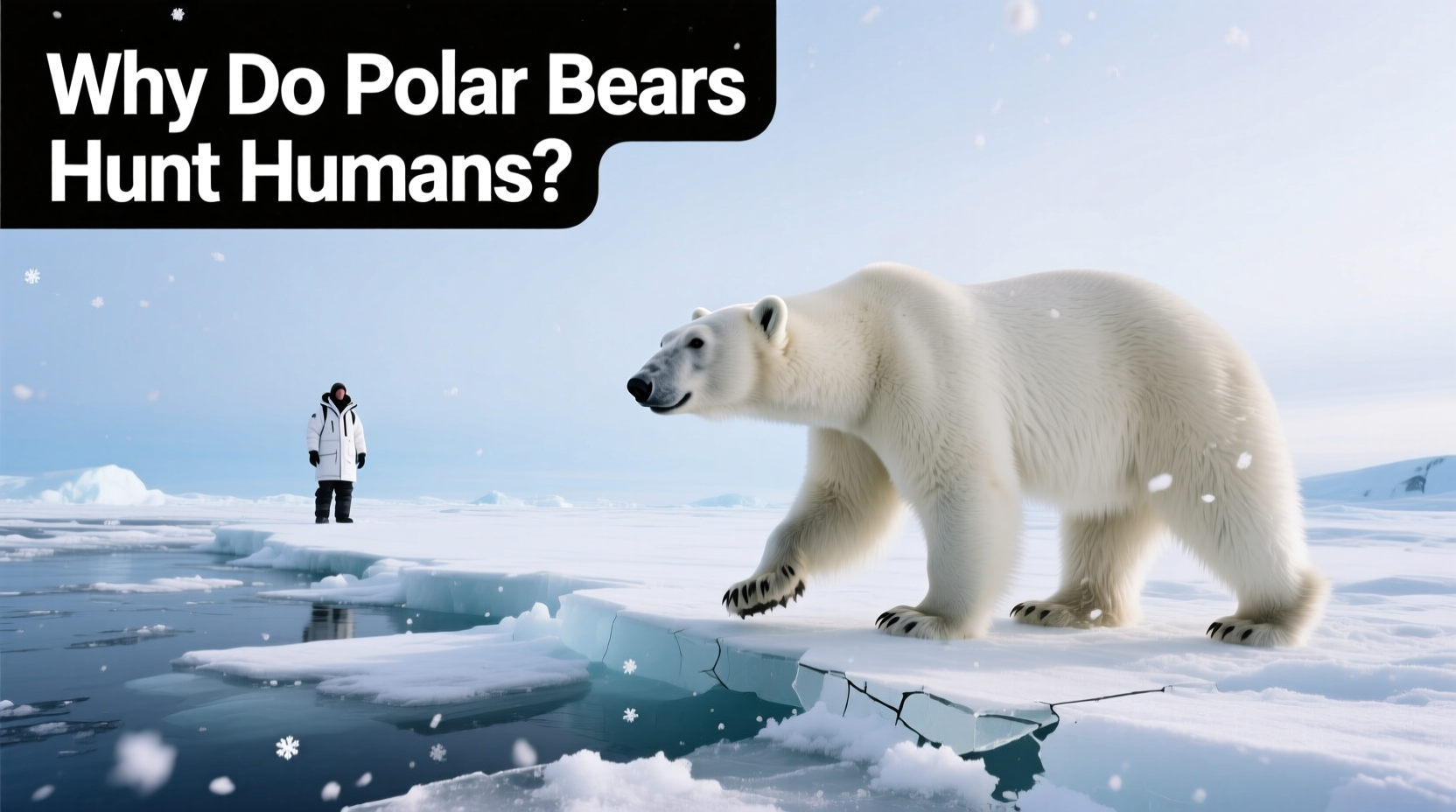
Polar bears (*Ursus maritimus*) are apex predators whose primary food source is ringed and bearded seals. They rely on sea ice as a platform to hunt, using still-hunting techniques—waiting silently by seal breathing holes—or stalking seals basking on the ice. Their survival depends on high-fat diets, which provide the energy needed to endure long fasts during ice-free seasons.
Unlike brown or black bears, polar bears are hypercarnivorous, meaning over 70% of their diet consists of meat. This intense specialization makes them highly efficient hunters but also vulnerable when food is scarce. In such cases, their predatory instincts don’t disappear—they may simply shift focus.
Importantly, polar bears do not naturally view humans as prey. However, under certain circumstances, they may perceive people as potential food sources, especially if the bear is undernourished, young, or has limited hunting success.
When Hunger Overrides Caution: The Role of Starvation
In recent decades, climate change has drastically reduced Arctic sea ice, shortening the hunting season for polar bears. With less time to build fat reserves, more bears are experiencing prolonged fasting periods—sometimes lasting six months or longer. A study published in *Science* found that some subpopulations are losing weight and reproductive capacity at alarming rates.
Starving bears become desperate. In these states, their usual wariness of humans diminishes. A weakened bear may see a human not as a threat, but as an opportunity—an easily accessible source of calories. Most documented attacks involving consumption of human victims occur under these conditions.
Dr. Steven Amstrup, chief scientist at Polar Bears International, explains:
“Polar bears are not innately aggressive toward people. But when they’re starving, their behavior changes. They take risks they wouldn’t normally take—including approaching human settlements.”
This shift is particularly evident in regions like western Hudson Bay and the Russian Arctic, where bears spend increasing amounts of time on land near communities, scavenging garbage or lingering near industrial sites.
Behavioral Triggers That Increase Attack Risk
While hunger is a major factor, other behavioral and environmental elements contribute to human-bear conflicts:
- Surprise encounters: In flat, snow-covered terrain with limited visibility, humans and bears can come upon each other suddenly. A startled bear may react defensively.
- Protective mothers: Though rare, a female with cubs may charge if she perceives a person as a threat.
- Habituation: Bears that repeatedly encounter humans without negative consequences may lose their natural fear, increasing the likelihood of bold or aggressive behavior.
- Curiosity: Young, exploratory bears (especially subadult males) may approach human camps out of curiosity, which can escalate if misinterpreted as non-threatening.
It's critical to recognize that polar bears lack the evolutionary experience with humans that other bear species have. Unlike grizzlies in North America, which have coexisted with people for thousands of years, polar bears evolved in near-isolation. This means they don’t have ingrained avoidance behaviors, making their responses less predictable.
Safety Checklist for Travelers in Polar Bear Regions
If you're traveling to the Arctic—whether for research, tourism, or work—preparation is essential. Use this checklist to reduce your risk:
- Carry deterrents: Always have bear spray and signal flares accessible.
- Travel in groups: Larger parties are more intimidating and less likely to be approached.
- Establish a watch rotation: Maintain 24-hour vigilance when camping.
- Avoid strong odors: Store food and waste in sealed, bear-proof containers away from sleeping areas.
- Use electric fencing: Portable fences can effectively deter curious or aggressive bears.
- Know how to respond: If charged, stand your ground and use deterrents only when necessary.
- Report sightings: Notify local authorities or wildlife officers immediately.
Real-World Case: The 2010 Svalbard Attack
In July 2010, a group of British university students camping on Norway’s Svalbard archipelago was attacked by a large male polar bear. The bear breached their tent and killed one student before being shot by a fellow camper.
Investigations revealed the bear was severely underweight and showed signs of tooth decay, impairing its ability to hunt seals. Experts concluded it had likely been scavenging and viewed the camp as a potential food source. The site had no electric fence, and food odors may have attracted the animal.
This tragic incident underscores several key points: even well-prepared groups can be vulnerable; early detection systems matter; and malnourished bears pose a heightened threat. Since then, Svalbard has enforced stricter regulations, including mandatory firearms training and bear-awareness courses for visitors.
Do’s and Don’ts When in Polar Bear Territory
| Do’s | Don’ts |
|---|---|
| Set up camp in open areas with clear visibility | Set up near animal carcasses or garbage dumps |
| Carry and know how to use bear deterrents | Run if a bear approaches—this triggers chase instinct |
| Make noise while moving to avoid surprising a bear | Feed or attempt to photograph bears up close |
| Follow local guidelines and travel with experienced guides | Assume a bear is “tame” because it isn’t charging |
| Use motion-sensor lights or alarms around camp | Leave food, trash, or cooking gear unattended |
Frequently Asked Questions
Are polar bears naturally aggressive toward humans?
No, polar bears are not naturally aggressive toward humans. Attacks are uncommon and typically occur when bears are hungry, sick, or surprised. Most interactions stem from opportunistic behavior rather than innate hostility.
How many polar bear attacks on humans happen each year?
On average, there are fewer than five reported attacks per year across the entire circumpolar region. Fatalities are even rarer, averaging one every few years. However, experts warn that attack frequency may rise as sea ice declines and bears spend more time on land.
Can you survive a polar bear attack?
Survival depends on preparation and response. Unlike grizzly attacks, playing dead is generally ineffective against polar bears, especially if the attack is predatory. Using deterrents like bear spray, flare guns, or firearms—and having them ready—is the best chance of survival. Making loud noises and appearing threatening may also deter a curious bear before it attacks.
Conclusion: Respecting the Apex Predator of the Arctic
Understanding why polar bears might hunt humans isn't about vilifying the species—it's about respecting their power, recognizing the pressures they face, and taking responsibility for our own safety in their domain. As climate change reshapes the Arctic, human-bear encounters will likely increase. Preparedness, education, and conservation are all part of the solution.
Whether you're planning an expedition or simply seeking to understand one of nature’s most awe-inspiring creatures, remember this: polar bears aren't monsters. They are animals driven by survival in a rapidly changing world. By learning their behavior, we protect both ourselves and them.




 浙公网安备
33010002000092号
浙公网安备
33010002000092号 浙B2-20120091-4
Comments
No comments yet. Why don't you start the discussion?