
If you’ve ever shone a blacklight over a carton of quail eggs and noticed a soft blue or greenish glow emanating from the shells, you’re not imagining things. This subtle luminescence isn’t magic—it’s science. Quail eggs, more so than chicken eggs, often exhibit a visible fluorescent reaction under ultraviolet (UV) light. While it may seem mysterious, the explanation lies in biochemistry, protein structures, and the unique mineral composition of the eggshell. Understanding this phenomenon offers insight into avian biology, food safety testing, and even forensic applications.
The Role of Ultraviolet Light and Fluorescence
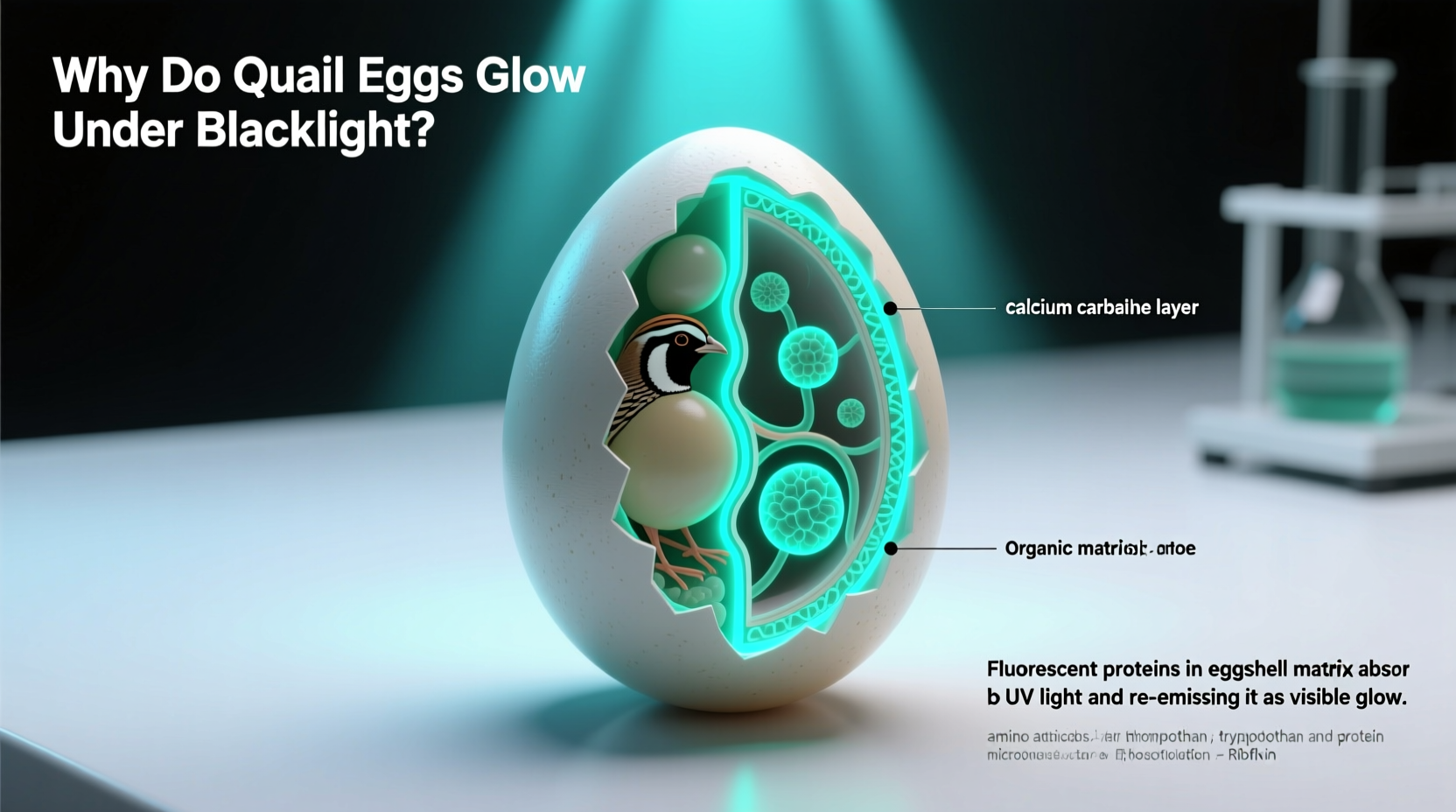
Blacklights emit long-wave ultraviolet (UVA) radiation, typically between 365 and 400 nanometers. While invisible to the human eye, this light can excite certain molecules, causing them to absorb energy and re-emit it as visible light—a process known as fluorescence. Not all substances fluoresce, but those that do contain specific chemical compounds called fluorophores.
In the case of quail eggs, several components within the shell and membrane act as natural fluorophores. When UV light strikes these molecules, electrons become temporarily energized. As they return to their ground state, they release photons—visible as a faint glow, usually in the blue-green spectrum.
Key Fluorescent Compounds in Quail Eggs
Three primary components contribute to the glowing effect observed in quail eggs:
- Porphyrins: These are organic pigments involved in the synthesis of heme, a component of hemoglobin. Porphyrins are naturally present in bird eggshells, especially in species like quails that lay speckled or pigmented eggs. They are strong fluorophores, emitting red or pink fluorescence under UV light.
- Proteins in the Cuticle: The outermost layer of the eggshell, known as the cuticle, contains glycoproteins and other organic materials. Some of these proteins—particularly those with aromatic amino acids like tryptophan and tyrosine—fluoresce under UV exposure.
- Calcium Carbonate Crystals: While pure calcium carbonate (the main mineral in eggshells) does not fluoresce strongly, microscopic impurities or lattice defects can enhance weak luminescence. In quail eggs, the denser, more crystalline structure may amplify this effect.
Quail eggs tend to show stronger fluorescence than chicken eggs due to higher concentrations of porphyrins and a thicker organic cuticle layer. This is partly evolutionary—darker, speckled shells help camouflage eggs in the wild, and the same pigments responsible for color also contribute to fluorescence.
Comparative Fluorescence: Quail vs. Chicken Eggs
| Egg Type | Fluorescence Strength | Primary Fluorophores | Shell Pigmentation | Typical Glow Color |
|---|---|---|---|---|
| Quail Egg | Strong | Porphyrins, Tryptophan-rich proteins | Dark brown spots on white base | Blue-green with pink speckles |
| Chicken Egg (White) | Weak to none | Minimal organic content | None (bleached appearance) | No visible glow |
| Chicken Egg (Brown) | Moderate | Trace porphyrins, cuticle proteins | Uniform tan or brown | Faint yellow-green |
| Duck Egg | Moderate | Organic cuticle, some porphyrins | Bluish or greenish tint | Soft blue |
This table illustrates why quail eggs stand out under blacklight: their combination of pigmentation, organic shell content, and structural properties creates a more pronounced fluorescent response compared to most domestic poultry eggs.
Real-World Applications of Egg Fluorescence
The fluorescence of quail eggs isn’t just a curiosity—it has practical implications across several fields.
“Natural fluorescence in avian eggs provides a non-invasive way to assess shell integrity and aging without damaging the sample.” — Dr. Lena Torres, Avian Biochemist, University of Edinburgh
In wildlife research, scientists use UV light to identify bird species’ nests based on eggshell fluorescence, especially in low-light environments. Similarly, in agriculture, fluorescence patterns can indicate microbial contamination or shell thinning, serving as an early warning system for egg quality.
A mini case study from a Japanese hatchery demonstrated this utility. Workers began using handheld UV lamps during routine egg inspections and noticed inconsistent glow patterns in a batch of quail eggs. Further analysis revealed micro-cracks invisible to the naked eye. By removing these compromised eggs, the hatchery improved its孵化 (hatching) success rate by nearly 18% over three months.
Step-by-Step Guide: How to Observe Quail Egg Fluorescence at Home
You don’t need a laboratory to witness this phenomenon. Here’s how to conduct your own safe and informative observation:
- Gather Supplies: Obtain a 365nm UV flashlight (commonly labeled “true blacklight”), a fresh quail egg, and a dark room.
- Prepare the Environment: Turn off all lights and allow your eyes to adjust to darkness for at least two minutes.
- Position the Egg: Place the egg on a non-reflective surface, such as black fabric or cardboard.
- Shine the Light: Hold the UV flashlight 2–4 inches from the eggshell at a slight angle to reduce glare.
- Observe Carefully: Look for a soft blue or greenish glow along the shell surface. Speckled areas may emit a faint pink or red hue due to porphyrin concentration.
- Compare Samples: Test multiple eggs to note variations in intensity—older eggs may fluoresce less due to cuticle degradation.
- Record Observations: Take notes or use a UV-safe camera to document differences.
Debunking Common Myths
Several misconceptions surround glowing quail eggs. One popular myth claims that fluorescence indicates radioactivity or contamination. This is false. The glow is purely optical and poses no health risk. Another myth suggests only fertilized eggs glow—however, both fertilized and unfertilized quail eggs exhibit similar fluorescence since the effect originates in the shell, not the embryo.
It’s also important to note that while fluorescence can hint at freshness or structural integrity, it cannot determine whether an egg is fertile or spoiled. Always rely on standard food safety practices—smell, texture, and storage time—when consuming eggs.
FAQ
Is it safe to eat quail eggs that glow under blacklight?
Absolutely. The fluorescence is caused by natural compounds in the shell and has no bearing on edibility. As long as the egg is fresh, properly stored, and cooked thoroughly, it is safe to consume.
Do all bird eggs glow under UV light?
Most bird eggs exhibit some degree of fluorescence, but the intensity varies widely. Ground-nesting birds like quails and plovers tend to have stronger fluorescence due to pigmented shells, while cavity-nesting birds may show weaker signals.
Can I use a smartphone UV light for this test?
Most phone attachments emit near-UV or purple visible light, not true UVA. These are ineffective for detecting subtle fluorescence. Invest in a dedicated 365nm UV flashlight for accurate results.
Checklist: What to Know About Quail Egg Fluorescence
- ✅ Fluorescence is caused by porphyrins and proteins in the shell
- ✅ Strongest in pigmented eggs like those from quails
- ✅ Best observed with 365nm UV light in total darkness
- ✅ Not an indicator of fertility or spoilage
- ✅ Useful in scientific and agricultural inspection
- ✅ Harmless and completely natural
Conclusion
The glow of quail eggs under blacklight is a beautiful example of nature’s hidden chemistry. Far from being supernatural, it reveals the intricate interplay between light, organic molecules, and biological evolution. Whether you're a curious home experimenter, a biology student, or someone interested in food science, understanding this phenomenon deepens appreciation for the complexity of something as simple as an egg.




 浙公网安备
33010002000092号
浙公网安备
33010002000092号 浙B2-20120091-4
Comments
No comments yet. Why don't you start the discussion?