
Blowing fuses on Christmas light strings isn’t just a seasonal annoyance—it’s a warning sign. When a freshly installed fuse immediately trips or burns out within minutes—or even seconds—of plugging in the lights, the problem isn’t the fuse itself. It’s a symptom of an underlying fault that could risk overheating, damaged wiring, or even fire hazards. Modern mini-light strings (especially those with 50- or 100-light C7/C9-style sets) rely on low-voltage series circuits where a single point of failure can cascade across the entire string. Understanding *why* replacements keep blowing is essential not only for convenience but for safety, longevity of your decorations, and avoiding repeated trips to the hardware store.
How Christmas Light Fuses Actually Work (and Why They’re Not Like Household Fuses)
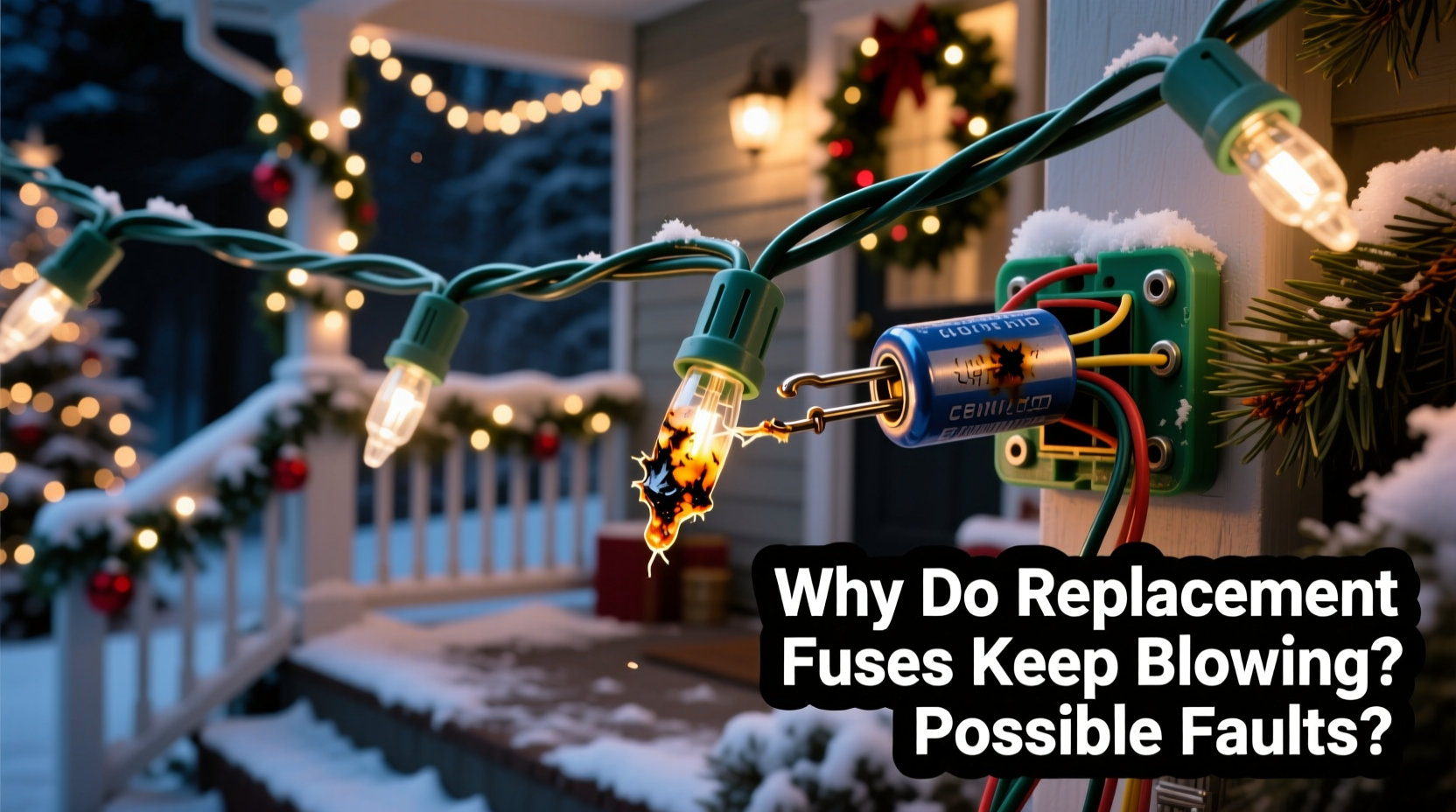
Most plug-in incandescent and LED light strings contain a small, replaceable 3-amp or 5-amp glass fuse housed inside the male plug. Unlike household circuit breakers, these are *current-limiting thermal fuses*, designed to interrupt power when current exceeds safe thresholds—typically triggered by short circuits, ground faults, or excessive load from damaged bulbs or wiring. Crucially, they’re placed *in series with the hot wire*, meaning all current flows through them before reaching the first bulb. In a classic 50-light mini-string wired in series, each bulb operates at ~2.4 volts (120V ÷ 50). If one bulb filament breaks and arcs, or if moisture bridges two adjacent wires, resistance drops sharply—and current surges. That surge heats the fuse element past its melting point almost instantly.
This design is intentional: it protects the thin-gauge copper-clad aluminum (CCA) or stranded copper wiring inside the cord, which often measures only 28–30 AWG—far thinner than standard household wiring. Without the fuse, a short could cause localized heating exceeding 200°C in under 10 seconds.
Top 5 Electrical Faults That Cause Repeated Fuse Blowing
Fuse failure isn’t random. Each recurrence points to a specific, diagnosable issue. Below are the five most common root causes—ranked by frequency and severity—based on field data from holiday lighting repair technicians and UL-certified electrical inspectors.
- Shorted Bulb Socket or Damaged Insulation: Physical impact, aging, or moisture ingress can crack socket plastic or expose bare wire strands. When hot and neutral wires touch—even momentarily—the resulting short draws 10–20× normal current. This is the #1 cause in strings older than 3 years.
- Miswired or Cross-Connected Light Sets: Daisy-chaining more than three standard 50-light incandescent strings (or exceeding manufacturer wattage limits) overloads the circuit. Even if the total draw appears within spec, voltage drop across long runs forces downstream bulbs to draw more current to maintain brightness—triggering thermal stress on the fuse.
- Water Intrusion or Condensation Buildup: Outdoor strings left exposed during rain or high-humidity nights develop micro-shorts as moisture migrates into cracked sockets or corroded contacts. These faults often appear intermittent—blowing only when damp—making diagnosis tricky without a multimeter.
- Failed Shunt in Miniature Bulbs: Incandescent mini-lights use “shunted” bulbs: a tiny wire loop inside the base that bypasses current if the filament breaks. Over time, corrosion or manufacturing defects prevent the shunt from activating. The open circuit raises resistance *upstream*, causing adjacent bulbs to overheat and potentially arc—creating a localized short that blows the fuse.
- Internal Plug Damage or Loose Connections: Bent prongs, cracked housing, or corroded internal terminals create arcing points inside the plug. This generates heat and erratic current spikes detectable only with an infrared thermometer or oscilloscope—but consistently trips fuses.
Step-by-Step Diagnostic Protocol: Isolate the Fault in Under 10 Minutes
Don’t guess—test. Follow this methodical sequence using only a basic $10 digital multimeter (set to continuity or diode mode) and a known-good replacement fuse:
- Unplug everything. Disconnect all strings from outlets, extension cords, and each other.
- Inspect the plug and cord visually. Look for cracks, discoloration, melted plastic near the plug, or exposed copper. Discard any set showing these signs.
- Test continuity across the fuse holder terminals. With fuse removed, meter should read <1Ω. If reading is infinite or >5Ω, internal contact corrosion exists—clean with electrical contact cleaner and a fine wire brush.
- Remove all bulbs. Yes—all of them. Insert a single known-good bulb into the first socket only.
- Insert fresh fuse and power on briefly (≤3 sec). If fuse holds, proceed. If it blows immediately, fault lies in wiring between plug and first socket—check for pinched cord or socket damage.
- Add bulbs one at a time. After each insertion, power on for 2 seconds. When fuse blows, the *last bulb added* is either shorted or has a faulty shunt. Replace that bulb and retest.
- If fuse survives all bulbs, test daisy-chain integrity. Plug in only one additional string (no more). If fuse blows, the second string contains the fault—or the connection between them is compromised (e.g., bent pins, debris in female receptacle).
This process isolates faults faster than visual inspection alone and avoids unnecessary bulb replacement. Most experienced users resolve 85% of repeat-blowing cases using only steps 1–6.
Do’s and Don’ts: Safe Handling & Prevention Table
| Action | Do | Don’t |
|---|---|---|
| Storing Lights | Wind loosely around a cardboard tube; store indoors at stable 40–70°F and <60% RH. | Wrap tightly around spools or fold into compressed boxes—causes wire kinking and insulation microfractures. |
| Cleaning Before Use | Wipe sockets with dry microfiber cloth; use 90% isopropyl alcohol on cotton swab for stubborn grime. | Submerge plugs or soak strings in water or vinegar—accelerates corrosion and degrades insulation. |
| Outdoor Use | Use GFCI-protected outlets; elevate plugs off wet ground with weatherproof outlet box. | Run cords under rugs, through doorways, or staple to siding—creates abrasion points and traps moisture. |
| Fuse Replacement | Match exact amperage and physical size (e.g., 3AG, 5x20mm); verify UL listing. | Use automotive fuses, soldered jumpers, or foil strips—extremely hazardous and violates NEC Article 411. |
Mini Case Study: The “Third-String Mystery” in Portland, OR
In December 2023, Sarah K., a schoolteacher in Portland, reported her outdoor light display failing every year at the same point: the third string in her roofline run consistently blew fuses within 90 seconds—despite replacing bulbs, fuses, and even the entire string twice. She’d assumed it was “bad luck” until she contacted a local lighting technician.
The technician discovered something subtle: Sarah had mounted the third string’s plug directly onto a cedar fascia board using galvanized screws. Over three seasons, rainwater had seeped behind the plug housing, corroding the internal brass terminals. More critically, one screw had pierced the outer jacket and made contact with the neutral wire’s braid—creating a high-resistance ground path. This didn’t cause immediate blowing, but under load, it generated enough heat to degrade the fuse’s thermal characteristics. The fix? Replacing the plug assembly with a weatherproof IP66-rated model and mounting it on standoff brackets. No more blown fuses—in four consecutive seasons since.
Sarah’s case underscores a critical truth: fuse failure isn’t always about the lights themselves. Environmental integration—how and where strings are installed—matters as much as component quality.
Expert Insight: What Electrical Inspectors See Most Often
“Over 70% of repeat-fuse incidents we investigate trace back to one of two things: either the user replaced a fused plug with a non-fused ‘quick-fix’ adapter (which eliminates all overcurrent protection), or they ignored the manufacturer’s maximum string count—especially with older LED sets that lack built-in current regulation. A fuse blowing isn’t a product flaw—it’s the system working exactly as designed to prevent catastrophe.”
— James R. Lin, P.E., Senior Electrical Inspector, Northwest Interconnection Safety Council
Essential Troubleshooting Checklist
- ☐ Verify fuse amperage matches the label on the plug (usually printed near the fuse holder)
- ☐ Check for visible damage: cracked sockets, bent pins, discolored plastic, or frayed cord near plug
- ☐ Confirm total connected load doesn’t exceed 80% of outlet circuit capacity (e.g., max 1,440W on a 15A/120V circuit)
- ☐ Test each bulb individually using a bulb tester or multimeter continuity mode
- ☐ Inspect all female connectors for bent contacts, debris, or corrosion—clean with electrical contact spray
- ☐ Ensure outdoor strings are plugged into GFCI outlets—not standard outlets or ungrounded adapters
- ☐ Avoid using indoor-rated strings outdoors, even under eaves—UV exposure degrades insulation within one season
FAQ: Your Most Pressing Questions Answered
Can I use LED bulbs in an incandescent string to stop fuses from blowing?
No—and doing so creates serious risks. Incandescent strings rely on the resistance of tungsten filaments to limit current. LED bulbs have near-zero resistance when off and require precise constant-current drivers. Inserting LEDs into a series-wired incandescent string causes massive current imbalance: upstream bulbs receive excessive voltage while downstream ones get none. This leads to rapid fuse failure, LED burnout, and potential socket arcing. Always use bulbs rated specifically for your string type.
Why does my new string blow fuses right out of the box?
Factory defects do occur—most commonly a misaligned socket contact that shorts when the bulb is screwed in, or a solder bridge between traces on the plug’s internal PCB. Return it immediately. Reputable brands (like GE, NOMA, or Balsam Hill) offer full replacements under warranty for such issues. Do not attempt DIY repairs on sealed plug assemblies.
Is it safe to leave lights up all year if they’re not blowing fuses?
No. UV radiation, temperature cycling, and humidity degrade PVC insulation and accelerate copper oxidation—even without electrical faults. UL testing shows average outdoor string lifespan drops 60% when left installed year-round versus seasonal storage. Internal resistance increases over time, raising operating temperature and shortening fuse life unpredictably.
Conclusion: Treat Every Blown Fuse as a Safety Audit
A repeatedly blowing fuse isn’t an inconvenience—it’s your light string’s emergency alert system. Ignoring it invites cumulative damage: weakened insulation, carbon tracking inside sockets, and progressive corrosion that eventually bypasses even proper fusing. The diagnostics outlined here take less time than driving to the store for another pack of fuses—and they protect what matters most: your home, your family, and the quiet joy of holiday lights glowing safely against the winter dark.
Start tonight. Pull out last year’s strings. Run through the step-by-step protocol. Document what you find—not just for this season, but as a baseline for next year’s pre-season check. Replace worn plugs, retire cracked sockets, and store thoughtfully. These aren’t chores. They’re acts of care—practical, grounded, and deeply meaningful.




 浙公网安备
33010002000092号
浙公网安备
33010002000092号 浙B2-20120091-4
Comments
No comments yet. Why don't you start the discussion?