
In a world that often glorifies spontaneity—impromptu trips, last-minute decisions, and free-flowing lifestyles—many people still find comfort in structure. The alarm clock at 7:00 a.m., the morning coffee ritual, the same route to work: these small repetitions may seem mundane, but they carry profound psychological weight. Routines, far from being restrictive, offer a quiet sense of safety that spontaneity rarely provides. This isn’t just about preference; it’s rooted in neuroscience, cognitive psychology, and evolutionary biology. Understanding why routines feel safer reveals much about how our minds manage uncertainty, conserve energy, and maintain emotional balance.
The Brain’s Preference for Predictability
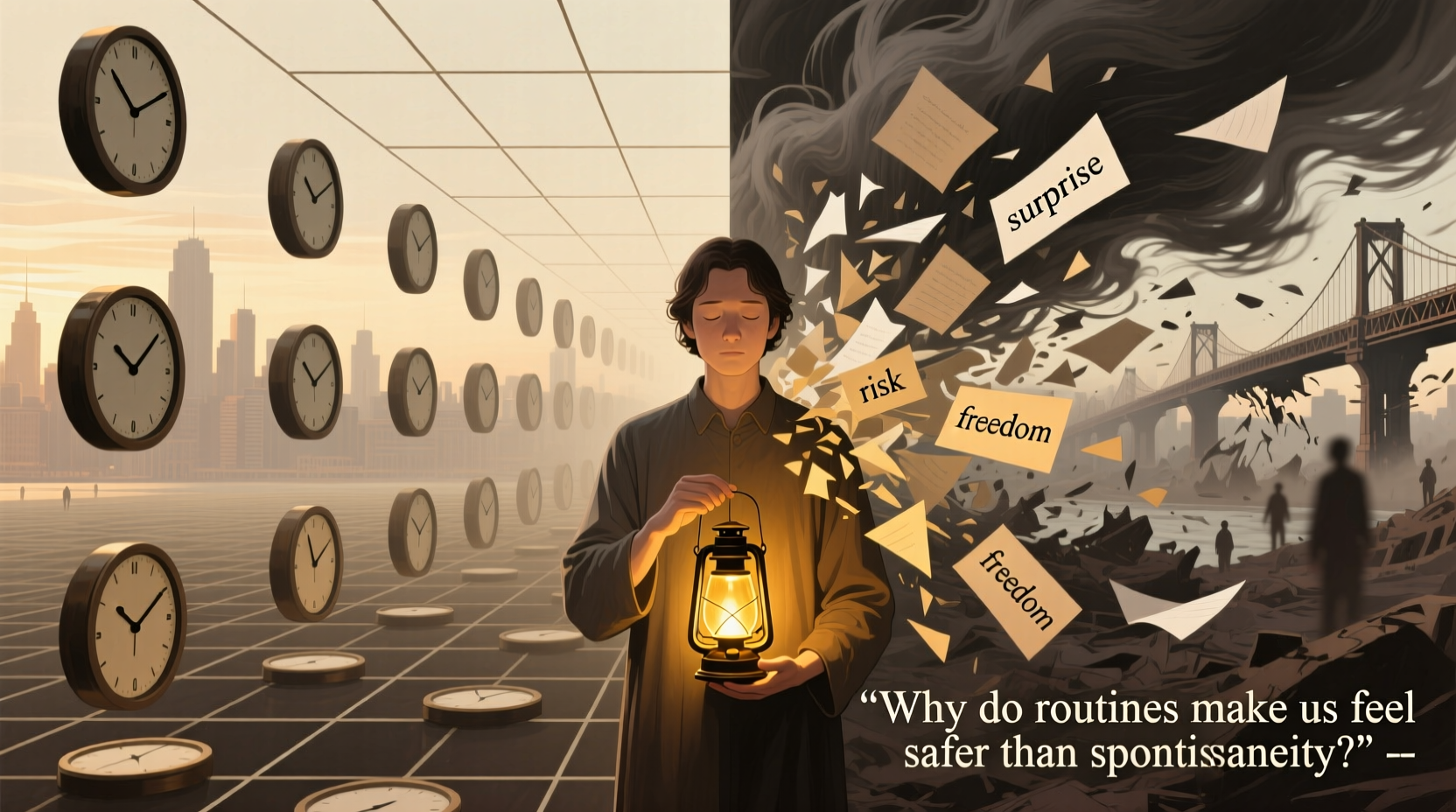
Human brains are prediction machines. From an evolutionary standpoint, survival depended on anticipating threats—knowing where food was, when predators might strike, or how weather patterns shifted. Today, while we no longer face saber-toothed tigers, our brains still operate under the same principle: predictability equals safety.
Neuroscientists have found that the brain’s basal ganglia play a crucial role in forming habits and automating behaviors. When actions become routine, the prefrontal cortex—the area responsible for decision-making and conscious thought—can relax. This shift reduces cognitive load, freeing mental resources for more complex tasks. In contrast, spontaneous decisions require constant evaluation, increasing stress hormones like cortisol.
Dr. Lisa Feldman Barrett, neuroscientist and author of How Emotions Are Made, explains:
“Our brains are constantly running simulations of the future based on past experience. When life follows a familiar pattern, the brain doesn’t need to work as hard to keep us safe. That’s why even minor disruptions—a delayed train, a changed meeting time—can trigger disproportionate stress.”
This internal simulation system thrives on consistency. Routines act as a buffer against the unknown, offering a framework within which the brain can operate efficiently and with minimal anxiety.
Emotional Stability Through Structure
Stability is not merely physical—it’s emotional. For many, especially those managing anxiety, depression, or trauma, routines serve as anchors. They provide a sense of control in an unpredictable world. A structured day doesn’t eliminate challenges, but it creates a container in which they can be managed.
Consider someone recovering from burnout. Waking up at the same time each day, eating regular meals, and scheduling focused work blocks aren’t just productivity hacks—they’re acts of self-protection. Each step reinforces a message: I am taking care of myself. I am in charge of my time and energy.
Spontaneity, by contrast, introduces variables. While exciting in theory, unplanned changes can disrupt sleep cycles, meal schedules, and social commitments. Over time, this inconsistency can erode emotional resilience. Without reliable cues—like bedtime rituals or morning movement practices—the nervous system remains in a state of low-grade alertness, making recovery from stress more difficult.
Routines vs. Spontaneity: A Balanced Comparison
It’s important to clarify that this isn’t a call to eliminate spontaneity altogether. Flexibility has its place. But understanding the trade-offs helps explain why routines feel inherently safer.
| Aspect | Routine | Spontaneity |
|---|---|---|
| Cognitive Load | Low – automatic processes reduce mental effort | High – constant decision-making required |
| Emotional Impact | Calming, grounding, stabilizing | Exciting but potentially destabilizing |
| Energy Use | Conserves willpower and focus | Drains mental reserves quickly |
| Long-Term Effects | Promotes consistency in health, work, relationships | May lead to inconsistency if overused |
| Best For | Daily functioning, recovery, focus | Creativity, adventure, novelty-seeking |
The data suggests that while spontaneity fuels inspiration, routines sustain progress. One supports bursts of joy; the other builds lasting well-being.
A Case Study: Life After Chaos
Sarah, a 34-year-old graphic designer, spent years embracing what she called “creative chaos.” She worked late into the night, skipped meals, and traveled on impulse. Initially, this lifestyle felt liberating. But over time, her anxiety spiked, her sleep deteriorated, and she began missing client deadlines.
After a panic attack during a presentation, Sarah sought therapy. Her counselor didn’t suggest eliminating creativity—instead, she recommended introducing micro-routines. They started with something simple: waking up at 7:30 a.m. every day, followed by ten minutes of stretching and a glass of water.
Within three weeks, Sarah noticed subtle shifts. She felt less groggy in the mornings. Her afternoon energy improved. She began scheduling creative work during her peak focus hours instead of burning the midnight oil. Over six months, she built a flexible but consistent structure: dedicated work blocks, scheduled walks, and a firm bedtime.
“I used to think routine would kill my creativity,” Sarah shared. “But now I realize it gave me the space to actually access it. I’m not reacting to emergencies all day. I’m choosing where to put my energy.”
Her story illustrates a key truth: routines don’t eliminate freedom—they create the conditions for sustainable freedom.
The Role of Rituals in Safety and Belonging
Beyond individual habits, collective routines reinforce safety through shared meaning. Think of family dinners, weekly religious services, or team stand-up meetings. These rituals signal belonging. They communicate: You are part of something predictable. You know what to expect here.
Anthropologist Bronisław Malinowski observed that in high-stress environments—such as fishermen venturing into dangerous waters—rituals increased significantly. Even when logic couldn’t control outcomes, ritual behavior reduced anxiety by restoring a sense of agency.
In modern workplaces, structured onboarding processes, regular check-ins, and clear feedback cycles serve a similar function. Employees report higher job satisfaction and lower turnover when routines are transparent and consistent. Uncertainty about expectations, roles, or evaluations triggers threat responses in the brain, impairing performance.
“Predictable structures don’t stifle people—they free them to innovate within a trusted framework.” — Dr. Alan Sroufe, Organizational Psychologist
Building Safer Habits: A Step-by-Step Guide
Transitioning toward more stabilizing routines doesn’t require rigid perfection. The goal is consistency, not inflexibility. Follow this sequence to build routines that enhance safety without sacrificing adaptability:
- Identify one area of instability – Is it sleep? Work focus? Emotional regulation? Choose a single starting point.
- Select a keystone habit – Pick a small, repeatable action that influences broader behavior (e.g., morning hydration supports better focus).
- Anchor it to an existing cue – Link the new habit to something you already do consistently (after brushing teeth, before checking email).
- Track for two weeks – Use a simple calendar or app to mark completion. Focus on streaks, not perfection.
- Evaluate and adjust – After 14 days, reflect: Did this reduce stress? Improve energy? Modify timing or context as needed.
- Add flexibility buffers – Plan for disruptions (travel, illness) with simplified versions of the routine (e.g., five-minute stretch instead of thirty).
This approach emphasizes sustainability over strict adherence. The safest routines are those that survive real life.
Common Misconceptions About Routine and Freedom
One major barrier to adopting routines is the belief that they equate to boredom or loss of autonomy. Yet research shows the opposite: structure enhances perceived control. A study published in the Journal of Personality and Social Psychology found that people who followed consistent daily routines reported higher levels of personal freedom and lower decision fatigue.
The confusion arises from conflating routine with rigidity. A well-designed routine includes intentional space for spontaneity. For example, scheduling “free time” every Saturday afternoon allows for unplanned activities—without derailing the rest of the week.
Think of routines as the rails on which a train runs. They don’t dictate every destination; they simply ensure the journey is smooth and safe.
Frequently Asked Questions
Does too much routine make life boring?
Not necessarily. Routines handle the predictable so your mind can engage with the novel. By automating daily tasks—like meal prep or email management—you free up attention for creative projects, deep conversations, or spontaneous adventures. The key is balancing structure with intentional openness.
Can routines help with anxiety?
Yes. Clinical studies show that structured daily schedules are effective tools in managing anxiety and mood disorders. Predictable sleep, eating, and activity patterns regulate circadian rhythms and neurotransmitter function, both of which influence emotional stability. Therapies like Cognitive Behavioral Therapy for Insomnia (CBT-I) rely heavily on routine-building techniques.
What if my job requires spontaneity?
Even dynamic professions benefit from core routines. Emergency responders, for instance, follow strict protocols despite unpredictable situations. The routine isn’t in the outcome but in the preparation: equipment checks, debriefings, rest periods. Build routines around recovery, reflection, and readiness—even if the work itself is fluid.
Action Checklist: Creating Safety Through Routine
- ☐ Identify one recurring source of daily stress or unpredictability
- ☐ Choose a small, repeatable action to address it (e.g., 5-minute evening journal)
- ☐ Attach the action to an existing habit (e.g., after dinner)
- ☐ Set a reminder or visual cue (post-it, phone alert)
- ☐ Practice for seven days without judgment
- ☐ Reflect: Did this increase your sense of control or calm?
- ☐ Adjust and expand gradually
Conclusion: Embrace Structure to Truly Be Free
Spontaneity captures the imagination, but routine sustains the human spirit. Behind every moment of creative leap or unexpected joy lies a foundation of stability—often invisible, always essential. Routines are not cages; they are containers that hold our energy, protect our focus, and preserve our peace.
In embracing structure, we don’t surrender freedom—we reclaim it from the chaos of constant decision-making and reactive living. Whether you’re navigating recovery, parenting, entrepreneurship, or creative work, a thoughtful routine offers something rare and valuable: the quiet confidence that you can handle whatever comes next.




 浙公网安备
33010002000092号
浙公网安备
33010002000092号 浙B2-20120091-4
Comments
No comments yet. Why don't you start the discussion?