
There’s something almost magical about the way a whiff of cinnamon rolls can transport you back to your grandmother’s kitchen, or how the scent of rain on dry earth evokes childhood summers. Unlike other senses, smell has an uncanny ability to unlock deeply buried memories with startling clarity. This phenomenon isn’t just poetic—it’s rooted in neuroscience. The reason why smells trigger memories so powerfully lies in the unique way our olfactory system is wired into the brain’s emotional and memory centers.
While sight, sound, and touch travel through multiple relay stations before reaching higher processing areas, smell takes a direct route. This shortcut allows odors to bypass cognitive filters and strike at the core of emotion and recollection almost instantly. Understanding this connection not only explains nostalgic flashbacks but also reveals insights into human behavior, mental health, and even therapeutic applications.
The Olfactory System: A Direct Line to Memory
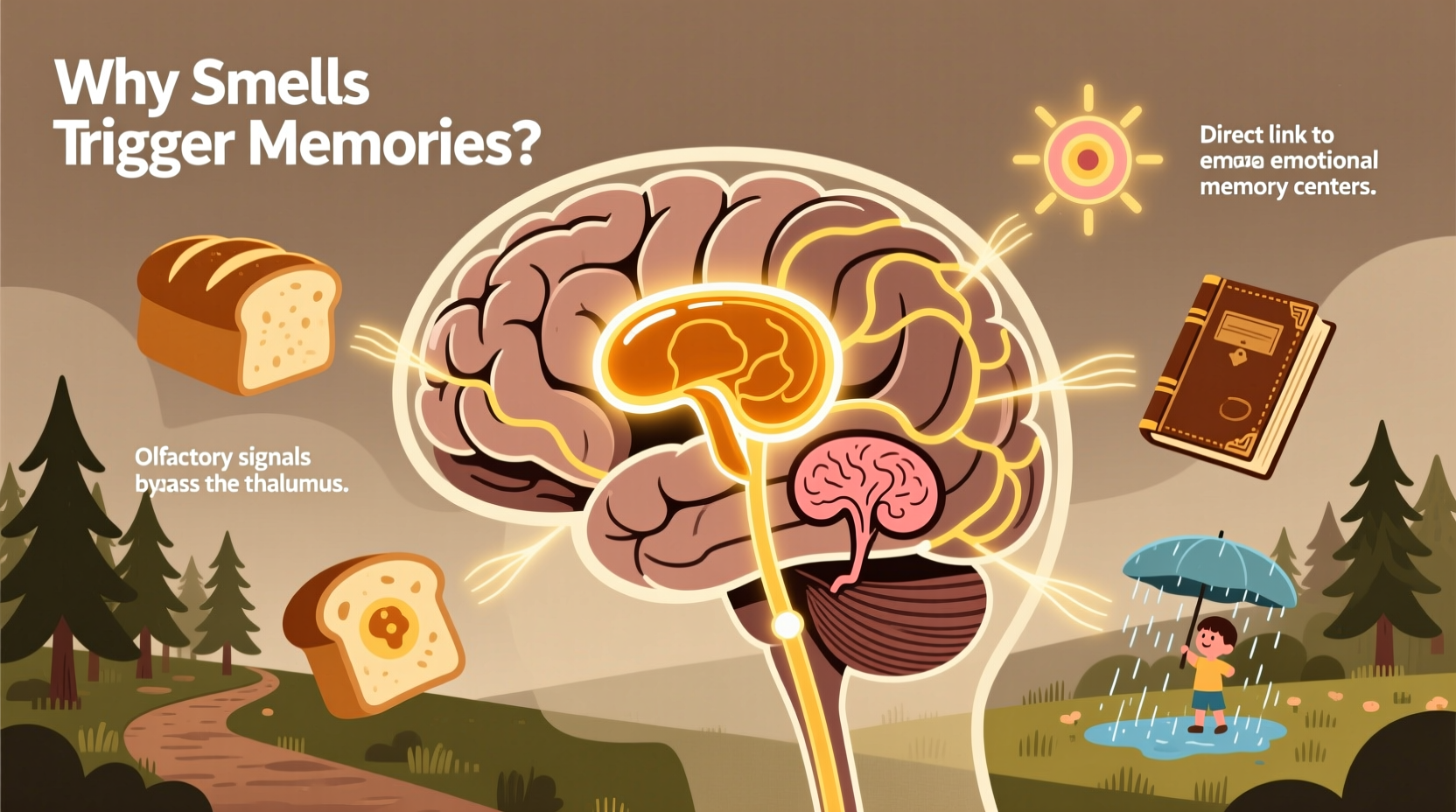
The human sense of smell begins when odor molecules enter the nasal cavity and bind to olfactory receptors. These specialized nerve cells send signals directly to the olfactory bulb, located at the base of the brain. From there, information travels to several key regions—most notably, the amygdala and hippocampus—structures deeply involved in emotion and memory formation.
This neural pathway is unique. Other sensory inputs—like vision or hearing—are first processed by the thalamus, which acts as a central relay station. Smell, however, skips this step entirely. As neuroscientist Dr. Rachel Herz explains:
“Olfaction is the only sense that has a direct synaptic connection to the limbic system. That means scent reaches the emotional brain before it even gets to the cortex where we consciously recognize it.” — Dr. Rachel Herz, Cognitive Neuroscientist and Author of *The Scent of Desire*
This anatomical distinction explains why a familiar fragrance can evoke a visceral emotional response long before you’ve intellectually identified what you’re smelling. The brain reacts emotionally first, cognitively second.
The Proustian Phenomenon: When Scents Unlock the Past
The term “Proustian moment” originates from French writer Marcel Proust’s novel *In Search of Lost Time*, in which the narrator dips a madeleine cake into tea and is suddenly overwhelmed by vivid childhood memories. This literary example has become synonymous with the powerful, involuntary recall triggered by sensory cues—especially smell.
What makes these memories different from ordinary recollections? Research shows that odor-evoked memories tend to be more emotional, detailed, and older than those triggered by sight or sound. A landmark study published in *Chemical Senses* found that participants could identify scents linked to their early life with greater accuracy and emotional intensity than visual or auditory prompts.
This effect is strongest for memories formed during childhood and adolescence—a period known as \"the reminiscence bump.\" Because many foundational experiences occur between ages 5 and 20, scents associated with this time often carry lasting emotional weight.
How the Brain Links Smell, Emotion, and Memory
The close physical proximity of the olfactory bulb to the amygdala and hippocampus isn't coincidental—it reflects evolutionary priorities. In early mammals, detecting predators, finding food, and recognizing kin depended heavily on smell. Emotional responses needed to be rapid and automatic, so the brain evolved to process scent and emotion in tandem.
When you inhale a scent, the signal reaches the amygdala within milliseconds, triggering feelings such as comfort, fear, or nostalgia. Simultaneously, the hippocampus retrieves contextual details—where you were, who was with you, what happened next. This dual activation creates a rich, multi-sensory memory package.
Moreover, because the olfactory system doesn’t habituate (become desensitized) as quickly as other senses, certain smells remain potent over decades. You might forget a person’s face, but their perfume—or the smell of campfire smoke from a family vacation—can linger in your mind indefinitely.
| Sense | Pathway to Brain | Emotional Impact | Memory Strength |
|---|---|---|---|
| Smell | Direct to limbic system | High (immediate) | Strong, emotional, long-lasting |
| Sight | Via thalamus to cortex | Moderate (processed) | Clear but less emotional |
| Hearing | Via thalamus to auditory cortex | Variable | Context-dependent |
| Taste | Mixed with smell (flavor) | High (when combined with aroma) | Moderate to strong |
The Role of Context and Association
Not all smells trigger memories equally. The strength of the association depends on context, repetition, and emotional significance. For instance, the smell of chlorine might mean nothing to someone who rarely swam, but for a competitive swimmer, it could flood the mind with competition-day nerves, locker room chatter, and post-race exhaustion.
These associations are formed through classical conditioning. If a particular scent repeatedly appears during emotionally charged events—positive or negative—it becomes encoded as part of the memory itself. Over time, re-exposure to the scent alone can reactivate the entire experience.
Practical Applications of Scent-Memory Science
Understanding the link between smell and memory isn’t just academically fascinating—it has real-world implications across psychology, healthcare, and daily life.
Therapeutic Uses in Mental Health
Clinicians are exploring olfactory cues as tools in treating PTSD, anxiety, and depression. Controlled exposure to calming scents—such as sandalwood or chamomile—during therapy sessions can create positive associations that help patients regulate emotional responses.
In dementia care, personalized scent interventions have shown promise. Patients with Alzheimer’s disease often lose access to verbal and visual memories, yet some respond remarkably to familiar odors—like coffee brewing or fresh-cut grass—experiencing brief but meaningful moments of recognition and joy.
Enhancing Learning and Focus
Students and professionals can use scent strategically to improve concentration and recall. By introducing a specific fragrance during study or creative work, then reintroducing it during testing or performance, individuals may benefit from context-dependent memory enhancement.
Marketing and Branding Strategies
Retailers and hospitality brands leverage scent-memory connections deliberately. Hotels infuse lobbies with signature fragrances; bakeries pipe the aroma of fresh bread near entrances. These scents aren’t just pleasant—they’re designed to create emotional bonds and increase customer loyalty.
“We don’t remember days, we remember moments. And scent has the power to resurrect those moments with astonishing fidelity.” — Dr. Avery Gilbert, Olfaction Scientist and Former Bell Labs Researcher
A Real-Life Example: The Power of a Forgotten Scent
Consider Sarah, a 45-year-old woman who hadn’t thought about her late father in years—until she walked past a hardware store one autumn afternoon. The sharp tang of turpentine and sawdust hit her unexpectedly. Suddenly, she was eight years old again, sitting on a wooden stool in her dad’s basement workshop, watching him refinish an old dresser. She remembered the warmth of the space heater, the radio playing country music, and the way he’d hand her scraps of sandpaper to play with.
The memory brought tears to her eyes. It wasn’t just visual—it was tactile, auditory, emotional. And it was triggered entirely by a smell she hadn’t encountered in decades. This kind of spontaneous recall illustrates how deeply embedded scent-linked memories can be, lying dormant until the right odor reactivates them.
Step-by-Step Guide: Using Scent to Strengthen Positive Memories
You can harness the power of scent intentionally to enrich your life and preserve meaningful experiences. Follow this simple process:
- Choose a meaningful event: Identify a current experience you want to remember—e.g., a vacation, a new relationship, a personal achievement.
- Select a unique scent: Pick a fragrance not commonly encountered in daily life—patchouli oil, pine essential oil, or a specific candle blend.
- Introduce the scent during the event: Use it consistently throughout—while traveling, during dates, or while celebrating.
- Store the scent properly: Keep the bottle sealed and labeled with the memory (e.g., “Hawaii Trip 2024”).
- Re-expose yourself periodically: Open the scent once a month or on anniversaries to reactivate the memory and reinforce its emotional value.
Frequently Asked Questions
Why don’t all smells trigger memories?
Only scents tied to emotionally significant or frequently repeated experiences tend to form strong memory links. Neutral or background odors—like office air or laundry detergent—rarely stand out unless they’re associated with a pivotal moment.
Can unpleasant smells also trigger memories?
Absolutely. Traumatic or stressful events often become linked to specific odors—hospital disinfectant, cigarette smoke, or gasoline. These can provoke strong negative reactions, sometimes even contributing to conditions like PTSD.
Is the smell-memory connection the same for everyone?
No. While the neurological pathway is universal, individual experiences shape which scents are meaningful. Cultural background, personal history, and even genetics influence how people perceive and respond to odors.
Actionable Checklist: Enhance Your Scent-Memory Awareness
- Identify 2–3 scents that evoke strong personal memories
- Journal the stories behind those memories for future reflection
- Create a “memory scent kit” with small vials of meaningful fragrances
- Use a consistent scent during important projects or milestones
- Share scent-related memories with loved ones to deepen emotional connections
- Explore aromatherapy for stress reduction and mood regulation
Conclusion: Awaken Your Sensory Past
The profound link between smell and memory is one of the brain’s most elegant designs—a biological bridge between past and present. It reminds us that memory isn’t purely intellectual; it’s sensory, emotional, and deeply human. By paying attention to the scents around you, you gain access to a hidden archive of lived experience.
Start noticing the fragrances in your daily life—not just for pleasure, but as potential keys to forgotten moments. Capture them intentionally. Preserve them. Let them guide you back to who you were, and perhaps, help shape who you want to become.




 浙公网安备
33010002000092号
浙公网安备
33010002000092号 浙B2-20120091-4
Comments
No comments yet. Why don't you start the discussion?