
Every holiday season, millions of homes welcome an artificial Christmas tree as a centerpiece of celebration. Unlike real trees, they’re reusable, low-maintenance, and don’t shed needles. But many people notice an unexpected downside: the branches often feel oddly “staticky” and quickly gather layers of dust. This phenomenon isn’t just a nuisance—it can affect air quality, trigger allergies, and make decorating more frustrating than festive. The root causes lie in the materials used, environmental conditions, and electrostatic principles most people rarely consider. Understanding these factors not only explains the problem but also reveals practical ways to minimize it.
The Science Behind Static Electricity in Artificial Trees
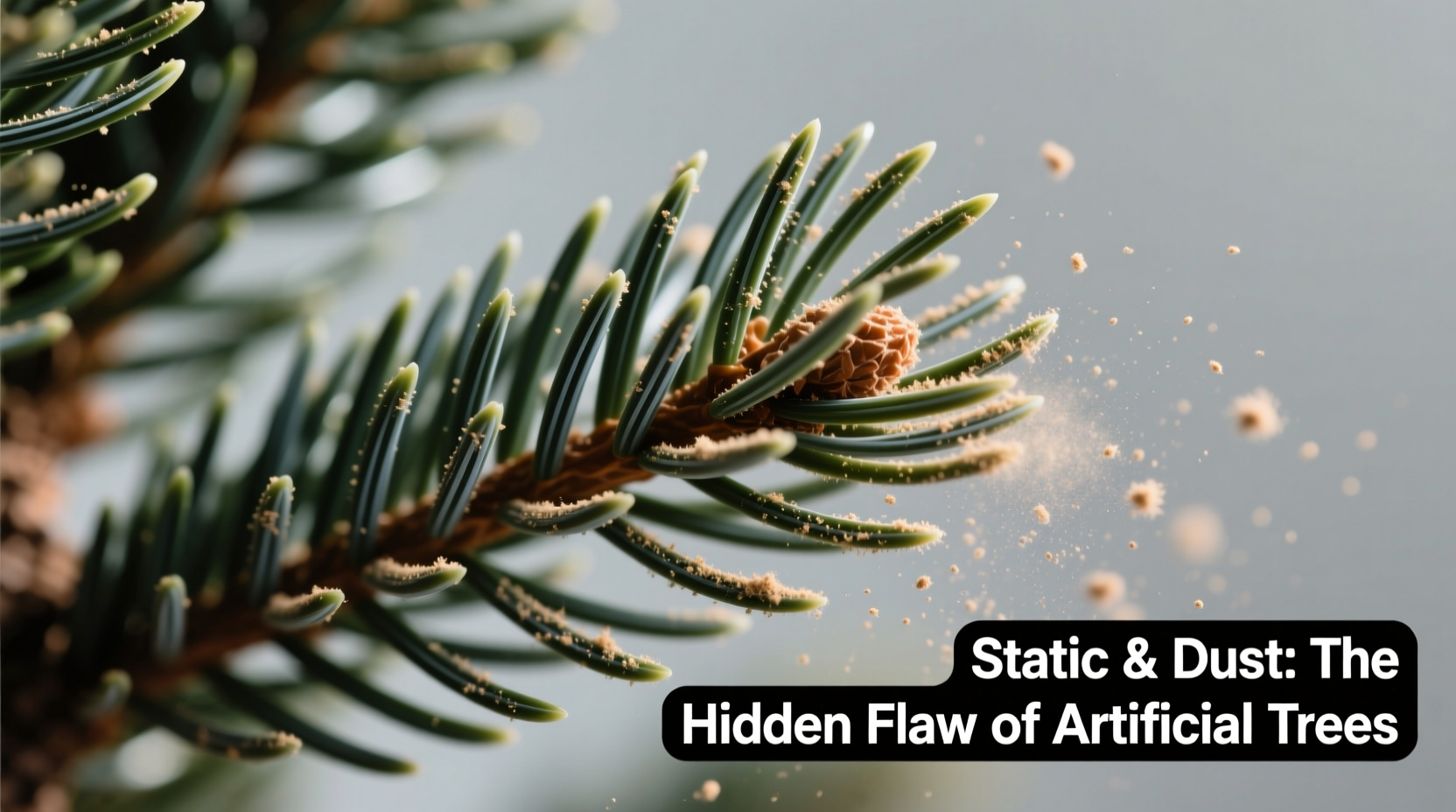
Artificial trees are typically made from polyvinyl chloride (PVC) or polyethylene (PE), both synthetic plastics known for their durability and lifelike appearance. However, these materials are also excellent insulators—meaning they resist the flow of electricity. When two insulating surfaces rub together, such as when you unpack or assemble your tree, electrons transfer between them. This creates an imbalance of electrical charge, resulting in static electricity.
This static charge builds up on the surface of the tree’s branches and needles. Since plastic doesn’t conduct electricity well, the charge has nowhere to go and remains trapped. That’s why touching the tree sometimes results in a small shock or makes your sleeve cling momentarily. More importantly, this charged surface actively attracts oppositely charged particles floating in the air—including dust.
“Static buildup on artificial trees is a classic example of triboelectric charging—the same principle behind rubbing a balloon on your hair. Once charged, the surface becomes a magnet for airborne particulates.” — Dr. Alan Reeves, Materials Physicist, University of Michigan
Why Dust Is Drawn to Charged Surfaces
Dust may seem inert, but it's composed of microscopic particles like skin cells, fabric fibers, pollen, and soot—all carrying slight electrical charges. In a home environment, dust tends to be slightly positive due to interactions with indoor air currents and household materials. A negatively charged artificial tree (which is common after assembly) will naturally attract these positively charged particles.
The effect is compounded by airflow. HVAC systems, fans, and even walking across carpet generate air movement that suspends dust. A statically charged tree acts like a passive filter, pulling in these suspended particles over time. Within days, especially in dry environments, a visible film forms on branches and tips, dulling the tree’s appearance and potentially aggravating respiratory conditions.
Environmental Factors That Worsen the Problem
Static buildup and dust accumulation aren’t inevitable—they’re heavily influenced by your home’s environment. The primary culprit? Low humidity.
During winter, indoor heating reduces relative humidity, often dropping levels below 30%. Dry air increases the likelihood of static discharge because moisture in the air normally helps dissipate electrical charges. Without it, charges build up more easily and persist longer. Homes in arid climates or those using forced-air heating systems are particularly prone to this issue.
Additionally, high-traffic areas increase dust circulation. If your tree is near a doorway, staircase, or return vent, it’s exposed to more airborne particles. Even vacuuming nearby can stir up settled dust, which then gravitates toward the nearest charged surface—your tree.
Common Risk Factors for Static and Dust Buildup
- Low indoor humidity (below 40%)
- Frequent handling during setup and decoration
- Proximity to heating vents or high-traffic zones
- Trees stored in plastic bags (traps static)
- Older trees with degraded anti-static coatings
Solutions to Reduce Static and Dust Accumulation
While you can’t eliminate static entirely from plastic-based trees, you can significantly reduce its effects with smart care and preventive measures. The goal is twofold: neutralize existing charges and create a less attractive surface for dust.
1. Use Anti-Static Sprays
Commercial anti-static sprays designed for electronics or upholstery can be lightly applied to tree branches. These products contain surfactants that leave a conductive residue, allowing charges to dissipate. Avoid overspraying—just a light pass from 12 inches away is sufficient.
2. Increase Indoor Humidity
Maintaining indoor humidity between 40% and 60% dramatically reduces static. Use a humidifier, especially in the room where the tree is displayed. Not only does this help with static, but it also improves comfort and reduces dry skin and respiratory irritation during winter.
3. Pre-Treat Before Assembly
Before assembling your tree, wipe down sections with a dryer sheet. The fabric softener residue contains cationic surfactants that neutralize static. Alternatively, mix a few drops of liquid fabric softener with water in a spray bottle and lightly mist each section—then let it dry before connecting.
4. Store Properly Off-Season
How you store your tree matters. Plastic storage bags generate friction and trap static. Instead, use breathable fabric tree bags and store in a cool, dry place away from insulation materials like fiberglass, which shed tiny charged fibers.
Step-by-Step Guide to Minimizing Static and Dust
- Unpack in a low-traffic area: Choose a garage or basement to reduce immediate dust exposure.
- Wipe down sections: Use a dryer sheet or anti-static cloth on each branch before assembly.
- Assemble slowly: Minimize rubbing by connecting sections gently—don’t force branches together.
- Humidify the room: Turn on a humidifier 24 hours before bringing the tree indoors.
- Lightly mist (optional): Spray a diluted fabric softener solution (1 tsp per quart of water) and allow to air dry.
- Decorate from top to bottom: Reduces repeated contact with lower branches, preserving any anti-static treatment.
- Use microfiber for cleaning: During the season, dust with a dry microfiber cloth to avoid scratching or generating more static.
Do’s and Don’ts: Caring for Your Artificial Tree
| Do | Don’t |
|---|---|
| Store in a breathable fabric bag | Store in sealed plastic bags |
| Use a humidifier in the display room | Place near heating vents or radiators |
| Dust with a dry microfiber cloth weekly | Use feather dusters (they scatter dust) |
| Treat with anti-static spray before decorating | Apply furniture polish or oils |
| Clean hands before handling to reduce oil transfer | Handle with lotioned or greasy hands |
Mini Case Study: The Johnson Family’s Dust-Free Tree
The Johnsons in Denver, Colorado, had struggled for years with their artificial tree turning gray by mid-December. Their home sits at high altitude with naturally dry air, and their tree stood near a hallway return vent. Each year, they’d spend hours wiping down branches before guests arrived.
In 2022, they decided to test a new approach. They purchased a compact humidifier and placed it near the tree stand, keeping humidity around 45%. Before assembly, they wiped each section with dryer sheets and lightly misted with a homemade anti-static spray. They also switched to a fabric storage bag.
The results were dramatic. Over a six-week display period, the tree accumulated less than half the dust compared to previous years. No visible layer formed, and family members with seasonal allergies reported fewer symptoms. The Johnsons now follow this routine annually, calling it their “low-dust holiday protocol.”
FAQ: Common Questions About Static and Dust on Artificial Trees
Can I wash my artificial tree?
Full washing is not recommended. Immersing PVC or PE branches in water can damage connectors and promote mold if not dried completely. Instead, spot-clean with a damp cloth and mild soap, then dry thoroughly. For deep cleaning every few years, consider professional tree cleaning services that use compressed air and anti-static treatments.
Do newer artificial trees have anti-static features?
Yes, many premium models now include built-in anti-static technology. Manufacturers apply conductive coatings during production or blend anti-static additives into the plastic. Look for terms like “anti-static,” “dust-resistant,” or “easy-care” in product descriptions. While not foolproof, these trees show significantly less static buildup than older or budget models.
Why does my tree attract more dust after I decorate it?
Ornaments, tinsel, and lights add surface area and often introduce new materials that generate or hold static. Metallic tinsel, in particular, can act as a conductor, redistributing charges across the tree. Lights generate heat, creating convection currents that pull in more airborne particles. To minimize this, choose matte-finish ornaments and LED lights, which run cooler than incandescent bulbs.
Conclusion: A Cleaner, Calmer Holiday Display
An artificial Christmas tree should bring joy—not frustration from constant dusting or surprise shocks. The staticky feel and dust attraction are predictable outcomes of material science and winter indoor conditions, but they’re far from unavoidable. By understanding how static develops and what draws dust, you can take proactive steps to maintain a cleaner, safer, and more enjoyable holiday centerpiece.
From proper storage and pre-treatment to managing indoor humidity and using the right cleaning tools, small changes yield significant results. Whether you’ve had the same tree for a decade or just bought your first one, applying these strategies ensures it stays vibrant, healthy-looking, and allergy-friendly throughout the season.




 浙公网安备
33010002000092号
浙公网安备
33010002000092号 浙B2-20120091-4
Comments
No comments yet. Why don't you start the discussion?