
Every holiday season, millions of homes welcome the familiar silhouette of a Christmas tree—though increasingly, it’s not cut from a forest but assembled from boxes in the garage. Artificial trees offer convenience, reusability, and allergy-friendly alternatives to live evergreens. Yet one frustrating experience unites many owners: finding plastic needles scattered across the floor like fallen leaves in autumn. If you’ve ever vacuumed up a confetti of synthetic pine, you’re not alone. The phenomenon of artificial needle shedding isn’t just an annoyance—it reveals important truths about materials, manufacturing quality, and care.
This behavior may seem ironic—why would a product designed to avoid the mess of real trees end up mimicking their most inconvenient trait? The answer lies in the intersection of design trade-offs, cost-cutting measures, and environmental exposure. Understanding why this happens empowers consumers to make smarter choices and extend the life of their holiday centerpiece.
The Anatomy of an Artificial Tree
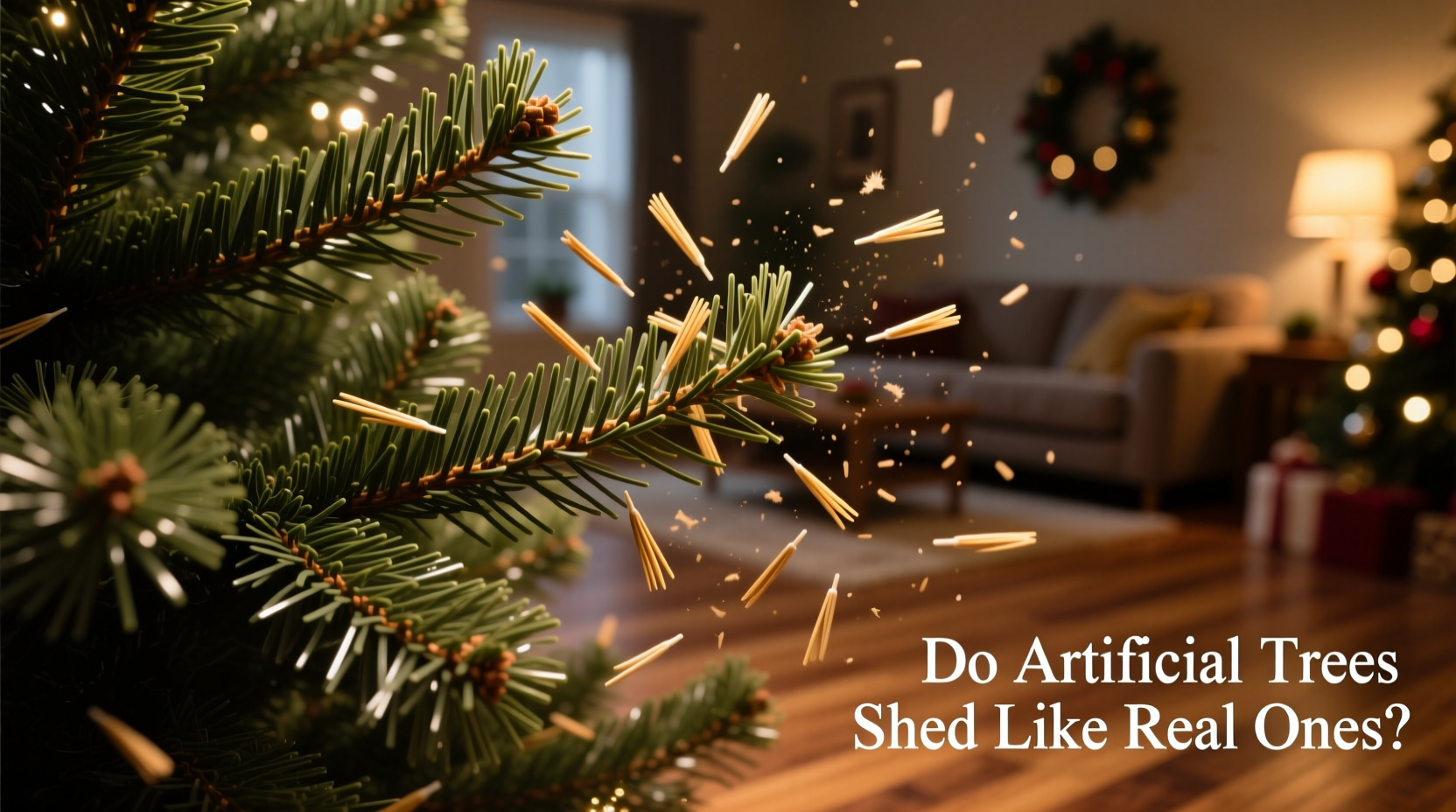
Artificial trees are typically constructed from two primary materials: polyvinyl chloride (PVC) and polyethylene (PE). Each plays a role in appearance, durability, and—unfortunately—shedding potential.
- PVC needles: Most common in budget-friendly models, PVC is molded into thin, flexible fronds attached to metal or plastic stems. While cost-effective, PVC becomes brittle over time, especially when exposed to heat, sunlight, or dry air.
- PE needles: Higher-end trees use polyethylene, which is injection-molded to replicate real foliage with greater realism. PE is more flexible and resilient, less prone to cracking or detaching under stress.
The method of attachment also matters. Lower-quality trees often use simple crimping or friction-fit techniques to secure branches into sockets on the central pole. These connections can loosen during assembly, transport, or storage. Over time, repeated setup and takedown wear down both the branch connectors and the trunk sleeves, increasing instability.
“Many people assume artificial means indestructible. But plastics degrade—especially when stored improperly or subjected to thermal cycling.” — Dr. Lena Pruitt, Materials Scientist, Sustainable Home Goods Institute
Why Shedding Happens: Five Key Causes
Unlike real trees, which drop needles due to dehydration, artificial shedding results from mechanical failure, material fatigue, or poor construction. Here are the top five reasons why fake needles fall off.
1. Material Degradation from Environmental Exposure
PVC degrades when exposed to ultraviolet light, high temperatures, and low humidity. Even indoor lighting—especially halogen or LED spotlights—can generate enough heat over weeks to weaken plastic fibers. Rooms near fireplaces, vents, or sunny windows accelerate this process. Once micro-cracks form at the base of a needle cluster, entire sections can snap off with minimal handling.
2. Poor Manufacturing Standards
Budget models often prioritize speed and low cost over longevity. Needles may be loosely glued, inadequately fused, or poorly aligned during production. In mass-produced trees, quality control varies widely. A single defective batch can result in widespread shedding complaints, even if other units perform well.
3. Repeated Assembly and Disassembly
Each time an artificial tree is taken apart and reassembled, its components endure stress. Hinges, branch arms, and connection points flex beyond their intended range. After several seasons, cumulative strain leads to loosening joints and broken attachments. Trees with hundreds of individual branches compound this risk significantly.
4. Improper Storage Conditions
Storing a tree in a damp basement, hot attic, or compressed bag introduces conditions that promote brittleness and mold growth. Moisture weakens adhesives; heat warps plastic; tight folding creates permanent creases in branch stems. All contribute to premature breakdown.
5. Design Flaws in Branch Construction
Some trees use \"hinged branch\" systems for faster setup. While convenient, these rely on small plastic pins or clips that degrade faster than rigid inserts. Similarly, overly dense foliage increases visual appeal but adds weight, straining support structures and making detachment more likely.
How to Choose a Low-Shedding Artificial Tree
Not all artificial trees are created equal. Investing in a higher-quality model reduces shedding risk and increases overall satisfaction. Consider these factors before purchasing.
| Feature | Recommended Choice | Avoid If Possible |
|---|---|---|
| Needle Material | Polyethylene (PE) | PVC-only construction |
| Branch Attachment | Metal hinge or screw-in system | Frayed wire or loose socket fit |
| Tree Type | Pre-lit with UL certification | Non-certified electrical components |
| Foliage Density | Balanced fullness (not overcrowded) | Extremely dense tips with no airflow |
| Warranty | Minimum 2-year limited warranty | No warranty or vague coverage |
Look for terms like “premium,” “lifetime branch retention,” or “non-shedding guarantee” in product descriptions—but verify reviews independently. Retailers sometimes exaggerate claims. Third-party testing sites and consumer forums often reveal patterns missed in official marketing.
Step-by-Step Guide to Minimize Shedding Over Time
Even the best-made tree requires proper handling. Follow this timeline each year to preserve structural integrity and reduce needle loss.
- Before Unboxing (Early November): Inspect storage container for signs of moisture, pests, or deformation. Allow tree to acclimate indoors for 24 hours before assembly to prevent thermal shock.
- During Assembly: Handle branches gently. Rotate each section clockwise into place without forcing. Check alignment before tightening collar bolts. Avoid hanging heavy ornaments early in setup.
- Mid-Season Maintenance: Dust lightly with a microfiber cloth or soft brush. Do not use water or chemical cleaners unless specified by manufacturer. Check lights for overheating bulbs.
- Takedown (After New Year):
- Remove ornaments and lights carefully.
- Fold branches in reverse order of assembly.
- Use original compartment dividers or stackable bins to prevent crushing.
- Storage Preparation: Ensure tree is completely dry. Place silica gel packets inside storage bags to absorb ambient moisture. Label sections clearly for next season.
Real Example: A Family's Frustrating Holiday Experience
The Reynolds family bought a popular 7.5-foot pre-lit tree from a big-box retailer in 2019. Priced under $150, it promised “full-bodied pine look” and hassle-free setup. For the first two years, it performed well—minimal shedding, consistent lighting. But by the third holiday season, they noticed green specks accumulating around the base.
By December 15th, vacuuming became a daily chore. Close inspection revealed that dozens of PVC needle clusters were snapping at the stem. Further disassembly showed worn socket fittings on the main pole—some nearly split open. Despite contacting customer service, the warranty had expired, and replacement parts weren’t available.
They replaced it in 2023 with a pricier PE-model costing $320—but included a 10-year warranty and modular branch design. Now in their second season with the new tree, shedding is virtually nonexistent. Their lesson? “You don’t realize how much stress a tree goes through until it starts falling apart,” says Mark Reynolds. “We should’ve invested sooner.”
Expert Tips for Long-Term Tree Care
Extending the life of an artificial tree isn't complicated—but it does require consistency. Industry professionals emphasize proactive habits over reactive fixes.
“The first sign of shedding isn’t on the floor—it’s in how easily branches detach. Test them early.” — Clara Nguyen, Holiday Decor Specialist, Midwest Home Styling Co.
Checklist: Annual Artificial Tree Maintenance Routine
- ✅ Inspect storage container condition
- ✅ Acclimate tree indoors before assembly
- ✅ Examine all branch connections for cracks or looseness
- ✅ Test light strings for flickering or hot spots
- ✅ Dust foliage mid-season with dry cloth
- ✅ Disassemble in correct sequence
- ✅ Store in upright, ventilated container with desiccants
- ✅ Note any damage for future reference or warranty claims
Frequently Asked Questions
Is some shedding normal for artificial trees?
A minimal number of loose tips during the first setup may occur due to transit vibration, especially in boxed shipments. However, ongoing or significant shedding throughout the season is not normal and indicates either poor quality or improper care.
Can I repair a shedding artificial tree?
Limited repairs are possible. Use clear epoxy glue to reattach broken branch stems or reinforce cracked sockets. Replace damaged sections if the manufacturer offers spare parts. However, widespread degradation usually means replacement is more cost-effective than restoration.
Do pre-lit trees shed more than unlit ones?
Not inherently. Pre-lit trees don’t shed more because of wiring—but lower-quality pre-lit models dominate the budget market. Higher-end lit trees often have superior construction. The key factor is build quality, not whether lights are integrated.
Conclusion: Make Your Tree Last Beyond the Season
An artificial tree should be a long-term companion, not a disposable decoration. Shedding fake needles isn’t inevitable—it’s a warning sign of compromised materials or mishandling. By understanding the causes and adopting better selection and maintenance practices, homeowners can enjoy lush, clean, and enduring holiday displays for a decade or more.
The holidays are fleeting, but traditions don’t have to be fragile. With informed choices and consistent care, your artificial tree can stand proudly year after year—without leaving a trail behind.




 浙公网安备
33010002000092号
浙公网安备
33010002000092号 浙B2-20120091-4
Comments
No comments yet. Why don't you start the discussion?