
Every holiday season, millions of households across the world unpack their artificial Christmas trees, ready to bring festive cheer indoors. But for many, that excitement is quickly dampened by a sharp, unpleasant odor—like plastic, vinyl, or industrial solvents—rising from the branches. This chemical smell isn’t just annoying; it can trigger headaches, respiratory irritation, or allergic reactions in sensitive individuals. So why do these trees smell so strongly, and more importantly, what can you do about it? The answers lie in manufacturing materials, storage conditions, and proper airing techniques.
Artificial trees are designed for longevity, but their convenience often comes at an olfactory cost. Understanding the source of the smell allows you to take proactive steps—not only to eliminate it, but also to protect your indoor air quality during one of the most cherished times of the year.
The Chemistry Behind the Smell
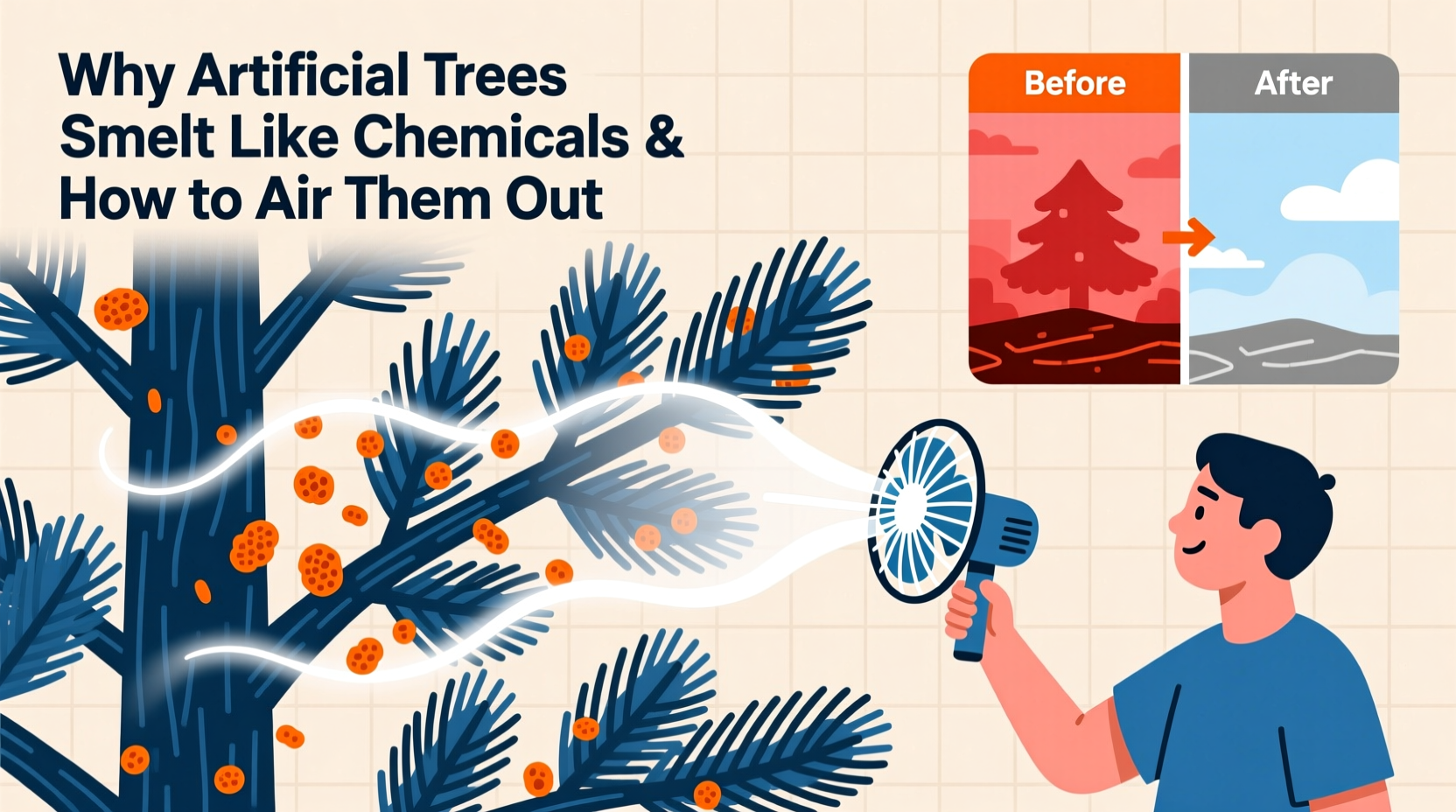
Most artificial Christmas trees are made primarily from polyvinyl chloride (PVC), a durable synthetic plastic widely used in construction, packaging, and consumer goods. While PVC itself is odorless, the additives used to make it flexible, flame-resistant, and color-stable are not. Phthalates, which act as plasticizers, are commonly added to soften rigid PVC into pliable foliage. These compounds can off-gas volatile organic compounds (VOCs) over time, especially when first exposed to air after long-term storage.
In addition to phthalates, manufacturers may apply flame retardants such as antimony trioxide or chlorinated paraffins to meet fire safety standards. These substances can emit a metallic or sour odor when warmed or disturbed. Residual mold release agents—used in factories to help remove molded parts from molds—can also linger on branch tips and trunks, contributing to the overall scent profile.
“New or stored artificial trees can release measurable levels of VOCs, particularly in poorly ventilated spaces. The concentration typically peaks within the first 72 hours after setup.” — Dr. Lena Pruitt, Indoor Air Quality Researcher, National Institute of Environmental Health Sciences
The intensity of the smell varies depending on several factors: the tree’s age, storage environment, country of manufacture, and even batch-specific formulations. Trees manufactured overseas, especially before stricter EU and U.S. regulations were enforced, tend to have higher concentrations of unregulated additives, leading to stronger odors.
How Storage Affects Odor Intensity
Where and how you store your artificial tree between seasons plays a major role in how strong it smells when unpacked. Trees kept in damp basements, humid garages, or non-breathable plastic bags are more likely to absorb musty scents and retain trapped VOCs. Moisture encourages mildew growth, which reacts with plastic components to create a pungent blend of decay and chemicals.
Conversely, trees stored in cool, dry, well-ventilated areas using breathable cotton or mesh storage bags tend to off-gas less upon reuse. However, even properly stored trees will emit some odor due to the natural reactivation of residual chemicals once exposed to room temperature and airflow.
Step-by-Step Guide to Air Out Your Artificial Tree
Airing out your artificial tree effectively requires patience, strategy, and attention to environmental conditions. Follow this timeline-based method to minimize odor while protecting your home’s air quality.
- Unpack Outside (Day 1): Open the tree box or storage container in a garage, patio, or sheltered outdoor area. Avoid doing this indoors, especially in small rooms or near HVAC intakes.
- Disassemble and Shake (Day 1–2): Take apart each section and shake vigorously to release dust and trapped gases. Use a soft brush or microfiber cloth to wipe down metal poles and heavy branch clusters.
- Use Fans for Circulation (Days 2–4): Set up oscillating fans around the tree to accelerate air movement. Position them to blow across—not directly at—the branches to prevent bending.
- Add Activated Charcoal or Baking Soda (Optional, Days 3–5): Place bowls of activated charcoal or open boxes of baking soda near the base. These materials absorb VOCs and neutralize odors passively.
- Test Indoors Gradually (Day 5+): After initial airing, move one section inside for 6–8 hours. If no noticeable odor remains, proceed with full assembly. Otherwise, repeat outdoor ventilation.
- Run an Air Purifier Indoors (Ongoing): Once assembled, operate a HEPA + carbon-filter air purifier nearby for at least 48 hours to capture lingering particles and gases.
This process typically takes 5 to 7 days for older or heavily scented trees. Newer models may require only 2–3 days if pre-aired by the manufacturer.
Do’s and Don’ts When Dealing with Chemical Smells
| Action | Recommended? | Reason |
|---|---|---|
| Using essential oils to mask the smell | No | Oils can react with plasticizers and worsen off-gassing; masking doesn't eliminate VOCs. |
| Washing branches with water | Limited | Only safe for removable tips; excess moisture risks rust and mold. |
| Vacuuming with a brush attachment | Yes | Removes dust and surface contaminants without damaging foliage. |
| Using ozone generators | No | Ozone is a lung irritant and can degrade PVC faster, increasing emissions. |
| Exposing to sunlight briefly | Yes (with caution) | UV light helps break down VOCs, but prolonged exposure fades green pigment. |
Real Example: A Family’s Holiday Near-Miss
The Ramirez family in Denver purchased a new pre-lit artificial tree online ahead of the 2023 holidays. Excited to decorate early, they assembled it in their living room immediately upon delivery. Within hours, both children began complaining of headaches and nasal irritation. Their youngest, who has asthma, developed a persistent cough.
After ruling out allergies and checking smoke detectors (which showed elevated CO levels due to confusion with VOC sensors), they contacted a local environmental health consultant. The investigation revealed high concentrations of benzene derivatives and phthalate esters emanating from the tree’s PVC needles. The family moved the tree to their detached garage, set up fans, and aired it for six days before bringing it back indoors—with an air purifier running continuously.
When reinstalled, no symptoms returned. “We didn’t realize something meant to bring joy could affect our health,” said Maria Ramirez. “Now we air out every seasonal decoration—even wreaths and garlands.”
Long-Term Solutions and Prevention Checklist
If you're tired of battling fumes year after year, consider upgrading your approach. Here's a checklist to reduce or eliminate chemical odors from artificial trees going forward:
- ✅ Choose PVC-free alternatives like PE (polyethylene) trees, which tend to have lower VOC emissions.
- ✅ Look for certifications such as “low-VOC,” “phthalate-free,” or compliance with California Proposition 65.
- ✅ Purchase trees labeled as “pre-aired” or “eco-friendly”—some brands now treat products post-manufacture to reduce off-gassing.
- ✅ Store your tree annually in a climate-controlled space with good airflow.
- ✅ Clean and inspect branches before storage to prevent mold buildup.
- ✅ Invest in a portable air quality monitor (e.g., Awair or uHoo) to detect VOC spikes during setup.
While no artificial tree is completely inert, newer manufacturing practices are shifting toward safer materials. Some European and North American brands now use bio-based polymers or recyclable polyethylene blends that mimic real pine more closely—and smell far less.
Frequently Asked Questions
Can the chemical smell from an artificial tree make you sick?
Yes, in sensitive individuals. VOCs such as phthalates and chlorine-based flame retardants can cause short-term effects like dizziness, nausea, throat irritation, and exacerbation of asthma or allergies. Long-term exposure in poorly ventilated areas may pose additional health risks, though typical seasonal use is generally considered low-risk by public health agencies.
How long does it take for an artificial tree to stop smelling?
Most trees significantly reduce their odor within 3 to 7 days of continuous ventilation. Older trees usually off-gas less over time, but improper storage can reintroduce smells. If the odor persists beyond two weeks despite airing, the tree may be contaminated with mold or degraded plastics and should be inspected or replaced.
Are there truly \"non-toxic\" artificial trees available?
While no tree is entirely free of synthetic materials, certain models are marketed as low-emission or eco-conscious. Look for those made from PE instead of PVC, labeled phthalate-free, or tested for indoor air quality compliance. Note that “non-toxic” is not a regulated term, so verify claims through third-party certifications or material safety data sheets (MSDS).
Protect Your Home and Enjoy the Holidays Fully
An artificial Christmas tree should enhance your holiday experience—not compromise your comfort or health. The chemical odors they emit stem from real materials used in production, but they are manageable with informed care. By understanding the sources of the smell and applying proven airing techniques, you can enjoy a festive, fresh-smelling home without the side effects of industrial off-gassing.
Start early. Ventilate thoroughly. Store wisely. And don’t assume last year’s routine will suffice—each season brings new exposures and opportunities for improvement. With a little planning, your tree can become a symbol of tradition, safety, and joy—not a source of sneezes and headaches.




 浙公网安备
33010002000092号
浙公网安备
33010002000092号 浙B2-20120091-4
Comments
No comments yet. Why don't you start the discussion?