
There’s nothing more disappointing than stepping outside on a crisp winter morning to find your once-jolly inflatable Santa flat on the lawn. What was a festive centerpiece just hours ago now lies deflated, damp, and defeated. You’re not alone—thousands of holiday decorators face this issue every year. While it might seem like bad luck or faulty equipment, most overnight deflation stems from predictable, repairable causes. Understanding these issues can save you time, money, and seasonal frustration.
Christmas inflatables rely on continuous airflow from an internal fan to maintain their shape. Unlike balloons that hold air statically, inflatables are designed to circulate air constantly. When they lose pressure, it's typically due to disruptions in this airflow—either from physical damage, environmental stress, or mechanical failure. This article breaks down the most common reasons behind deflation, how to diagnose them, and what you can do to keep your display standing strong through the season.
How Inflatables Work: The Role of Continuous Airflow
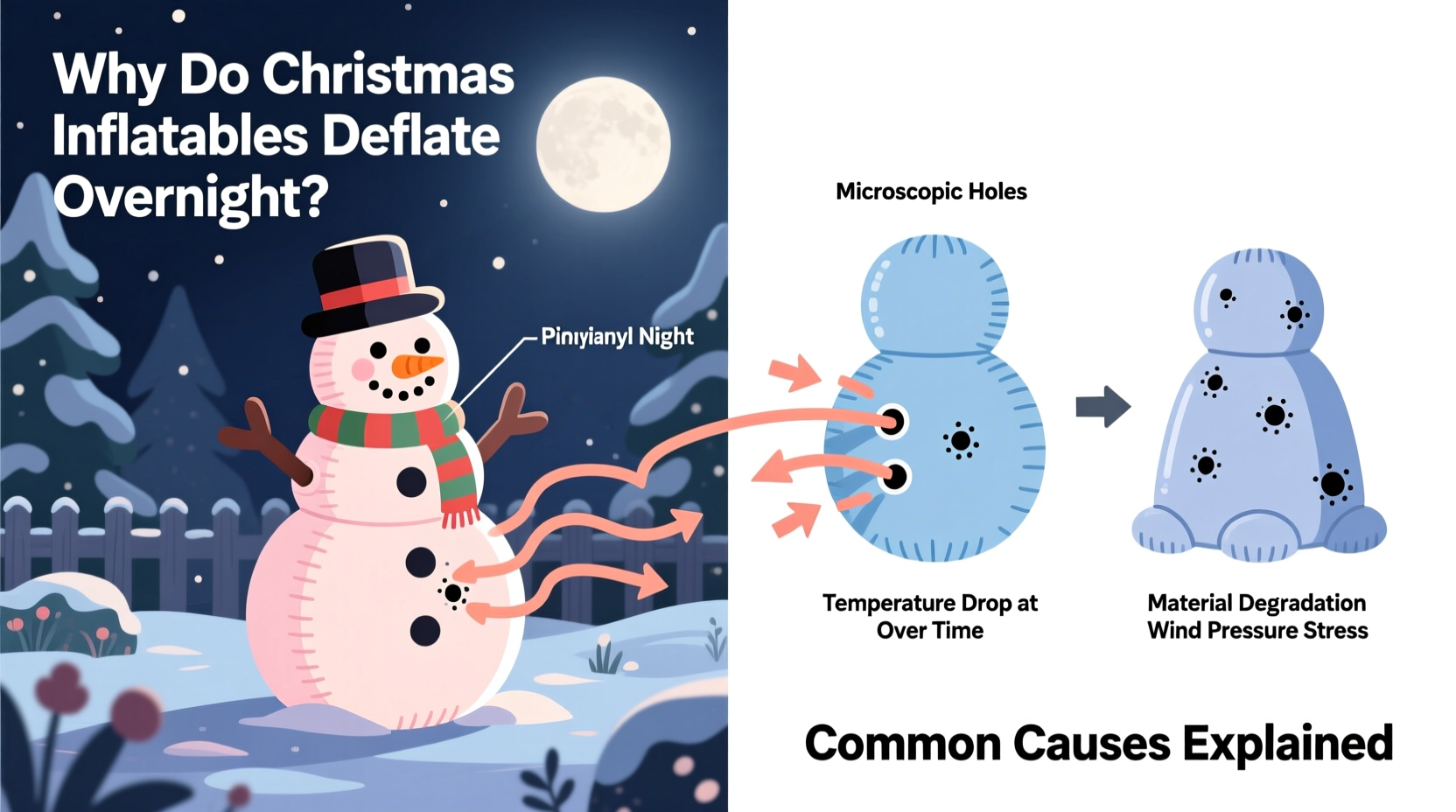
Unlike traditional balloons or bouncy castles that trap air, modern holiday inflatables use small electric fans built into their base or seam. These fans pull in ambient air and push it into sealed chambers within the fabric structure. As long as power is supplied and no major breaches exist, the internal pressure keeps the figure upright and rigid.
The system operates on a balance: air enters steadily, while minimal leakage around seams or stitching is normal and compensated for by the fan’s output. But when a tear, puncture, or disconnection occurs, the rate of air loss exceeds the fan’s ability to replenish it. That imbalance leads to partial or complete collapse—often overnight, when temperature drops increase material contraction and wind stress peaks.
“Most deflation isn’t a sign of poor quality—it’s about exposure and wear. A well-maintained inflatable can last five years or more, even with nightly inflation.” — Daniel Reeves, Seasonal Lighting & Display Technician, 12-year industry veteran
Common Causes of Overnight Deflation
1. Punctures and Tears in the Fabric
The most frequent culprit is physical damage. Even a tiny hole—smaller than a pinprick—can cause significant air loss over several hours. Sharp twigs, pet claws, garden tools, or accidental foot traffic during setup can all create micro-tears. These often go unnoticed until the next morning when the figure fails to reinflate properly.
Fabric fatigue also plays a role. After multiple seasons of folding, packing, and exposure to UV rays, the vinyl or polyester material becomes brittle. Cold temperatures exacerbate this, making cracks more likely during deployment.
2. Loose or Disconnected Fan Units
The fan is the heart of any inflatable. If it becomes disconnected from the internal ductwork, even slightly, air escapes before reaching the main chamber. This commonly happens if the unit is dropped, packed too tightly, or subjected to strong gusts that shift its position.
Sometimes, the fan remains powered and appears to be working (you’ll hear the motor), but because the air hose has slipped off or torn, none of that airflow reaches the body. This creates the illusion of a “mystery leak” when the real issue is mechanical misalignment.
3. Failed Seams and Stitching
Over time, stitched seams can unravel due to repeated expansion and contraction. Heat from sunlight during the day followed by freezing nights causes materials to flex repeatedly, weakening thread bonds. Water trapped in folds can freeze and expand, further stressing connections.
Seam failure often starts at high-tension zones—such as where limbs meet the torso in character inflatables. Once a stitch pops, the tear tends to propagate quickly under pressure.
4. Zipper or Closure Gaps
Many larger inflatables feature access zippers for fan maintenance or storage. These zippers must be fully closed and sometimes taped or sealed to prevent air escape. If left partially open—or if debris like leaves or ice block the zipper track—air leaks occur silently throughout the night.
5. Environmental Factors
Cold air is denser and contracts, reducing internal pressure. Wind creates negative pressure on the leeward side of inflatables, increasing strain on weak spots. Moisture from rain or snow can seep into fabric layers, adding weight and promoting mold that degrades material integrity.
In extreme cases, heavy snow accumulation can physically compress lower chambers, overwhelming the fan’s capacity to maintain shape—even without a leak.
Step-by-Step Guide: Diagnosing and Fixing Leaks
Before replacing or discarding a deflating inflatable, follow this systematic process to locate and repair the issue.
- Unpack and inspect dry. Lay the inflatable flat in a clean, dry area. Look for obvious tears, scuff marks, or loose threads.
- Inflate indoors temporarily. Plug it in inside your garage or basement to observe behavior without weather interference.
- Listen closely. Walk around the unit while it runs. Hissing sounds indicate air escaping—follow the noise to its source.
- Use the soapy water test. Mix dish soap and water in a spray bottle. Lightly mist suspected areas. Bubbles will form where air is leaking.
- Check all connections. Ensure the fan nozzle is fully inserted into the intake port and secured with Velcro or clips.
- Examine zippers and vents. Confirm all closures are tight. Seal non-essential vents with waterproof tape if needed.
- Test overnight. Once repaired, run a 12-hour trial indoors to confirm stability.
Tips for Preventing Future Deflation
Proactive care extends the life of your inflatables and reduces mid-season failures. Implement these strategies early in the season.
- Anchor securely with stakes or sandbags to reduce flapping in wind.
- Elevate off wet ground using a tarp or platform to avoid water absorption.
- Turn off during severe storms or high winds to limit stress.
- Clean gently with mild soap and water before storage; never use harsh detergents.
- Keep pets and children from playing near active displays.
Repair Checklist: Restore Your Inflatable in Under an Hour
🔧 Inflatable Repair Checklist
- ✅ Unplug and fully deflate the unit
- ✅ Perform visual inspection for tears, fraying, or detached parts
- ✅ Reconnect fan hose securely; check for cracks in the duct
- ✅ Seal small holes with vinyl repair patch kit (heat-activated or adhesive)
- ✅ Reinforce split seams with waterproof tape or sewing (for fabric models)
- ✅ Test inflate indoors and perform bubble test
- ✅ Reinstall outdoors with proper anchoring and elevation
Do’s and Don’ts of Inflatable Maintenance
| Do | Don’t |
|---|---|
| Use manufacturer-recommended repair kits | Apply duct tape permanently (it damages fabric over time) |
| Store clean and completely dry | Fold sharply—creates weak crease lines |
| Inspect annually for wear and UV damage | Leave outdoors year-round |
| Anchor against wind with proper stakes | Ignore minor hissing—it will worsen |
| Run test cycles before permanent setup | Overinflate using modified fans or boosters |
Real Example: How One Family Saved Their 8-Foot Reindeer
The Thompson family in Wisconsin had grown attached to their 8-foot inflatable reindeer, which had graced their yard for seven consecutive Christmases. Last December, it began deflating every two to three nights. Assuming it was worn out, they nearly discarded it—until their teenage son, a robotics club member, suggested testing it with soapy water.
After inflating it in the garage, they sprayed the neck joint and immediately saw bubbles forming near the seam. A half-inch separation had developed where the head met the body. Using a heat-seal repair kit borrowed from a neighbor’s pool liner kit, they fused the gap. They also added grommeted tie-downs to reduce wind sway. Since then, the reindeer has remained fully inflated throughout the season—with no further issues.
This case highlights how a small, overlooked flaw can mimic total failure—and how simple diagnostics can extend the life of beloved decorations.
Frequently Asked Questions
Can I leave my inflatable up all winter?
While possible, it’s not recommended. Prolonged exposure to snow, ice, UV radiation, and temperature swings accelerates wear. For best results, display only during the holiday window (late November to early January) and store promptly afterward.
Why does my inflatable work fine one night but fail the next?
Intermittent failure often ties to weather changes. A drop in temperature increases air density and contraction. Wind patterns may shift, placing new stress on weak seams. Also, moisture infiltration overnight can temporarily block airflow or add weight. Consistent performance indoors suggests environmental triggers outdoors.
Are newer inflatables less prone to leaks?
Higher-end models use reinforced stitching, double-layered vinyl, and better fan seals, reducing failure rates. However, even premium units suffer from improper storage or storm damage. Build quality helps, but maintenance matters more over time.
Final Thoughts: Keep the Holiday Spirit Aloft
A deflated inflatable doesn’t mean the end of your holiday display—it’s often a solvable problem hiding in plain sight. By understanding how these decorations function and what compromises their integrity, you can troubleshoot efficiently and enjoy reliable performance year after year.
From routine inspections to smart storage and timely repairs, a little attention goes a long way. These festive figures bring joy to neighborhoods and families; preserving them is part of keeping traditions alive. Don’t let a single leak dim your lights or flatten your cheer.




 浙公网安备
33010002000092号
浙公网安备
33010002000092号 浙B2-20120091-4
Comments
No comments yet. Why don't you start the discussion?