
As holiday decorations go up each winter, many homeowners notice a curious detail: some strands of Christmas lights feel warm—or even hot—after hours of use, while others remain cool to the touch. This isn’t just a matter of comfort or curiosity—it can signal differences in energy efficiency, safety, and longevity. Understanding what causes this variation helps you make smarter choices when decorating, reduce fire risks, and lower electricity bills.
The answer lies in the type of bulb technology used, the electrical design of the string, and how efficiently energy is converted into light rather than heat. Not all Christmas lights are created equal, and knowing the science behind their operation empowers you to decorate safely and sustainably.
How Christmas Lights Convert Electricity Into Light (and Heat)
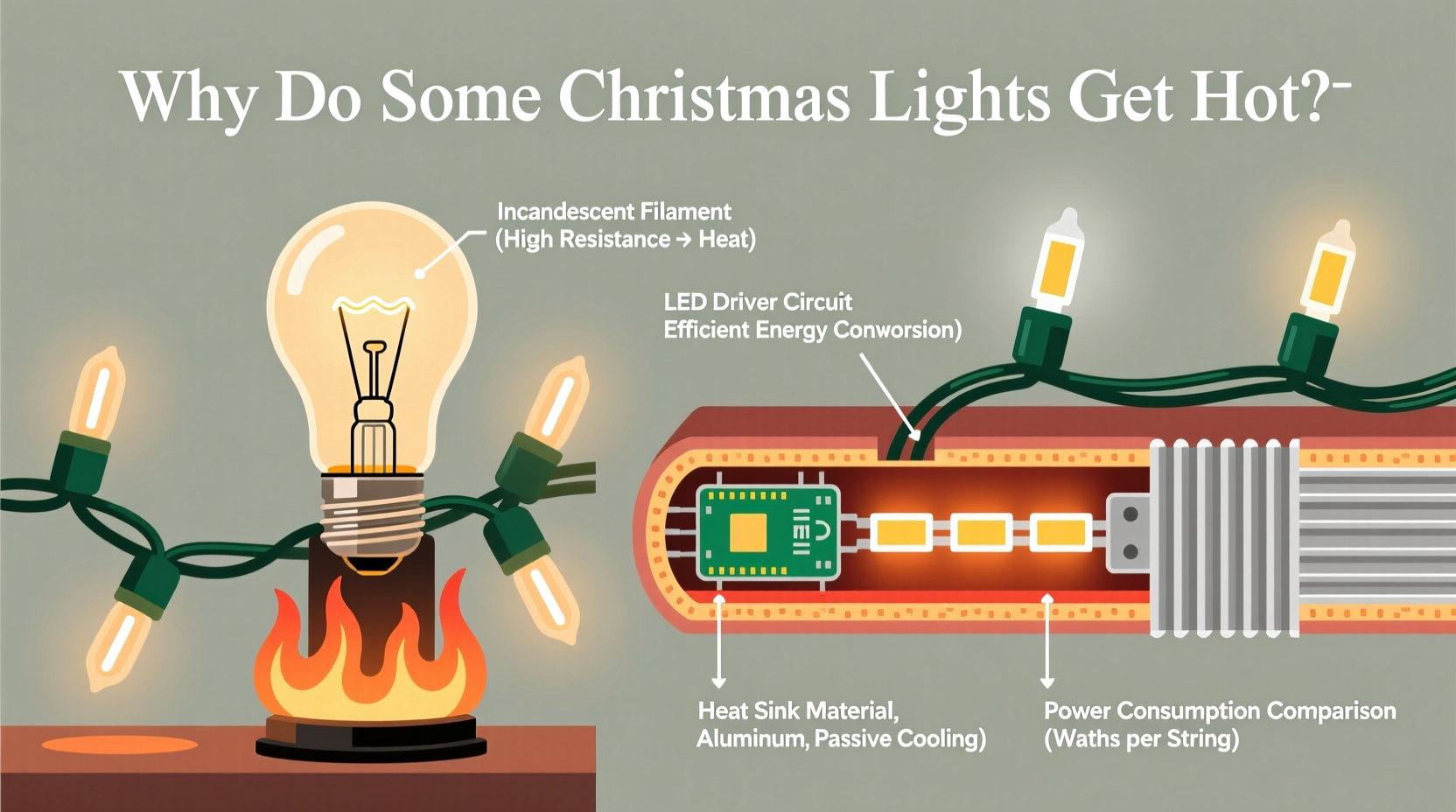
All electric lights produce light by passing an electric current through a material that resists the flow. In traditional incandescent bulbs, this resistance heats a thin tungsten filament until it glows white-hot—a process known as incandescence. However, only about 10% of the energy consumed becomes visible light; the remaining 90% is released as infrared radiation, which we perceive as heat.
This inefficiency is inherent to incandescent technology. The warmth you feel from older-style mini lights or C7/C9 bulbs is essentially wasted energy. While not always dangerous under normal conditions, excessive heat increases the risk of melting insulation, damaging nearby materials, or contributing to overheating in enclosed spaces.
In contrast, modern LED (light-emitting diode) Christmas lights operate on a completely different principle. LEDs generate light through electroluminescence—where electrons move through a semiconductor material and release photons directly. This process produces very little heat, making LED strings significantly cooler during operation.
“LED technology has revolutionized holiday lighting—not just in brightness and color range, but in thermal safety and energy conservation.” — Dr. Alan Reyes, Electrical Engineer & Lighting Specialist
Bulb Type: The Key Factor Behind Heat Output
The primary reason some light strings get warm while others stay cool comes down to the bulb type. Below is a comparison of the most common types used in holiday lighting:
| Bulb Type | Heat Output | Energy Efficiency | Lifespan (hours) | Average Surface Temp |
|---|---|---|---|---|
| Incandescent Mini Bulbs | High | Low (10–17 lm/W) | 1,000–3,000 | 60–90°F above ambient |
| C7/C9 Incandescent | Very High | Very Low | 1,500–5,000 | Can exceed 150°F |
| LED Mini Bulbs | Low | High (80–100+ lm/W) | 25,000–50,000 | Only 5–15°F above ambient |
| LED C7/C9 | Minimal | Very High | 35,000–75,000 | Nearly room temperature |
As shown, LED strings convert far more electricity into usable light and dissipate minimal heat. Their semiconductor design doesn’t rely on heating a filament, so they remain safe to touch even after days of continuous use. Incandescent strings, especially older models with larger bulbs, behave like tiny space heaters—useful in theory for outdoor snow-melting applications, but inefficient and potentially hazardous indoors.
Electrical Design and Circuit Load Impact Temperature
Beyond bulb type, the way a light string is wired affects its operating temperature. Most traditional incandescent strings are wired in series, meaning the same current flows through every bulb. If one bulb burns out, the entire string often goes dark unless it has shunt technology. These series circuits tend to concentrate resistance along the line, increasing overall heat generation.
In contrast, many modern LED strings use parallel-wired or constant-current driver systems that distribute power more evenly. Even if multiple LEDs fail, the rest stay lit, and heat buildup is minimized due to lower voltage per bulb (typically 2–3 volts vs. 2.5–12V for incandescents).
Another critical factor is the number of sets linked together. Most manufacturers specify a maximum number of connectable strings (e.g., “link up to 3 sets”). Exceeding this limit overloads the first set’s wiring, causing resistive heating at connection points. This is especially problematic with incandescent lights, where daisy-chaining ten or more strands can create a fire hazard.
Voltage drop also plays a role. In long runs of incandescent lights, the last few bulbs may glow dimmer because resistance consumes power before it reaches them. That lost energy turns into heat within the wire itself, further warming the strand unevenly.
Real Example: A Home Decorator’s Wake-Up Call
Sarah M., a homeowner in Denver, decorated her front porch annually with vintage C7 incandescent lights. One December, she noticed the pine garland near the roofline had begun to brown and emit a faint smoky odor after several nights of use. Upon inspection, she found that the lights closest to the outlet were extremely hot—hot enough to dry out plant material over time. After consulting an electrician, she learned her setup exceeded the recommended load and lacked proper ventilation.
She switched to commercial-grade LED C7s with built-in fuses and thermal protection. Not only did the new lights stay cool, but her energy bill dropped by $18 that month compared to the previous year. More importantly, her home became safer without the risk of igniting flammable greenery.
Safety Implications of Hot vs. Cool Light Strings
Temperature matters when it comes to fire safety and material compatibility. According to the U.S. Fire Administration, holiday decorations contribute to an estimated 800 fires annually, many involving Christmas trees, lights, or extension cords. Overheated light strings are a leading ignition source.
- Fabric and Greenery: Real or artificial wreaths, garlands, and tree branches can degrade or ignite when exposed to sustained heat.
- Indoor Surfaces: Placing hot strings against curtains, wallpaper, or foam insulation increases fire risk.
- Children and Pets: Warm bulbs can cause minor burns if touched, particularly with C9-sized incandescents.
- Outdoor Use: While cold weather helps dissipate heat, moisture ingress into damaged sockets can lead to short circuits or electrocution hazards.
LED lights mitigate these dangers. Because they run cooler, they’re less likely to damage materials or trigger thermal events. Many also include built-in surge protectors, low-voltage drivers, and compliance with UL 588 (the U.S. standard for seasonal decorative lighting).
Step-by-Step Guide to Choosing Cooler, Safer Christmas Lights
- Identify Your Current Lights: Plug in your existing strings and let them run for 15 minutes. Carefully touch several bulbs and the wire. If they’re noticeably warm, consider replacing them with LEDs.
- Check the Packaging or Label: Look for terms like “LED,” “energy-efficient,” “cool-touch,” or “low heat.” Avoid any labeled “incandescent” unless intended for temporary, supervised use.
- Verify Connection Limits: Never exceed the manufacturer’s stated number of connectable sets. When in doubt, plug additional strands into separate outlets using timers.
- Inspect Wiring and Plugs: Frayed wires, cracked insulation, or loose connections increase resistance and heat. Replace damaged sets immediately.
- Use Timers or Smart Plugs: Automate lighting schedules to prevent extended operation. Running lights only 6–8 hours per night reduces cumulative heat exposure and saves energy.
- Install with Clearance: Keep all light strings away from flammable materials, including paper ornaments, tinsel, and dried floral arrangements.
- Upgrade Gradually: Replace one strand per year with high-quality LEDs. Prioritize lights near beds, sofas, or stair railings where heat poses the greatest risk.
FAQ: Common Questions About Warm Christmas Lights
Is it normal for Christmas lights to get warm?
Some warmth is expected with incandescent bulbs due to their operating principle. However, if the cord or plugs are hot to the touch, or if bulbs are too hot to hold, there may be an overload, poor ventilation, or a defect. LED strings should never feel more than slightly warm.
Can warm Christmas lights start a fire?
Yes. Faulty wiring, overloaded circuits, or prolonged contact with combustible materials can lead to ignition. The National Fire Protection Association reports that one in four holiday fires involve decorative lighting. Using certified, cool-running LEDs greatly reduces this risk.
Do LED Christmas lights ever get hot?
While LEDs themselves generate little heat, the driver box or transformer in some premium or commercial strings may become mildly warm during operation. This is normal and localized. The bulbs and wires should still remain close to ambient temperature.
Checklist: Safer Holiday Lighting Practices
- ✅ Replace incandescent strings with LED alternatives
- ✅ Verify UL certification and outdoor ratings
- ✅ Limit daisy-chained sets to manufacturer specifications
- ✅ Use timers to control runtime (max 8–10 hours/night)
- ✅ Inspect all cords and sockets for damage before use
- ✅ Keep lights away from flammable materials
- ✅ Unplug lights before leaving home or going to sleep
- ✅ Store lights properly after the season to prevent wire stress
Conclusion: Make the Switch for Safety, Savings, and Sustainability
The warmth you feel from a strand of Christmas lights is more than a physical sensation—it’s a sign of inefficiency and potential danger. While traditional incandescent bulbs carry nostalgic charm, their high heat output, short lifespan, and increased fire risk make them outdated for modern homes.
LED technology offers a superior alternative: cooler operation, longer durability, and up to 90% lower energy consumption. What once required ten strings of incandescents now takes one equivalent LED set—with no compromise on brightness or ambiance. Plus, with options ranging from warm white to multicolor and programmable effects, today’s LEDs deliver both performance and peace of mind.




 浙公网安备
33010002000092号
浙公网安备
33010002000092号 浙B2-20120091-4
Comments
No comments yet. Why don't you start the discussion?