
As holiday decorations go up each year, the warm glow of Christmas lights brings joy and festivity. But for many homeowners, that cheer can be interrupted by an unexpected sound: a faint, persistent buzzing coming from the strands. While it might seem minor, this soft hum often signals an underlying issue—particularly with the transformer. Understanding why Christmas lights buzz isn't just about comfort; it's about safety, efficiency, and extending the life of your display.
The source of the buzz is typically electromagnetic vibration within the transformer or power supply, especially in older or low-quality lighting systems. This article explores the science behind the noise, identifies common causes, and provides practical steps to diagnose and resolve transformer-related problems before they escalate into fire hazards or electrical failures.
How Transformers Work in Christmas Lighting Systems
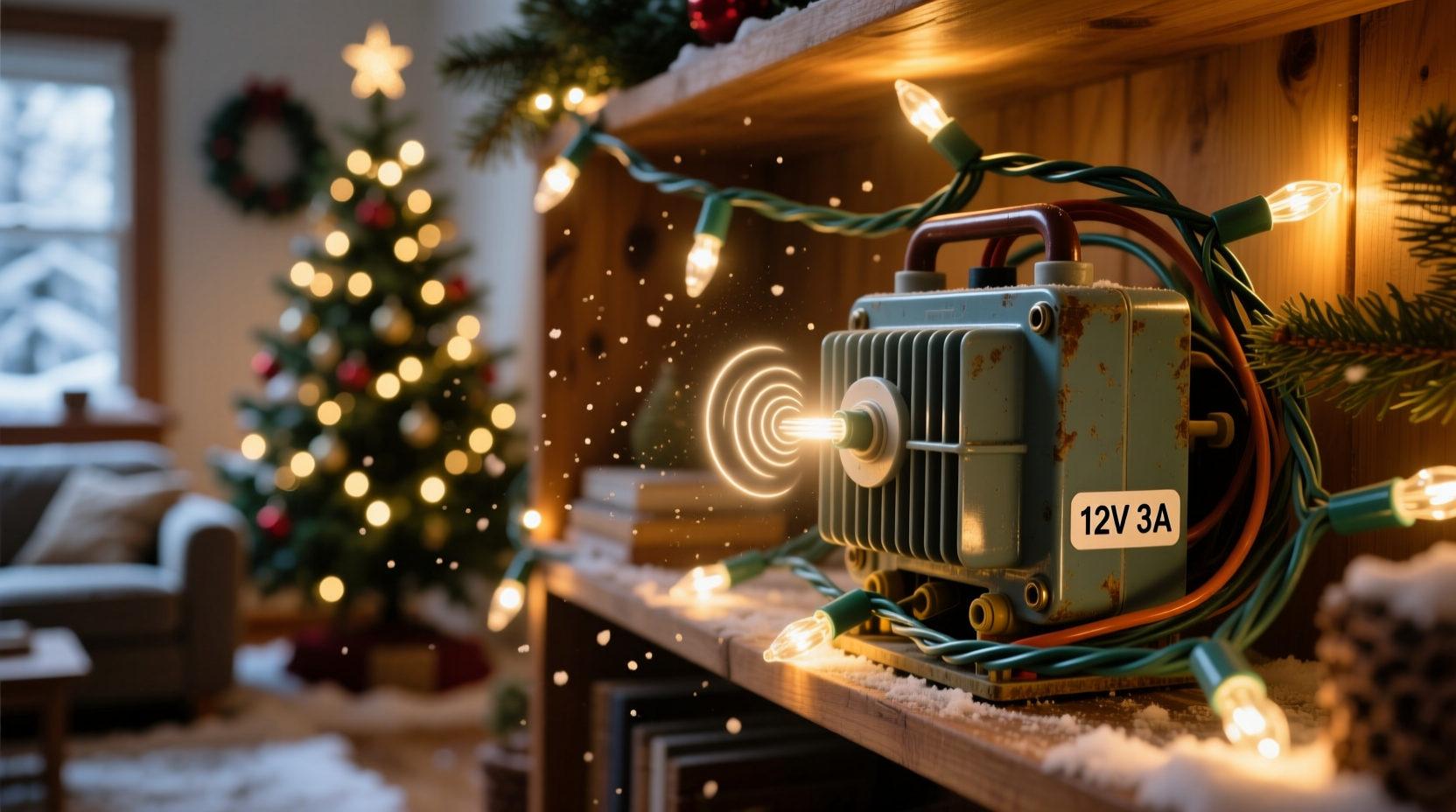
Most modern Christmas lights—especially LED varieties—operate on low voltage, commonly 12V or 24V DC. Since household outlets supply 120V (or 230V in some regions), a transformer is required to step down the voltage to a safe level. These transformers are either built into plug-in adapters or integrated into larger power supplies for commercial-grade displays.
Transformers work through electromagnetic induction: alternating current passes through a primary coil, creating a fluctuating magnetic field that induces a lower voltage in a secondary coil. In ideal conditions, this process is silent. However, imperfections in design, wear over time, or incompatible loads can cause physical vibrations in the transformer’s laminated core or windings. These vibrations resonate at 50Hz or 60Hz—matching the frequency of the AC supply—and produce an audible hum.
“Any noticeable buzzing from a transformer indicates inefficiency. It may start as a nuisance, but unchecked, it can lead to overheating and insulation breakdown.” — Dr. Alan Reeves, Electrical Engineer & Lighting Systems Consultant
The hum isn’t always dangerous, but consistent or increasing noise should never be ignored. It reflects energy loss and mechanical stress, both of which degrade performance and lifespan.
Common Causes of Buzzing in Christmas Lights
Not all buzzing stems from the same root cause. Identifying the specific trigger helps determine whether the issue is manageable or requires immediate replacement.
1. Loose Windings or Core Laminations
Over time, thermal expansion and contraction can loosen the metal plates (laminations) inside the transformer. When these components vibrate against each other due to magnetic forces, they generate a humming sound. This is more common in older transformers or those exposed to outdoor temperature swings.
2. Overloaded Transformer
Connecting too many light strings to a single transformer exceeds its rated capacity. The increased current amplifies magnetic fields, intensifying vibrations. Many people daisy-chain multiple strands without checking total wattage, inadvertently pushing the transformer beyond safe limits.
3. Poor-Quality Components
Budget-friendly Christmas lights often use cheaper transformers with inadequate shielding, loose assembly, or inferior materials. These units are more prone to buzzing even under normal load. UL-certified or name-brand power supplies typically include potting compounds or damping materials to reduce noise.
4. Incompatible Dimming or PWM Signals
If you're using dimmable LEDs or smart controllers, pulse-width modulation (PWM) can interact poorly with certain transformers. Rapid switching creates high-frequency harmonics that excite mechanical resonance in the core, resulting in a higher-pitched buzz or whine.
5. Moisture or Corrosion
Outdoor transformers exposed to rain, snow, or humidity may develop internal corrosion. This disrupts smooth magnetic flux and increases resistance, leading to erratic current flow and audible noise. Even small amounts of moisture trapped inside the casing can create micro-arcing sounds mistaken for buzzing.
Step-by-Step Guide to Diagnosing a Buzzing Transformer
A systematic approach helps isolate the source of the buzz and determines whether repair or replacement is needed. Follow this timeline when you first notice unusual sounds:
- Unplug the lights immediately. Safety first—do not continue using a buzzing unit until inspected.
- Inspect the transformer visually. Look for cracks, bulging casings, discoloration, or signs of melting. Any visible damage means replacement is necessary.
- Check connections and cords. Ensure no frayed wires or loose plugs exist between the outlet and transformer input, or between output and light strings.
- Test with reduced load. Disconnect all but one string of lights and reconnect. If the buzz disappears, the original setup was overloaded.
- Try a different outlet. Rule out issues with home wiring by testing on a known-stable circuit, preferably on a different breaker.
- Listen closely in a quiet environment. Place the transformer on a non-conductive surface and power it on briefly. Determine if the sound comes from inside the unit or nearby fixtures.
- Smell test (cautiously). A burnt odor—even faint—indicates internal damage. Do not reuse.
- Use a multimeter (optional). Measure output voltage under load. Significant deviation from rated voltage (e.g., below 11V on a 12V system) suggests failure.
If the transformer passes visual inspection and operates quietly at low load but buzzes under full connection, the solution may simply be redistributing the lighting across multiple power supplies.
Do’s and Don’ts of Transformer Maintenance
| Action | Do | Don’t |
|---|---|---|
| Installation Location | Mount indoors or under waterproof enclosures outdoors | Leave exposed to rain or snow |
| Load Management | Stay within 80% of rated wattage | Daisy-chain beyond manufacturer limits |
| Cleaning | Wipe exterior with dry cloth; ensure power is off | Use water or cleaning sprays directly on unit |
| Storage | Store in cool, dry place with ends capped | Fold cords tightly around transformer |
| Troubleshooting | Replace immediately if buzzing persists after load reduction | Wrap tape around noisy units to “muffle” sound |
Proper handling extends transformer life and reduces the risk of electrical faults. Remember: muffling the noise doesn’t fix the problem—it only hides it.
Mini Case Study: The Neighborhood Display That Almost Went Dark
In suburban Denver, homeowner Maria Thompson installed a new 200-string LED Christmas display in December 2022. By mid-season, she noticed a faint buzzing near her front porch transformer. Assuming it was normal, she ignored it—until neighbors reported flickering lights during evening hours.
An electrician diagnosed the issue: Maria had connected 18 strands—exceeding the 12-string limit—into a single entry-level transformer. The overload caused excessive core vibration and rising internal temperatures. Though no fire occurred, the transformer’s insulation was compromised, risking short circuits.
The fix? Two additional UL-listed transformers were installed, splitting the load evenly. The buzzing stopped immediately, and power stability returned. Maria now checks specifications before connecting any new strand and uses smart timers to monitor usage.
This real-world example underscores how easily transformer issues arise—and how simple preventive measures can avoid serious consequences.
When to Replace vs. Repair a Buzzing Transformer
Unlike appliances, most consumer-grade Christmas light transformers are not designed for repair. They are sealed units with no user-serviceable parts. Attempting to open them voids safety certifications and exposes live components.
Replacement is almost always the safest and most cost-effective option. However, consider the following:
- Age: Units older than 5 years have degraded insulation and are less efficient.
- Brand: Reputable brands like Philips, GE, or Hyperikon offer longer warranties and better build quality.
- Smart Features: Newer models support app control, scheduling, and surge protection—features that justify upgrading even functional units.
- Environmental Exposure: Outdoor transformers should be replaced every 3–4 seasons, regardless of condition.
FAQ: Common Questions About Buzzing Christmas Lights
Is a buzzing Christmas light transformer dangerous?
A mild hum can be normal in low-cost units, but persistent or loud buzzing often indicates overload, internal damage, or component failure. Left unaddressed, it can lead to overheating, melting, or fire. If the unit feels hot to the touch or emits a burning smell, disconnect it immediately and replace it.
Can I stop the buzzing without replacing the transformer?
Sometimes. Reducing the number of connected light strings may eliminate the noise if the cause is overloading. Ensuring secure connections and using a stable power source can also help. However, if the buzz returns under normal load, replacement is recommended for long-term safety.
Are LED Christmas lights supposed to be completely silent?
Ideal LED systems operate silently. Some very low-frequency hum may occur with magnetic transformers, but modern electronic (switch-mode) transformers should be nearly inaudible. High-pitched whines often point to compatibility issues with dimmers or controllers.
Checklist: Preventing Transformer Issues Before Hanging Lights
- ☐ Verify total wattage of all light strings to be connected
- ☐ Match load to transformer rating (use 80% rule)
- ☐ Inspect transformer for physical damage or prior corrosion
- ☐ Test transformer output with one strand before full setup
- ☐ Install in protected location away from moisture and foot traffic
- ☐ Use GFCI-protected outlets for outdoor installations
- ☐ Keep spare transformer on hand for quick replacement
Running through this checklist annually ensures reliability and minimizes risks during the holiday season.
Conclusion: Silence the Buzz, Secure the Season
The soft buzz of Christmas lights might seem harmless, but it’s often the first warning sign of a failing transformer. Behind that subtle hum lies potential danger—overheating, electrical shorts, or even fire. By understanding how transformers function, recognizing early symptoms, and taking proactive steps, you protect not only your investment in festive décor but also your home and family.
Don’t wait for smoke or sparks. Address buzzing lights promptly, invest in quality components, and maintain a disciplined approach to seasonal electrical setups. A quiet, bright display is a safe one.




 浙公网安备
33010002000092号
浙公网安备
33010002000092号 浙B2-20120091-4
Comments
No comments yet. Why don't you start the discussion?