
As the holiday season unfolds, twinkling Christmas lights bring warmth and cheer to homes, porches, and trees. But when those festive strands begin to flicker unpredictably—some bulbs pulsing, others dimming or going dark—it can disrupt the magic. While a gentle flicker might be intentional in certain decorative designs, erratic blinking, partial blackouts, or rapid flashing usually indicate an underlying issue. Understanding why this happens—and knowing how to fix it quickly—is essential for maintaining a flawless light display without last-minute stress.
Flickering isn’t just annoying; it can signal electrical inefficiencies, failing components, or even safety hazards. The good news is that most causes are simple to diagnose and resolve with basic tools and a methodical approach. Whether you're dealing with traditional incandescent strings or modern LED sets, this guide breaks down the science behind flickering, offers practical solutions, and equips you with a step-by-step plan to troubleshoot like a pro.
The Science Behind Flickering: Why Lights Misbehave
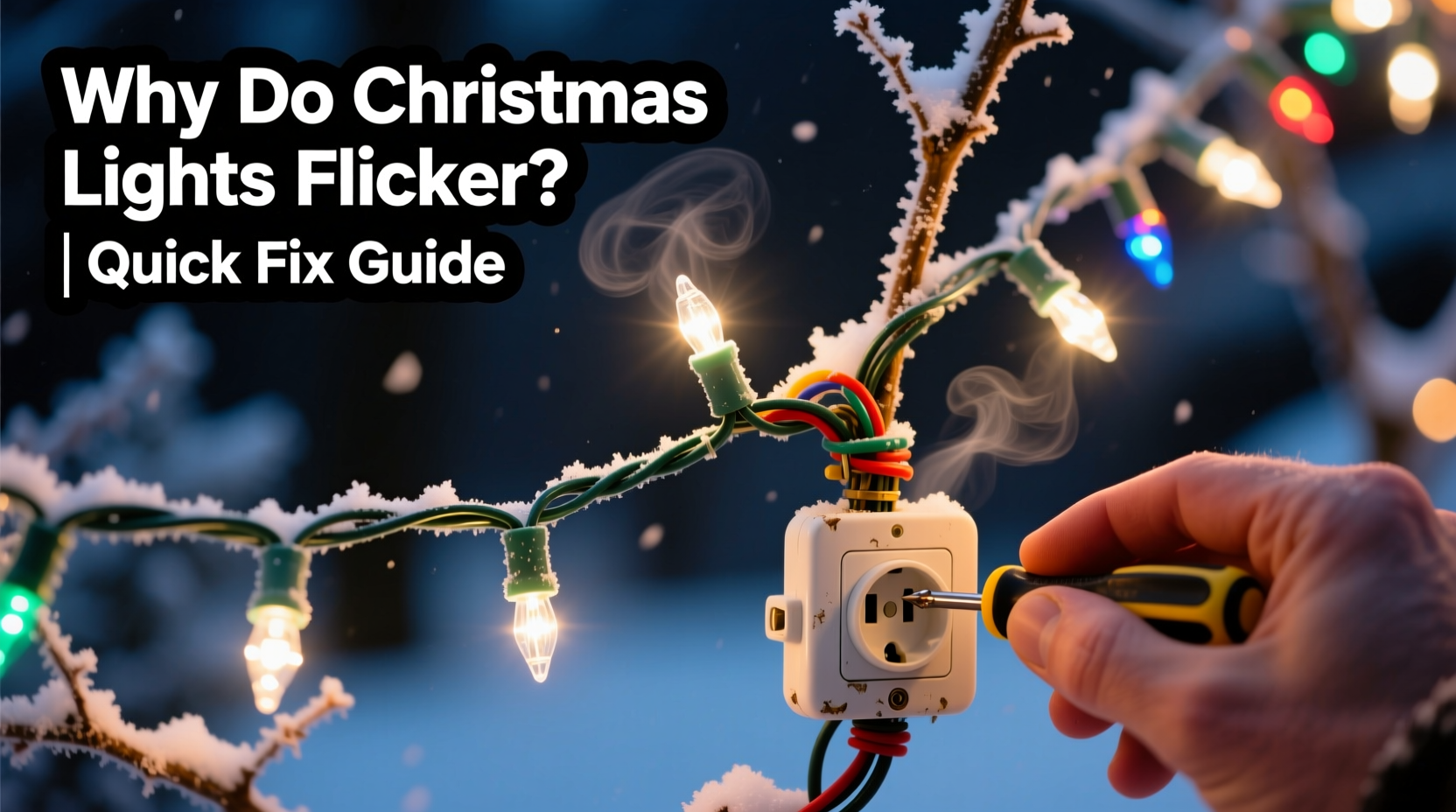
Christmas lights flicker due to interruptions in electrical current, inconsistent voltage delivery, or component failure. In older incandescent sets, flickering often stems from loose bulbs or worn-out shunts. In newer LED strands, the behavior may be tied to driver malfunctions, incompatible dimmers, or circuit design. Each type of lighting system operates differently, so the root cause varies accordingly.
In series-wired light strings—common in both vintage and budget-friendly models—electricity flows through each bulb in sequence. If one bulb is loose, burned out, or has a broken filament, the entire circuit can be disrupted, causing sections to blink or go dark. Some strands include shunt wires designed to bypass dead bulbs, but these can degrade over time. When the shunt fails, the break in continuity leads to intermittent flickering.
LED lights, while more energy-efficient and longer-lasting, use electronic drivers to regulate power. These drivers convert household AC current into low-voltage DC power. If the driver is faulty or overheating, it may deliver inconsistent voltage, resulting in visible flicker. Additionally, cheaper LED strings sometimes lack proper filtering capacitors, making them sensitive to minor voltage fluctuations in your home’s electrical system.
“Flickering isn’t always a defect—sometimes it’s a symptom of deeper electrical inconsistency. Addressing it promptly prevents cascading failures.” — Rafael Nguyen, Residential Lighting Technician with 15+ years in holiday electrical systems
Common Causes of Flickering and How to Identify Them
Before attempting repairs, pinpointing the source of flickering saves time and prevents unnecessary replacements. Below are the most frequent culprits across different types of Christmas lights:
- Loose or improperly seated bulbs: Even a slightly twisted bulb can break contact, especially in vibration-prone outdoor settings.
- Burned-out bulbs: One dead bulb in a series circuit can cause downstream flickering or darkness.
- Failing shunts (in incandescent sets): Shunts are meant to reroute current around dead filaments, but corrosion or age can render them ineffective.
- Damaged sockets or wiring: Cracked sockets, frayed wires, or moisture ingress compromise conductivity.
- Overloaded circuits: Plugging too many strands into one outlet or extension cord reduces voltage stability.
- Faulty or incompatible power sources: Using non-recommended adapters, damaged outlets, or dimmer switches not rated for LEDs can induce flicker.
- Temperature sensitivity: Cold weather affects older bulbs and poorly insulated electronics, increasing flicker risk outdoors.
Step-by-Step Guide to Fix Flickering Lights Fast
Resolving flicker doesn’t require advanced skills. Follow this timeline-tested process to restore your lights efficiently—most fixes take under 30 minutes.
- Unplug the strand immediately. Safety first. Never handle electrical components while powered.
- Inspect for visible damage. Run your fingers along the wire, checking for cuts, kinks, or melted insulation. Look at each socket for cracks or discoloration.
- Remove and reseat every bulb. Even if they appear tight, twist each bulb gently counterclockwise, then back in clockwise until snug. This restores contact and clears oxidation.
- Replace any visibly darkened or broken bulbs. Use manufacturer-matched replacements. Mismatched wattage or voltage can destabilize the circuit.
- Test with a known-working outlet. Plug the strand into a different indoor outlet to rule out circuit overload or GFCI tripping.
- Check the fuse (if applicable). Many plug heads contain small fuses. Open the compartment and inspect both fuses—one may be blown. Replace only with identical-rated fuses (usually 3A).
- Segment test long runs. If using multiple connected strands, unplug all but one and test individually. Isolate the problematic set.
- Verify power supply compatibility. For LED sets, ensure you’re not using a dimmer switch unless it’s labeled “LED-compatible.” Also, avoid daisy-chaining beyond the manufacturer’s limit (often 3–5 strands).
- Use a multimeter for advanced diagnosis (optional). Set to continuity mode and check resistance across suspect bulbs or between wire ends. No continuity means a break in the circuit.
- Allow time for thermal stabilization. Outdoor lights in freezing temps may flicker briefly on startup. Wait 5–10 minutes before concluding failure.
If flickering persists after these steps, the issue likely lies within the internal driver (for LEDs) or main wiring harness—indicating replacement is safer and more cost-effective than repair.
Troubleshooting Table: Do’s and Don’ts When Fixing Flickering Lights
| Do | Don’t |
|---|---|
| Use gloves and dry hands when handling lights | Work on lights while plugged in |
| Match replacement bulbs exactly (voltage, base type) | Substitute higher-wattage bulbs to \"brighten\" the strand |
| Store lights coiled loosely on a cardboard reel | Yank tangled strands apart—this damages wires |
| Use UL-listed extension cords rated for outdoor use | Run cords under rugs or through doorways where they can be pinched |
| Replace blown fuses with same amperage | Use foil or metal objects to bypass a fuse |
| Label tested-good strands after seasonal use | Reuse lights with cracked insulation or exposed copper |
Real-World Example: A Homeowner’s Quick Fix
Sarah Thompson, a homeowner in Minneapolis, noticed her porch lights flickered violently during cold nights, despite working perfectly indoors. She followed the step-by-step guide above and discovered two issues: first, three bulbs were slightly loose due to wind exposure; second, she was using a non-LED-rated dimmer switch on an outdoor timer outlet. After reseating the bulbs and replacing the dimmer with a standard outdoor-rated switch, the flickering stopped completely. “I spent less than 20 minutes and saved $40 on a new string,” she said. “Now I check all my lights before installing them outside.”
This case illustrates how environmental factors and overlooked electrical compatibility can combine to create persistent flicker—yet remain easily solvable with systematic attention.
Prevention Checklist: Keep Your Lights Steady Year After Year
Proactive maintenance extends the life of your lights and prevents flicker before it starts. Use this checklist annually:
- ✅ Inspect all strands for wear before installation
- ✅ Clean bulb bases with a dry cloth to remove dust and corrosion
- ✅ Verify maximum connectable length and don’t exceed it
- ✅ Use surge-protected power strips for indoor displays
- ✅ Install outdoor lights with drip loops to prevent water entry
- ✅ Store in climate-controlled areas—avoid attics and damp basements
- ✅ Label storage boxes by location (e.g., “Front Porch – 50 LED Warm White”)
- ✅ Replace older incandescent strands with modern LED alternatives for better reliability
Frequently Asked Questions
Is it safe to leave flickering Christmas lights plugged in?
No. Persistent flickering can indicate arcing, overheating, or short circuits, which pose fire risks—especially with older incandescent sets. Unplug immediately and inspect. If the cause isn’t obvious or the problem recurs after fixing, retire the strand.
Why do my LED Christmas lights flicker only when other appliances turn on?
This is typically due to voltage sags in your home’s electrical system. High-draw devices like refrigerators or heaters momentarily reduce available voltage. LED drivers are sensitive to these dips. Solution: Plug lights into a dedicated circuit or use a line conditioner/surge protector with voltage regulation.
Can I mix different brands or types of Christmas lights together?
You can—but cautiously. Only connect strands explicitly rated for series connection (check packaging). Avoid mixing incandescent and LED on the same run, as their power demands differ drastically. This mismatch stresses circuits and increases flicker and burnout risk.
Conclusion: Shine Bright Without the Flicker
Flickering Christmas lights don’t have to derail your holiday spirit. With a clear understanding of common causes—from loose bulbs to incompatible power supplies—and a structured approach to diagnosis, most issues can be resolved in under half an hour. Prioritize safety, use the right tools, and remember that prevention through proper storage and inspection pays dividends year after year.
Modern lighting technology continues to improve, but even the best strands need care. By adopting routine checks and smart setup practices, you ensure your display remains bright, steady, and joyful. Don’t let unreliable lights dim your décor—take action tonight and enjoy a seamless, sparkling season.




 浙公网安备
33010002000092号
浙公网安备
33010002000092号 浙B2-20120091-4
Comments
No comments yet. Why don't you start the discussion?