
As the holiday season approaches, twinkling Christmas lights bring warmth and cheer to homes, streets, and storefronts. But nothing disrupts the festive mood faster than erratic flickering—lights that pulse, dim, or blink unpredictably. While some flicker is intentional in decorative designs, persistent or uneven flickering often signals deeper electrical issues. Understanding the root causes and learning how to stabilize voltage flow can transform your display from frustrating to flawless.
Flickering isn’t just an aesthetic problem—it can indicate unsafe wiring, overloaded circuits, or incompatible components. Left unaddressed, it may shorten the lifespan of your lights or even pose fire hazards. This guide explores the science behind flickering, identifies common culprits, and provides actionable solutions to ensure steady, reliable illumination throughout the holidays.
Understanding How Christmas Lights Work
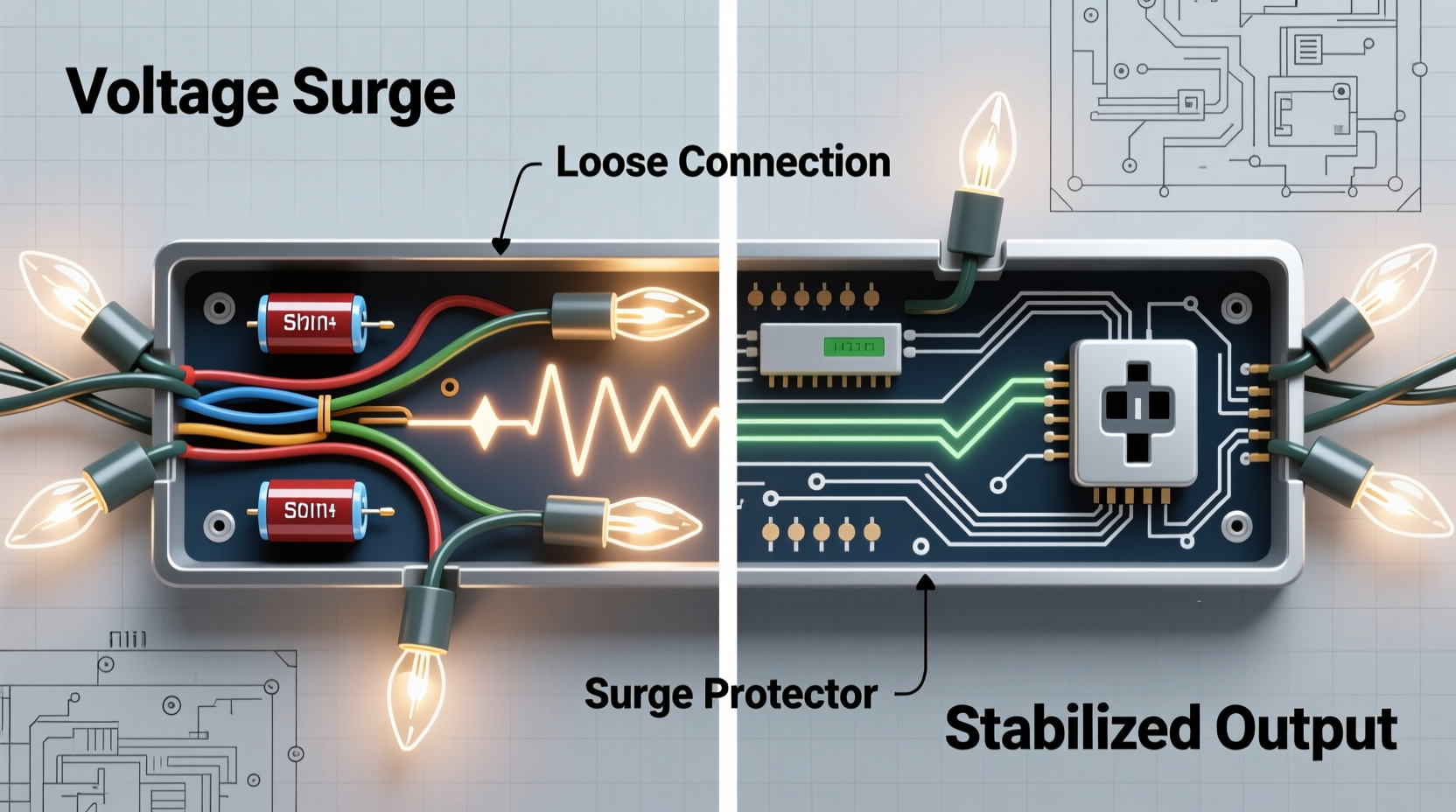
Most traditional Christmas light strings operate on low-voltage alternating current (AC), typically drawing power from standard 120V household outlets in North America. The design varies between series-wired and parallel-wired configurations, each with distinct behaviors under load:
- Series-wired lights: Each bulb shares the same current path. If one bulb fails, the entire string goes dark. These are more prone to flickering due to voltage drops across bulbs.
- Parallel-wired lights: Each bulb has its own connection to the power source. Failure of one bulb doesn’t affect others. These are generally more stable but still susceptible to external electrical fluctuations.
Modern LED Christmas lights use even less power and include internal drivers that convert AC to DC. However, these drivers can be sensitive to inconsistent voltage, leading to flickering when input power fluctuates beyond acceptable thresholds.
“Flickering in LED strings often stems not from the LEDs themselves, but from poor regulation in their driver circuits.” — Dr. Alan Reyes, Electrical Systems Engineer, Pacific Lighting Research Group
Common Causes of Flickering Christmas Lights
Flickering arises from disruptions in the flow of electricity. Identifying the specific cause is essential before applying fixes. Below are the most frequent sources:
1. Loose Bulbs or Poor Socket Contact
In incandescent mini-light strings, a slightly loose bulb can interrupt the circuit momentarily, causing the entire strand to flicker. Corrosion or dirt in sockets exacerbates this issue, especially in older sets used year after year.
2. Voltage Fluctuations in Household Circuits
Large appliances like refrigerators, HVAC systems, or washing machines draw significant power when cycling on. This sudden demand can cause temporary voltage sags, visible as flickering in sensitive lighting circuits—especially if lights share an outlet or circuit with such devices.
3. Overloaded Outlets or Extension Cords
Daisy-chaining too many light strings exceeds the rated capacity of outlets and cords. As resistance builds up, voltage drops occur, leading to dimming and flickering. UL-rated extension cords have maximum wattage limits; exceeding them risks both performance and safety.
4. Incompatible Dimmer Switches
If your outdoor lights are controlled by an indoor dimmer switch, compatibility becomes critical. Most standard dimmers are designed for incandescent loads, not LEDs. Using LED lights on non-dimmable or incompatible dimmers results in flickering, buzzing, or premature failure.
5. Faulty or Low-Quality Transformers/Drivers
LED light strings rely on transformers or built-in drivers to regulate voltage. Cheaply made drivers lack sufficient filtering and stabilization, making them vulnerable to minor line noise or surges. This results in visible flicker, even when no other devices are running.
How to Stabilize Voltage Flow for Steady Lighting
Stabilizing voltage ensures consistent brightness and eliminates unwanted flicker. The solution depends on whether the issue is localized to one string or affects multiple fixtures across a circuit.
Step-by-Step Guide to Voltage Stabilization
- Inspect and Replace Damaged Components
Begin by checking each bulb and socket. Remove and reseat all bulbs firmly. Replace any darkened, broken, or corroded bulbs—even if they appear functional. - Use Dedicated Circuits
Plug light displays into outlets on circuits not shared with high-draw appliances. Test this by turning off suspect appliances and observing if flickering stops. - Upgrade Extension Cords
Switch to heavy-duty, outdoor-rated extension cords with lower gauge numbers (e.g., 16 AWG or lower). Shorter cords reduce resistance and maintain better voltage delivery. - Install a Voltage Regulator or Surge-Protected Power Strip
These devices smooth out minor voltage fluctuations and protect against spikes. Look for models with automatic voltage regulation (AVR) technology. - Replace Incompatible Dimmers
If using dimmable LED lights, ensure the switch is labeled “LED-compatible” or “trailing-edge.” Retrofitting old dimmers prevents erratic behavior. - Add a Line Conditioner for Sensitive Displays
For elaborate setups with programmable or RGB LED lights, a line conditioner filters electrical noise and stabilizes input voltage, eliminating micro-fluctuations.
Mini Case Study: The Johnson Family’s Flickering Front Yard
The Johnsons installed a new set of LED icicle lights along their roofline, but noticed persistent flickering every evening at 6 PM. After ruling out faulty strings, they discovered their furnace cycled on at that time, sharing a circuit with the porch outlet. By relocating the lights to a garage outlet on a separate breaker and installing a surge-protected power strip, the flickering ceased completely. A simple circuit audit resolved what seemed like a complex electrical flaw.
Do’s and Don’ts of Christmas Light Wiring
| Do’s | Don’ts |
|---|---|
| Use UL-listed extension cords rated for outdoor use | Never daisy-chain more than three standard light strings unless specified |
| Check total wattage against circuit capacity (typically 1,440W per 15A circuit) | Avoid mixing LED and incandescent strings on the same run—they draw different currents |
| Test lights before installation using a multimeter to check for continuity | Don’t leave connections exposed to rain or snow without weatherproof covers |
| Use GFCI-protected outlets for all outdoor installations | Never splice wires without proper insulation and junction boxes |
| Label circuits used for holiday lighting to prevent accidental overloads | Don’t ignore warm outlets or frayed cords—these are fire risks |
Expert Tools and Upgrades for Long-Term Stability
For homeowners committed to a professional-quality holiday display, investing in advanced tools pays off in reliability and safety.
- Smart Plugs with Energy Monitoring: Devices like the TP-Link Kasa KP125 allow real-time tracking of voltage, current, and power usage. Set schedules and receive alerts if anomalies occur.
- Whole-House Surge Protectors: Installed at the breaker panel, these protect all circuits from voltage spikes caused by lightning or grid switching.
- DC-Powered LED Systems: Some premium landscape lighting uses centralized 12V or 24V DC transformers. These eliminate AC ripple entirely, resulting in zero flicker and longer LED life.
For large-scale displays, consider splitting loads across multiple GFCI-protected circuits. This not only reduces flicker risk but also complies with electrical codes and improves fault isolation.
FAQ: Common Questions About Flickering Christmas Lights
Why do my LED Christmas lights flicker even when nothing else is running?
This usually points to a poor-quality driver or incompatible transformer. Low-cost LED strings often cut corners on internal electronics. Try plugging the lights into a different outlet or using a regulated power supply. If flickering stops, the original circuit or adapter was the issue.
Can cold weather cause Christmas lights to flicker?
Indirectly, yes. Cold temperatures increase wire resistance slightly and can make brittle wires or cracked insulation more problematic. Additionally, condensation inside connectors may create intermittent shorts. Ensure all outdoor connections are sealed and elevated off wet surfaces.
Is it safe to use a dimmer switch with Christmas lights?
Only if both the lights and the dimmer are explicitly rated for dimming. Non-dimmable LEDs on dimmer circuits can overheat, flicker violently, or fail prematurely. Use smart plugs instead for scheduling or brightness control without risking damage.
Final Checklist Before You Plug In
- ✅ Inspect all bulbs and replace any damaged ones
- Ensure tight seating and clean contacts.
- ✅ Verify total wattage vs. circuit capacity
- Add up all connected strings and stay below 80% of breaker rating.
- ✅ Use only outdoor-rated, grounded extension cords
- No indoor-only cords outside, even temporarily.
- ✅ Test GFCI outlets monthly during the season
- Press the “Test” and “Reset” buttons to confirm function.
- ✅ Install a surge protector or line conditioner
- Especially important in areas with frequent storms or unstable grids.
- ✅ Avoid sharing circuits with major appliances
- Dedicate one circuit exclusively to holiday lighting if possible.
Conclusion: Shine Bright Without the Flicker
A flicker-free Christmas light display is achievable with the right knowledge and preparation. From understanding basic electrical principles to selecting quality components and managing circuit loads, every step contributes to a safer, more beautiful outcome. Don’t settle for blinking lights caused by overlooked details—take control of your voltage flow and enjoy a steady, radiant glow all season long.




 浙公网安备
33010002000092号
浙公网安备
33010002000092号 浙B2-20120091-4
Comments
No comments yet. Why don't you start the discussion?