
As the holiday season approaches, strings of twinkling Christmas lights transform homes into festive wonderlands. But nothing disrupts the magic quite like a set of lights that flicker unpredictably—some bulbs glowing brightly while others dim or blink out entirely. While a gentle twinkle can be charming, erratic flickering often signals an underlying issue. Understanding why this happens and how to fix it isn’t just about aesthetics; it’s also about safety, efficiency, and preserving the longevity of your decorations.
Flickering can stem from simple causes like loose bulbs or outdated wiring, or more complex issues such as incompatible dimmer switches or voltage fluctuations. The good news? Most problems are easy to diagnose and resolve with basic tools and a bit of patience. This guide breaks down the common reasons behind flickering Christmas lights, offers step-by-step solutions, and shares expert-backed tips to keep your holiday lighting display steady and safe.
Understanding How Christmas Lights Work
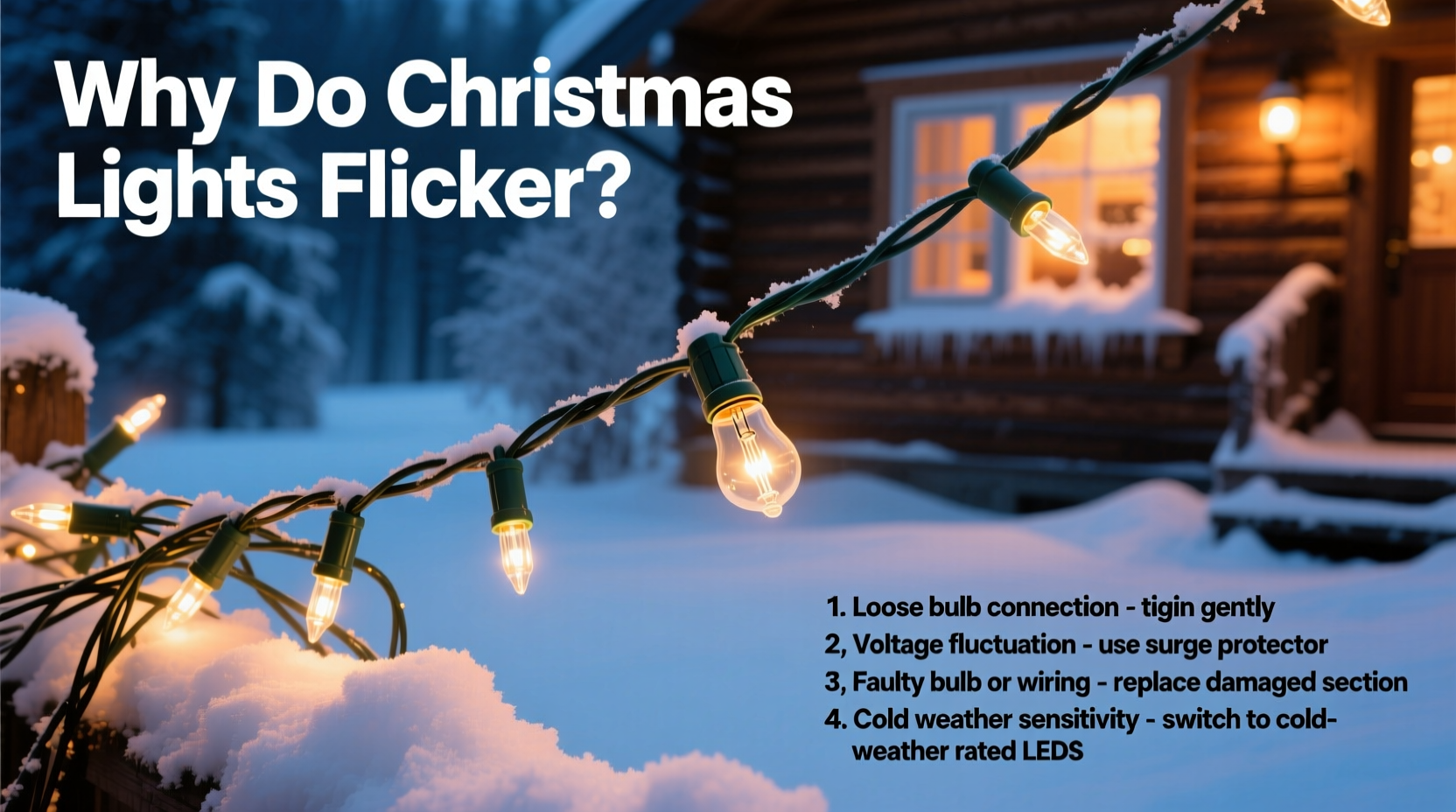
To troubleshoot flickering effectively, it helps to understand the two main types of Christmas light circuits: series and parallel.
- Series-wired lights: In older or budget-friendly strands, bulbs are connected in a single electrical path. If one bulb fails or becomes loose, the entire circuit breaks, causing all downstream bulbs to go dark—or flicker if the connection is intermittent.
- Parallel-wired lights: Modern light sets often use parallel wiring, where each bulb has its own connection to the power source. A single faulty bulb won’t affect the rest, reducing the risk of widespread flickering.
Additionally, LED lights behave differently than incandescent ones. LEDs require lower voltage and are sensitive to power inconsistencies. Some flicker due to built-in controllers designed for effects like twinkling, while others react poorly to incompatible transformers or dimmers.
“Many people assume flickering lights are just part of the charm, but persistent flicker often points to a real electrical flaw—especially when it’s uneven or sudden.” — Daniel Reyes, Electrical Safety Inspector, NFPA
Common Causes of Flickering Christmas Lights
Flickering doesn’t happen randomly. Each cause has distinct clues. Identifying the root issue saves time and prevents potential hazards like overheating or short circuits.
1. Loose or Poorly Seated Bulbs
In series-wired strands, even one slightly dislodged bulb interrupts the circuit. As the strand heats up or moves in the wind, the connection may briefly restore, causing flickering.
2. Faulty or Burned-Out Bulbs
A dead bulb acts like a gap in the circuit. In older strands, shunt wires (designed to bypass failed bulbs) don’t always activate properly, especially in cold weather, leading to inconsistent current flow.
3. Overloaded Circuits
Daisy-chaining too many light strands exceeds the manufacturer’s limit and stresses the circuit. This leads to voltage drops, especially at the end of long runs, resulting in dimming and flickering.
4. Incompatible Power Sources
Using non-recommended extension cords, damaged outlets, or low-quality power adapters (especially for LEDs) introduces resistance or fluctuating voltage. Outdoor outlets exposed to moisture can also cause intermittent connections.
5. Dimmer Switch Conflicts
If your lights are plugged into a circuit controlled by a dimmer switch, standard Christmas lights—particularly LEDs—may flicker because they aren’t designed for variable voltage. Even if the dimmer is “on,” residual signal modulation can interfere.
6. Temperature and Weather Effects
Cold temperatures increase resistance in wiring and can make plastic components brittle. Moisture ingress from snow or rain creates conductivity issues, especially in damaged insulation.
7. Built-In Controllers or Twinkling Features
Some flickering is intentional. Many modern strands include controllers that cycle certain bulbs on and off. However, if only part of the strand behaves erratically, it may indicate a malfunctioning controller rather than a design feature.
Step-by-Step Guide to Fix Flickering Christmas Lights
Follow this systematic approach to identify and resolve flickering issues safely and efficiently.
- Unplug the lights completely. Safety first—never work on energized strands.
- Inspect the entire length visually. Check for broken bulbs, frayed wires, bent prongs, or cracked sockets. Replace any visibly damaged components.
- Test each bulb in a series strand. Remove bulbs one by one and insert them into a known working socket. A bulb that flickers or doesn’t light may have a broken filament or failed shunt.
- Reseat all bulbs firmly. Press each bulb down until it clicks or feels snug. Wiggle gently to ensure it doesn’t loosen easily.
- Use a light tester or multimeter. For precision, test continuity across each bulb and socket. This helps locate open circuits without guesswork.
- Check the fuse in the plug. Many strands have small fuses inside the male plug. Use a spare fuse (usually included) or test with a multimeter. Replace if blown.
- Verify power source compatibility. Ensure you’re using an outdoor-rated extension cord with sufficient gauge (typically 16 AWG or lower for long runs). Avoid indoor cords outdoors.
- Reduce load by shortening daisy chains. Follow manufacturer guidelines—usually no more than 3–5 strands linked together, depending on wattage.
- Bypass dimmer switches. Plug lights directly into a standard wall outlet, not one controlled by a dimmer, especially for LED sets.
- Test in a different outlet. Rule out issues with the power source by trying a different circuit, preferably on a different breaker.
If flickering persists after these steps, the issue may lie in internal wiring degradation or a failing transformer (for low-voltage systems). At that point, replacement is safer and more cost-effective than repair.
Do’s and Don’ts: Quick Reference Table
| Do’s | Don’ts |
|---|---|
| ✔ Use LED lights with matching transformers or drivers | ✘ Daisy-chain more than the recommended number of strands |
| ✔ Inspect lights annually before installation | ✘ Use indoor lights outdoors unless rated for it |
| ✔ Store lights on reels or cardboard spools to prevent tangling | ✘ Force bulbs into sockets—this damages shunts |
| ✔ Replace fuses only with correct amperage (usually 3A) | ✘ Repair cracked insulation with tape—replace the strand instead |
| ✔ Use GFCI-protected outlets for outdoor displays | ✘ Leave flickering lights unattended or overnight |
Real Example: A Homeowner’s Holiday Fix
Sarah from Minneapolis strung 200 feet of mini Christmas lights around her roofline every December. One year, the far end of the display began flickering wildly during cold snaps. She replaced bulbs and checked connections, but the issue returned.
After consulting an electrician, she discovered two problems: she was linking eight strands together—double the safe limit—and using an old indoor extension cord that couldn’t handle the load over distance. Voltage drop was starving the final lights.
The fix? She split the run into two separate circuits, used heavy-duty outdoor extension cords, and upgraded to commercial-grade LED strings with parallel wiring. The flickering stopped immediately, and her energy bill dropped by 40% compared to previous years.
Sarah’s case highlights a common mistake: assuming more lights mean better decoration, without considering electrical limits. Her solution wasn’t complicated—just informed.
Preventive Maintenance Tips for Long-Lasting Lights
Proper care extends the life of your lights and reduces flickering risks year after year.
- Label and organize by type. Keep indoor, outdoor, LED, and incandescent sets separate. Mixing types on one circuit can cause compatibility issues.
- Store carefully. Wrap lights around a piece of cardboard or a dedicated spool. Avoid tight knots that stress wires.
- Keep dry and rodent-free. Store in sealed plastic bins with cedar blocks to deter pests that chew wires.
- Test before decorating. Plug each strand in for 10–15 minutes before hanging. Catch issues early.
- Upgrade gradually to LEDs. They consume less power, generate less heat, and are less prone to flicker when properly matched with power sources.
Frequently Asked Questions
Why do my new LED Christmas lights flicker even when they’re brand new?
New LED lights may flicker if used with incompatible dimmer switches, low-quality power supplies, or surge protectors with built-in circuitry that interferes with low-current devices. Try plugging them directly into a wall outlet without any intermediaries. If the flicker stops, the issue is likely the power strip or dimmer.
Can cold weather cause Christmas lights to flicker?
Yes. Cold temperatures increase electrical resistance and can cause minor contraction in metal contacts, leading to intermittent connections. This is especially true for older incandescent strands. LEDs are less affected, but extreme cold can impact driver performance if not rated for outdoor use.
Is it dangerous if my Christmas lights flicker?
Occasional flickering due to loose bulbs is usually not dangerous. However, persistent or worsening flicker—especially accompanied by buzzing, overheating, or burning smells—can indicate a serious electrical fault. Unplug immediately and inspect or replace the strand. Never ignore signs of arcing or melted insulation.
Final Checklist: Eliminate Flicker for Good
- ✅ Unplug and visually inspect all lights
- ✅ Reseat or replace every bulb, especially in series strands
- ✅ Test and replace fuses if needed
- ✅ Use only compatible, outdoor-rated extension cords
- ✅ Avoid daisy-chaining beyond manufacturer limits
- ✅ Plug into a non-dimmer, GFCI-protected outlet
- ✅ Test the strand before full installation
- ✅ Upgrade to modern LED strings with parallel circuits
- ✅ Store properly after the season ends
Conclusion: Shine Bright Without the Flicker
A flickering Christmas light display doesn’t have to be the norm. With a clear understanding of the causes—from simple loose bulbs to deeper electrical mismatches—you can restore steady, reliable illumination to your holiday decor. The fixes are often straightforward, requiring only attention to detail and adherence to safety standards.
By investing a little time in inspection, proper setup, and preventive care, you ensure not only a more beautiful display but also a safer home environment during the busy holiday season. Whether you’re maintaining cherished heirloom strands or upgrading to smart LEDs, the goal remains the same: lights that shine consistently, reliably, and joyfully.




 浙公网安备
33010002000092号
浙公网安备
33010002000092号 浙B2-20120091-4
Comments
No comments yet. Why don't you start the discussion?