
As the holiday season approaches, twinkling Christmas lights bring warmth and cheer to homes around the world. But when those cheerful strings begin to flicker unpredictably—dimming, blinking out of sync, or cutting off entirely—it can be more frustrating than festive. While a gentle twinkle is intentional in some designs, erratic flickering often signals an underlying issue. Understanding the root causes and knowing how to address them ensures your display remains reliable, safe, and visually appealing throughout the season.
Flickering isn’t just an aesthetic problem; it can indicate electrical inefficiencies or potential safety hazards. Whether you're dealing with traditional incandescent strands or modern LED sets, several factors—from loose bulbs to voltage fluctuations—can contribute to inconsistent lighting. This guide breaks down the most common reasons behind flickering Christmas lights and provides clear, actionable solutions to restore stability and brightness.
Understanding How Christmas Lights Work
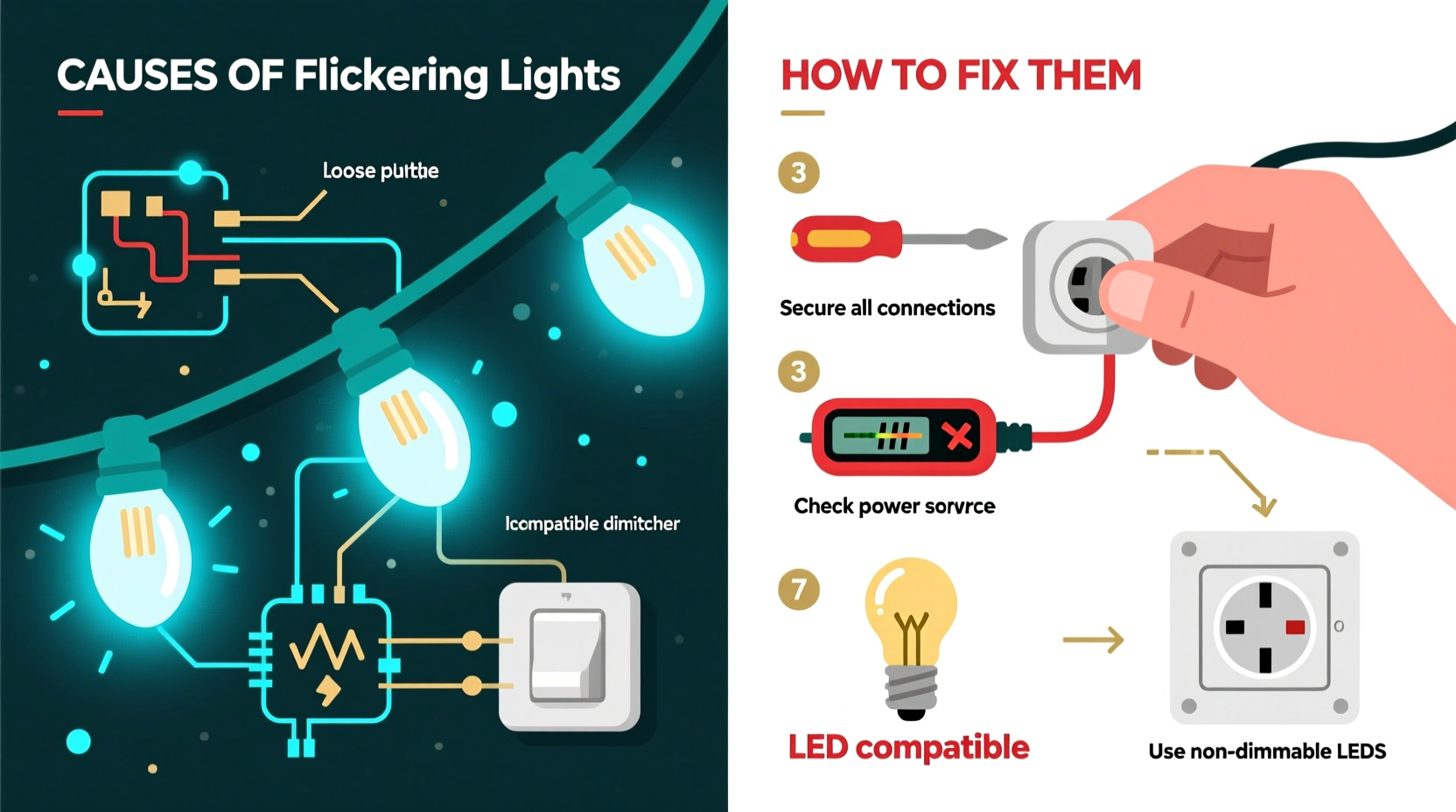
To diagnose flickering effectively, it helps to understand the two primary types of Christmas light circuits: series and parallel.
In a series circuit, electricity flows through each bulb in sequence. If one bulb fails or becomes loose, the entire string may dim or go dark. This design was common in older incandescent light sets and is highly susceptible to flickering when any component is compromised.
Parallel circuits, on the other hand, allow each bulb to receive power independently. A single faulty bulb won’t disrupt the rest of the strand. Most modern LED Christmas lights use this configuration, offering greater reliability and reduced flicker risk.
Additionally, many contemporary light strings include built-in resistors, rectifiers, or controllers that manage current flow and create special effects like fading or chasing patterns. These components can also influence how lights behave and whether flickering appears normal or problematic.
Common Causes of Flickering Christmas Lights
Flickering doesn’t happen randomly. It’s usually the result of identifiable mechanical, electrical, or environmental issues. Below are the most frequent culprits:
- Loose or improperly seated bulbs: In both incandescent and LED strings, a bulb not fully screwed into its socket interrupts the circuit, causing intermittent flickering or dead sections.
- Damaged or frayed wires: Outdoor exposure, foot traffic, or improper storage can wear down insulation, leading to short circuits or inconsistent conductivity.
- Overloaded circuits: Plugging too many light strands into a single outlet or power strip can cause voltage drops, resulting in dimming or pulsing lights.
- Poor-quality extension cords: Using undersized or low-gauge cords over long distances reduces voltage delivery, especially for longer runs of lights.
- Moisture infiltration: Water entering connectors or sockets—common in outdoor setups—can corrode contacts and disrupt electrical flow.
- Incompatible dimmer switches: If your lights are connected to a household dimmer not rated for decorative lighting, especially LEDs, flickering is likely.
- LED driver or rectifier failure: Many LED strings convert AC to DC using internal drivers. A failing component here can cause rhythmic or random flickering.
- Voltage fluctuations in home wiring: Older homes or those with unstable electrical systems may experience minor surges or sags that affect sensitive lighting.
“Flickering lights aren’t just annoying—they’re often early warning signs of electrical stress. Addressing them promptly prevents bigger issues.” — Carlos Mendez, Residential Electrician & Lighting Safety Consultant
Step-by-Step Guide to Fix Flickering Christmas Lights
Resolving flicker issues requires methodical troubleshooting. Follow this step-by-step process to identify and correct the problem efficiently.
- Unplug the light string before inspecting or handling to avoid shock or short-circuit risks.
- Visually inspect the entire strand for damaged wires, cracked sockets, or corroded connectors. Pay close attention to areas near plugs and junction boxes.
- Check each bulb by gently pressing it into its socket. For removable bulbs, take them out and reseat them firmly. Look for darkened filaments (in incandescents) or cloudy casings (in LEDs).
- Test individual bulbs using a known-working socket or a bulb tester. Replace any that are burnt out or defective.
- Examine connections between strands. Ensure male and female ends are fully engaged and dry. Clean corrosion with isopropyl alcohol and a cotton swab if needed.
- Verify your power source. Plug the lights into a different outlet to rule out circuit issues. Avoid daisy-chaining more than three standard light sets unless they’re rated for it.
- Use proper extension cords. For outdoor use, select heavy-duty, weather-resistant cords rated for the total wattage of your display.
- Separate LED and incandescent strings. Mixing types on the same circuit can cause compatibility issues due to differing power requirements.
- Check for dimmer switch interference. If lights are controlled by a wall dimmer, bypass it temporarily to see if flickering stops. Use only dimmers labeled as compatible with LED holiday lights.
- Replace faulty fuses in plug ends. Some light sets have small replaceable fuses inside the plug. Use a multimeter to test continuity or swap with a known-good fuse.
Do’s and Don’ts: Best Practices for Stable Holiday Lighting
| Do’s | Don’ts |
|---|---|
| Use LED lights with built-in rectifiers for smoother current flow | Use indoor-rated lights outdoors—even under eaves or porches |
| Plug no more than 3–5 light strings together, depending on manufacturer specs | Daisy-chain excessive numbers of lights, risking circuit overload |
| Store lights on reels or cardboard spools to prevent tangles and wire damage | Throw lights loosely into bins where bulbs can break and wires kink |
| Inspect and test lights before decorating each season | Assume last year’s working set will function perfectly this year |
| Use GFCI-protected outlets for all outdoor installations | Ignore tripped GFCIs—investigate the cause before resetting |
Real Example: Solving a Persistent Flicker Problem
Consider Sarah, who decorated her front porch annually with two long strands of C7 LED lights. One year, the right side flickered erratically despite being new. She checked each bulb and found none visibly damaged. After unplugging and reseating all connections, the flickering persisted.
She then tested the strand on a different circuit inside her home—no flicker. That pointed to an issue with the outdoor outlet. Upon inspection, she discovered moisture had entered the extension cord connection. She replaced the non-weatherproof connector with a sealed, in-line waterproof coupler and added a drip loop to prevent water runoff into the plug. The flickering stopped immediately, and the lights performed flawlessly for the rest of the season.
Sarah’s experience highlights how environmental factors and overlooked details—like proper sealing and cord routing—can make or break a holiday lighting display.
When Flickering Is Intentional: Special Effects vs. Malfunction
Not all flickering is a defect. Many modern light sets are designed to mimic candlelight, firelight, or falling snow using programmed microcontrollers. These effects typically follow a rhythmic pattern and affect entire sections uniformly.
To distinguish intentional flicker from malfunction:
- Check the packaging or product manual for terms like “twinkle,” “flicker flame,” or “gorgeous glow effect.”
- Observe whether the flickering is synchronized across multiple bulbs or random and irregular.
- Look for a mode switch or remote control that allows toggling between steady and animated modes.
If the flicker changes when you press a button on a remote, it’s almost certainly a feature. However, if only part of the strand flickers or the behavior changes mid-display, treat it as a fault and investigate further.
FAQ: Common Questions About Flickering Christmas Lights
Why do my LED Christmas lights flicker even when they’re new?
New LED lights may flicker due to incompatible transformers, poor rectification of AC current, or being connected to a dimmer switch not designed for LEDs. Always ensure your power source matches the light specifications. Some budget LED strings lack sufficient filtering capacitors, causing visible ripple in brightness.
Can cold weather cause Christmas lights to flicker?
Extreme cold alone doesn’t cause flickering, but it can exacerbate existing issues. Low temperatures make plastic brittle, increasing the chance of cracked sockets or broken solder joints. Additionally, thermal contraction can loosen connections slightly, interrupting current flow until warmed.
Is it safe to leave flickering Christmas lights up overnight?
No. Persistent flickering can indicate overheating, arcing, or failing components, which pose fire risks—especially with older incandescent sets. If flickering persists after troubleshooting, unplug the lights and either repair or replace them before reuse.
Conclusion: Shine Bright Without the Flicker
A flicker-free holiday display is within reach with the right knowledge and preparation. From identifying loose bulbs to upgrading outdated cords and avoiding circuit overload, the solutions are straightforward and effective. Modern LED technology offers brighter, cooler, and more stable lighting than ever—but only when used correctly and maintained thoughtfully.
Take time now to inspect your lights, organize your storage system, and upgrade weak links in your setup. Not only will this enhance the beauty of your decorations, but it will also improve safety and reduce frustration during the busiest time of year.




 浙公网安备
33010002000092号
浙公网安备
33010002000092号 浙B2-20120091-4
Comments
No comments yet. Why don't you start the discussion?