
Every holiday season, millions of homes light up with festive cheer—strings of glowing bulbs draped across rooftops, wrapped around trees, and lining walkways. But for many, that joy dims the moment rain starts falling and the lights begin to flicker unpredictably. It’s not just an annoyance; it can signal underlying electrical issues that compromise safety and shorten the lifespan of your decorations.
Flickering lights during wet weather are more common than you might think, especially in regions with unpredictable winter climates. While occasional blinking might seem harmless, consistent or erratic flickering under rain points to moisture intrusion, poor connections, or inadequate insulation. Understanding the root causes—and knowing how to properly weatherproof your setup—can prevent hazards, reduce maintenance, and keep your display shining brightly through December and beyond.
How Moisture Affects Electrical Connections in Christmas Lights
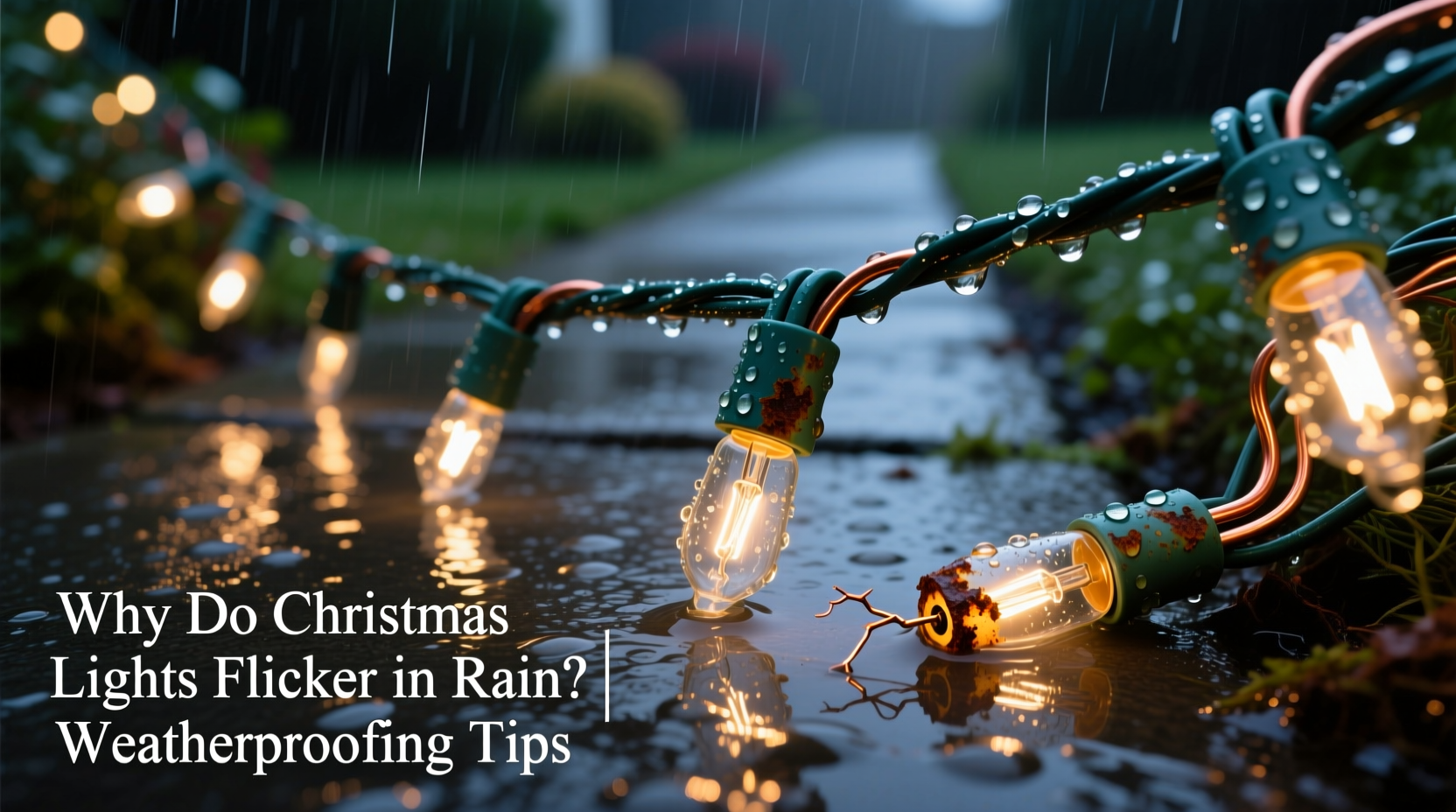
Christmas lights operate on low-voltage circuits, but even minor disruptions in continuity can cause visible flickering. When rain falls, water can seep into exposed wire junctions, plug sockets, or cracked bulb housings. Because water is conductive, it creates unintended pathways for electricity, disrupting the intended flow and causing intermittent contact.
The most vulnerable points are where wires connect: between strands, at extension cords, or where lights attach to power sources. If a connection isn’t sealed properly, rainwater can bridge contacts, leading to short circuits or ground faults. Even condensation buildup inside enclosed fixtures can be enough to trigger flickering, especially if the fixture lacks proper ventilation or drainage.
Additionally, older incandescent bulbs are more sensitive to voltage fluctuations caused by moisture-induced resistance changes. LED strings are generally more resilient, but they’re not immune—especially if they lack adequate sealing or use substandard materials.
Common Causes of Rain-Induced Flickering
Flickering isn’t random—it’s a symptom. Identifying the specific cause helps determine whether the issue is fixable or requires replacement. Below are the most frequent culprits behind rain-related flickering:
- Loose or corroded connections: Over time, outdoor plugs and connectors can loosen or develop corrosion from humidity and temperature swings. Water accelerates this process, increasing resistance and interrupting current.
- Non-weatherproof connectors: Many standard light sets use indoor-rated connectors that aren’t designed for exposure. These often lack gaskets or seals, allowing water ingress.
- Poor strand-to-strand coupling: Daisy-chaining multiple strings increases failure points. If one link gets wet, the entire circuit may behave erratically.
- Ground faults or leakage currents: In damp conditions, small amounts of current can leak to grounded surfaces (like metal gutters or wet wood), tripping GFCI outlets or causing unstable operation.
- Inadequate insulation: Thin or degraded wire coatings crack over time, exposing copper to moisture. This is especially true for older sets stored improperly between seasons.
“Moisture doesn’t need a flood to cause problems—just a few droplets in the right (or wrong) place can disrupt low-voltage circuits.” — Mark Reynolds, Electrical Safety Inspector, NFPA
Weatherproofing Your Christmas Lights: A Step-by-Step Guide
Preventing flickering starts with proactive protection. Follow this detailed process to safeguard your lights against rain and extend their usable life.
- Choose outdoor-rated lights from the start
Select strings labeled “For Indoor/Outdoor Use” or specifically “Outdoor Rated.” These meet UL 588 standards and include thicker insulation, sealed sockets, and corrosion-resistant materials. - Use waterproof connectors and covers
Invest in silicone-based connector sleeves or waterproof outlet enclosures. Slide these over plug junctions before securing them. For permanent installations, consider using gel-filled wire nuts or heat-shrink tubing for added protection. - Elevate and angle connections upward
Never let plugs sit flat on wet ground or inside puddles. Mount them on brackets so any water runs off instead of pooling. Position all male-female couplings facing downward or sideways to prevent drip entry. - Seal splice points with dielectric grease
Apply a thin layer of dielectric grease (available at auto parts stores) to clean metal contacts before connecting. This non-conductive lubricant repels moisture without interfering with conductivity. - Install a GFCI-protected circuit
Plug your lights into a Ground Fault Circuit Interrupter (GFCI) outlet. These cut power within milliseconds if current leakage is detected, reducing shock risk and preventing erratic behavior during wet conditions. - Add drip loops to cords
Before plugging in, loop the cord downward below the connection point, then back up to the outlet. This allows water to drip off the lowest part of the loop rather than running along the wire into the socket. - Test after rain begins
Monitor performance during the first rainfall. If flickering persists, isolate sections by unplugging segments until the faulty one is identified.
Mini Case Study: The Portland Porch Fix
A homeowner in Portland, Oregon, installed new LED string lights along her porch railing each November. Despite being labeled “outdoor use,” the lights consistently flickered during winter rains. After two years of frustration, she consulted an electrician who discovered the root cause: the connectors were seated flush against a wooden beam, creating a pocket where rainwater collected.
The solution was simple: she re-routed the strands using plastic clips to create a drip loop and covered each junction with a molded silicone boot. She also switched to a dedicated GFCI outlet. Since the fix, the lights have operated flawlessly—even during heavy downpours.
Do’s and Don’ts of Outdoor Light Maintenance
| Do | Don’t |
|---|---|
| Use UL-listed outdoor-rated lights | Use indoor-only lights outside, even temporarily |
| Inspect cords and sockets annually | Tape over damaged wires as a long-term fix |
| Store lights coiled loosely in dry containers | Leave lights exposed to snow or standing water |
| Use waterproof connector covers | Daisy-chain more than three strands unless rated for it |
| Plug into GFCI outlets | Ignore frequent breaker trips or flickering |
When to Replace vs. Repair
Not every flickering set can be saved. Some damage is irreversible or poses too great a risk to justify repair. Here’s a quick checklist to help decide:
Checklist: Should You Repair or Replace?
- ✅ Are all sockets intact and free of cracks? → Continue evaluation
- ✅ Is the wire insulation flexible and unbroken? → Possible repair
- ✅ Do only certain sections flicker, and can they be isolated? → Likely repairable
- ❌ Are there blackened areas near connections? → Replace immediately (fire hazard)
- ❌ Does the strand emit a burning smell when powered? → Discard safely
- ❌ Have the lights been submerged or left out all year? → Replace; internal corrosion is likely
If three or more red flags appear, replacement is the safest option. Modern LED strings are energy-efficient, durable, and often cost less than professional repair services.
FAQ: Common Questions About Flickering and Weatherproofing
Can I use electrical tape to waterproof my light connections?
While electrical tape offers temporary protection, it’s not a long-term solution. It degrades under UV exposure, loosens with temperature changes, and can trap moisture if applied over damp connections. Use purpose-built waterproof connector boots instead.
Why do my new LED lights flicker only when it rains, even though they’re outdoor-rated?
Even certified outdoor lights can fail if connections aren’t properly sealed or if they’re plugged into a non-GFCI circuit that’s sensitive to minor leakage. Also, cheaper “outdoor-rated” sets may meet minimum standards but lack robust sealing. Inspect the junction points and consider upgrading to commercial-grade lighting for high-moisture areas.
Is it safe to leave Christmas lights up during a storm?
If installed correctly using outdoor-rated components, GFCI protection, and proper weatherproofing, it is generally safe. However, always disconnect lights during severe storms with high winds or lightning to avoid surge damage or physical dislodging.
Conclusion: Shine Bright, Stay Safe
Flickering Christmas lights in the rain aren’t just a seasonal nuisance—they’re a warning sign that should never be ignored. With a clear understanding of how moisture impacts electrical systems and a commitment to proper installation and maintenance, you can enjoy a reliable, radiant display year after year.
The effort you invest in weatherproofing today pays off in safety, longevity, and peace of mind. From choosing the right gear to applying smart sealing techniques, every step strengthens your holiday setup against the elements. Don’t wait for a rainy night to reveal hidden flaws. Take action now, protect your investment, and make your lights the brightest—and safest—on the block.




 浙公网安备
33010002000092号
浙公网安备
33010002000092号 浙B2-20120091-4
Comments
No comments yet. Why don't you start the discussion?