
Every year, as the holidays approach, millions of people pull out their Christmas lights—only to be met with a frustrating mess. Tangled wires, knotted strands, and hours of untangling become an unwelcome tradition. But why do these lights seem to knot themselves almost instantly? And more importantly, is there a way to stop it? The answer lies in physics, material behavior, and storage habits. Understanding the science behind tangling and adopting smarter handling techniques can save you time, stress, and even extend the life of your festive decor.
The Science Behind Instant Tangling
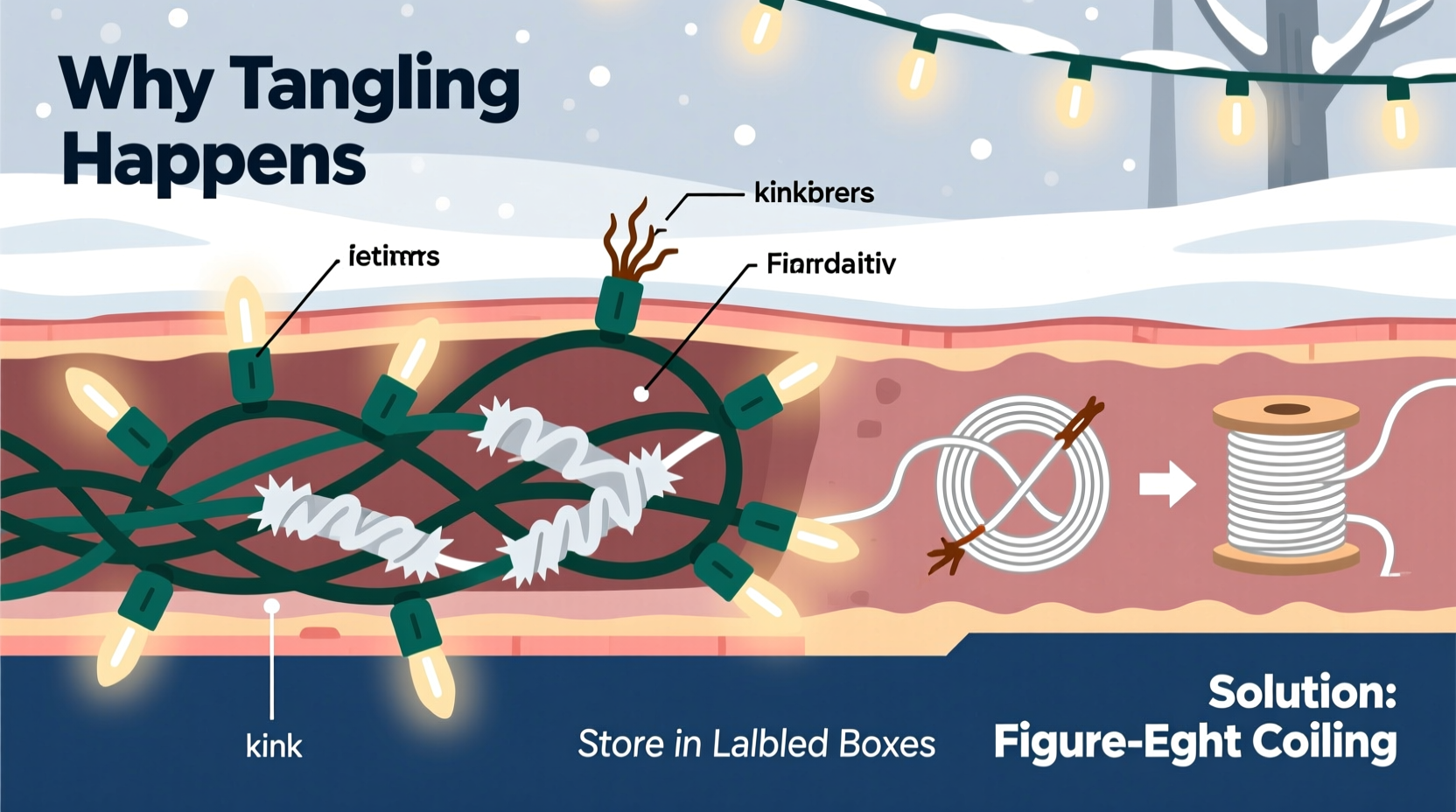
It may feel like your Christmas lights have a mind of their own, but the truth is rooted in well-documented physical principles. In 2007, physicists Dorian M. Raymer and Douglas E. Smith from the University of California, San Diego conducted a study published in the Proceedings of the National Academy of Sciences. They discovered that when a string or cord is agitated—such as being tossed into a box—it has a high probability of forming knots within seconds. Their experiments showed that even short lengths of rope, when tumbled randomly, formed complex knots over 50% of the time.
Christmas lights are especially prone to this because they combine several risk factors: length, flexibility, uneven weight distribution (from bulbs and plugs), and often being stored loosely in containers. When you drop a strand into a bin, the movement causes loops to form. As the strand shifts, one end can slip through a loop—creating a knot. Once started, friction and continued motion tighten the knot, making it harder to undo.
Additionally, most modern Christmas lights use thin, pliable copper wiring coated in flexible plastic insulation. While ideal for bending around trees and railings, this flexibility makes them more susceptible to coiling and twisting. Over time, repeated bending can cause \"memory\" in the wire, encouraging it to curl back on itself and increasing tangling potential.
Material and Design Factors That Increase Tangling Risk
Not all Christmas lights tangle equally. Several design elements influence how likely a strand is to become a knotted nightmare.
- Length and Strand Count: Longer strands (over 25 feet) are exponentially more likely to tangle than shorter ones. Multiple connected strands compound the problem, creating junctions where knots easily form.
- Bulb Spacing and Weight: Lights with large or heavy bulbs create uneven tension. When stored, heavier sections sag and twist, increasing contact points where knots initiate.
- Wire Gauge and Stiffness: Thinner wires (higher gauge numbers) are more flexible and thus more prone to coiling. Some LED light manufacturers now use slightly stiffer jackets to reduce this issue.
- Plug and End Configuration: A bulky plug or transformer at one end acts as a \"knot anchor,\" catching loops as the wire moves. Strands with connectors on both ends are especially problematic.
Older incandescent lights tend to tangle less than modern LEDs—not because of brightness, but due to thicker wiring and heavier construction. However, their energy inefficiency and heat output make them less desirable despite better knot resistance.
Proven Methods to Prevent Tangling
Preventing tangles isn’t about luck—it’s about technique. By applying consistent winding methods and proper storage tools, you can drastically reduce or even eliminate knots year after year.
Use the Over-Under Coiling Method
This professional cable management technique prevents twist buildup. Instead of wrapping lights in a continuous clockwise motion (which introduces rotational stress), alternate the direction every other wrap.
- Hold the plug end in one hand.
- Make the first loop over your fingers (clockwise).
- For the second loop, go under and then over (counterclockwise).
- Alternate each loop: over, under, over, under.
- Secure the coil with Velcro straps or soft ties.
This method cancels out torsion forces, keeping the wire neutral and reducing spontaneous curling during storage.
Store Lights on a Reel or Cardboard Spool
Wrapping lights around a rigid object maintains shape and prevents shifting. You can buy plastic reels designed for Christmas lights, or make your own using:
- Circular cardboard cutouts (12–14 inches in diameter)
- PVC pipe caps with center holes
- Empty oatmeal containers with the top rim used as a guide
Drill or punch two small slots near the edge to tuck the plug and bulb end in place, preventing uncoiling.
Separate and Individualize Strands
Avoid chaining multiple strands together before storage. Disconnect them completely and store each one separately. This reduces complexity and eliminates junction points where tangles begin.
Best Storage Practices: Do’s and Don’ts
| Do’s | Don’ts |
|---|---|
| Use soft fabric ties or Velcro straps instead of rubber bands or zip ties | Never use metal twist ties—they can damage insulation over time |
| Store in shallow, wide containers to minimize stacking pressure | Avoid deep boxes where cords get buried and crushed |
| Keep in a cool, dry place away from rodents and temperature swings | Don’t store in attics or garages if humidity or pests are present |
| Place silica gel packs in storage bins to reduce moisture | Never seal lights in airtight plastic without desiccants—condensation causes corrosion |
| Test lights before storing to catch issues early | Don’t pack away broken strands; fix or replace them immediately |
“Cable management is 20% equipment and 80% habit. The over-under method takes practice, but once mastered, it cuts setup time in half.” — Carlos Mendez, Electrical Systems Technician and Holiday Lighting Installer
Real-World Example: How One Family Eliminated Tangle Time
The Thompson family in Portland, Oregon, had spent nearly eight hours untangling lights each December. With three outdoor trees, a roofline display, and a full porch setup, their 42 light strands were thrown into two large bins after the holidays. By November, the strands were fused into dense knots, requiring cutting and splicing—costing them replacements every few years.
In 2021, they adopted a new system: each strand was individually coiled using the over-under method, secured with Velcro, and labeled. They mounted five wooden reels in their basement closet, each dedicated to a specific display area. After decorating, they tested and rewound each strand immediately.
The result? First-year setup time dropped from 14 hours to under 4. Not a single strand was damaged due to tangling. Over three seasons, they’ve saved over $180 in replacement costs and reclaimed family time previously lost to untangling.
Step-by-Step Guide: How to Store Christmas Lights Without Tangles
Follow this timeline each year after taking down your decorations:
- Day 1: Test and Sort
Plug in each strand to check for dead bulbs or broken wires. Set aside any needing repair. - Day 2: Clean Gently
Wipe down wires with a dry microfiber cloth. For outdoor lights, use a slightly damp cloth to remove dirt, then air-dry completely before storage. - Day 3: Coil Using Over-Under Method
Wrap each strand carefully, alternating loop directions. Keep tension even—don’t pull too tight. - Day 4: Secure and Label
Fasten with soft ties. Attach a tag indicating length, color, location used, and date of last test. - Day 5: Store Properly
Place coils on reels or in shallow bins. Avoid stacking heavy items on top. Include moisture absorbers.
By spreading the process over five days, the work feels manageable and ensures attention to detail.
Frequently Asked Questions
Can I use zip ties to secure coiled lights?
No. Zip ties can compress the wire insulation over time, leading to cracks and electrical hazards. Use reusable Velcro straps or cloth ribbons that don’t constrict the wires.
Why do my lights tangle even when I try to be careful?
If you’re still experiencing tangles, check for unnoticed twists during winding. Also, ensure you’re not storing lights in a container that gets jostled—like a closet door bin or a moving vehicle. Even minor vibrations can initiate knotting.
Are there tangle-resistant Christmas lights on the market?
Yes. Some brands now offer pre-strung light kits on reels or with rigid support frames. Others use flat ribbon cables instead of round wires, which resist twisting. Look for terms like “tangle-free design” or “memory-reduced cable” when shopping.
Conclusion: Make Next Holiday Season Smoother
Tangled Christmas lights aren’t inevitable—they’re the result of predictable physical forces and avoidable storage mistakes. By understanding the science of knot formation and applying disciplined winding and storage techniques, you can transform a frustrating chore into a seamless part of your holiday routine. The over-under method, proper tools, and consistent habits make all the difference. Imagine opening your storage bin next December and pulling out perfectly coiled strands, ready to hang in minutes. That peace of mind is worth the small effort invested today.




 浙公网安备
33010002000092号
浙公网安备
33010002000092号 浙B2-20120091-4
Comments
No comments yet. Why don't you start the discussion?