
As the holiday season approaches, homes across the country light up with festive displays. Among the most common decorations are strings of Christmas lights—twinkling in windows, wrapped around trees, or draped along rooftops. But if you've ever sorted through a tangled box of lights, you may have noticed something subtle yet significant: some plugs have two prongs, while others have three. This isn't random variation—it reflects important differences in electrical design, safety standards, and intended use. Understanding why helps ensure safer installations, better compatibility, and smarter purchasing decisions.
The Basics of Plug Design: Two vs. Three Prongs
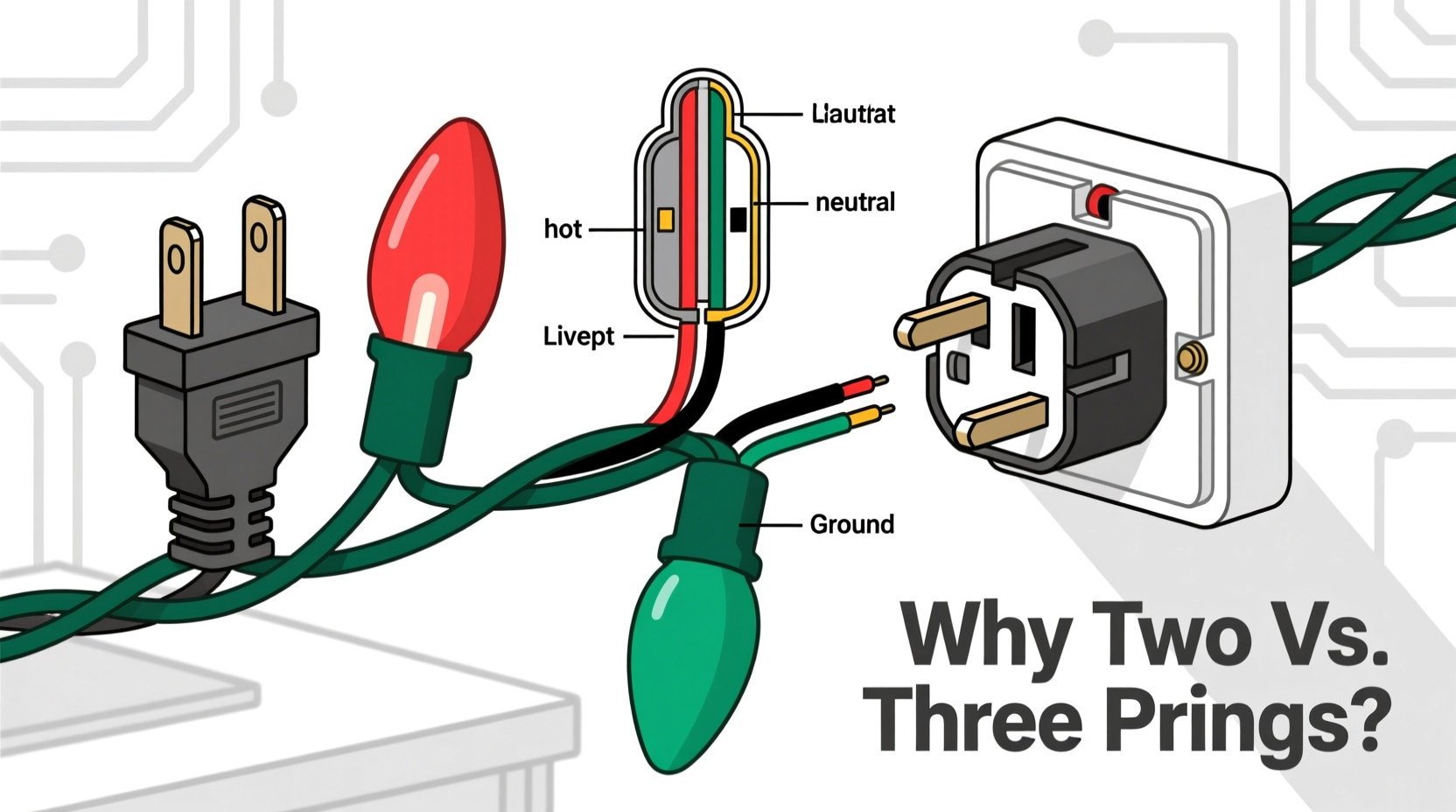
At first glance, the difference between a two-prong and three-prong plug seems simple. A two-prong plug consists of a hot (live) and neutral conductor. The wider blade is typically neutral, while the narrower one carries current from the source. These are commonly found on double-insulated devices where grounding isn’t required by design.
A three-prong plug adds a third component: the ground pin. This round or U-shaped prong connects to the grounding wire in your home’s electrical system. Its purpose is safety—to provide a low-resistance path for stray electrical current in case of a short circuit or insulation failure. If a fault occurs, the ground redirects electricity safely into the earth instead of through a person or flammable material.
So when applied to Christmas lights, the presence or absence of that third prong signals whether the product includes—or requires—a grounding mechanism. But not all Christmas lights need grounding, which explains why both types exist.
Electrical Safety Standards and Holiday Lighting
The distinction between two- and three-prong Christmas lights stems largely from compliance with national electrical codes and product safety certifications. In the United States, the National Electrical Code (NEC), enforced through local building regulations, sets minimum requirements for safe electrical installations, including temporary holiday lighting.
Underwriters Laboratories (UL) certification plays a crucial role here. UL-listed Christmas lights must meet rigorous testing standards for fire risk, electrical leakage, and mechanical durability. Products are categorized based on their intended environment:
- Indoor-rated lights: Typically use two-prong plugs. They operate at lower voltages or are designed with sufficient insulation so grounding is unnecessary.
- Outdoor-rated lights: Often feature three-prong grounded plugs, especially for longer runs, higher wattage, or metal-based components. Moisture exposure increases shock risk, making grounding essential.
“Grounding reduces the risk of electric shock significantly, particularly in damp environments like outdoor patios or garages.” — David Reynolds, Electrical Safety Engineer, UL Solutions
This division aligns with how circuits are wired in homes. Most interior outlets near living areas are ungrounded (older homes) or grounded but used primarily for low-risk appliances. Outdoor and garage outlets, however, are now required by code to be grounded and GFCI-protected—making them compatible only with three-prong plugs for high-draw or exposed-use devices.
Power Load and Circuit Design Differences
Another key factor behind the prong count is power consumption. Traditional incandescent mini-lights often draw more current than modern LED versions. A string of 50 incandescent bulbs might consume 20–40 watts, whereas an equivalent LED set uses as little as 4–6 watts. Higher wattage means more heat and greater potential for faults—especially when multiple strands are daisy-chained together.
To manage this, manufacturers of heavier-duty light sets (often used outdoors or commercially) incorporate grounding via a three-prong plug. Consider these typical configurations:
| Type of Light | Voltage | Typical Plug | Use Case | Max Daisychain Length |
|---|---|---|---|---|
| Mini Incandescent (Indoor) | 120V | Two-prong | Windows, indoor trees | 3–4 sets |
| LED Mini Lights (Indoor/Outdoor) | 120V | Two-prong (many) | General decoration | Up to 10+ sets |
| C7/C9 Bulbs (Incandescent) | 120V | Three-prong (common) | Outdoor rooflines, commercial | Depends on gauge |
| Commercial Grade LED Arrays | 120V / 240V | Three-prong | Large displays, theaters | Varies by model |
Note that even among LED lights, higher-output models meant for permanent outdoor mounting often include grounding. The decision hinges not just on voltage, but on enclosure type, proximity to moisture, and expected lifespan under stress.
Real-World Example: A Homeowner’s Wiring Challenge
Sarah Thompson lives in a 1970s suburban home with mostly two-prong outlets. She wanted to install new C9 Christmas lights along her roofline—lights she bought because they were advertised as “commercial brightness” and “long-lasting.” When she unpacked them, she discovered they had three-prong grounded plugs.
Her existing outdoor outlet was ungrounded, meaning plugging in the lights would either require rewiring or using a cheater plug—an unsafe workaround. After consulting an electrician, she learned that upgrading the circuit to include grounding and GFCI protection wasn’t just necessary for safety; it was now required by local code for any new outdoor installation drawing over 15 amps.
The electrician explained that the manufacturer included the third prong precisely because those lights could generate hazardous leakage currents if insulation degraded due to weather exposure. Without grounding, a fault could energize the metal sockets or frame, posing a serious shock hazard during installation or removal.
Sarah decided to upgrade her outdoor circuit. Though it cost a few hundred dollars, she gained peace of mind—and future-proofed her setup for other seasonal equipment like inflatable decorations and landscape lighting.
How to Choose the Right Lights for Your Setup
Selecting between two- and three-prong Christmas lights shouldn’t be arbitrary. It should reflect your electrical infrastructure, location, and usage plans. Follow this checklist before buying or installing:
🔌 Christmas Light Selection Checklist
- ✅ Determine where you’ll install the lights: indoors, covered porch, or fully exposed outdoor area?
- ✅ Check your outlet types: Are they grounded (three-slot)? Use a receptacle tester if unsure.
- ✅ Review the packaging: Look for “UL Listed,” “For Indoor Use Only,” or “Suitable for Outdoor Use.”
- ✅ Calculate total load: Add up the wattage of all connected strings to avoid overloading circuits.
- ✅ Inspect cords annually: Discard any with cracked insulation, loose connections, or bent prongs.
- ✅ Avoid modifying plugs: Never cut off the ground pin to fit an older outlet.
If your home has outdated wiring, consider investing in GFCI outlets—even without full grounding. While they don’t replace a true ground, GFCIs detect imbalances in current flow and shut off power within milliseconds, greatly reducing electrocution risk.
Common Misconceptions About Grounding and Holiday Lights
Several myths persist about plug types and safety:
- Myth: “Three prongs mean better quality.” Not necessarily. Many premium LED light sets are double-insulated and legally exempt from requiring a ground.
- Myth: “If it fits, it’s safe.” Forcing a three-prong plug into a two-slot outlet bypasses critical protection.
- Myth: “LEDs don’t need grounding because they’re low voltage.” While many LEDs run on low-voltage DC internally, they still plug into 120V AC mains and can develop faults.
The real determinant is not the number of prongs alone, but whether the device meets applicable safety standards for its class and application. Always verify labeling and avoid off-brand imports lacking UL or ETL certification.
Step-by-Step: Installing Christmas Lights Safely Based on Plug Type
Follow this sequence to ensure safety regardless of prong configuration:
- Inspect all light sets for damage before use. Replace frayed wires or broken sockets.
- Test outlets with a plug-in circuit analyzer to confirm correct wiring and grounding status.
- Match plug type to outlet: Use only two-prong lights in ungrounded outlets. For three-prong devices, use only in grounded outlets.
- Connect through a GFCI if possible—especially outdoors—even if the lights have two prongs.
- Daisy-chain responsibly: Follow manufacturer limits. Overloading causes overheating, even with LEDs.
- Secure cords properly using insulated clips, not nails or staples, to prevent wire damage.
- Turn off and unplug lights when leaving home or going to sleep.
This process minimizes fire hazards, protects against shocks, and extends the life of your display.
Frequently Asked Questions
Can I use a two-prong adapter to plug three-prong Christmas lights into an old outlet?
No—not safely. Adapters rely on the outlet cover screw being grounded to complete the connection, which is often not the case in older homes. Doing so defeats the purpose of grounding and creates a hidden hazard. Upgrade the circuit instead.
Why do some outdoor-rated lights still have two prongs?
Many modern outdoor LED light sets are double-insulated and carry a “Class II” rating, meaning they don’t require grounding. Their construction prevents user contact with live parts even if internal insulation fails. Always check the label for confirmation.
Is it dangerous to mix two- and three-prong lights on the same circuit?
No, as long as each is plugged into a compatible outlet. The danger lies in mismatched plug-to-outlet connections, not mixed use. However, avoid overloading the circuit by calculating combined wattage.
Conclusion: Safety First, Sparkle Second
The reason some Christmas lights have two prongs while others have three comes down to engineering choices rooted in safety, regulatory compliance, and environmental exposure. Two-prong designs work well for lightweight, indoor, or double-insulated applications. Three-prong versions serve higher-risk scenarios—particularly outdoors—where grounding provides a vital fail-safe.
Beyond aesthetics, responsible decorating means respecting electrical fundamentals. Whether you're hanging delicate fairy lights in a child’s room or outlining your house with bold C9s, always match the plug type to your outlet's capabilities, prioritize certified products, and never compromise on grounding when it’s required.




 浙公网安备
33010002000092号
浙公网安备
33010002000092号 浙B2-20120091-4
Comments
No comments yet. Why don't you start the discussion?