
That sharp, acrid, sometimes sweet-and-burnt scent wafting from freshly plugged-in holiday lights is familiar to many households each December. It’s not imagination—it’s chemistry in action. While the odor typically fades within minutes or hours, its presence raises understandable questions: Is it harmful? Does it indicate a defect? Could it signal fire risk? The answer lies in materials science, manufacturing processes, and decades of electrical safety evolution—not faulty wiring or poor quality alone. Understanding this phenomenon empowers consumers to use seasonal lighting safely, confidently, and intelligently.
The Science Behind the Smell: Off-Gassing of New Materials
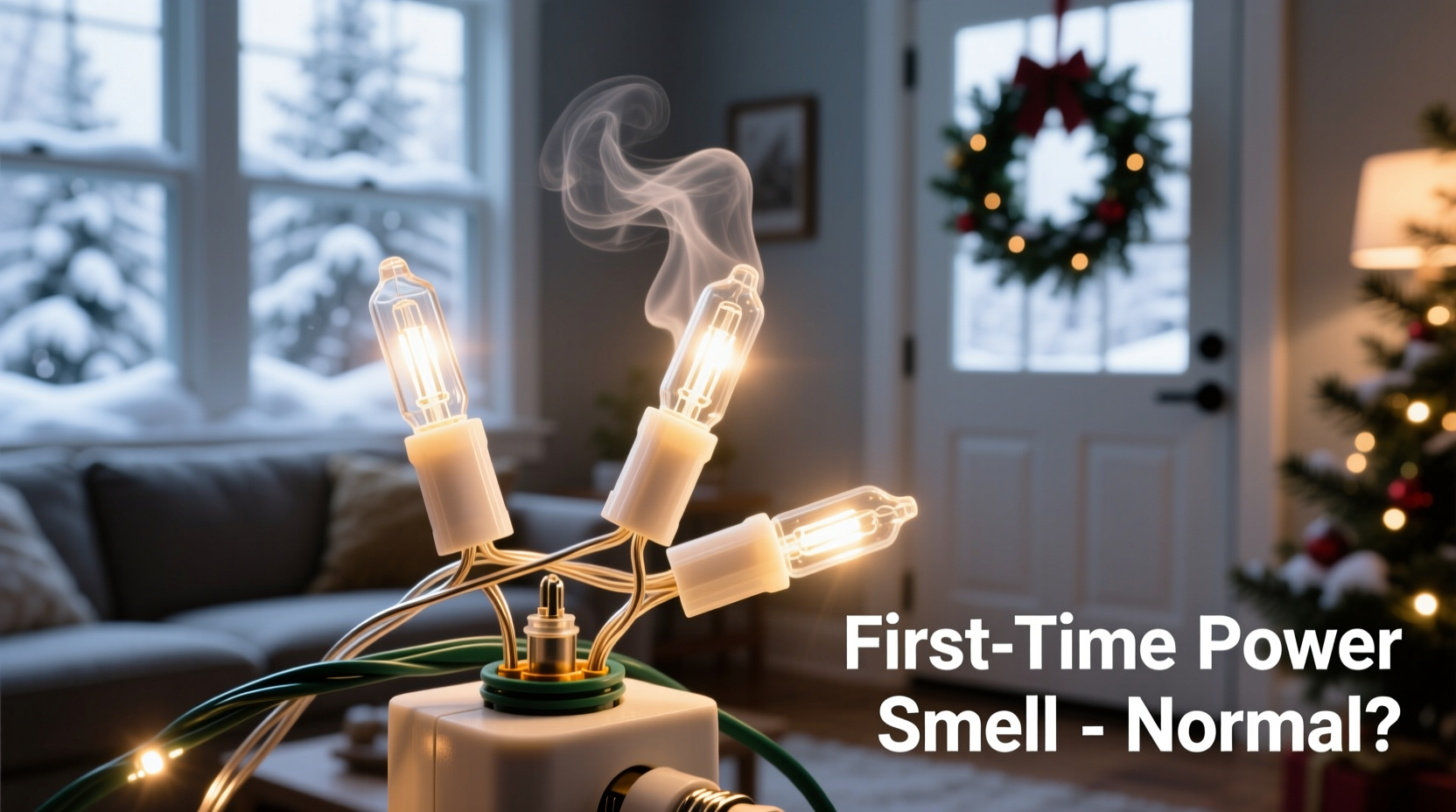
The primary cause of the “new light smell” is thermal off-gassing—a process where volatile organic compounds (VOCs) trapped in plastics, adhesives, wire insulation, and solder fluxes are released as heat builds up in the circuit. When electricity flows through the filament or LED driver, even low-wattage strands generate localized warmth (typically 40–75°C at connection points). This heat agitates molecules embedded in nearby polymers, causing them to volatilize and enter the air as odorants.
Common culprits include:
- Plasticizers like phthalates or adipates used in PVC insulation jackets—especially in older or budget-friendly C7/C9 bulb sets—emit a chlorinated, medicinal aroma when warmed.
- Epoxy resins in LED encapsulants (the clear dome covering each diode) can release trace formaldehyde or acetaldehyde during initial thermal cycling.
- Flux residues left behind after soldering printed circuit boards (PCBs) in LED controllers often contain rosin-based or no-clean organic acids that produce a pine-like or slightly caramelized scent.
- UV stabilizers and flame retardants (e.g., brominated compounds or organophosphates) added to outdoor-rated housings may emit faint chemical notes under sustained load.
This off-gassing is transient by design. Once the materials reach thermal equilibrium—usually after 1–3 hours of continuous operation—the emission rate drops sharply. Manufacturers intentionally engineer these compounds to migrate and dissipate early, ensuring long-term stability and reduced VOC exposure over the product’s lifespan.
Safety Assessment: When Odor Is Normal vs. When It Warrants Concern
Not all smells carry equal weight. Context matters: intensity, duration, accompanying symptoms, and environmental conditions help determine risk level.
According to UL (Underwriters Laboratories), all certified seasonal lighting sold in North America must pass thermal endurance testing, which includes measuring VOC emissions under worst-case load scenarios. Their 2023 Holiday Lighting Safety Report confirms that “initial thermal off-gassing falls well below occupational exposure limits (OELs) established by OSHA and ACGIH.” In other words, brief exposure poses negligible health risk to healthy adults—but sensitivity varies.
“The brief, low-concentration VOC release during first use is an expected part of polymer stabilization—not a sign of failure. What matters is whether the system remains thermally stable afterward.” — Dr. Lena Torres, Senior Materials Engineer, UL Solutions
However, certain red flags demand immediate attention:
- A strong, acrid, or burning-rubber smell that grows stronger over time
- Visible smoke, charring, or bubbling insulation near plugs or controllers
- Flickering accompanied by audible buzzing or sizzling
- Tripping circuit breakers or GFCI outlets repeatedly
These suggest electrical overload, compromised insulation, or component failure—not routine off-gassing.
Material & Design Factors That Amplify or Reduce the Smell
Odor intensity isn’t random. It correlates strongly with construction choices. Below is a comparison of common light types and their typical off-gassing profiles:
| Light Type | Typical Odor Profile | Primary Source Material | Duration of Noticeable Smell |
|---|---|---|---|
| Traditional Incandescent Mini-Lights (Corded) | Warm, slightly sweet, waxy | PVC-coated copper wire + phenolic plastic sockets | 15–45 minutes |
| LED String Lights (Budget, Non-UL Listed) | Sharp, chemical, plasticky | Low-grade PVC housing + rosin-core solder flux | 2–4 hours |
| UL-Certified LED Net Lights | Faint, neutral, barely perceptible | Halogen-free TPE insulation + no-clean solder + silicone encapsulation | Under 10 minutes |
| Commercial-Grade C9 LED Bulbs | Negligible to none | Aluminum heat sinks + ceramic PCB substrates + epoxy-free lens bonding | None detectable |
Key differentiators include:
- Insulation type: Polyvinyl chloride (PVC) emits more VOCs than thermoplastic elastomers (TPE) or polyethylene (PE).
- Soldering method: Rosin-core solder leaves more residual flux than nitrogen-reflow soldering used in premium electronics.
- Encapsulation: Silicone gels outgas less than epoxy resins; some high-end LEDs use glass lenses instead.
- Certification status: UL 588 (Standard for Seasonal and Holiday Electrical Products) mandates VOC emission limits and requires thermal aging tests before certification.
A Real-World Example: The 2022 Chicago Apartment Incident
In November 2022, a Chicago apartment complex reported multiple residents complaining of persistent “burnt candy” odors from newly installed pre-lit garlands. Property managers initially suspected HVAC cross-contamination—until maintenance staff traced the scent to identical 100-light LED strands purchased online from an uncertified supplier. Upon inspection, technicians observed subtle yellowing at the base of several bulbs and mild softening of the PVC cord jacket near the plug.
Testing by the city’s Fire Prevention Bureau revealed the strands lacked UL listing and used non-compliant flame retardants that degraded at lower temperatures. While no fire occurred, the VOC profile included elevated levels of benzaldehyde (almond-like odor) and chlorobenzene (medicinal)—both regulated under EPA’s Toxics Release Inventory. The incident led to a recall of 17,000 units and reinforced the importance of purchasing only UL- or ETL-listed seasonal lighting.
This case underscores that while most new-light smells are harmless, sourcing matters profoundly. Certification isn’t marketing—it’s third-party verification of material integrity and thermal behavior.
Practical Steps to Minimize Odor and Maximize Safety
You don’t need to wait until December to prepare. Proactive steps taken before and during use significantly reduce odor impact and enhance reliability.
- Unbox and air out indoors (not in garage or attic): Lay strands flat in a well-ventilated room for 24–48 hours before plugging in. Air circulation accelerates passive off-gassing without heat stress.
- Perform a “test burn” outdoors or in a garage: Plug in for 30 minutes in a safe, open area. Monitor closely for smoke, unusual sounds, or excessive heat at connections.
- Use a dedicated outlet with GFCI protection: Avoid power strips or extension cords unless rated for outdoor/continuous-duty use. Overloading increases resistance—and heat—at junction points.
- Limit initial runtime to 2–3 hours: Let the strand stabilize thermally before overnight or extended use. Many modern controllers include auto-shutoff timers for this purpose.
- Store properly between seasons: Coil loosely (never tightly wound), keep in climate-controlled space (avoid attics >35°C or basements >60% RH), and store in breathable cotton bags—not sealed plastic bins where residual VOCs can reabsorb.
FAQ: Addressing Common Concerns
Is the smell toxic to pets or children?
No evidence suggests short-term exposure to initial off-gassing poses toxicity risks to pets or children. However, because young children and small animals have higher respiratory rates per body weight, it’s prudent to ventilate the room and avoid placing lit strands at nose level in cribs, playpens, or pet beds during the first few hours of use.
Why do outdoor lights smell more than indoor ones?
Outdoor-rated lights often use thicker PVC jackets with higher concentrations of UV stabilizers and flame retardants to withstand weather extremes. These additives contribute additional VOCs. Also, colder ambient temperatures mean greater thermal delta when powered—intensifying initial outgassing. Always allow outdoor lights to acclimate to indoor temps for 1–2 hours before first use if stored in cold conditions.
Can I eliminate the smell permanently with cleaning or treatment?
No—and attempting to do so is unsafe. Wiping connectors with alcohol, applying silicone sprays, or “baking” lights in an oven risks damaging insulation, corroding contacts, or triggering premature failure. The odor resolves naturally. Interfering introduces new hazards without benefit.
Conclusion: Smell as Signal—Not Symptom
The scent of new Christmas lights is neither a flaw nor a warning—it’s a quiet signature of modern materials doing exactly what engineers designed them to do: stabilize under thermal load. Recognizing it as transient chemistry, not malfunction, transforms anxiety into informed confidence. Choosing UL- or ETL-listed products, allowing for proper ventilation and test burns, and storing thoughtfully aren’t just best practices—they’re meaningful acts of care for your home, your loved ones, and the traditions you uphold each year.
That first whiff of December isn’t something to mask or dismiss. It’s a subtle reminder that behind every twinkle is precision engineering, rigorous testing, and the quiet alchemy of polymers meeting electricity. Embrace it as part of the season’s sensory ritual—but always anchor that embrace in awareness, preparation, and respect for the standards that keep our holidays bright and safe.




 浙公网安备
33010002000092号
浙公网安备
33010002000092号 浙B2-20120091-4
Comments
No comments yet. Why don't you start the discussion?