
Christmas villages—those intricate, nostalgic tabletop landscapes of snow-dusted cottages, glowing churches, and winding train tracks—are more than festive décor. For discerning collectors, they represent a quiet but compelling asset class. While most holiday ornaments depreciate or hold steady, select village lines have appreciated 200–500% over two decades. The 1994 Department 56 “Snow Village” Santa’s Workshop, for example, sold for $39.99 at launch; mint-in-box examples now command $425–$580. Meanwhile, a rare 1987 Department 56 “Lighthouse Point” set recently sold for $1,275—nearly 12× its original $109 price. This isn’t luck. It’s the result of intersecting forces: scarcity, craftsmanship, cultural resonance, and disciplined collecting habits. Understanding *why* value accrues—and how to position yourself strategically—is essential for anyone who wants their holiday tradition to grow in meaning *and* monetary worth.
The Four Pillars of Village Appreciation
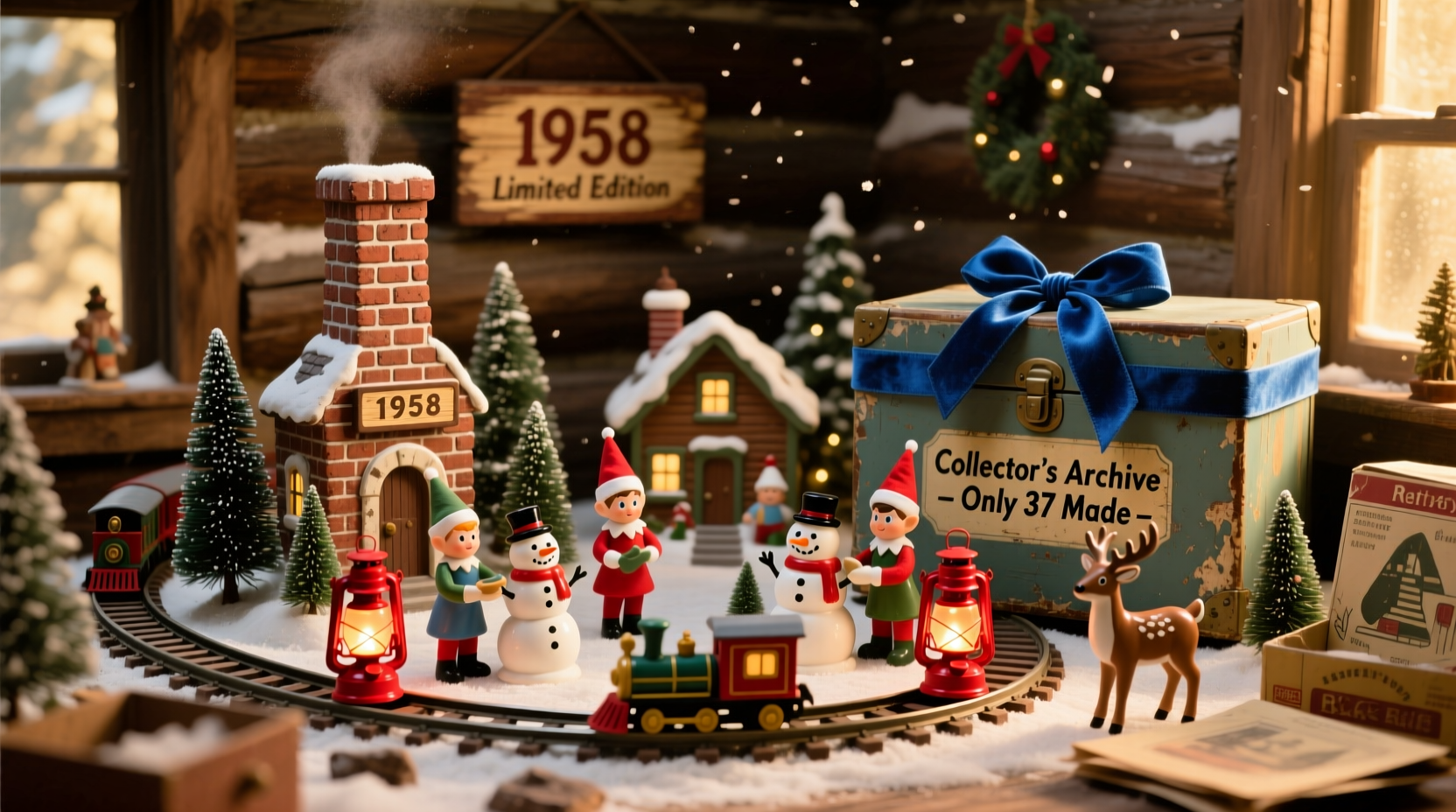
Appreciation in Christmas villages doesn’t happen randomly. It emerges from four interdependent pillars—each acting as a filter that separates transient novelties from enduring collectibles.
- Rarity & Production Limits: Villages released in limited editions (e.g., “First Edition,” “Collector’s Reserve,” or numbered runs under 5,000) inherently constrain supply. When demand rises—even modestly—the price floor lifts. Department 56’s early “Village Green” series (1985–1988) had print runs averaging just 12,000–18,000 units per piece—tiny by mass-market standards.
- Artistic Significance & Craftsmanship: Pieces hand-sculpted by recognized designers (like Department 56’s original sculptor, Jim Kline) or featuring unique techniques—hand-painted details, embedded fiber-optic lighting (pre-2000), or multi-layered ceramic glazing—carry higher intrinsic value. These elements resist replication and age gracefully when preserved.
- Cultural Timing & Nostalgia Cycle: Villages launched during peak nostalgia windows—such as the mid-1990s “retro-holiday” revival or post-2008 recession-era comfort collecting—gain emotional resonance. As original buyers age into discretionary income and sentimental motivation, secondary-market demand surges. The 2001 “Heritage Collection” line gained traction precisely because it echoed 19th-century New England architecture—a deliberate callback during a period of heightened Americana appreciation.
- Brand Continuity & Legacy: Companies with long-standing reputations (Department 56, Lemax, Dept 56 Heritage, and the discontinued but revered Bachmann E-Z Track Village line) benefit from collector trust. Their consistent quality control, documentation practices, and archival support (e.g., official catalogs, production records) enable verification—critical for high-value transactions.
Condition Is Non-Negotiable: The 90/10 Rule
In village collecting, condition dominates all other factors. A pristine 1992 Department 56 “Gingerbread House” can sell for $340, while the same piece with a hairline crack in the chimney or faded roof glaze may fetch only $95. Collectors apply what’s known as the 90/10 rule: 90% of a piece’s value hinges on its physical state; only 10% relates to rarity or design. Why? Because flaws compound. A chipped roof edge invites moisture ingress; a loose light bulb socket corrodes wiring; a missing chimney finial suggests prior mishandling—raising red flags about overall care history.
Three condition benchmarks separate “good” from “valuable”:
- Mint-in-Box (MIB): Factory-sealed box, unopened, with all original inserts, tags, and paperwork. Highest liquidity and premium (often +40–70% over opened pieces).
- Mint-on-Display (MOD): Removed from box but never assembled or lit; stored upright in climate-controlled darkness; no fingerprints, dust buildup, or discoloration. Requires meticulous handling—gloves, clean surfaces, zero vibration.
- Flawless-Operational (FO): Fully assembled and used, yet without scratches, paint wear, bent wires, burnt-out bulbs, or yellowed plastic components. All lights function, trains run smoothly, and structural joints remain tight.
“Collectors don’t buy villages—they buy *certainty*. A single flaw introduces doubt: Was it dropped? Stored damp? Exposed to UV? That uncertainty erodes confidence—and price.” — Lydia Chen, Senior Appraiser, Heritage Auctions Holiday Division
Provenance & Documentation: Your Value Insurance Policy
Unlike fine art or vintage watches, Christmas villages rarely come with formal certificates of authenticity. Yet provenance—the documented history of ownership and care—acts as powerful value insurance. A 1998 Lemax “North Pole Express” set accompanied by its original sales receipt from FAO Schwarz (dated December 1998), a 2003 appraisal letter from a certified holiday appraiser, and photos showing its display in a climate-controlled cabinet since purchase, sold for $890 in 2023—32% above comparable undocumented listings.
Build your own provenance trail with this checklist:
- ✔ Save every original box, insert, instruction sheet, and warranty card—even if you discard packaging later.
- ✔ Photograph each piece upon acquisition: front, back, base stamp, and close-up of any distinguishing marks (e.g., “Dept 56 ©1993” etched into ceramic).
- ✔ Record purchase date, location, and price in a dedicated log (digital or analog). Note environmental conditions: e.g., “Stored in dehumidified closet, 62°F avg, 45% RH.”
- ✔ If restoring or repairing, use only manufacturer-approved parts and document repairs with dated notes and vendor receipts.
- ✔ Avoid third-party “authentication stickers” or aftermarket labels—these diminish trust. Authenticity is verified through factory markings and historical consistency, not added seals.
Strategic Acquisition: What to Buy (and What to Skip)
Not all villages are created equal—and not all will appreciate. Focus capital where convergence occurs: artistic merit, documented scarcity, and collector consensus. The table below compares key attributes across major lines to guide purchasing decisions.
| Village Line | Peak Production Era | Rarity Signal | Risk Factor | Current Appreciation Trend (5-yr CAGR) |
|---|---|---|---|---|
| Department 56 Snow Village (Pre-1995) | 1984–1994 | Hand-numbered bases; “First Edition” stamps; ceramic glaze variations | High breakage risk; fragile fiber-optic strands | +12.4% |
| Lemax “Haunted Village” (Original Series) | 1999–2004 | Limited “Ghost Edition” releases; hand-painted faces; non-reproducible molds | Plastic warping in heat; LED drivers prone to failure | +9.7% |
| Dept 56 Heritage (Early Architectural) | 2007–2012 | Architectural blueprints signed by designer; museum collaboration editions | Overproduction in 2010–2011 diluted scarcity | +3.1% |
| Bachmann E-Z Track Village (Discontinued) | 1997–2005 | No reissues; proprietary track interface; integrated sound modules | Parts scarcity; no service manuals available | +18.2% |
| Modern Mass-Market (e.g., IKEA, Target) | 2015–present | None—no numbering, no archives, no collector infrastructure | Plastic degradation; no resale ecosystem | −2.8% (depreciating) |
Avoid pieces with these red flags: non-removable glued bases (prevents safe cleaning), generic “Made in China” stamps without brand licensing, or designs that mimic popular licensed properties (e.g., “Winter Wonderland” versions of Disney castles—these face legal gray areas and collector skepticism).
Real-World Example: How One Collector Turned $2,100 Into $14,300
In 2008, Maria R., a school librarian in Vermont, began collecting Department 56’s “Historic Landmarks” series—not for investment, but to recreate her childhood village. Over five years, she acquired 22 pieces, always prioritizing MIB condition and focusing exclusively on pre-2000 releases. She kept meticulous logs, stored boxes in acid-free containers with silica gel packs, and displayed only three pieces annually—rotating others to minimize light exposure.
By 2018, she noticed rising auction interest in the 1996 “Liberty Bell” and 1997 “Independence Hall” sets. Rather than sell piecemeal, she engaged Heritage Auctions’ holiday specialist, who advised grouping complementary pieces into thematic lots (“Founding Era Collection”) and highlighting her provenance archive. In November 2023, the 22-piece collection sold as four curated lots. The total realized $14,300—nearly 6.8× her original outlay. Crucially, 73% of the final value came from just six pieces: the three rarest landmarks plus three early “Village Green” accessories purchased in 2009 for under $25 each. Her discipline around condition and documentation turned sentiment into strategy.
FAQ: Practical Questions from New Collectors
How do I verify if a village piece is truly rare?
Start with factory markings: check the base for edition numbers, copyright dates, and sculptor initials (e.g., “JK” for Jim Kline). Cross-reference with authoritative resources—Department 56’s official “Collector’s Encyclopedia” (2002, 2010 editions), the Lemax Collector’s Database (lemexcollectors.org), or the non-commercial forum VillageVault.net. Rarity is confirmed only when multiple independent sources corroborate low production numbers and discontinuation status—not just anecdotal claims on resale sites.
Is it okay to repair a cracked chimney or replace a burnt bulb?
Yes—but only if done invisibly and with period-correct materials. Use ceramic epoxy (not superglue), match paint with artist-grade acrylics mixed to original swatches, and replace bulbs with exact-voltage incandescents (not LEDs) for pre-2005 pieces. Document every repair. Never refinish entire pieces—collectors value original patina. A repaired flaw retains far more value than an untreated one, but full restoration eliminates collector appeal.
Should I invest in insurance for my collection?
Absolutely—if your collection exceeds $2,500 in appraised value. Standard homeowners policies exclude “scheduled collectibles” or cap coverage at $1,000. Obtain a specialized holiday collectibles rider from insurers like Chubb or Lloyd’s of London, which covers accidental breakage, theft, and environmental damage (e.g., humidity-induced warping). Require annual reappraisals—values shift with market trends and condition changes.
Conclusion: Build Legacy, Not Just Inventory
Christmas villages that appreciate aren’t merely objects—they’re vessels of craftsmanship, memory, and intention. Their value grows not because of speculation, but because thoughtful collectors protect them, document them, and pass them forward with reverence. You don’t need deep pockets to begin: start with one pre-2000 piece in impeccable condition, store it properly from day one, and record its story. Over time, that single piece becomes the anchor of a legacy collection—one that reflects your values, honors tradition, and quietly compounds in significance. The most valuable villages aren’t the ones that cost the most at launch. They’re the ones cared for like heirlooms from the very first unwrapping.




 浙公网安备
33010002000092号
浙公网安备
33010002000092号 浙B2-20120091-4
Comments
No comments yet. Why don't you start the discussion?