
For many, blinking lights signal celebration—festive holiday decorations, lively stage effects, or vibrant cityscapes at night. Yet for others, these same flickering patterns trigger discomfort, anxiety, or even physical pain. This divergence isn’t merely a matter of preference. It stems from deep-rooted neurological mechanisms that govern how individuals process sensory input. Understanding why blinking lights can be distressing rather than delightful requires an exploration of brain function, sensory sensitivity, and neural processing variability across different populations.
Sensory Processing and the Brain’s Response to Light
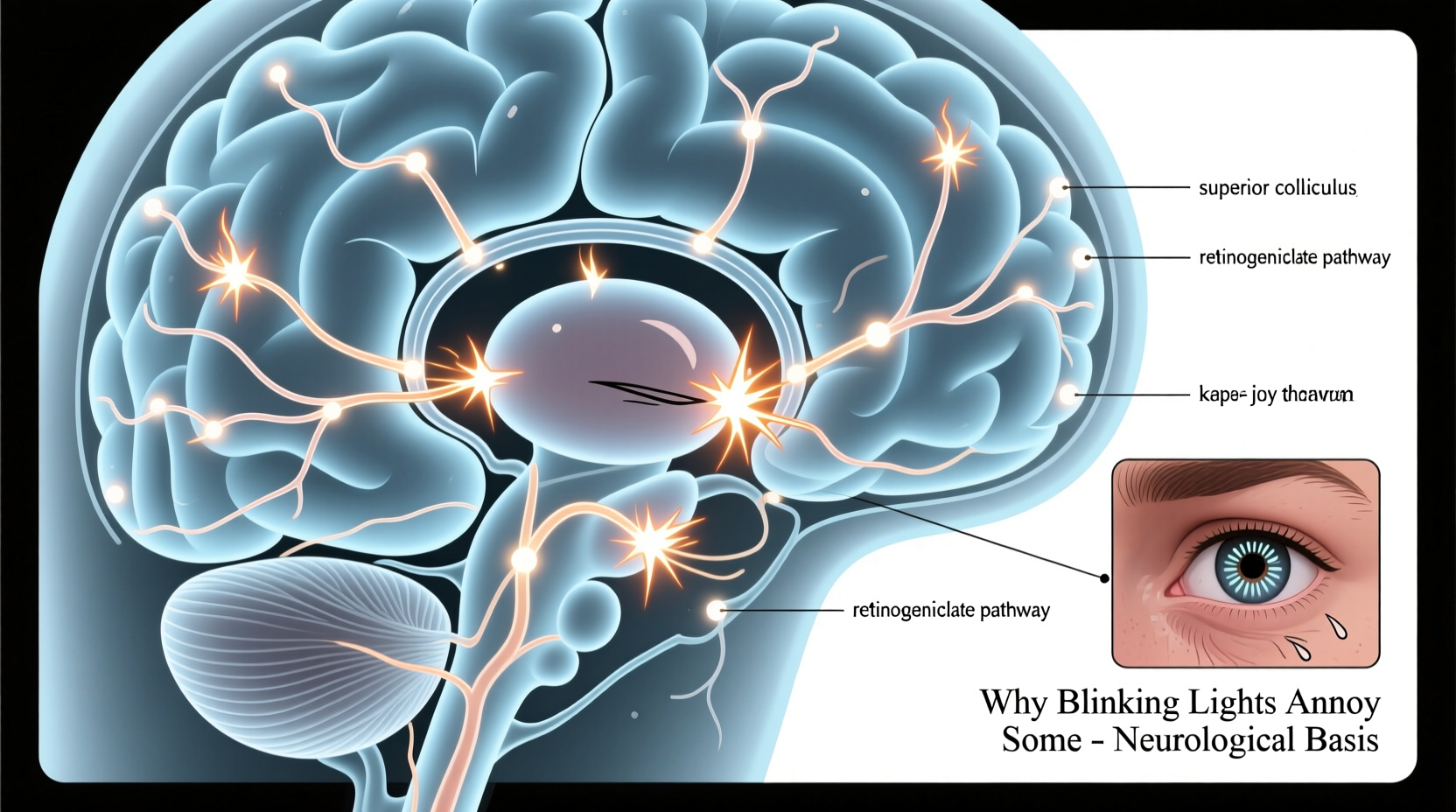
The human visual system is designed to detect changes in light, movement, and contrast. However, not all brains interpret these signals in the same way. Blinking or flickering lights create rapid fluctuations in luminance that activate the retina and send signals through the optic nerve to the visual cortex. In neurotypical individuals, this input is usually filtered and integrated seamlessly. But in those with heightened sensory sensitivity, the brain may struggle to modulate or suppress irrelevant stimuli, leading to overstimulation.
This phenomenon is linked to the brain’s sensory gating mechanism—the ability to filter out repetitive or non-threatening sensory information. When this system is less efficient, as seen in conditions like autism spectrum disorder (ASD), attention-deficit/hyperactivity disorder (ADHD), or migraine disorders, flickering lights are more likely to register as intrusive or overwhelming.
Neurological Conditions Associated with Light Sensitivity
Certain neurological and neurodevelopmental conditions make individuals particularly vulnerable to discomfort from blinking lights. These include:
- Migraine and photophobia: Over 80% of migraine sufferers report light sensitivity during attacks. Flickering lights—especially fluorescent bulbs or LED screens—can act as triggers by overstimulating the trigeminovascular system, which regulates pain in the head and face.
- Epilepsy: Photosensitive epilepsy affects approximately 3–5% of people with epilepsy. Rapidly flashing lights between 3–70 Hz, particularly at 15–20 Hz, can induce seizures by causing abnormal synchronous firing in the visual cortex.
- Autism Spectrum Disorder (ASD): Many autistic individuals experience hyper-reactivity to sensory stimuli. The unpredictability and intensity of blinking lights can disrupt cognitive focus and increase anxiety due to impaired habituation—the brain’s ability to grow accustomed to repeated stimuli.
- ADHD: While less studied, some research suggests that individuals with ADHD may have altered arousal regulation, making them more susceptible to distraction or irritation from environmental flicker.
“Flicker doesn’t just affect vision—it engages widespread brain networks involved in attention, alertness, and emotional regulation.” — Dr. Anjali Patel, Cognitive Neuroscientist, Stanford University
The Role of Neural Oscillations and Brainwave Entrainment
One of the most compelling explanations for discomfort from blinking lights lies in brainwave entrainment. The brain operates using rhythmic electrical activity measured in hertz (Hz), categorized into bands such as delta (sleep), theta (drowsiness), alpha (relaxation), beta (focus), and gamma (high-level processing).
Flickering lights can synchronize with these natural rhythms—a process known as photic driving. For example, a light flashing at 10 Hz may amplify alpha waves, potentially inducing relaxation in some but triggering dizziness or disorientation in others. In photosensitive individuals, this synchronization can push neural circuits into unstable states, increasing seizure risk or perceptual distortion.
Moreover, modern artificial lighting often uses pulse-width modulation (PWM) to control brightness in LEDs and screens. Even when imperceptible to conscious awareness, low-frequency PWM (e.g., below 200 Hz) can still be detected subcortically, contributing to eye strain, headaches, and fatigue in sensitive individuals.
Common Sources of Problematic Flicker
| Light Source | Flicker Frequency Range | Potential Impact |
|---|---|---|
| Fluorescent tubes (magnetic ballast) | 100–120 Hz | Headaches, migraines, attention disruption |
| LEDs with low-quality drivers | 50–500 Hz | Eye strain, visual fatigue, nausea |
| Digital screens (phones, monitors) | 60–240 Hz (PWM dimming) | Reduced concentration, sleep disturbances |
| Christmas lights / decorative LEDs | 1–10 Hz | Anxiety, sensory overload, seizure risk |
| Strobe lights (entertainment) | 3–30 Hz | Photosensitive seizures, vertigo |
Differences in Joyful vs. Annoying Perception
Why do some people enjoy blinking lights while others recoil? The answer lies in individual differences in brain wiring, past experiences, and context.
In safe, predictable environments—such as a holiday display viewed from a distance—blinking lights can evoke positive emotions tied to nostalgia, celebration, or aesthetic pleasure. The brain’s reward system, particularly the release of dopamine in response to novelty and pattern recognition, may contribute to this enjoyment.
However, when flicker is unpredictable, intense, or experienced in already overstimulating environments (e.g., crowded malls, concerts, or offices), it becomes harder for the brain to regulate emotional and sensory responses. Individuals with lower sensory thresholds may perceive the same stimulus as chaotic or threatening, activating the amygdala and sympathetic nervous system—leading to stress, irritability, or withdrawal.
Additionally, cultural and developmental factors play a role. Children exposed to fast-paced media with rapid visual transitions may develop different tolerance levels compared to those raised in visually calmer environments. Similarly, urban dwellers might adapt to constant light variation, whereas rural residents could find the same stimuli jarring.
Mini Case Study: Office Worker with Migraine Sensitivity
Sarah, a 34-year-old graphic designer, began experiencing frequent headaches after her company upgraded to energy-efficient LED lighting. The new overhead panels used PWM dimming, creating a subtle flicker she couldn’t consciously see—but her brain registered it. She reported difficulty concentrating, increased anxiety, and weekly migraines. After consulting a neurologist, she was diagnosed with chronic photophobia linked to prolonged exposure to high-frequency flicker. By switching to full-spectrum, flicker-free bulbs at her desk and wearing FL-41 tinted glasses, Sarah reduced her symptoms significantly within three weeks.
Her case highlights how invisible flicker can have real physiological consequences—and how small environmental adjustments can yield major improvements in well-being.
Practical Strategies for Managing Light Sensitivity
Whether you’re personally affected or supporting someone who is, there are actionable steps to reduce discomfort from blinking lights. Here’s a checklist to help identify and mitigate problematic exposures:
✅ Sensory-Friendly Lighting Checklist
- Choose lighting labeled “flicker-free” or with high-frequency drivers (>20 kHz).
- Use incandescent or high-quality LED bulbs with continuous current regulation.
- Avoid fluorescent lighting, especially older models with magnetic ballasts.
- Adjust screen settings: increase refresh rate, enable DC dimming if available, reduce blue light.
- Wear FL-41 tinted lenses, proven to reduce light sensitivity in migraine and ASD populations.
- Control ambient lighting—use lamps instead of overhead lights where possible.
- Create low-stimulus zones at home or work for sensory recovery.
- Limit exposure to strobe effects, flashing advertisements, or rapidly animated digital displays.
Step-by-Step Guide to Reducing Flicker Exposure
- Assess Your Environment: Walk through your home, workplace, and common areas. Note any sources of blinking, pulsing, or rapidly changing lights (e.g., signage, traffic signals, appliances).
- Identify Symptoms: Keep a log of headaches, eye strain, dizziness, or mood changes. Correlate them with time spent under certain lights.
- Test for Flicker: Use your phone camera or download a flicker-detection app to check bulbs and screens.
- Replace Problematic Lights: Swap out fluorescent or low-quality LEDs with certified flicker-free alternatives.
- Optimize Screens: Set monitors and devices to maximum brightness (to minimize PWM) and use dark mode to reduce glare.
- Introduce Filters: Apply screen filters or wear specialized glasses like those with FL-41 or amber tints.
- Create Retreat Spaces: Designate a room with warm, steady lighting for rest and recovery.
- Advocate for Change: Request accommodations at work or school if flicker affects your health or performance.
Frequently Asked Questions
Can flickering lights cause long-term brain damage?
No evidence suggests that typical environmental flicker causes permanent brain damage. However, chronic exposure to irritating light can contribute to persistent headaches, sleep disruption, and mental fatigue—especially in sensitive individuals. Managing exposure helps prevent cumulative strain.
Are children more sensitive to blinking lights than adults?
Yes, children’s developing nervous systems are often more reactive to sensory stimuli. Autistic children, in particular, may exhibit strong aversions to flickering lights. Early identification and environmental modification can support better comfort and learning outcomes.
Is there a test for photosensitivity?
Yes. Neurologists can perform an electroencephalogram (EEG) with photic stimulation to assess photosensitive epilepsy. For general light sensitivity, symptom tracking and controlled exposure trials are commonly used diagnostic tools.
Conclusion: Toward a More Sensory-Inclusive World
The experience of blinking lights—as either joyful or jarring—is deeply personal and biologically grounded. Recognizing that neurological diversity shapes perception is the first step toward building more inclusive environments. From schools to workplaces, public spaces to entertainment venues, thoughtful lighting design can prevent discomfort and promote well-being for everyone.
Understanding the science behind light sensitivity empowers individuals to advocate for their needs and equips designers, educators, and employers with knowledge to make meaningful changes. Small adjustments—like choosing flicker-free bulbs or offering shaded seating areas—can transform an overwhelming space into a welcoming one.




 浙公网安备
33010002000092号
浙公网安备
33010002000092号 浙B2-20120091-4
Comments
No comments yet. Why don't you start the discussion?