
Across homes, cities, and digital devices, blinking lights are everywhere—from holiday decorations to smartphone notifications. Yet reactions to these flickering stimuli vary dramatically. Some people report feeling calm, even meditative, when watching rhythmic LED patterns or slow-pulsing lamps. Others experience anxiety, headaches, or sensory overload from the same visual cues. This divergence isn’t random. It reflects deep-rooted differences in neurology, psychology, and personal history. Understanding why blinking lights affect us so differently offers insight into brain function, mental health, and how we design environments for well-being.
The Neuroscience of Light Perception
The human brain processes light through a complex network involving the retina, thalamus, and visual cortex. But it doesn't stop there. Non-visual pathways, particularly those linked to the suprachiasmatic nucleus (SCN)—the body’s master clock—respond to changes in light intensity and frequency, influencing mood, alertness, and circadian rhythms.
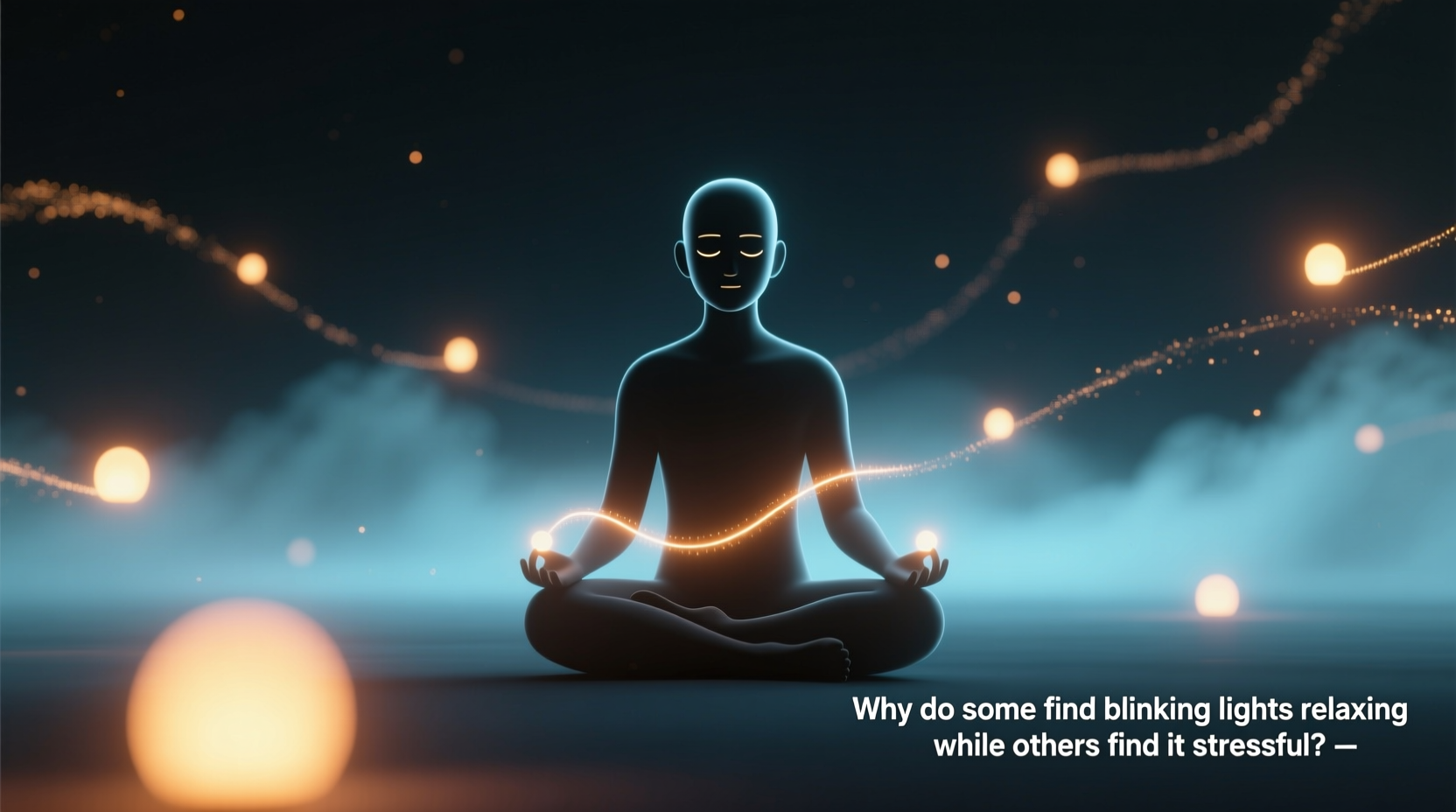
Blinking or flickering lights activate both conscious visual processing and subconscious regulatory systems. For example, steady, low-frequency pulses (like those between 0.5 and 4 Hz) can mimic alpha brainwave rhythms associated with relaxation. When synchronized with breathing or meditation, such lights may entrain brain activity, guiding the mind into a calmer state.
However, not all brains respond favorably. Individuals with heightened neural excitability—such as those with epilepsy, migraines, or autism spectrum disorder (ASD)—may perceive flicker as disruptive. Their brains process sensory input more intensely, making rapid or irregular flashes feel jarring rather than soothing. In fact, photic-induced seizures are triggered in part by flashing lights at specific frequencies, typically between 15–20 Hz, which resonate with cortical neurons.
“Light isn’t just about vision—it’s a direct line to our autonomic nervous system. The way someone reacts to flicker often reveals how their brain regulates arousal.” — Dr. Lena Torres, Cognitive Neuroscientist, Stanford University
Psychological and Emotional Associations
Beyond biology, emotional memory plays a crucial role in how blinking lights are interpreted. A soft, pulsing nightlight might evoke childhood comfort for one person, while another associates similar lights with emergency vehicles during a traumatic event. These learned associations shape perception on an unconscious level.
Consider hospital environments: rhythmic beeping and flashing monitors keep medical staff alert but can induce stress in patients. Over time, repeated exposure under high-stress conditions conditions the brain to link certain light patterns with danger or urgency. This phenomenon, known as classical conditioning, explains why some individuals develop visceral discomfort around intermittent lighting—even when logically safe.
Conversely, intentional use of dynamic lighting in therapeutic settings has shown promise. Chromatherapy rooms, sensory integration spaces, and mindfulness apps often incorporate slow, color-shifting LEDs designed to reduce anxiety. Controlled studies suggest that predictable, aesthetically pleasing light sequences can lower cortisol levels and increase parasympathetic activation—the \"rest and digest\" response.
Sensory Processing Differences Across Populations
One of the most significant factors in divergent responses to blinking lights is individual variation in sensory processing. Research shows that approximately 15–20% of people are “highly sensitive” to environmental stimuli—a trait known as Sensory Processing Sensitivity (SPS). These individuals often report discomfort from bright screens, loud sounds, and flashing visuals.
This sensitivity is especially prevalent among neurodivergent populations:
- Autism Spectrum Disorder (ASD): Many autistic individuals experience hyper-reactivity to sensory input. Flickering lights can contribute to sensory overload, leading to meltdowns or withdrawal.
- ADHD: While less studied, some with ADHD report that rhythmic lights help focus, while others find them distracting due to increased cognitive load.
- Migraine sufferers: Around 80% report photophobia (light sensitivity), with flashing or fluorescent lights commonly cited as triggers.
- Anxiety disorders: Unpredictable stimuli like erratic blinking can heighten vigilance and trigger panic responses.
In contrast, some people actively seek out controlled flicker. Strobe therapy, used in biofeedback and neurotherapy, employs precise light pulses to stimulate brainwave regulation. Similarly, raves and immersive art installations use synchronized lighting to induce trance-like states, suggesting that context and control are key determinants of whether flicker feels liberating or threatening.
Environmental Design and Lighting Control
The built environment significantly influences how blinking lights are experienced. Urban areas saturated with neon signs, traffic signals, and digital billboards create constant visual stimulation—an effect researchers call “urban flicker.” For many, this contributes to chronic low-grade stress, particularly when escape routes (like dark, quiet spaces) are unavailable.
On the other hand, private spaces allow customization. Smart home systems now let users program lighting scenes tailored to mood and task. Someone might set a “wind-down” routine with gentle blue-to-amber transitions before bed, while another uses bright, pulsing alerts only during work hours.
| Light Type | Typical Effect | Best For | Avoid If |
|---|---|---|---|
| Slow, rhythmic pulse (0.5–2 Hz) | Relaxation, meditation support | Bedrooms, therapy rooms | You have photosensitive epilepsy |
| Rapid flash (>10 Hz) | Alertness, potential overstimulation | Workspaces, safety signals | You suffer from migraines or anxiety |
| Irregular blinking | Distraction, unease | Limited practical use | Anyone seeking calm; especially ASD individuals |
| Flicker-free continuous light | Stability, reduced eye strain | Offices, study areas | N/A – generally recommended |
Mini Case Study: Emma’s Experience with Sensory Overload
Emma, a 28-year-old graphic designer diagnosed with ASD, began experiencing daily headaches after her office installed new energy-efficient LED panels. Though the lights appeared steady to most colleagues, she noticed a subtle flicker, particularly under fluorescent settings. Her productivity dropped, and she felt increasingly irritable by midday.
After consulting an occupational therapist, she learned that many budget LEDs operate on pulse-width modulation (PWM), creating imperceptible flicker that still affects brain activity. By switching to flicker-free bulbs at her desk and wearing blue-light-filtering glasses, Emma saw immediate improvement. She also advocated for inclusive lighting policies in her workplace, resulting in adjustable lighting zones across departments.
Her story underscores the importance of recognizing invisible sensitivities—and how small environmental changes can make a profound difference.
How to Navigate Blinking Lights Responsibly
Whether you’re designing a space, choosing home lighting, or managing personal sensitivity, awareness and balance are essential. Below is a step-by-step guide to minimizing negative impacts while preserving the benefits of dynamic lighting.
- Assess your environment: Walk through your home or workspace and note any sources of blinking or flickering light—lamps, appliances, screens, signage.
- Distinguish purpose: Identify whether each light serves a functional need (e.g., notification) or aesthetic role (e.g., decoration).
- Eliminate unnecessary flicker: Turn off decorative blinking features when not needed. Use solid-state modes instead of strobe effects.
- Choose quality lighting: Invest in flicker-free LEDs with high-frequency drivers. Check product specifications for “low ripple” or “DC-driven” technology.
- Offer controls: Provide dimmers, timers, or app-based adjustments so individuals can personalize their exposure.
- Create retreat spaces: Ensure access to quiet, low-light areas where people can decompress from visual stimulation.
- Educate others: Share knowledge about sensory diversity to foster empathy and inclusivity.
Checklist: Creating a Sensory-Friendly Lighting Environment
- ✅ Replace flickering bulbs with certified flicker-free alternatives
- ✅ Install dimmers or smart switches for adjustable brightness
- ✅ Avoid colored or strobing lights in shared or rest spaces
- ✅ Position task lighting to minimize glare and reflection
- ✅ Offer options: allow users to opt out of dynamic lighting features
- ✅ Test lighting under various conditions (day/night, screen use)
- ✅ Gather feedback from diverse users, including neurodivergent individuals
FAQ
Can blinking lights really cause seizures?
Yes, for a subset of people with photosensitive epilepsy, certain flashing frequencies (typically 15–20 Hz) can trigger seizures. This affects roughly 3% of epilepsy patients. However, even non-seizure-related neurological discomfort—such as dizziness or nausea—can occur at lower frequencies, especially with prolonged exposure.
Are there therapeutic uses for blinking lights?
Absolutely. Techniques like audiovisual entrainment (AVE) use synchronized light and sound pulses to influence brainwave activity. Used clinically, they’ve been shown to improve focus in ADHD, reduce anxiety, and enhance meditation depth. Devices like the MindAlive system employ this principle safely under guided protocols.
Why do some people enjoy disco lights or rave visuals if they’re stressful?
Context and agency matter. In recreational settings, blinking lights are often anticipated, enjoyable, and paired with music and movement. The brain interprets them as part of a pleasurable experience. Moreover, participants choose to engage—unlike involuntary exposure in public or workspaces. Control transforms potential stressors into stimulating elements.
Conclusion
The paradox of blinking lights—soothing to some, distressing to others—reveals a deeper truth: human perception is deeply personal. What appears neutral or beautiful to one person may be overwhelming to another. As lighting becomes smarter and more pervasive, we must move beyond one-size-fits-all designs and embrace sensory inclusivity.
By understanding the neuroscience behind light sensitivity, honoring emotional associations, and applying thoughtful environmental strategies, we can create spaces where everyone—from the highly sensitive to the sensation-seeking—feels comfortable and respected. Whether you're selecting a bedside lamp or designing a public installation, consider not just how light looks, but how it feels.




 浙公网安备
33010002000092号
浙公网安备
33010002000092号 浙B2-20120091-4
Comments
No comments yet. Why don't you start the discussion?