
Despite the rapid advancement of digital technology and the widespread adoption of eReaders like Kindle, Kobo, and Nook, a significant number of readers continue to favor physical books. The appeal isn't rooted in nostalgia alone—it's a complex blend of sensory, psychological, and practical factors that make holding a real book a uniquely satisfying experience. From the texture of paper to the spatial memory tied to turning pages, physical books offer a depth of engagement that screens often fail to replicate.
The Tactile Experience: More Than Just Touch
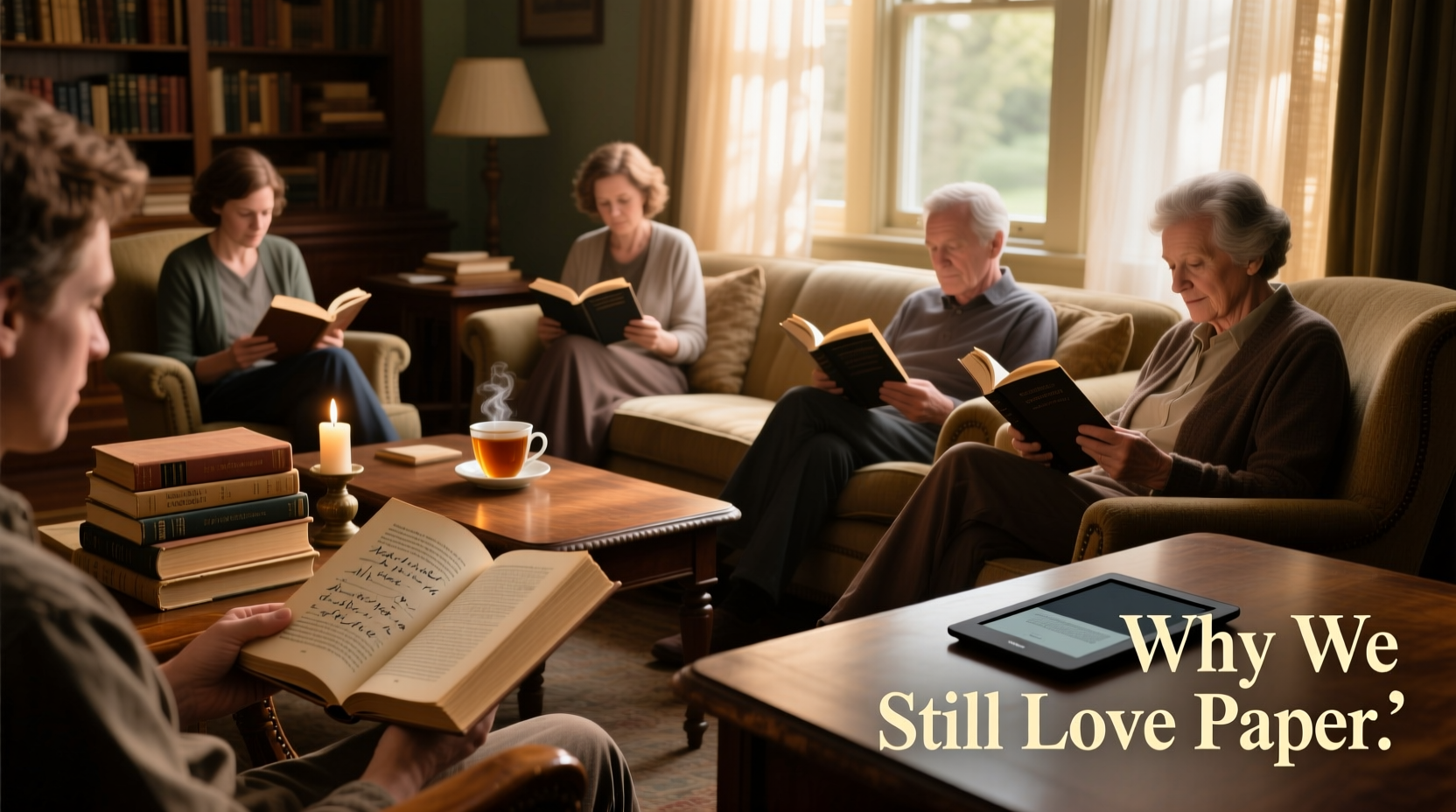
One of the most frequently cited reasons for preferring physical books is their tactile nature. The weight of a book in hand, the sound of a page turning, the slight resistance when flipping from one page to the next—these are subtle but meaningful interactions that anchor the reader in the moment. Unlike swiping or tapping on a screen, these actions feel organic and deliberate.
Paper quality, binding style, and even font choice contribute to the overall reading experience. A well-designed hardcover with thick, matte pages can elevate a novel into something closer to art. Readers report feeling more connected to stories when they’re physically present in their hands, almost as if the book itself becomes a companion through the narrative journey.
Cognitive Benefits of Print Reading
Research consistently shows that reading from physical books supports better comprehension, retention, and focus compared to digital reading. A 2014 meta-analysis published in Psychonomic Bulletin & Review found that readers of printed texts performed significantly better on recall tasks than those who read digitally, especially with longer or more complex material.
This advantage may stem from several factors:
- Spatial memory: Physical books allow readers to remember where information appeared—on the left or right page, near the top or bottom—which aids memory retrieval.
- Reduced distractions: Unlike eReaders (especially tablets), print books don’t have notifications, hyperlinks, or apps vying for attention.
- Fewer eye movements: Studies suggest readers skim more on screens, leading to shallower processing of text.
“Reading a physical book creates a deeper cognitive imprint. The brain treats it as a tangible event, not just a stream of data.” — Dr. Naomi Baron, Professor of Linguistics, American University
Emotional and Psychological Connection
For many, books are more than vessels for information—they're keepsakes, symbols of growth, or markers of identity. A dog-eared copy of a favorite novel from college carries memories. A gifted book with a handwritten note inside holds emotional weight. These intangible values are difficult to replicate in digital formats.
Bookshelves serve as personal archives, reflecting taste, curiosity, and life chapters. Walking past a shelf filled with beloved titles can evoke pride, comfort, or inspiration. In contrast, digital libraries, though vast, remain invisible and impersonal. You can’t point to your “Kindle collection” on the wall or gift someone your downloaded copy of Bird by Bird with a heartfelt inscription.
Moreover, the ritual of reading enhances the emotional bond. Selecting a book from the shelf, settling into a favorite chair, and losing oneself in its pages becomes a mindful practice—a form of analog self-care in an increasingly digital world.
Comparison: Physical Books vs. eReaders
| Feature | Physical Books | eReaders |
|---|---|---|
| Tactility & Sensory Engagement | High – full sensory experience | Low – limited to screen interaction |
| Ease of Annotation | Moderate – marginalia possible, but permanent | High – digital notes, searchable highlights |
| Portability (Multiple Books) | Low – bulky to carry many | High – thousands of books in one device |
| Durability | High – no battery, long lifespan | Moderate – dependent on battery and tech updates |
| Eye Strain | Low – natural light reflection | Variable – depends on screen type and lighting |
| Ownership & Sharing | Full ownership, easy gifting | Licensed access, sharing restrictions apply |
| Environmental Impact | Moderate – paper use, but biodegradable | Higher – electronic waste, energy-intensive production |
While eReaders excel in convenience and functionality, they often fall short in creating lasting emotional resonance. For readers who value presence, permanence, and personal connection, physical books remain unmatched.
A Real Reader’s Journey: Sarah’s Story
Sarah Thompson, a high school literature teacher from Portland, Oregon, made the switch back to physical books after years of using her Kindle. “I started with eReaders because I thought it was more efficient,” she explains. “I could carry my entire curriculum in my bag. But I noticed my students weren’t retaining as much during discussions, and honestly, neither was I.”
She reintroduced physical copies into her classroom and began buying used editions for her personal reading. “There’s something about seeing the progression of a story across pages. My students underline passages, write reactions in the margins, and even argue over whose turn it is to borrow a particular copy. It’s alive in a way a PDF isn’t.”
Now, Sarah curates a rotating library at home, donating books after she finishes them. “Each one has a history. When I pass it on, I imagine someone else discovering it, maybe writing their own notes in the margins. That cycle feels meaningful.”
Practical Tips for Maximizing the Physical Book Experience
To get the most out of your physical reading habit, consider adopting small but impactful practices:
- Store books upright or flat to prevent warping spines.
- Keep them away from direct sunlight and humidity to avoid fading and mold.
- Use a simple cloth cover to protect dust jackets.
- Wash hands before reading rare or collectible editions.
- Rotate books occasionally to ensure even exposure to air and light.
Checklist: Building a Sustainable Physical Library
- ✅ Buy secondhand when possible—support bookstores and reduce environmental impact.
- ✅ Donate or lend books after reading to keep them in circulation.
- ✅ Prioritize quality over quantity—choose well-printed editions with durable bindings.
- ✅ Organize by genre, mood, or color for both function and visual pleasure.
- ✅ Maintain a reading journal to record insights and track progress.
Addressing Common Misconceptions
Some assume that preferring physical books means rejecting technology altogether. This isn’t necessarily true. Many avid print readers also use audiobooks during commutes or download academic papers for research. The preference is contextual—not ideological.
Others argue that physical books are less eco-friendly due to paper consumption. While valid, this overlooks the full lifecycle analysis. EReaders require rare earth metals, energy-intensive manufacturing, and eventual disposal as e-waste. A single eReader must be used for several years and replace dozens of books to offset its environmental footprint.
“It’s not about being anti-technology. It’s about choosing the right tool for deep, reflective reading.” — Alberto Manguel, author of A History of Reading
Frequently Asked Questions
Isn’t carrying physical books inconvenient?
It can be, especially when traveling. However, many readers find the trade-off worthwhile. For daily use or home reading, the inconvenience is minimal. If portability is essential, selecting compact paperbacks or rotating a few favorites weekly can help balance practicality and preference.
Can you annotate physical books effectively?
Absolutely. Marginalia—writing notes in the margins—has been a tradition among scholars and passionate readers for centuries. Using pencils or non-permanent pens allows for flexibility. Some readers even scan annotated pages for digital backup. The act of handwriting notes also reinforces memory and understanding more than typing.
Are physical books more expensive?
Initially, yes—especially for new releases. But secondhand markets, libraries, and book swaps make print reading highly affordable. Additionally, physical books retain value and can be resold, unlike digital licenses which expire or are tied to accounts.
Conclusion: Why the Page Endures
The persistence of physical books in the digital age speaks to something fundamental in human nature—the desire for tangible connection, focused attention, and meaningful rituals. While eReaders offer undeniable utility, they don’t always satisfy the deeper needs of readers who seek immersion, memory, and presence.
Choosing a physical book isn’t a rejection of progress; it’s an assertion of intentionality. It says: *This moment matters. This story deserves my full attention.* In a world of endless scrolling and fragmented focus, that decision carries quiet power.




 浙公网安备
33010002000092号
浙公网安备
33010002000092号 浙B2-20120091-4
Comments
No comments yet. Why don't you start the discussion?