
As holiday decorations go up, nothing disrupts the festive mood quite like a strand of LED Christmas lights that won’t stop flickering. Unlike traditional incandescent bulbs, LED lights are energy-efficient and long-lasting—but they’re not immune to quirks. Flickering can stem from electrical mismatches, poor connections, or incompatible dimmers. While it might seem like a minor annoyance, persistent flickering can indicate deeper issues that affect performance and safety. Understanding the root causes allows you to troubleshoot effectively and restore the warm, steady glow your holiday display deserves.
Understanding Why LED Christmas Lights Flicker
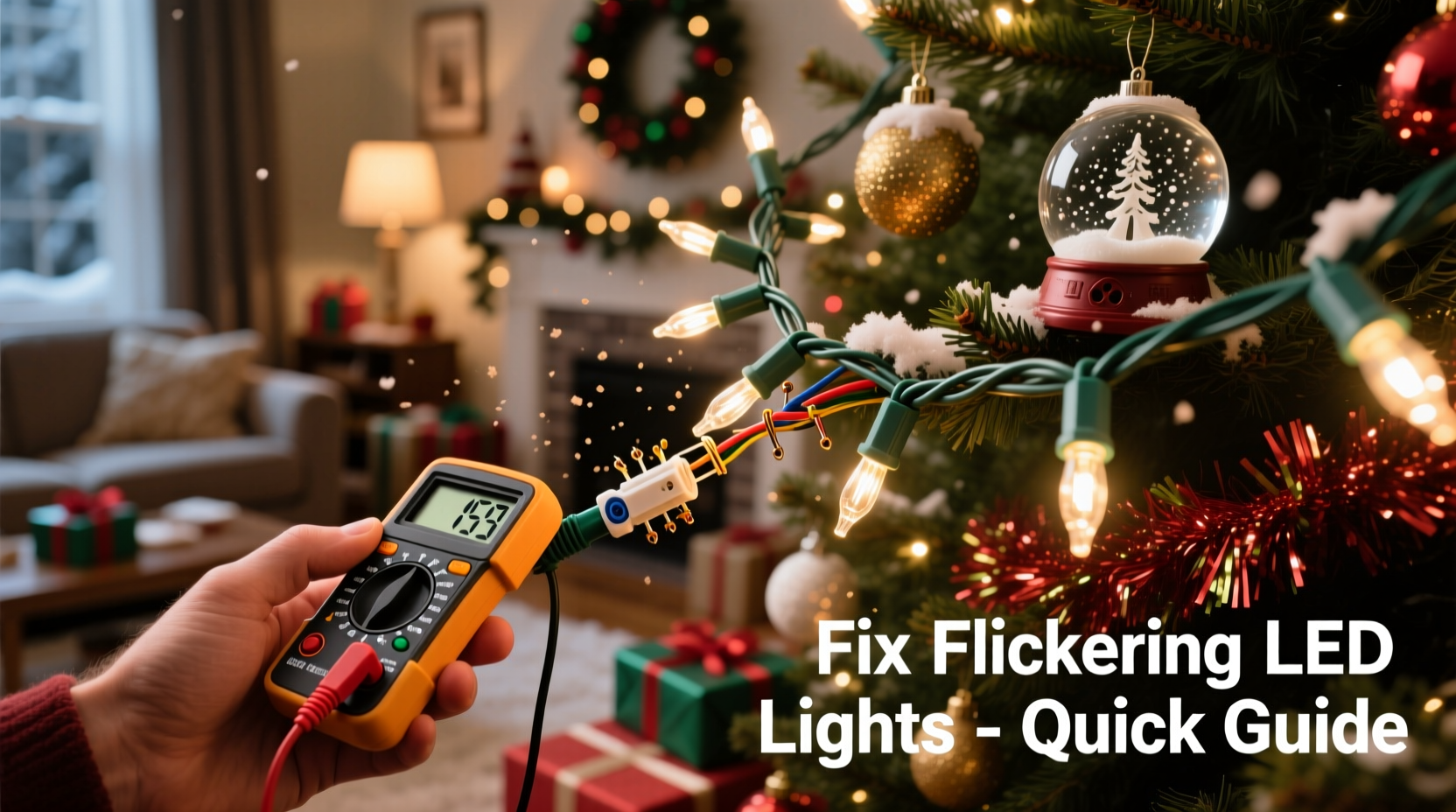
LED technology operates differently than older lighting systems. Instead of relying on a heated filament, LEDs use semiconductors that require precise voltage and current regulation. When any part of the circuit fails to deliver consistent power, the result is often visible flickering. This behavior is not always a defect—it’s frequently a symptom of mismatched components or environmental stress.
The most common reasons for flickering include:
- Voltage fluctuations – Minor changes in household voltage, especially during high-energy usage periods (e.g., when heaters or ovens turn on), can cause temporary instability in LED circuits.
- Poor or loose connections – Corrosion, worn-out sockets, or loosely inserted bulbs can interrupt the flow of electricity.
- Incompatible dimmer switches – Many homes have dimmers designed for incandescent bulbs. These often don’t work well with low-wattage LEDs, leading to rhythmic pulsing or strobing.
- Overloaded circuits – Daisychaining too many light strands exceeds the rated load, causing inconsistent power delivery.
- Low-quality LED drivers or transformers – Cheaply made internal components may fail to regulate current properly, especially in outdoor settings exposed to temperature swings.
Flickering isn't just an aesthetic issue. According to the U.S. Consumer Product Safety Commission, faulty holiday lighting accounts for over 7,000 home fires annually. While most incidents involve older incandescent sets, improper handling of LED strings—especially when modified or overloaded—can also pose risks.
How to Diagnose the Source of Flickering
Before attempting repairs, identify whether the flickering affects one section, an entire strand, or multiple strings on the same circuit. A systematic approach saves time and prevents unnecessary replacements.
- Unplug all lights and inspect each bulb for dark spots, looseness, or physical damage. Replace any visibly damaged bulbs with manufacturer-recommended equivalents.
- Test individual strands by plugging them in one at a time. If only one set flickers, the problem is isolated to that string.
- Check the outlet using a different device (like a lamp) to confirm it delivers stable power. Use a multimeter if available to test for voltage drops.
- Inspect extension cords and power strips. Frayed wires or corroded contacts can introduce resistance and cause intermittent operation.
- Determine if dimmers are involved. If lights are controlled by a wall dimmer or smart switch, bypass it temporarily by plugging directly into a standard outlet.
If the flickering stops when disconnected from a dimmer, compatibility is likely the culprit. Modern LED-compatible dimmers use trailing-edge technology to handle low loads efficiently, unlike older leading-edge models designed for higher-wattage bulbs.
Mini Case Study: The Outdoor Porch Display That Wouldn’t Stay On
A homeowner in Minnesota installed new LED icicle lights along their eaves every November. One year, the lights began flickering erratically after the first snowfall. After replacing bulbs and checking outlets, they noticed the issue only occurred when the porch light dimmer was active. The solution? The existing dimmer was decades old and incompatible with LEDs. Replacing it with a Lutron Caseta LED-rated dimmer eliminated the flickering entirely. Temperature wasn’t the cause—electrical compatibility was.
Step-by-Step Guide to Fix Flickering LED Christmas Lights
Follow this practical sequence to resolve flickering issues efficiently and safely.
- Turn off and unplug all affected lights
Never perform inspections or repairs while the system is live. - Examine each bulb and socket
Gently press each LED to ensure it's fully seated. Look for cloudy lenses or blackened bases, which indicate overheating or failure. - Replace faulty bulbs
Use spares from the original packaging or purchase exact matches. Mismatched voltages or polarities can worsen flickering. - Clean contact points
Use a cotton swab dipped in isopropyl alcohol to wipe metal sockets and plug prongs. Dirt and oxidation increase resistance. - Verify proper strand connection
Ensure male and female ends are fully engaged. Some connectors click; others rely on friction fit. - Reduce load by shortening chains
If you’ve linked more than three strands, disconnect extras. Most manufacturers recommend no more than 3–5 connected sets. - Bypass dimmers or timers
Plug directly into a wall outlet to test stability. If flickering stops, upgrade to compatible controls. - Try a different circuit
Move the display to another room or outdoor outlet to rule out household wiring issues. - Use a surge-protected power strip
This stabilizes input voltage and protects against spikes, especially useful for outdoor setups. - Contact the manufacturer
If under warranty and still flickering, request a replacement. Defective drivers or rectifiers are not user-serviceable.
Do’s and Don’ts of LED Christmas Light Maintenance
| Do | Don’t |
|---|---|
| Use LED-specific replacement bulbs | Mix LED and incandescent strings on the same run |
| Inspect cords annually for cracks or brittleness | Use indoor-rated lights outdoors |
| Keep connections elevated and dry (use drip loops) | Submerge plugs or connectors in water |
| Store coiled loosely in a ventilated container | Wrap tightly around sharp edges or furniture |
| Use UL-listed extension cords rated for outdoor use | Daisy-chain more than five strands unless specified |
“LED lights are sensitive to electrical conditions that incandescents simply burned through. A flicker isn’t just annoying—it’s a signal.” — Dr. Alan Reeves, Electrical Systems Engineer, IEEE Member
FAQ: Common Questions About Flickering LED Christmas Lights
Can cold weather cause LED Christmas lights to flicker?
Cold temperatures alone rarely cause flickering, but thermal contraction can loosen connections in outdoor installations. Additionally, moisture ingress due to freeze-thaw cycles may create intermittent shorts. Using weatherproof connectors and drip loops minimizes these risks.
Why do my LED lights flicker only when other appliances turn on?
This typically indicates voltage sag caused by high-draw devices (like refrigerators or space heaters). The sudden demand lowers line voltage momentarily, affecting sensitive LED drivers. Installing dedicated circuits for holiday lighting or using a voltage stabilizer can resolve this.
Is it safe to keep using flickering LED Christmas lights?
Occasional, brief flickering due to loose bulbs is usually harmless once corrected. However, persistent or random flashing—especially accompanied by buzzing, heat, or burning smells—should be addressed immediately. These signs may point to failing insulation, short circuits, or fire hazards.
Expert Checklist: Quick Fixes for Flickering Lights
Use this checklist before deciding to replace an entire strand:
- ✅ Unplug the lights and let them cool
- ✅ Visually inspect every bulb for damage
- ✅ Reseat all bulbs firmly in their sockets
- ✅ Clean plug contacts with rubbing alcohol
- ✅ Test on a different outlet without dimmers
- ✅ Disconnect extra strands beyond manufacturer limit
- ✅ Check fuse in plug (replace if blown)
- ✅ Confirm lights are rated for indoor/outdoor use as needed
- ✅ Try a surge-protected power strip
- ✅ Contact manufacturer if under warranty
Note: Many LED light strings have built-in fuses located in the plug. Use a small screwdriver to open the fuse compartment and check for discoloration. Replace with identical size and rating (usually 3A or 5A).
Preventing Flickering Next Season
Maintaining your lights between seasons ensures reliability year after year. At the end of the holiday period, follow these steps before storage:
- Label each strand by location (e.g., “Front Roof,” “Tree Top”) so you can track performance trends.
- Wrap carefully using cardboard reels or soft fabric sleeves to prevent wire kinks.
- Store in climate-controlled areas away from attics or damp basements where temperature extremes degrade electronics.
- Keep manuals and warranties in a digital folder or physical binder for future reference.
Investing in higher-quality LED strings from reputable brands often pays off. Premium models include better drivers, thicker wiring, and superior seals against moisture—reducing flicker risk significantly.
Conclusion: Restore the Holiday Glow with Confidence
Flickering LED Christmas lights are more than a nuisance—they’re a solvable puzzle rooted in electrical fundamentals. By understanding the causes and applying methodical fixes, you can eliminate flickering without replacing entire displays. From checking simple connections to upgrading outdated dimmers, most solutions are fast, affordable, and within reach of any homeowner.
Take a few minutes this season to inspect your lights, apply the tips above, and enjoy a steady, shimmering display that enhances your holiday spirit. Well-maintained LED lights can last a decade or more, making today’s troubleshooting effort a gift that keeps giving.




 浙公网安备
33010002000092号
浙公网安备
33010002000092号 浙B2-20120091-4
Comments
No comments yet. Why don't you start the discussion?