
Unlike traditional incandescent bulbs that typically burn out with a sudden pop, many modern LED lights don’t fail dramatically. Instead, they slowly lose brightness over months or even years. This subtle decline often goes unnoticed until one day you realize the kitchen no longer feels as bright as it once did. The phenomenon isn’t a defect—it’s an inherent characteristic of LED technology shaped by physics, materials science, and design choices. Understanding why this happens empowers homeowners, facility managers, and lighting designers to make smarter purchasing decisions and maintain optimal illumination over time.
The Science Behind LED Lumen Depreciation
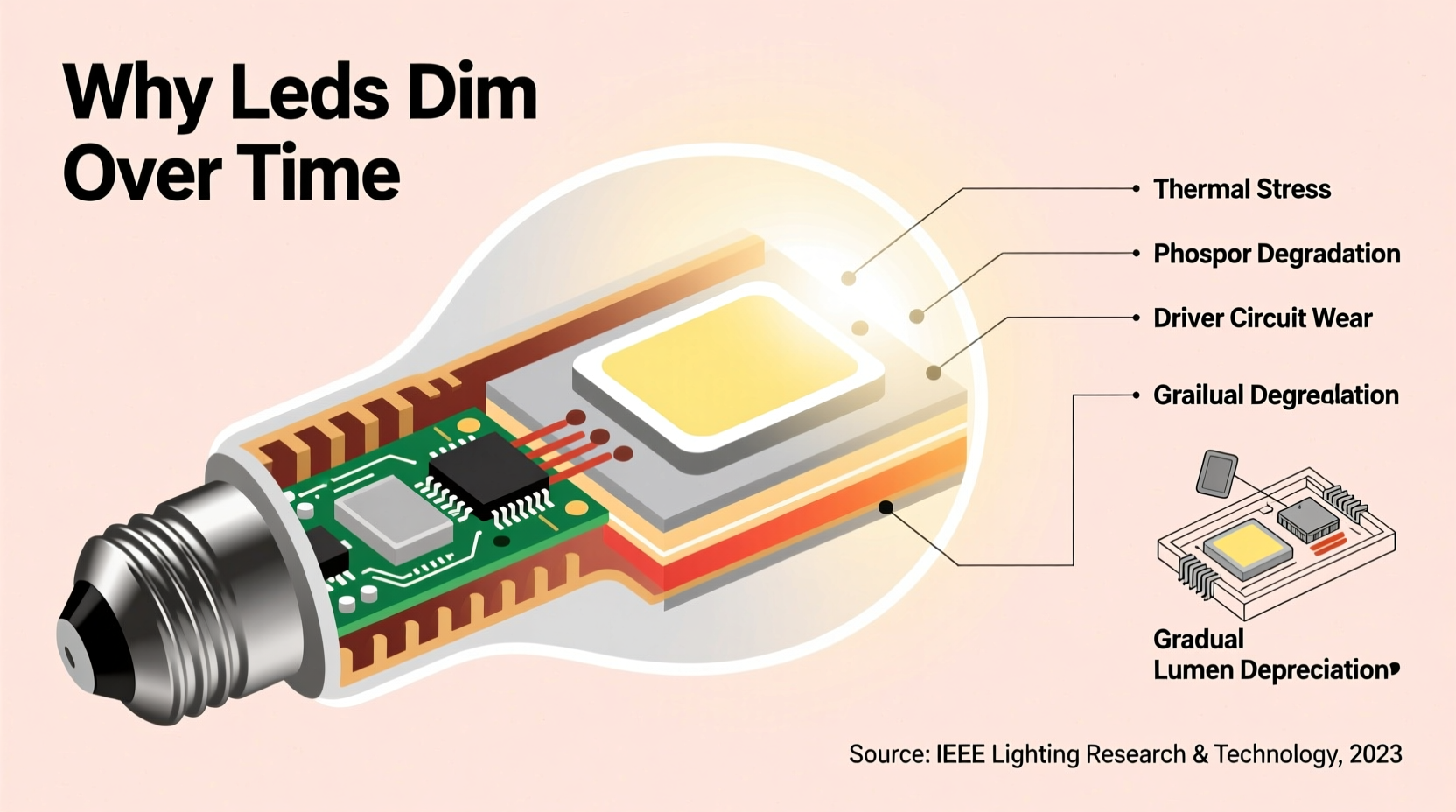
At the heart of every LED is a semiconductor chip that emits light when an electric current passes through it—a process known as electroluminescence. Unlike filaments in incandescent bulbs, which fail catastrophically when they break, LEDs degrade incrementally. As the semiconductor material and surrounding components age, their ability to produce light diminishes. This gradual reduction in brightness is formally called lumen depreciation.
Lumen depreciation is measured using the L70 standard, which indicates how long it takes for an LED to emit only 70% of its initial light output. For example, an LED rated for 25,000 hours at L70 means it will still produce 70% of its original brightness after that period. Many quality LEDs continue operating beyond this point but become progressively dimmer.
Several internal factors contribute to lumen loss:
- Junction temperature rise: Heat is the primary enemy of LED longevity. If heat isn’t properly dissipated from the semiconductor junction, it accelerates material degradation.
- Phosphor layer degradation: White LEDs use a blue LED chip coated with yellow phosphor to create white light. Over time, this phosphor can deteriorate due to heat and UV exposure, reducing efficiency.
- Driver component aging: The electronic driver regulates power to the LED. Capacitors and other small components may weaken over time, leading to inconsistent current delivery and reduced light output.
- Encapsulation yellowing: The plastic lens or encapsulant covering the LED chip can discolor under prolonged heat and light exposure, filtering more light and reducing perceived brightness.
“LEDs rarely die—they fade. Their lifespan is less about sudden failure and more about acceptable performance thresholds.” — Dr. Alan Zhou, Solid-State Lighting Researcher, Pacific Northwest National Laboratory
Environmental and Operational Factors That Accelerate Dimming
Even high-quality LEDs will dim faster if subjected to poor conditions. Real-world environments play a significant role in determining how quickly lumen depreciation occurs.
Heat Buildup in Enclosed Fixtures
One of the most common causes of premature dimming is installing LEDs in enclosed or poorly ventilated fixtures. Without adequate airflow, heat accumulates around the LED board and driver, increasing junction temperatures. A sustained increase of just 10–15°C above recommended levels can cut effective lifespan by up to 50%.
Voltage Fluctuations and Poor Power Quality
While LEDs are designed to operate on low-voltage DC power, household circuits deliver AC. The driver converts this current, but frequent surges, brownouts, or dirty electricity (electrical noise) strain the driver electronics. Over time, this leads to inconsistent power regulation and uneven light output.
Humidity and Corrosion
In damp environments—such as bathrooms, outdoor sconces, or garages—moisture can seep into non-rated fixtures. Even minor condensation inside the housing promotes corrosion on circuit boards and solder joints, increasing resistance and reducing current flow to the LEDs.
Comparing LED Lifespan Claims: What the Numbers Really Mean
Manufacturers often advertise LED lifespans of “25,000 hours” or even “50,000 hours,” but these figures can be misleading without context. These ratings assume ideal conditions—constant moderate temperature, stable voltage, and proper thermal management. In real homes and buildings, actual performance varies widely.
| Lifespan Rating | Test Conditions | Real-World Expectation |
|---|---|---|
| 25,000 hours (L70) | 25°C ambient, open fixture, clean power | 12,000–18,000 hours with noticeable dimming |
| 50,000 hours (L90) | Thermally managed module, lab setting | 20,000–30,000 hours maintaining usable brightness |
| No rating / Cheap consumer bulb | Unverified testing | May begin dimming within 6 months in harsh conditions |
The discrepancy arises because independent testing labs like Underwriters Laboratories (UL) or the Illuminating Engineering Society (IES) follow strict protocols (e.g., IES LM-80 and TM-21), while budget brands may extrapolate data from short-term tests or omit critical details.
A Real-World Example: Office Recessed Lighting Over Two Years
A mid-sized office building in Phoenix, Arizona, retrofitted its ceiling lights with affordable LED downlights labeled “25,000-hour lifespan.” Within 18 months, employees began reporting that certain zones felt darker, particularly near interior conference rooms where fixtures were enclosed and ventilation was limited.
An energy audit revealed that average light output had dropped by 32%, far exceeding expected L70 thresholds. Thermal imaging showed junction temperatures consistently above 90°C—well beyond the 65°C maximum recommended for long life. The root cause? Inadequate heat sinks combined with high ambient temperatures (regularly exceeding 35°C indoors during summer).
After replacing the units with commercial-grade, thermally optimized LEDs and adding passive vents, light levels stabilized. Follow-up measurements after another 12 months showed only a 6% additional drop—demonstrating how proper product selection and environmental control preserve performance.
How to Maximize LED Longevity and Maintain Brightness
You can’t stop physics, but you can significantly slow down lumen depreciation with proactive measures. Whether upgrading home lighting or managing a commercial property, these strategies help maintain consistent brightness over time.
Choose the Right Product for the Application
Not all LEDs are created equal. Look for:
- Reputable certifications: UL, Energy Star, DesignLights Consortium (DLC)
- Thermal management features: aluminum heat sinks, vented housings
- Clear lumen maintenance data: L70 or L90 ratings based on IES standards
- Appropriate IP ratings for moisture-prone areas
Ensure Proper Installation
Even the best LED will underperform if installed incorrectly. Avoid common pitfalls:
- Don’t overload circuits or daisy-chain too many fixtures on one driver
- Use compatible dimmers—especially MLV or ELV types for smooth control
- Leave space around fixtures for air circulation
Monitor and Maintain Your System
Treat your lighting like any other building system. Schedule periodic checks:
- Visually inspect for darkening lenses or flickering
- Clean dust buildup from reflectors and diffusers every 6–12 months
- Use a handheld lux meter to track light levels in key areas annually
- Replace clusters showing significant output drops to maintain uniformity
Checklist: Extending LED Performance and Delaying Gradual Dimming
- ✅ Select LEDs with published L70/L90 data from reputable manufacturers
- ✅ Match fixture type (enclosed, recessed, outdoor) to bulb specifications
- ✅ Install in well-ventilated areas or use fixtures with built-in heat dissipation
- ✅ Use surge protectors or whole-house voltage regulators if power fluctuations are common
- ✅ Avoid frequent on/off cycling unless using rated switches (some drivers degrade faster with rapid switching)
- ✅ Clean optical surfaces regularly to prevent dust-induced output loss
- ✅ Replace aging drivers proactively in integrated systems where possible
Frequently Asked Questions
Can I prevent my LED lights from dimming over time?
You cannot completely prevent dimming—lumen depreciation is a natural part of LED aging—but you can significantly slow it down. Choosing high-quality products, ensuring good ventilation, avoiding voltage spikes, and maintaining clean fixtures all help preserve brightness for longer. With optimal conditions, LEDs can retain usable light output for decades.
Is dimming a sign my LED is about to fail?
Not necessarily. Gradual dimming is normal and expected. However, sudden flickering, color shifting (e.g., turning pinkish), or partial section failures (in strip lights) may indicate driver issues, poor connections, or water damage. These symptoms warrant inspection or replacement.
Should I replace dimmed LEDs or wait until they stop working?
That depends on your needs. From an energy perspective, dimmed LEDs still consume nearly the same power, so efficiency drops. In task lighting (kitchens, workspaces), reduced brightness can affect safety and comfort. Consider replacing them when light levels fall below 70–80% of original output, especially in critical areas.
Conclusion: Embrace the Fade—But Manage It Wisely
The gradual dimming of LED lights reflects not a flaw, but the quiet evolution of advanced lighting technology. Unlike the dramatic end of incandescent bulbs, LEDs offer a prolonged twilight phase where functionality persists, albeit diminished. Recognizing this behavior allows users to plan better, invest wisely, and maintain environments that remain bright, efficient, and visually comfortable over time.
By selecting components thoughtfully, respecting thermal limits, and monitoring performance, you can stretch the useful life of your LEDs and delay the inevitable fade. The goal isn’t to chase immortality in a bulb, but to maximize value, consistency, and illumination quality across seasons.




 浙公网安备
33010002000092号
浙公网安备
33010002000092号 浙B2-20120091-4
Comments
No comments yet. Why don't you start the discussion?