
Nail polish that chips just hours after a careful application can be incredibly frustrating—especially when you've taken the time to prep, paint, and seal your nails with precision. Despite using high-end brands or following tutorials to the letter, many people still face rapid deterioration of their manicure. The truth is, chipping isn’t always about poor-quality polish. It’s often the result of a combination of formulation issues, application errors, and lifestyle factors. Understanding the root causes empowers you to make smarter choices in products and technique, ultimately extending the life of your manicure.
The Science Behind Nail Polish Adhesion
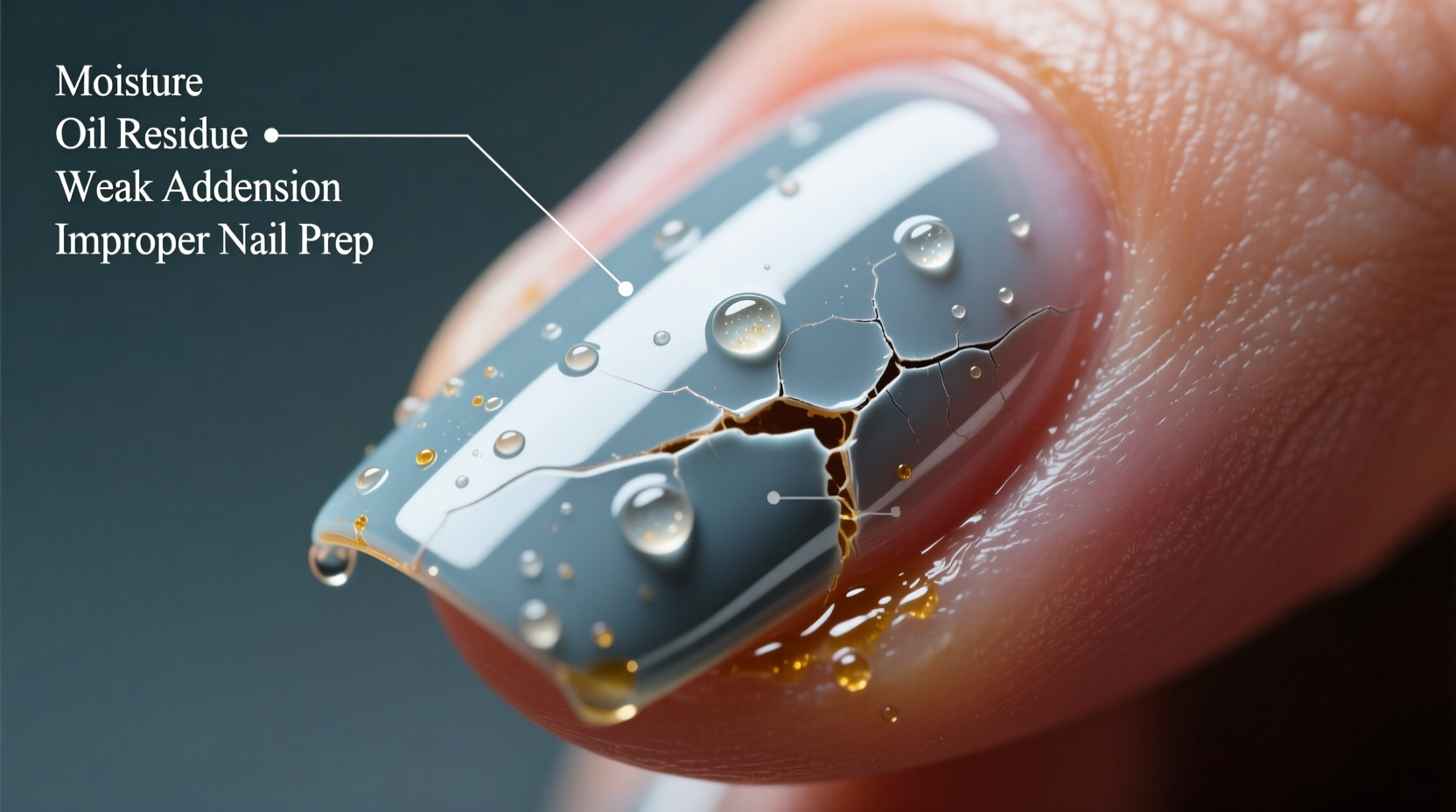
Nail polish adheres to the nail plate through physical bonding rather than chemical fusion. The keratin surface of the nail is naturally porous but also slightly oily due to natural sebum transfer from fingers and environmental exposure. For polish to bond effectively, it must first adhere to this surface without interference from oils, moisture, or residue.
The base coat plays a critical role by creating a uniform layer that bridges the gap between the nail and the color. Without it, pigments and solvents in the polish can interact unevenly with the nail, leading to weak spots where lifting begins. Even with a base coat, improper nail preparation—such as skipping degreasing—can sabotage adhesion from the start.
“Adhesion failure usually starts at the cuticle edge or free edge, where stress and moisture exposure are highest. If the foundation isn’t clean and dry, even the best polish won’t last.” — Dr. Lena Torres, Cosmetic Chemist & Nail Formulation Specialist
Common Causes of Premature Chipping
Several interrelated factors contribute to early chipping. While some stem from product quality, others are related to user habits or biological differences.
1. Inadequate Nail Preparation
One of the most overlooked steps is prepping the nail surface. Residual oils, old polish, or moisturizer left on the nail prevent proper adhesion. Many people wash their hands before painting but then skip wiping the nail with alcohol or acetone, leaving behind invisible film that repels polish.
2. Poor Base Coat Selection or Omission
Skipping the base coat—or using one that lacks adhesive properties—leaves the polish vulnerable. Some base coats are designed only for strengthening or smoothing ridges, not enhancing adhesion. A dedicated \"sticky\" or \"bonding\" base coat significantly improves longevity.
3. Fast-Drying Polishes and Solvent Evaporation
Polishes marketed as “quick-dry” often contain higher concentrations of volatile solvents like ethyl acetate or butyl acetate. These evaporate rapidly, which may seem beneficial, but they can cause the film to shrink too quickly, creating micro-cracks and tension points. This internal stress leads to early peeling, especially around the tips.
4. Thick Coats and Trapped Solvent
Applying thick layers traps solvent beneath the surface. Even if the top appears dry, the lower layers remain liquid longer, weakening structural integrity. As these solvents finally escape, they compromise the cohesion of the film, making it brittle and prone to flaking.
5. Environmental and Lifestyle Stressors
Daily activities like typing, washing dishes, or handling paper create friction and flexing at the nail tip—the most common site for chipping. Water exposure swells the nail plate temporarily, causing the polish to stretch and contract, which promotes lifting over time.
Formulation Factors That Impact Wear Time
Not all polishes are created equal. The ingredients used in the formula directly affect durability, flexibility, and drying behavior.
| Ingredient Type | Role in Polish | Impact on Chipping |
|---|---|---|
| Cellulose Acetate Butyrate (CAB) | Film former | High flexibility and adhesion; reduces cracking |
| Nitrocellulose | Primary film former | Brittle if not balanced with plasticizers; prone to chipping |
| Plasticizers (e.g., Dibutyl Phthalate*) | Adds flexibility | Prevents brittleness; absence increases chipping risk |
| Resins (e.g., Tosylamide/Formaldehyde Resin) | Improves adhesion and hardness | Enhances chip resistance when properly formulated |
| Volatile Solvents | Carry pigment and aid drying | Too much = rapid shrinkage = micro-cracking |
*Note: Dibutyl phthalate (DBP) has been phased out in many markets due to health concerns, but its functional replacement (e.g., camphor or citrate esters) may not offer the same flexibility, affecting performance.
Higher-end brands often invest in balanced formulations that maintain elasticity without sacrificing hardness. Drugstore polishes may cut costs by reducing resin or plasticizer content, resulting in a stiffer, more brittle finish that chips easily under stress.
Step-by-Step Guide to Long-Lasting Polish Application
Following a precise routine dramatically improves wear time. This timeline ensures optimal adhesion and film formation:
- Remove all traces of old polish using pure acetone or non-acetone remover (if nails are sensitive). Avoid moisturizing removers during prep.
- Shape and buff gently. Use a fine-grit file to shape nails. Light buffing removes shine and creates micro-texture for better grip—but don’t overdo it, as excessive thinning weakens the nail.
- Push back cuticles and clean debris. Use a cuticle stick or nipper carefully. Any hangnails or rough edges will catch polish and initiate peeling.
- Wipe nails with 91% isopropyl alcohol or pure acetone. This degreases the surface and removes invisible residue. Let nails air dry completely.
- Apply a thin layer of adhesive base coat. Ensure coverage extends slightly under the free edge (“tucking”) to seal the tip. Wait 2–3 minutes for it to become tacky.
- Apply two thin color coats. Never overload the brush. First coat should be sheer; second builds opacity. Allow each to dry 3–4 minutes.
- Seal with a high-quality top coat. Apply one full coat, wrapping the tip by rolling the brush over the edge. Reapply top coat every 2–3 days for extended wear.
- Avoid water and heavy use for 1–2 hours. Wait before showering, washing dishes, or typing extensively.
Real-World Example: Office Worker vs. Early Chipping
Sarah, a 32-year-old project manager, consistently experienced chipped polish by midday despite using premium brands. She applied three coats, let them dry overnight, and avoided water. Yet, her manicures rarely lasted beyond 48 hours.
Upon analysis, two key issues were identified: she skipped the alcohol wipe after handwashing, and she applied thick coats to achieve opacity in one pass. Additionally, her habit of resting her fingertips on her keyboard throughout the day created constant micro-friction at the free edge.
After switching to thinner layers, incorporating a bonding base coat, and using alcohol prep pads before painting, Sarah’s manicures began lasting six days with minimal chipping. She also started wearing fingertip gloves while typing—a small change that reduced mechanical stress significantly.
This case illustrates how technique and environment outweigh product cost when it comes to longevity.
Checklist for Preventing Early Chipping
- ✅ Remove old polish completely
- ✅ Shape and lightly de-shine nails
- ✅ Clean under cuticles and trim snags
- ✅ Degrease nails with alcohol or acetone
- ✅ Use an adhesive or ridge-filling base coat
- ✅ Apply two thin color coats (not one thick one)
- ✅ Wrap the free edge with every coat (base, color, top)
- ✅ Seal with quality top coat immediately
- ✅ Reapply top coat every 2–3 days
- ✅ Minimize prolonged water exposure
- ✅ Wear gloves for cleaning or dishwashing
- ✅ Avoid using nails as tools (opening cans, scratching screens)
FAQ
Does hydration affect polish wear?
Yes. Over-moisturizing right before application leaves a barrier that prevents adhesion. However, keeping hands hydrated *between* manicures supports healthy nail plates that hold polish better. Apply lotion *before* starting your manicure, then cleanse nails thoroughly afterward.
Can cold water help polish dry faster?
No. Cold water immersion is a myth. While it may feel like it sets the polish, water doesn’t accelerate solvent evaporation. Worse, it introduces moisture that gets trapped, increasing the risk of lifting. Instead, use a quick-dry top coat or drying drops containing silicone or cyclomethicone.
Why does polish chip at the tips first?
The free edge experiences the most mechanical stress—from typing to opening doors. It's also the thinnest part of the nail and tends to absorb impact. Wrapping the top coat over the edge creates a protective seal that delays chipping.
Expert Insight on Product Evolution
In recent years, the shift toward “10-free” and eco-conscious formulas has led to reformulations that sometimes sacrifice performance. While eliminating harmful chemicals is important, replacements aren’t always functionally equivalent.
“The move away from formaldehyde and tosylamide resins has challenged formulators. These ingredients provided excellent hardness and adhesion. Their substitutes require careful balancing with other polymers to avoid compromising wear time.” — Marcus Lin, Lead Developer at Aura Beauty Labs
This explains why some modern “clean” polishes, despite ethical sourcing and appealing marketing, may not perform as well as older or professional-grade lines. Consumers should look for brands that transparently address wearability in their reformulated products.
Conclusion
Chipping within hours of application isn’t inevitable—it’s a signal that something in the process needs adjustment. Whether it’s skipping a prep step, choosing the wrong base coat, or misunderstanding how polish dries, each factor plays a role in longevity. By combining proper technique with informed product selection, you can transform fleeting manicures into long-lasting results.
Don’t blame yourself or assume cheap polish is the culprit. Instead, treat nail care like a science: test variables, refine your method, and observe outcomes. With attention to detail, even everyday routines can yield salon-quality durability.




 浙公网安备
33010002000092号
浙公网安备
33010002000092号 浙B2-20120091-4
Comments
No comments yet. Why don't you start the discussion?