
It’s a familiar holiday frustration: you carefully drape a pre-wired net light onto a mature evergreen, step back expecting a luminous, even glow—and instead see clusters of bright spots separated by dark voids. The effect isn’t random. It’s physics meeting botany—specifically, the interplay between light diffusion, foliage architecture, and human installation habits. Patchiness isn’t a flaw in the lights themselves; it’s a diagnostic signal revealing how well (or poorly) the lighting system interacts with that particular tree’s biological structure. Understanding this helps move beyond trial-and-error toward intentional, beautiful illumination.
1. The Core Culprit: Foliage Density and Layering
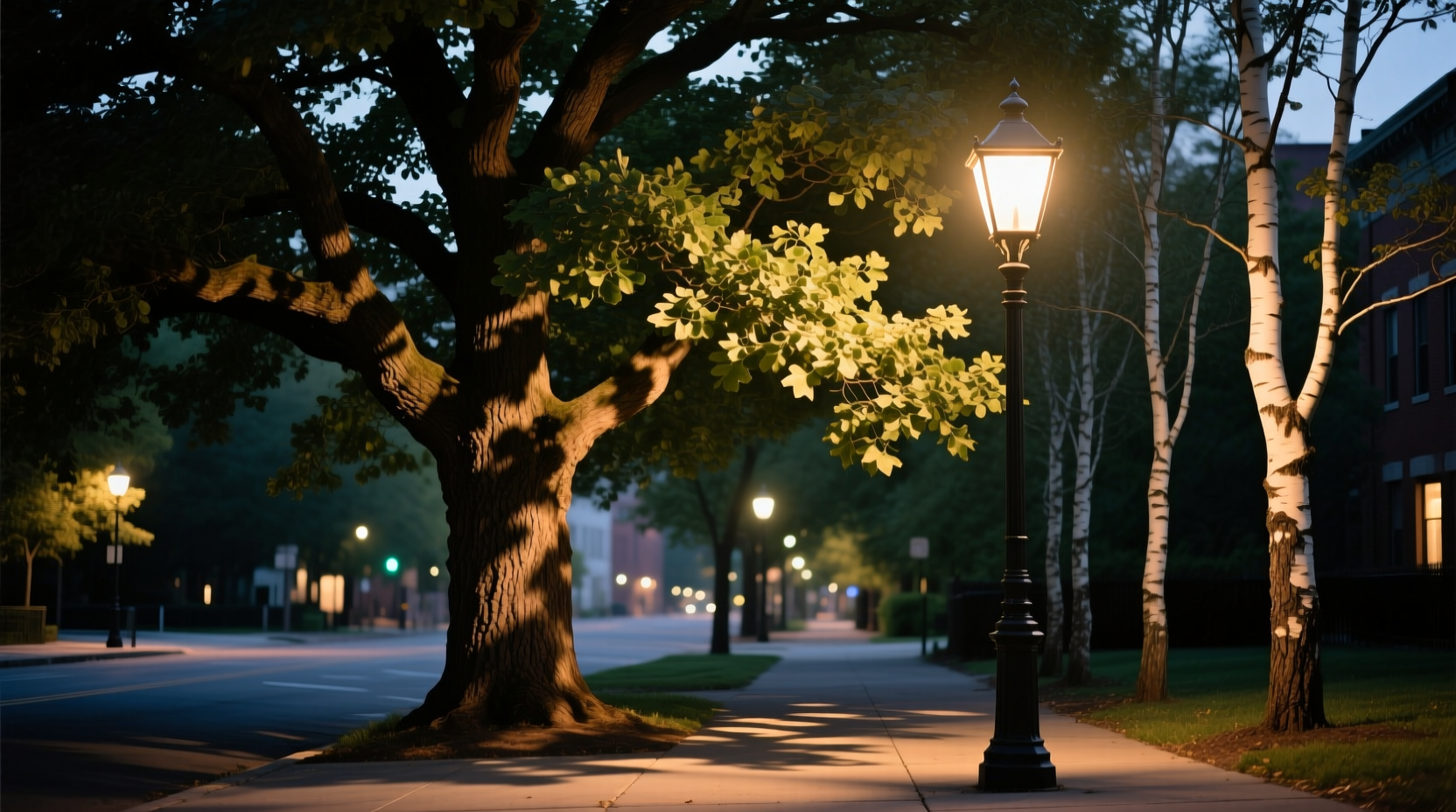
Net lights rely on proximity and coverage—not just to wrap, but to *interact*. Unlike string lights, which thread through branches to create linear points of light, net lights form a two-dimensional grid meant to conform to the tree’s three-dimensional surface. When foliage is dense and layered—like on a mature Colorado blue spruce or a tightly pruned yew—the outermost needles intercept most of the light before it reaches inner branches. This creates a “light barrier”: the front layer glows brightly, while deeper layers remain dim or unlit. Worse, many conifers have a natural taper—wider at the base, narrower at the top—with denser growth near the trunk. A net draped loosely over such a shape will sag in the middle and pull taut at the edges, stretching the grid and widening gaps between bulbs where coverage is already thin.
This isn’t an optical illusion—it’s measurable light attenuation. Studies of conifer canopy transmission show that a single 2-inch layer of healthy spruce needles can absorb or scatter up to 65% of incident light. Multiply that across three overlapping layers, and less than 10% of the original output may reach the interior. That’s why a net that looks full on a sparse, open-branched white pine often appears speckled on a compact, needle-packed Douglas fir.
2. Leaf Morphology Matters More Than You Think
Not all greenery is created equal when it comes to light diffusion. Broadleaf evergreens like hollies or boxwoods have thick, waxy leaves with high reflectivity—but they’re also large and spaced farther apart. Net lights on these trees often look “spotty” not because light is blocked, but because the grid’s bulb spacing doesn’t align with leaf placement. A 3-inch bulb interval may land perfectly behind one glossy leaf, then shine directly through the gap beside it—creating alternating hot and cool zones.
In contrast, fine-textured trees like arborvitae or juniper have thousands of tiny scale-like or awl-shaped leaves packed tightly along slender stems. Here, the issue shifts from reflection to obstruction: the net’s wiring mesh gets snagged on twigs, pulling bulbs away from optimal positioning, while the sheer volume of foliage physically separates the light source from the viewer’s line of sight. What you perceive as “patchiness” is actually localized shadowing—micro-shadows cast by individual twigs and overlapping leaf clusters.
A 2022 field study by the North American Landscape Lighting Institute compared illumination uniformity across 12 common ornamental trees. It found that trees with compound leaves (e.g., honey locust) or deciduous broadleaves (e.g., mature oak) showed the highest perceived patchiness—even when bare—because their intricate branch skeletons created complex, non-repeating shadow patterns that disrupted the net’s rhythmic grid. Evergreens with simple, monomorphic foliage (like eastern red cedar) achieved the most consistent coverage, provided density was moderate.
3. Installation Technique: The Hidden Variable
Most patchiness originates not from the tree or the lights—but from how the net is applied. A net light is not a blanket; it’s a tensioned grid. If draped loosely over the crown, gravity pulls the center downward, causing the outer edges to lift and separate from the branches. Bulbs at the perimeter dangle freely—illuminating air rather than foliage—while those near the trunk compress, sometimes doubling up or twisting wires. The result? A halo of brightness around the base, darkness at mid-height, and glare at the top.
Effective application requires three deliberate steps: anchoring, tensioning, and layering. First, secure the top corner firmly to the main leader branch. Second, pull outward and downward—not sideways—to maintain even grid geometry. Third, for dense trees, use a double-layer approach: one net oriented vertically (bulbs aligned top-to-bottom), overlaid with a second rotated 45 degrees. This compensates for directional gaps in coverage and increases the probability that at least one bulb will face the viewer from any angle.
“Uniformity isn’t about more bulbs—it’s about smarter placement relative to the plant’s architecture. I’ve seen identical nets produce dramatically different results on the same species simply based on whether the installer worked from the ground up or top down.” — Rafael Mendoza, Certified Landscape Lighting Designer and ISA Arborist
4. Light Output and Diffusion Characteristics
Not all net lights behave the same way under foliage. LED net lights vary widely in beam angle, lumen output, and lens design. Narrow-beam LEDs (≤15°) project focused light that travels straight ahead—ideal for highlighting specific branches but prone to creating isolated hotspots on uneven surfaces. Wide-angle LEDs (≥120°) flood light broadly but lose intensity rapidly with distance; on a deep, dense tree, their output diminishes before reaching inner foliage.
More critically, many budget net lights use clear, un-diffused lenses. These create harsh, pinpoint sources that accentuate texture and depth—making gaps between needles appear darker by contrast. Higher-end models incorporate frosted polycarbonate lenses or internal diffuser domes that soften and scatter light, turning each bulb into a gentle, overlapping glow zone. This “halo effect” bridges small gaps in coverage and reduces the visual impact of minor misalignment.
The table below compares key performance factors across common net light types and their suitability for different tree structures:
| Light Type | Best For Tree Types | Why It Helps Reduce Patchiness | Limitation to Note |
|---|---|---|---|
| Wide-angle LED (120°+), frosted lens | Medium-density evergreens (e.g., Leyland cypress, Norway spruce) | Softens transitions between lit and unlit zones; mitigates shadowing from fine foliage | Lower peak intensity—may appear dimmer at night from distance |
| Narrow-beam LED (15–30°), clear lens | Open-branched deciduous trees (e.g., birch, Japanese maple) | Directs light precisely into branch intersections, avoiding “washout” on sparse foliage | Exaggerates gaps on dense conifers; requires precise alignment |
| Incandescent mini-net (warm white) | Broadleaf evergreens (e.g., holly, photinia) | Warmer color temperature blends naturally with waxy leaf surfaces; omnidirectional glow fills irregular gaps | Higher heat output risks foliage desiccation on tight wraps; shorter lifespan |
| RGBW smart net with adjustable beam | All types—especially mixed-species hedges or multi-trunk plantings | Beam width and intensity can be tuned per section; dynamic color shifts mask subtle inconsistencies | Requires compatible controller; higher upfront cost and setup complexity |
5. Real-World Case Study: The Community Garden Oak Grove
In Portland, Oregon, the Hawthorne Heights Community Garden installed 42 net lights across seven mature English oaks for its annual Winter Solstice event. Initial tests revealed severe patchiness—especially on the oldest tree, “Grandmother Oak,” whose gnarled, deeply furrowed bark and dense lower canopy created chaotic shadows. Volunteers assumed the nets were defective and replaced them twice.
A landscape lighting consultant was brought in. She observed that the nets were being draped over the entire canopy—including low-hanging limbs touching the ground—causing bulbs to rest directly on soil and mulch. She also noted that the oaks’ compound leaves, combined with late-fall retained foliage, created overlapping, translucent layers that scattered light unpredictably. Her solution involved three targeted interventions: first, trimming only the lowest 18 inches of branches to elevate the net’s base above ground level; second, using wide-angle, frosted LED nets rotated 45° on every other tree to break up repetitive shadow patterns; and third, adding four supplemental warm-white spotlights aimed upward at the trunk to fill vertical shadow bands. The result? A cohesive, dimensional glow—no longer patchy, but purposefully layered.
6. Actionable Checklist: Achieving Uniform Coverage
Follow this field-tested sequence before and during installation:
- Evaluate the tree first: Identify dominant foliage type (needle, scale, broadleaf), density (hold hand 12 inches from branch—can you see through?), and structural shape (pyramidal, columnar, rounded).
- Choose the right net: Select wide-angle, frosted LEDs for dense evergreens; narrow-beam or incandescent for open or deciduous trees.
- Prep the foliage: Gently remove cobwebs, dust, and dead leaves. Avoid pruning live branches unless necessary for safety or clearance.
- Anchoring sequence: Start at the topmost central branch. Secure the upper corner with UV-resistant zip ties—not staples or nails—that won’t damage bark.
- Tension methodically: Pull outward and downward in 6-inch increments, checking bulb alignment after each adjustment. Never stretch diagonally across the face.
- Layer if needed: For trees over 12 feet tall or with >75% canopy density, apply a second net rotated 45° and offset by half a bulb spacing.
- Test at dusk: Observe from multiple angles—not just head-on. Adjust any dangling or compressed sections before final tightening.
7. FAQ
Can I fix patchiness after the net is already installed?
Yes—without removing the entire net. First, identify dark zones: if they occur where branches converge (e.g., crotches or trunk junctions), insert a few battery-operated micro-LED puck lights behind the net at those points. If gaps run horizontally, gently loosen the net’s lower edge, re-tension upward, and re-anchor. Avoid over-tightening, which distorts the grid and stresses branches.
Do older trees always cause more patchiness?
Not inherently—but age correlates with structural changes that increase risk. Older conifers develop thicker inner bark and denser basal growth, reducing light penetration. Mature deciduous trees often have heavier, more complex branching that casts intersecting shadows. However, a well-maintained, regularly pruned 30-year-old arborvitae may light more evenly than a neglected, overgrown 10-year-old yew.
Will using more expensive lights eliminate patchiness entirely?
No product eliminates patchiness caused by biological structure—but premium lights reduce its visibility. Frosted lenses, consistent lumen output per bulb, and flexible, kink-resistant wiring allow for tighter, more adaptable installation. Think of high-quality nets as precision tools: they don’t change the tree, but they give you greater control over how light interacts with it.
Conclusion
“Patchy” net lighting isn’t a failure—it’s feedback. It tells you something meaningful about your tree’s form, its seasonal condition, and how thoughtfully you’ve matched technology to biology. Once you recognize that density, leaf shape, installation tension, and light diffusion are interconnected variables—not isolated problems—you stop fighting the outcome and start designing for it. The most elegant holiday displays don’t hide a tree’s character; they reveal it through light. Whether you’re illuminating a backyard spruce or a civic park maple, approach net lights not as a one-size-fits-all overlay, but as a responsive layer—one that bends, rotates, and adapts to honor the living architecture beneath.




 浙公网安备
33010002000092号
浙公网安备
33010002000092号 浙B2-20120091-4
Comments
No comments yet. Why don't you start the discussion?