
Every autumn, millions of people line up to walk through dimly lit mazes filled with jump scares, eerie sounds, and costumed monsters. Haunted houses, horror-themed escape rooms, and scream parks have become cultural staples—especially around Halloween. Yet, on the surface, this fascination seems paradoxical: why would anyone voluntarily subject themselves to fear, a sensation evolution designed to protect us from danger?
The answer lies not in contradiction, but in complexity. The human brain is capable of distinguishing between real threats and perceived ones, allowing some individuals to transform fear into exhilarating entertainment. This psychological phenomenon—commonly referred to as \"fear fun\"—is rooted in neurochemistry, emotional regulation, and social dynamics. Understanding why people enjoy being scared reveals profound insights about human motivation, resilience, and the pursuit of intense emotional experiences.
The Science of Controlled Fear
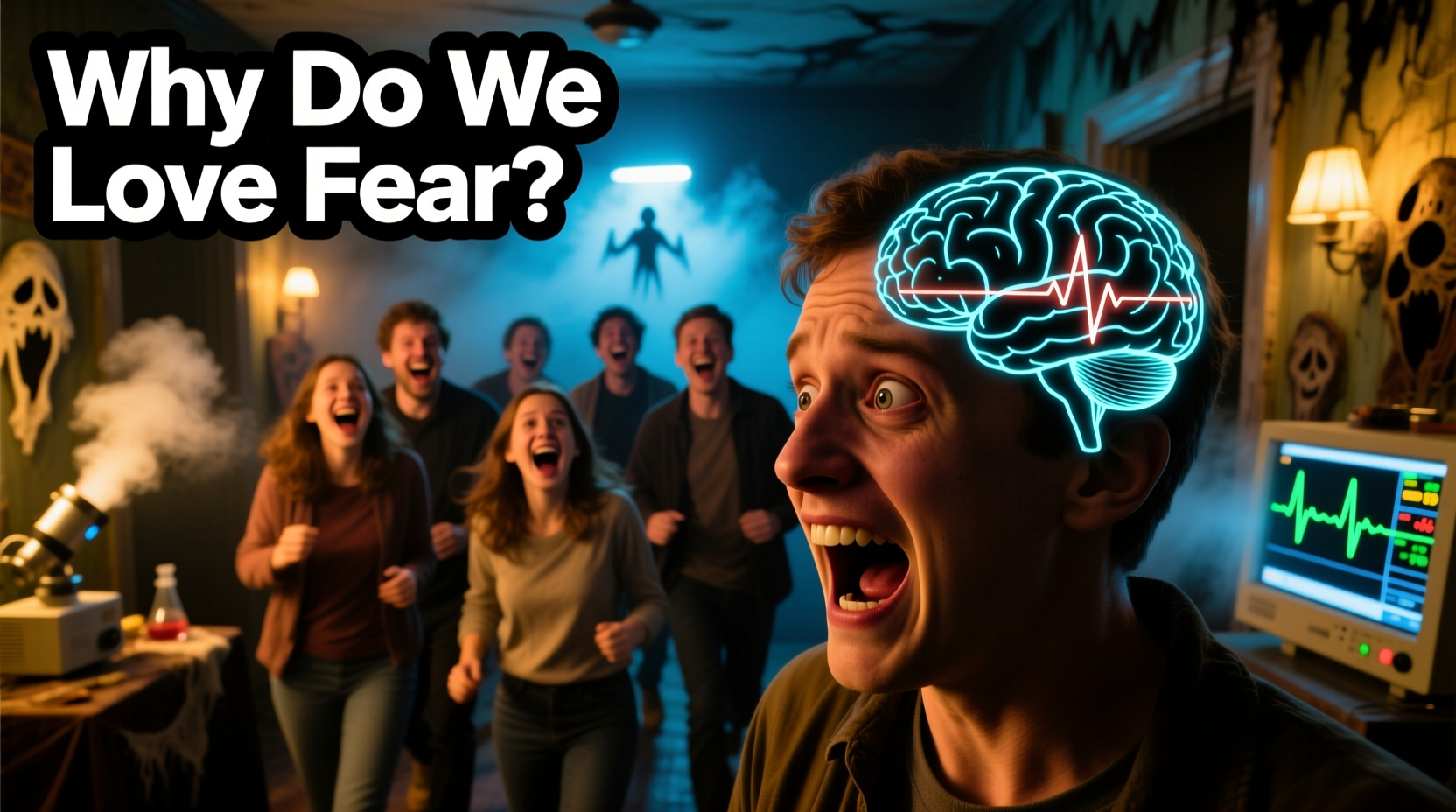
Fear is an ancient survival mechanism. When the brain detects a threat, the amygdala triggers the hypothalamus, which activates the sympathetic nervous system. This cascade releases adrenaline, cortisol, and noradrenaline—hormones that prepare the body for fight or flight. Heart rate increases, muscles tense, and senses sharpen. In a life-threatening situation, these responses are essential. But in a controlled environment like a haunted attraction, the brain quickly registers safety despite the sensory overload.
This distinction is critical. According to Dr. Margee Kerr, sociologist and author of Scream: Chilling Adventures in the Science of Fear, “The brain knows you’re not actually in danger, so it can reinterpret the physiological arousal as excitement rather than terror.” This cognitive reframing allows the body’s stress response to be experienced as thrilling instead of traumatic.
Neuroimaging studies show that during controlled fear experiences, the prefrontal cortex remains active—unlike in genuine danger, where higher-order thinking often shuts down. This means participants maintain awareness and control, enabling them to modulate their emotional response. The result? A rush of energy without lasting harm.
“We evolved to respond to threats, but we also evolved the ability to play with those responses. That’s what makes fear-based entertainment possible.” — Dr. Margee Kerr, Sociologist and Fear Researcher
Why Fear Can Feel Good: The Brain’s Reward System
The enjoyment derived from haunted attractions isn’t just about surviving a scare—it’s chemically rewarding. When the brain perceives a challenge and overcomes it (even symbolically), it releases dopamine, the neurotransmitter associated with pleasure, motivation, and reinforcement.
Consider the typical arc of a haunted house visit:
- A guest enters, uncertain and alert.
- They encounter a series of frightening stimuli (sudden noises, actors lunging, dark corridors).
- Each scare triggers a brief spike in stress hormones.
- After each event, the brain confirms safety, leading to relief.
- Relief is accompanied by a surge of dopamine and endorphins.
This cycle creates what psychologists call a “fear-reward loop.” The initial discomfort becomes part of the payoff. It’s similar to the satisfaction after a tough workout or solving a difficult puzzle—the struggle enhances the reward.
Moreover, endorphins released during fear can produce mild euphoria, sometimes described as a “natural high.” Some visitors report feeling more alive, energized, or even giddy after exiting a haunted maze. For them, the experience isn’t just entertaining—it’s invigorating.
Personality Traits and Thrill-Seeking Behavior
Not everyone enjoys being scared—and that’s perfectly normal. Individual differences in personality play a major role in whether someone finds fear fun or distressing. Psychologists use the concept of “sensation seeking” to explain this variation.
Developed by psychologist Marvin Zuckerman, sensation seeking refers to a person’s desire for varied, novel, complex, and intense experiences—even if they involve risk. People high in sensation seeking are more likely to enjoy roller coasters, extreme sports, and yes—haunted attractions.
Zuckerman identified four subcomponents of sensation seeking:
- Thrill and adventure seeking: Desire to engage in physically risky activities.
- Experience seeking: Pursuit of novel experiences through art, music, travel, or altered states.
- Disinhibition: Seeking release through social activities like parties or gambling.
- Boredom susceptibility: Intolerance for repetitive or routine experiences.
Those who score high on thrill and experience seeking are most drawn to fear-based entertainment. They don’t just tolerate fear—they crave the intensity it brings. Conversely, individuals low in sensation seeking may find such experiences overwhelming or unpleasant.
It’s important to note that sensation seeking isn’t inherently good or bad. It’s a temperament trait, much like introversion or openness. What matters is context: a high sensation seeker might thrive in a haunted house but struggle in a monotonous office job.
Group Dynamics and Social Bonding Through Fear
Fear isn’t always a solitary experience—and that changes everything. Most people visit haunted attractions in groups, and this social context transforms how fear is processed and remembered.
When people face a shared stressor, they often experience increased social cohesion. This phenomenon, known as “stress-induced bonding,” occurs because joint adversity fosters trust, empathy, and mutual support. Screaming together, grabbing each other’s arms, or laughing afterward strengthens interpersonal connections.
A 2015 study published in PLoS ONE found that participants who underwent a scary experience together reported feeling closer to one another than those who engaged in a neutral activity. Researchers concluded that moderate fear in a safe setting acts as a social glue.
This explains why haunted attractions are popular date nights or team-building events. The shared vulnerability breaks down social barriers. Couples report feeling more connected after navigating a scare maze, while coworkers find common ground outside the office environment.
In fact, some haunted attractions are intentionally designed to encourage physical contact—narrow passages, blind turns, and sudden darkness all prompt guests to hold hands or cluster together. These design choices aren’t accidental; they enhance both the fear experience and the social payoff.
Psychological Benefits of Voluntary Fear
Beyond immediate thrills and social bonding, engaging with fear in a controlled way may offer deeper psychological benefits. Regular exposure to manageable stressors can build emotional resilience—a concept known as “stress inoculation.”
By repeatedly confronting simulated threats and emerging unharmed, individuals reinforce their sense of competence and coping ability. Over time, this can reduce anxiety in real-life situations. Think of it as mental training: just as athletes condition their bodies, some people use fear experiences to strengthen their emotional endurance.
Dr. David Zald, a neuroscientist at Vanderbilt University, notes that “people who seek out scary experiences may be practicing emotional regulation. They’re learning how to manage arousal, recover from surprise, and stay calm under pressure—all valuable skills.”
Additionally, fear-based entertainment provides a rare opportunity to confront mortality and existential themes in a playful context. Horror often explores death, loss, and the unknown. By engaging with these ideas in a fictional setting, people can process deep fears indirectly, gaining perspective without real risk.
| Aspect | Real Danger | Controlled Fear (Haunted Attractions) |
|---|---|---|
| Perceived Threat Level | High – life-or-death stakes | Low – understood as pretend |
| Brain Response | Fight-or-flight dominance; reduced prefrontal activity | Heightened arousal with maintained cognitive control |
| Hormonal Output | Cortisol, adrenaline (sustained) | Adrenaline, dopamine, endorphins (short bursts) |
| Emotional Aftermath | Potential trauma, anxiety | Relief, euphoria, bonding |
| Behavioral Outcome | Avoidance, hypervigilance | Desire to repeat, sharing stories |
Mini Case Study: Sarah’s First Haunted House
Sarah, a 28-year-old teacher, had always avoided horror movies and spooky events. She considered herself anxious and easily startled. But when her friends invited her to a local haunted trail, she decided to step outside her comfort zone.
During the experience, Sarah screamed multiple times and once froze in place when a masked figure appeared inches from her face. Yet, as she exited, she felt surprisingly elated. “I couldn’t stop laughing,” she recalled. “I was shaking, but I also felt proud. Like I faced something scary and made it through.”
In the weeks that followed, Sarah noticed she was less reactive to daily stressors. Presentations at work, which used to make her nervous, felt more manageable. “It sounds silly, but surviving that haunted trail made me feel stronger,” she said. Her experience illustrates how voluntary fear can serve as a form of emotional rehearsal.
How to Make the Most of Fear Fun: A Practical Checklist
Whether you're a seasoned scare-seeker or a curious newcomer, these steps can help you maximize enjoyment and minimize distress:
- ✅ Choose attractions with clear safety guidelines and opt-out options.
- ✅ Go with trusted friends—you’ll bond more and feel safer.
- ✅ Set personal boundaries (e.g., no touching, knowing where exits are).
- ✅ Breathe deeply during intense moments to regulate your nervous system.
- ✅ Reflect afterward: What did you enjoy? What felt overwhelming?
- ✅ Avoid if you’re dealing with PTSD, severe anxiety, or recent trauma.
Frequently Asked Questions
Can being scared be addictive?
While not addictive in the clinical sense, the dopamine and endorphin release from fear experiences can create a powerful positive feedback loop. Some people return frequently because they crave the rush, similar to how others pursue extreme sports or spicy foods. However, healthy engagement depends on consent, control, and recovery time.
Are haunted attractions safe for children?
It depends on the child. Younger children often struggle to distinguish fantasy from reality, making intense scares potentially harmful. Most reputable attractions recommend age minimums (typically 13+). Parents should review content warnings and consider their child’s temperament before attending.
What if I start feeling genuinely panicked during a haunted attraction?
Many attractions have staff trained to assist guests who become overwhelmed. Look for designated exit paths or signal to an actor if you need to leave. Deep breathing and reminding yourself “this is not real” can help regain control. If fear persists after the experience, talking to a friend or professional can aid processing.
Conclusion: Embracing the Edge of Comfort
The appeal of haunted attractions isn’t about masochism or recklessness—it’s about exploration. Humans are wired to test limits, seek novelty, and grow through challenge. When fear is voluntary, bounded, and shared, it ceases to be purely aversive and becomes transformative.
Understanding the psychology behind fear fun doesn’t diminish the magic; it deepens it. It reveals that screaming in a dark hallway isn’t just entertainment—it’s a sophisticated interplay of biology, cognition, and connection. Whether you love jump scares or prefer to watch from the sidelines, there’s value in recognizing how we use controlled fear to feel more alive.




 浙公网安备
33010002000092号
浙公网安备
33010002000092号 浙B2-20120091-4
Comments
No comments yet. Why don't you start the discussion?