
As winter nights grow longer and neighborhoods begin to shimmer with holiday lights, many people report a sudden rush of warmth, longing, or even tears when they see particular arrangements of Christmas lights. It’s not just the brightness or color—some feel a profound emotional pull from specific patterns: the steady blink of red-and-green strings, the slow cascade of twinkling icicle lights, or the rhythmic dance of synchronized multicolored bulbs. This phenomenon is more than seasonal cheer; it's deeply rooted in human psychology, memory formation, and the powerful role of sensory triggers. The answer lies at the intersection of neuroscience, cultural tradition, and personal history.
The Science of Sensory Triggers and Memory Recall
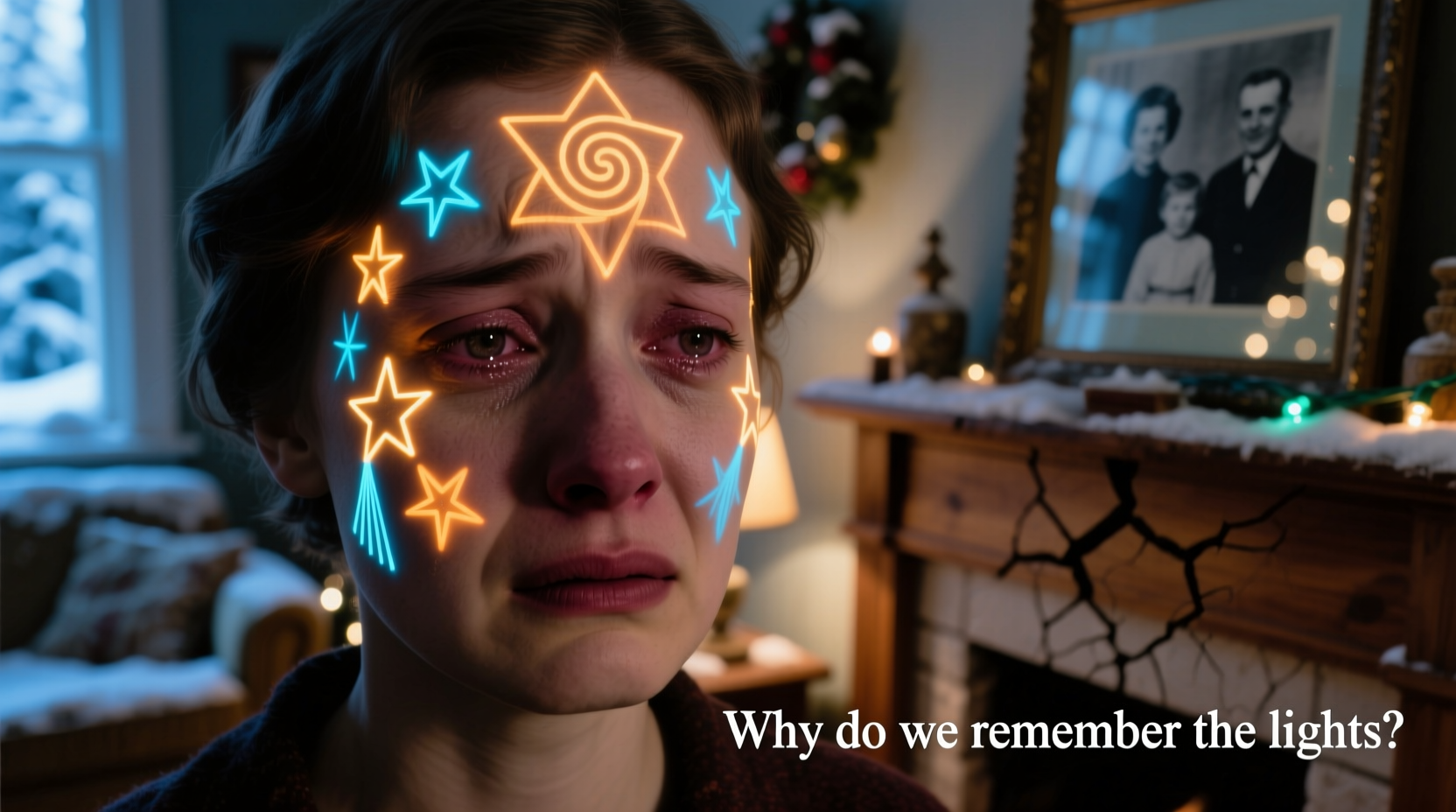
Nostalgia is not simply reminiscing—it’s an emotionally charged mental time travel. Research in cognitive neuroscience shows that sensory inputs, especially visual and auditory stimuli, are among the most potent triggers for autobiographical memory. Unlike abstract thoughts or facts, sensory experiences are processed in regions of the brain closely tied to emotion—the amygdala—and long-term memory—the hippocampus.
When someone sees a familiar pattern of Christmas lights—say, the classic staggered blink of incandescent bulbs on a childhood home’s roof—it can activate a neural pathway formed decades earlier. These pathways were encoded during emotionally significant moments, often in youth, when experiences felt more vivid and formative. Because the brain stores memories in a network of associations, a single cue—like the rhythm of flashing lights—can unlock a cascade of related recollections: the smell of pine needles, laughter around a tree, a parent’s voice, or the feeling of cold air on your face while standing outside admiring decorations.
“Sensory cues like light patterns act as keys to memory vaults. When we see something that matches a past emotional experience, the brain doesn’t just recall it—it re-experiences it.” — Dr. Lena Park, Cognitive Psychologist, University of Toronto
This re-experiencing is what makes nostalgia feel so real. Functional MRI studies have shown that nostalgic memories activate not only memory centers but also areas linked to reward and social connection, explaining why nostalgia often feels comforting, even bittersweet.
Why Light Patterns Matter More Than You Think
Not all Christmas lights evoke the same response. A modern LED display with rapid strobes and digital animations may impress, but it rarely stirs deep nostalgia. In contrast, older lighting styles—especially those using incandescent bulbs with warm glows and simple blinking sequences—are more likely to trigger emotional recall. Why?
- Rhythm and predictability: The steady, alternating blink of traditional lights mimics natural rhythms—heartbeats, breathing, waves—which the brain finds soothing and familiar.
- Color temperature: Warm white or soft-colored incandescent lights emit a glow similar to candlelight or firelight, evoking pre-electric eras associated with intimacy and family gatherings.
- Simplicity: Minimalist arrangements—such as outlining windows or draping eaves in straight lines—mirror common practices from the 1970s–1990s, a period many associate with their childhood Christmases.
- Movement patterns: Slow chases, alternating sides, or gentle twinkles mimic organic motion, which feels more “human” and less artificial than high-speed digital effects.
In essence, the aesthetic simplicity of older light designs acts as a time capsule. For those who grew up before smart lighting and app-controlled displays, these patterns are direct links to a personal past—a past often idealized through the lens of childhood wonder.
Cultural and Generational Influences on Nostalgic Response
Nostalgia isn't universal—it's shaped by culture, era, and personal experience. The Christmas light patterns that stir emotion in one generation may go unnoticed by another.
| Generation | Common Light Experience (Childhood) | Typical Emotional Association |
|---|---|---|
| Baby Boomers (born 1946–1964) | Large, colorful incandescent bulbs; outdoor trees lit with single strands | Post-war optimism, family stability, religious tradition |
| Gen X (born 1965–1980) | Mini-lights in red/green/white; blinking C9 bulbs; early animated displays | Childhood independence, suburban life, early consumer culture |
| Millennials (born 1981–1996) | Pre-lit trees, coordinated indoor/outdoor sets, themed displays | Commercialized holiday joy, media-influenced traditions |
| Gen Z (born 1997–2012) | Digital projectors, RGB LEDs, TikTok-inspired light shows | Entertainment-focused, shareable moments; less emphasis on tradition |
This generational shift explains why a 60-year-old might tear up at a house with old-school C7 lights, while a 22-year-old might find the same display dull. The emotional power lies not in the lights themselves, but in whether they match the viewer’s formative holiday environment.
Additionally, cultural context plays a role. In countries where Christmas is not widely celebrated or where electric lighting was historically limited, the very presence of bright outdoor displays—even modern ones—can evoke awe and longing, particularly among immigrants who encountered such sights for the first time in adulthood.
Case Study: The Johnson Family Lights
In a quiet suburb of Cincinnati, the Johnson family has displayed the same Christmas light setup since 1983. It’s modest: green wire lights outlining the roofline, red and white bulbs along the porch railing, and a single strand forming a star above the front door. The lights blink in a slow alternate pattern—left side on, then right—just as they did when Mark Johnson, now 52, was a boy.
Mark didn’t think much about the lights until he returned home after his father’s funeral in December 2020. As he pulled into the driveway and saw the familiar blink against the snow, he burst into tears. “It wasn’t just seeing them,” he said later. “It was hearing my mom hum ‘Silent Night’ while untangling cords, the way my brother would beg to plug them in first, the cold metal of the ladder under my hands. It all came back at once.”
For Mark, the light pattern wasn’t decoration—it was a living archive of family love, loss, and continuity. He now maintains the display himself, refusing offers to upgrade to LEDs or smart controllers. “This isn’t about being trendy,” he says. “It’s about keeping something alive.”
His story illustrates how ritualistic repetition amplifies emotional resonance. The consistency of the pattern over decades turned it into a reliable anchor—a signal that despite change, some things remain.
How to Harness Nostalgic Light Patterns Intentionally
Understanding the emotional power of light patterns allows individuals and communities to use them intentionally—not just for beauty, but for healing, connection, and intergenerational bonding.
- Recreate childhood setups: Use photos or family stories to rebuild a version of your childhood home’s lighting. Even small details—like the spacing between bulbs or the type of extension cord—can deepen authenticity.
- Involve older relatives: Ask parents or grandparents to help design or install lights. Their choices may reflect nostalgic preferences you weren’t aware of.
- Pair lights with other sensory cues: Combine visual patterns with music (e.g., playing a favorite holiday album), scents (pine, cinnamon), or rituals (hot cocoa after hanging lights) to strengthen memory encoding.
- Create a “memory lane” display: Dedicate one section of your yard to vintage-style lighting, labeling it with a sign like “In honor of Christmases past” to invite reflection.
- Document the moment: Record video of the lights in action, especially with family present. Future viewings can reactivate the same emotional circuitry.
Checklist: Designing a Nostalgia-Rich Light Display
- ☐ Use warm-white or traditional colored bulbs (avoid cool blue tones)
- ☐ Choose simple blinking patterns (alternate, chase, or twinkle—avoid strobe)
- ☐ Stick to physical strands rather than projections for tactile authenticity
- ☐ Incorporate heirloom items (old timers, vintage plugs, family-made ornaments)
- ☐ Maintain consistency year after year to build emotional familiarity
FAQ: Understanding Nostalgia and Christmas Lights
Why don’t modern light shows trigger the same nostalgia?
While impressive, modern LED displays often lack the personal and historical associations that create deep emotional bonds. They’re designed for spectacle, not intimacy. Additionally, their novelty means fewer people have long-term memories tied to them. Nostalgia requires time and repetition—most current tech hasn’t existed long enough to become “nostalgic.”
Can people feel nostalgic for light patterns they didn’t grow up with?
Rarely in the same way. However, someone might develop an “acquired nostalgia” if a new pattern becomes tied to meaningful adult experiences—like the lights at a first home with a partner or during a child’s early years. But this tends to be less intense than childhood-based nostalgia, which forms during peak memory encoding years (ages 5–15).
Is nostalgia from Christmas lights harmful if it leads to sadness?
Not necessarily. While nostalgia can bring up grief—especially for lost loved ones or vanished times—it’s generally psychologically beneficial. Studies show that moderate nostalgia increases feelings of social connectedness, meaning, and resilience. If sadness becomes overwhelming, however, it may be helpful to talk with a counselor, particularly during emotionally loaded seasons.
The Enduring Glow of Memory
The flicker of Christmas lights does more than illuminate darkness—it reignites the inner world of memory. Specific patterns serve as silent messengers from the past, carrying emotions, voices, and sensations across decades. In a fast-moving, digital age, these simple visual rhythms offer something rare: continuity, comfort, and a reminder of who we were—and who we still carry within us.
Whether you’re stringing lights on a balcony or pausing during a neighborhood walk, take a moment to notice not just what you see, but what you feel. That pang in your chest, that smile tugging at your lips—it’s not just holiday spirit. It’s your past reaching out, one blink at a time.




 浙公网安备
33010002000092号
浙公网安备
33010002000092号 浙B2-20120091-4
Comments
No comments yet. Why don't you start the discussion?