
Fluorescent lighting is common in offices, schools, hospitals, and retail spaces due to its energy efficiency and broad illumination. Yet for a significant number of people, these lights are more than just bright—they're a trigger for persistent headaches, eye strain, and even migraines. While many dismiss this as mere sensitivity, scientific research and clinical observations point to real physiological and neurological mechanisms behind this reaction. Understanding why fluorescent lighting affects certain individuals can empower better workplace design, personal health choices, and migraine management.
The Science Behind Fluorescent Light Sensitivity
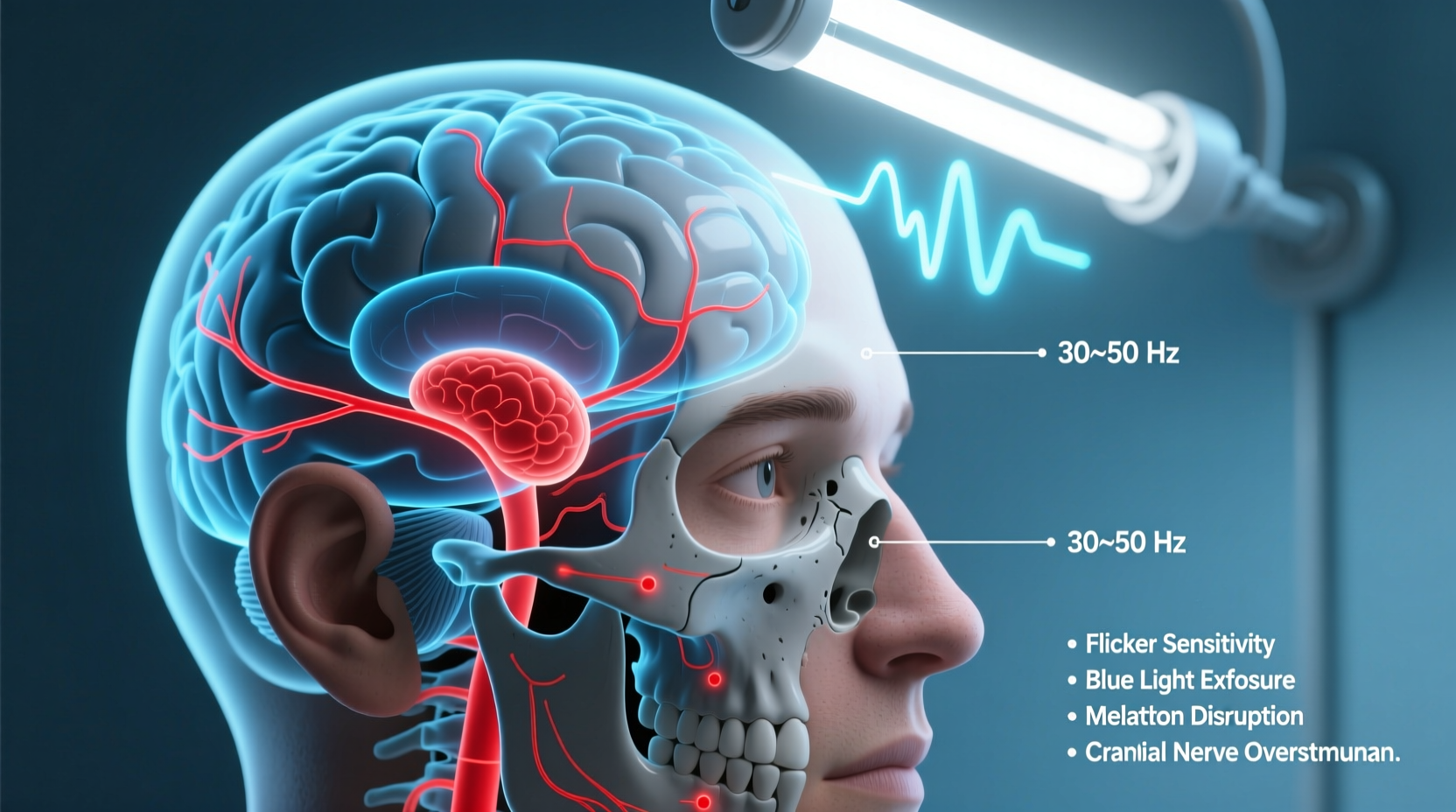
Fluorescent bulbs operate differently from incandescent or LED lighting. They use an electric current passed through mercury vapor to produce ultraviolet (UV) light, which then excites a phosphor coating inside the tube, resulting in visible light. This process doesn’t generate a steady glow; instead, it produces rapid fluctuations in brightness known as flicker—even when imperceptible to the naked eye.
Flicker rates in older magnetic ballast systems typically cycle at 60 Hz (in North America), meaning the light turns on and off 120 times per second. While newer electronic ballasts use higher frequencies (20,000 Hz or more), reducing perceptible flicker, subtle modulation still occurs. For neurologically sensitive individuals, especially those with migraines, epilepsy, or autism spectrum disorders, this flickering can disrupt brain activity.
“Even subclinical flicker—light changes too fast to see consciously—can cause cortical hyperexcitability in migraine-prone brains.” — Dr. Laura Chen, Neurologist and Headache Specialist
In addition to flicker, fluorescent lights emit a cooler, bluer spectrum of light compared to natural daylight or warm-toned bulbs. Blue-enriched white light has shorter wavelengths that scatter more easily in the eye, increasing visual noise and contributing to eye fatigue. Prolonged exposure may suppress melatonin production, disrupt circadian rhythms, and heighten alertness in ways that paradoxically lead to stress-induced headaches.
Common Triggers Associated with Fluorescent Lighting
Headaches triggered by fluorescent lighting are rarely due to one single factor. Instead, they result from a combination of physical, environmental, and individual susceptibility factors. Below are the most frequently observed contributors:
- Flicker frequency: Low-frequency flicker can induce photophobia and trigger neurological responses in sensitive individuals.
- Glare and brightness: Overhead fluorescent panels often create harsh glare, especially on computer screens or glossy surfaces, forcing the eyes to work harder.
- Spectral composition: High levels of blue light and uneven color rendering can distort visual perception and increase cognitive load.
- Hum and vibration: Older fixtures emit a low-frequency hum, which, while not always audible, can contribute to sensory overload and tension.
- Poor ambient lighting design: Uniform rows of ceiling-mounted tubes create flat, shadowless environments that lack depth cues, leading to visual disorientation over time.
Who Is Most at Risk?
Not everyone reacts negatively to fluorescent lighting, but several groups show increased vulnerability:
| Group | Risk Factors | Common Symptoms |
|---|---|---|
| Migraine sufferers | Neurological hypersensitivity to light (photophobia) | Throbbing headache, nausea, worsened by continued exposure |
| People with eye conditions | Dry eye, astigmatism, light sensitivity disorders | Burning eyes, blurred vision, frontal headaches |
| Autistic individuals | Heightened sensory processing sensitivity | Anxiety, dizziness, avoidance behaviors |
| Chronic fatigue syndrome patients | Reduced tolerance for environmental stressors | Fatigue, brain fog, muscle pain |
| Office workers in poorly lit spaces | Long hours under artificial lighting with limited control | Dull, persistent headaches, difficulty concentrating |
Studies suggest that up to 30% of migraine patients identify fluorescent lighting as a consistent trigger. Moreover, individuals with post-concussion syndrome or traumatic brain injury often report new-onset light sensitivity after their injury, making previously tolerable environments unbearable.
Real-World Impact: A Case Study
Sarah M., a 34-year-old technical writer, began experiencing daily headaches six months after transitioning to a corporate office with open-plan fluorescent lighting. Despite perfect vision and no prior history of migraines, she developed a dull ache above her eyes each afternoon, accompanied by eye strain and irritability. Over-the-counter pain relievers provided only temporary relief.
After consulting a neuro-ophthalmologist, Sarah learned she had developed light-induced headache disorder exacerbated by high-glare overhead fluorescents. Her doctor recommended switching to indirect task lighting, using matte screen filters, and wearing FL-41 tinted lenses—rose-colored glasses proven to reduce photophobia.
Within two weeks of implementing these changes—including requesting permission to turn off the overhead lights at her desk—Sarah’s headaches decreased in frequency from five days a week to less than one. Her case illustrates how environmental modifications can dramatically improve quality of life without medication.
How to Reduce Headache Risk from Fluorescent Lights
If you suspect fluorescent lighting is contributing to your headaches, consider taking proactive steps to minimize exposure and mitigate effects. The following checklist outlines practical actions you can take immediately:
✅ Headache Prevention Checklist
- Request access to natural light or areas with dimmable/LED lighting at work.
- Use a desk lamp with warm-white (2700K–3000K) LED bulbs to reduce reliance on overhead lights.
- Install anti-glare screens on computers and mobile devices.
- Wear FL-41 tinted glasses or blue-light-blocking lenses during long exposures.
- Take regular visual breaks using the 20-20-20 rule: every 20 minutes, look at something 20 feet away for 20 seconds.
- Avoid sitting directly under fluorescent fixtures or near reflective surfaces.
- Advocate for facility upgrades to high-frequency ballasts or full-spectrum LEDs.
“Simple ergonomic adjustments can be as effective as pharmacological interventions for environmentally triggered headaches.” — Dr. Rajiv Mehta, Occupational Health Consultant
Step-by-Step Guide to Creating a Headache-Friendly Workspace
Whether you’re managing your own environment or advocating for change in a shared space, follow this sequence to reduce fluorescent-related discomfort:
- Assess your current lighting: Identify sources of direct overhead lighting, glare, and flicker. Note when and where headaches occur.
- Introduce localized lighting: Replace or supplement overhead lights with adjustable desk lamps using warm-white LEDs.
- Modify screen settings: Lower brightness, enable night mode, and use dark themes to reduce contrast stress.
- Optimize seating position: Sit perpendicular to windows and avoid facing reflective walls or monitors.
- Use protective eyewear: Try FL-41 or amber-tinted lenses during peak exposure hours.
- Track symptom changes: Keep a log for two weeks to evaluate improvements.
- Engage facilities management: Present findings and request lighting retrofits or flexible policies.
This approach not only addresses immediate discomfort but also supports long-term wellness and productivity. Employers who adopt inclusive lighting standards often see reduced absenteeism and improved employee satisfaction.
FAQs About Fluorescent Lighting and Headaches
Can LED lights also cause headaches?
Yes, though generally less so than fluorescents. Some cheap or poorly designed LEDs exhibit flicker or emit excessive blue light, especially cool-white variants. Look for “flicker-free” certified LEDs with a color temperature below 4000K for optimal comfort.
Are there medical tests for light sensitivity?
While there’s no single diagnostic test, neurologists and ophthalmologists can assess photophobia through patient history, pupillometry, and functional vision testing. Conditions like iritis, optic neuritis, or vestibular migraine may underlie severe light intolerance.
Why do some people feel fine under fluorescents while others don’t?
Individual differences in neurological wiring, eye health, genetic predisposition, and prior exposure history all play a role. Just as some people tolerate loud noises or strong smells better than others, visual processing varies widely across populations.
Conclusion: Taking Control of Your Light Environment
Headaches caused by fluorescent lighting are not imagined—they are rooted in measurable physical phenomena and well-documented physiological responses. From invisible flicker to disruptive spectral output, the modern built environment often overlooks the human cost of energy-efficient design. But awareness is the first step toward change.
You don’t have to endure daily discomfort simply because \"everyone else seems fine.\" By understanding your triggers, making small but strategic adjustments, and advocating for healthier lighting standards, you can reclaim comfort and concentration. Whether you're an employee, employer, educator, or parent, prioritizing visual well-being contributes to better mental clarity, emotional balance, and overall health.




 浙公网安备
33010002000092号
浙公网安备
33010002000092号 浙B2-20120091-4
Comments
No comments yet. Why don't you start the discussion?