
Decorating a home shouldn’t feel like preparing for a high-stakes exam—but for millions, it does. The blank wall, the unopened paint swatch book, the furniture delivery that arrives with no instructions or clear place to go: these aren’t just logistical hurdles. They’re emotional pressure points. Stress around decorating isn’t a sign of poor taste or laziness. It’s often a quiet signal of deeper psychological, neurological, and environmental factors at play—perfectionism wired by social media, decision fatigue amplified by endless choice, or even sensory sensitivities misread as “being difficult.” What’s more, this stress is rarely acknowledged in design blogs or glossy magazines, which tend to spotlight finished rooms—not the anxiety behind them. This article unpacks why decorating becomes overwhelming for so many, and offers grounded, field-tested strategies to reclaim it as a source of calm, creativity, and self-expression—not dread.
The Hidden Roots of Decorating Stress
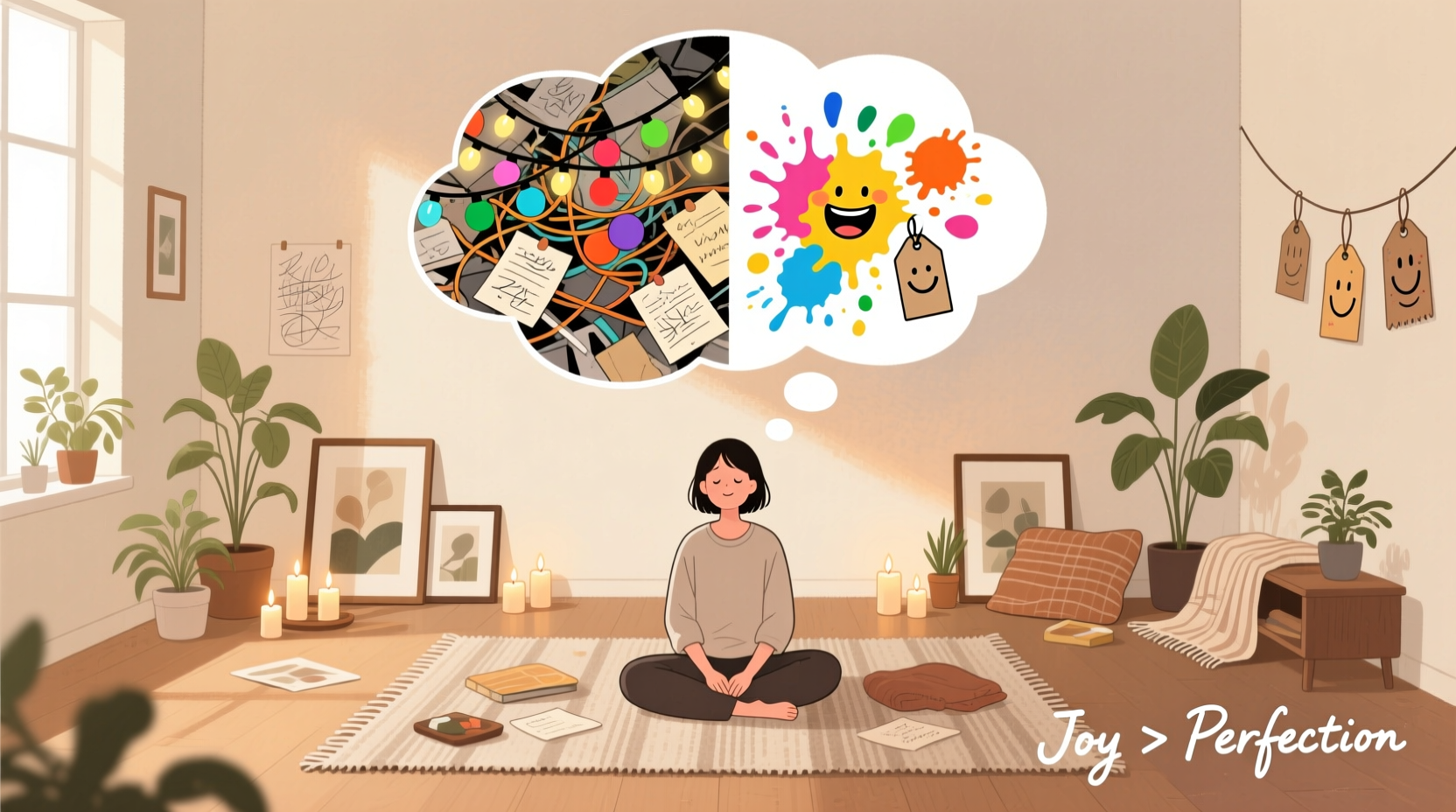
Stress around decorating rarely stems from a single cause. It’s usually a confluence of interlocking factors—some internal, some cultural, some practical. Understanding these helps dismantle the shame often attached to feeling paralyzed by a throw pillow.
First, there’s cognitive overload. A 2023 study published in the Journal of Environmental Psychology found that when presented with more than seven distinct furniture options per room, participants’ decision accuracy dropped by 42%, and self-reported anxiety spiked. Online retailers routinely show 50+ sofa variants—each with dozens of fabric, leg, and size combinations. That’s not choice; it’s cognitive tax.
Second, perfectionism fueled by curated digital feeds distorts reality. Instagram and Pinterest don’t show the three weeks of repositioning a single shelf, the paint that dried two shades too warm, or the rug that arrived with a permanent crease. They show the “after,” stripped of process, time, and imperfection. As Dr. Lena Torres, clinical psychologist specializing in creative anxiety, explains:
“Scrolling through ‘perfect’ interiors trains our brains to equate decoration with performance—not presence. We stop asking ‘Does this feel like me?’ and start asking ‘Does this pass the algorithm test?’ That shift alone can trigger chronic low-grade stress.”
Third, unspoken identity pressure plays a powerful role. Our homes are among the most visible extensions of self. For neurodivergent individuals, especially those with ADHD or sensory processing differences, the stakes feel higher: choosing the wrong texture, color temperature, or layout isn’t just aesthetic—it can directly impact daily functioning, focus, and emotional regulation. A muted gray wall may soothe one person and feel like visual static to another. Yet few interior guides acknowledge that “calm” is neurologically subjective.
Finally, there’s practical friction: mismatched measurements, delivery delays, assembly instructions written in cryptic pictograms, and the sheer physical labor of moving heavy objects without help. These aren’t minor inconveniences—they’re real barriers that compound mental load, especially for caregivers, remote workers, or those managing chronic health conditions.
7 Practical Strategies to Make Decorating Enjoyable (Not Exhausting)
Enjoyment isn’t the absence of difficulty—it’s the presence of agency, rhythm, and permission. These strategies are drawn from occupational therapy frameworks, behavioral design principles, and interviews with interior stylists who work exclusively with clients reporting high-decoration-anxiety.
1. Start with One Sensory Anchor—Not a Full Room
Forget “living room redo.” Begin with a single object that engages one sense deeply: a wool throw that feels grounding under your palms, a ceramic vase whose weight and curve fit your hand perfectly, or a lamp whose glow casts soft, warm shadows at dusk. Anchor your space in tactile or visual comfort first. Once that anchor feels settled, add one more intentional piece—only when you’ve lived with the first for at least five days. This builds confidence through micro-wins, not macro-pressure.
2. Use the “Three-Container Method” for Decision-Making
When overwhelmed by options, limit your active choices to exactly three—no more, no less. For example: choose three paint colors (not 30), three chair styles (not 87), three plant types (not every succulent on Etsy). Place each option in its own labeled container (physical or digital). Live with them for 48 hours—take photos, note how they look at different times of day, say the names aloud. Your brain will naturally begin eliminating based on resonance, not comparison. Research shows this method reduces decision fatigue by up to 60% while increasing satisfaction with the final choice.
3. Embrace “Imperfect Sourcing” as a Core Principle
Let go of the idea that everything must be “designed” or “matched.” Instead, adopt sourcing rules that prioritize ease and authenticity:
- No item requires more than one online search or one store visit.
- At least one piece in each room must have a visible story: a thrifted lamp with chipped enamel, a framed postcard from a trip, a child’s drawing in a simple black frame.
- If assembly takes longer than 20 minutes without clear instructions, return it—no guilt.
4. Schedule “Decoration Sprints,” Not Marathons
Block 25 minutes—no more—in your calendar for decoration-related tasks. Set a timer. During that time, you might: measure a window for curtains, text a friend for their opinion on two rug photos, or rearrange books on a shelf by height. When the timer ends, stop—even mid-thought. This leverages the brain’s natural attention cycle and prevents the overwhelm that comes from open-ended “I’ll do it someday” tasks. Over four weeks, these sprints accumulate tangible progress without draining reserves.
5. Design for Your Energy, Not Just Your Aesthetics
Create a simple table to map your daily energy patterns against spatial needs:
| Time of Day | Your Typical Energy Level (1–5) | What the Space Needs Most | Low-Effort Decoration Fix |
|---|---|---|---|
| Morning (7–10am) | 3 (moderate, focused) | Bright, clear visual field | Swap dark curtains for light-filtering linen ones; no sewing needed—use clip-on rings. |
| Afternoon (2–4pm) | 2 (slump, distracted) | Soft edges, reduced visual noise | Add a single large potted plant in the corner; choose one that thrives on neglect (ZZ plant, snake plant). |
| Evening (7–9pm) | 4 (calm, reflective) | Warm light, cozy textures | Layer two throws on the sofa—one wool, one cotton—folded simply, no tucking. |
This shifts decoration from “how should this look?” to “how should this support me—right now?”
A Real Example: How Maya Transformed Her Anxiety into Agency
Maya, 34, worked remotely in customer support and shared a 650-square-foot apartment with her partner. For two years, she avoided hanging art, kept boxes half-unpacked in the closet, and felt nauseous when scrolling interior accounts. “It wasn’t that I didn’t care,” she told us. “It was that every decision felt like a referendum on whether I was ‘good enough’ at adulting.”
With guidance from an occupational therapist, she began with Strategy #1: a sensory anchor. She chose a vintage kilim pillow—rough, thick, slightly uneven—because its texture helped ground her during stressful calls. She placed it on her desk chair. For five days, that was her only decoration action. Then, she added a second anchor: a small brass desk lamp whose light didn’t flicker and cast no glare. She didn’t buy new furniture. She didn’t repaint. She simply asked: “What makes this space safer for my nervous system?”
Within six weeks, Maya had hung three pieces of art—all created by local artists she met at a neighborhood market. She’d painted one accent wall—not with perfect lines, but using painter’s tape applied freehand, leaving visible, charming gaps. Her apartment didn’t look like a magazine spread. It looked like a place where someone breathed, rested, and occasionally laughed out loud. “The stress didn’t vanish,” she said. “But it stopped being the boss. Now it’s just background noise—like distant traffic.”
Your No-Stress Decorating Checklist
Use this before starting any decorating project—big or small. Tick each box only when genuinely complete. Do not skip steps.
- ✅ I’ve identified one specific feeling I want this space to support (e.g., “calm focus,” “playful connection,” “quiet solitude”).
- ✅ I’ve limited my active options to exactly three for the next decision (color, furniture, lighting, etc.).
- ✅ I’ve scheduled a 25-minute sprint—and set a timer—before opening any shopping tabs or measuring tapes.
- ✅ I’ve checked if the item requires assembly, delivery coordination, or installation beyond my current capacity—and accepted that “not now” is a valid, complete answer.
- ✅ I’ve named one thing I’ll keep exactly as it is—no changes—for the next 30 days (e.g., “this rug stays,” “this shelf remains empty,” “this wall stays bare”).
FAQ: Real Questions, Direct Answers
“I freeze every time I try to pick a paint color. Is that normal?”
Yes—and extremely common. Color selection activates the brain’s threat-detection system when we fear making a “wrong” choice with lasting consequences. Try this instead: Buy three $5 sample pots (not full gallons) in tones you’re drawn to—even if they seem “too bold” or “too dull.” Paint three 2' x 2' swatches on different walls, in different light conditions. Live with them for 72 hours. You’ll likely find one begins to feel “inevitable.” That’s your color—not because it’s objectively perfect, but because it’s resonant.
“My partner loves decorating; I dread it. How do we collaborate without resentment?”
Assign roles by energy—not expertise. Let your partner handle research, vendor calls, and logistics. You handle sensory testing: sitting in chairs, touching fabrics, testing lamp brightness at night, arranging objects by how they feel in your hands. Frame it as essential co-creation: “Your eye sees the vision; my body tells us what actually works.” This honors both contributions without demanding either person perform outside their capacity.
“What if I love something that ‘doesn’t go’ with the rest?”
That’s not a problem—it’s data. It reveals a genuine preference your current space hasn’t accommodated. Instead of forcing it in, ask: What quality does this object hold? (e.g., “vibrant energy,” “rough texture,” “playful shape”). Then, find one small way to echo that quality elsewhere—a single stripe on a pillow, a textured vase, a geometric coaster. Harmony isn’t sameness. It’s conversation.
Conclusion: Your Home Is Meant to Hold You—Not Impress Anyone
Decorating isn’t about achieving a finish line. It’s about practicing daily belonging. Every time you choose comfort over convention, pause before purchasing, or leave a wall beautifully bare—you’re not failing at design. You’re succeeding at self-knowledge. You’re refusing to let algorithms, outdated notions of “adulting,” or inherited family aesthetics dictate how your nervous system gets to rest. The most joyful spaces aren’t flawless. They’re forgiving. They’re layered with evidence of real life: a coffee stain on a beloved tray, a shelf slightly crooked because it was hung after a long day, a plant that’s survived three near-death experiences and still blooms.
You don’t need permission to decorate slowly. You don’t need approval to love what others overlook. You don’t need to wait until you “know enough.” You already know what calms you. You already know what energizes you. You already know what feels like home—even if it’s not yet reflected on the walls.




 浙公网安备
33010002000092号
浙公网安备
33010002000092号 浙B2-20120091-4
Comments
No comments yet. Why don't you start the discussion?