
In an era where smartphones are nearly extensions of our hands and social media thrives on visual content, being filmed has become routine. Yet for many, the act of being recorded—whether casually at a party or professionally for a public platform—triggers deep unease. This resistance isn’t about vanity or paranoia; it’s rooted in fundamental concerns about body autonomy, personal boundaries, and emotional safety. Understanding this aversion requires more than surface-level observation—it demands empathy, awareness of psychological dynamics, and recognition of how power operates in recording culture.
The Core Issue: Body Autonomy in a Hyper-Visual World
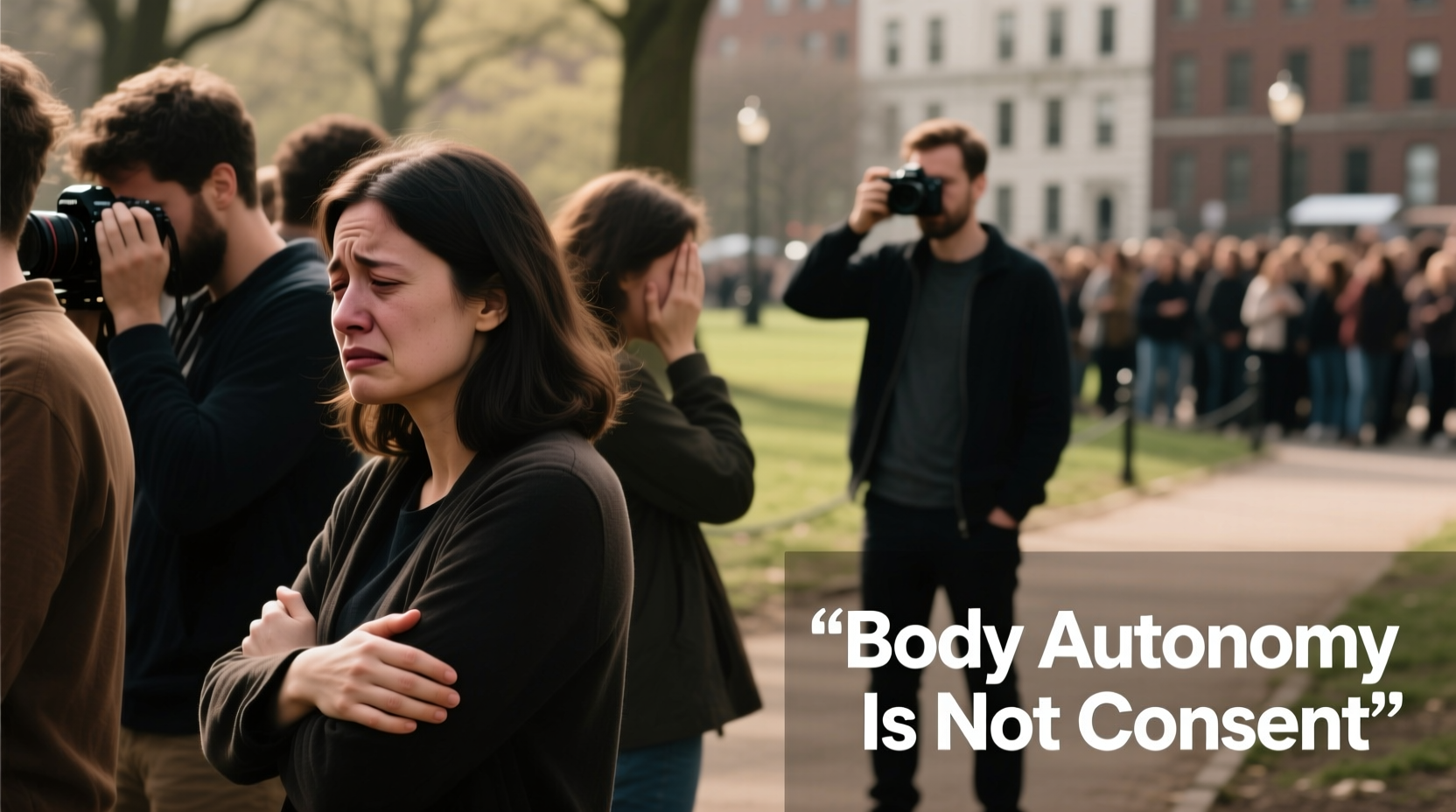
Body autonomy refers to the right of individuals to govern what happens to their bodies without coercion or external control. When someone is filmed without consent—or even with passive permission under social pressure—that autonomy can feel compromised. The camera becomes a tool that captures not just an image but a piece of identity, potentially redistributing it beyond the person’s control.
This concern is especially acute in cultures where surveillance, data harvesting, and non-consensual image sharing have normalized violations of privacy. Once a video exists, it can be edited, shared, misinterpreted, or weaponized. Even in benign contexts, the knowledge that one’s likeness might circulate indefinitely creates lasting anxiety.
“Consent isn't just about saying yes to being filmed—it's about retaining ongoing control over how your image is used.” — Dr. Lena Patel, Social Psychologist and Digital Ethics Researcher
For marginalized groups, including women, LGBTQ+ individuals, and people of color, this fear is often grounded in real-world experiences of exploitation. Historical and contemporary abuses—from unauthorized paparazzi photos to revenge porn—demonstrate how images can be used to harm, shame, or silence.
Psychological Discomfort: Why Being Filmed Feels Invasive
Not everyone who dislikes being filmed has experienced trauma. For many, the discomfort is psychological and instinctive. Several cognitive and emotional factors contribute:
- Hypervigilance to self-perception: Being recorded forces attention inward. People begin to monitor their appearance, voice, gestures, and expressions in real time—a process known as “self-objectification.” This shift from experience to performance can make natural interaction impossible.
- Fear of judgment: Knowing that footage may be reviewed repeatedly amplifies concern about being judged unfairly. A fleeting facial expression or awkward pause, normal in conversation, can be isolated and scrutinized out of context.
- Loss of spontaneity: Authentic moments thrive in unobserved spaces. When cameras roll, behavior often shifts toward what’s socially acceptable rather than genuine, eroding emotional honesty.
- Memory distortion: Research shows that people remember events differently when they know they’re being recorded. Instead of recalling feelings or sensations, they recall how they looked on camera—replacing lived memory with mediated representation.
Social Norms and Coercion: The Pressure to Participate
Social settings often create subtle or overt pressure to accept being filmed. At weddings, protests, parties, or workplace events, refusing can lead to exclusion, teasing, or accusations of being “difficult.” This dynamic turns consent into a performance of compliance rather than a free choice.
Consider a common scenario: a group dance at a friend’s birthday party. One person steps back while others grab phones. Someone says, “Come on, don’t be shy!” In that moment, declining feels socially costly. But agreeing doesn’t mean true comfort—it means prioritizing harmony over personal boundaries.
This phenomenon reflects what sociologists call “context collapse,” where multiple social roles (friend, employee, family member) converge in a single setting, making boundary-setting harder. The expectation to be perpetually visible and shareable undermines individual agency.
Mini Case Study: Workplace Training Videos
A mid-sized tech company launched a new onboarding campaign featuring short videos of employees sharing tips. Participation was technically voluntary, but managers encouraged staff to “show team spirit.” One junior developer, Alex, felt uneasy on camera due to past bullying over their stutter. Despite explaining this, their supervisor responded, “It’s just a quick clip—everyone else is doing it.”
Alex reluctantly participated but later found the video circulating internally and externally. Colleagues made jokes about their speech pattern in chat threads. Though HR eventually removed the video, the damage to Alex’s sense of safety lingered. This case illustrates how institutional encouragement can mask coercion—and why policies must protect those who opt out without penalty.
Power Dynamics in Filming: Who Controls the Lens?
Filming is never neutral. It involves decisions: who gets filmed, from which angle, for what purpose, and who owns the final product. These choices reflect power imbalances.
Think of documentary filmmaking, reality TV, or street photography. Subjects are often selected based on perceived “interest”—which frequently aligns with difference, vulnerability, or spectacle. The filmmaker holds editorial control; the subject rarely does. Even well-intentioned projects can replicate colonial or voyeuristic patterns if they fail to center participant consent and equity.
| Situation | Power Holder | Risk to Subject | Autonomy Safeguard |
|---|---|---|---|
| Viral TikTok challenge | Content creator/audience | Embarrassment, ridicule, loss of control over image | Explicit opt-in, ability to request deletion |
| Workplace training video | Employer/managers | Professional scrutiny, speech policing | Anonymous alternatives, no retaliation for refusal |
| Protest documentation | Journalists/activists | Identification, legal risk, doxxing | Blurring faces, secure storage, informed consent |
| Family home videos | Relative with phone | Long-term privacy erosion, future regret | Family agreements on sharing rules |
True respect for body autonomy means acknowledging that consent must be informed, revocable, and contextual. A person might agree to be filmed at a public rally for advocacy purposes but refuse at a private funeral—even if both involve the same camera operator.
How to Respect Boundaries Around Filming: A Practical Checklist
Whether you're filming friends, colleagues, or strangers, these actions help uphold dignity and trust:
- Ask explicitly before recording, even in casual settings. Silence or nodding isn’t enough—seek verbal confirmation.
- Explain the purpose of the recording: Is it for private use? Public posting? Internal review?
- Specify distribution limits: Will it be posted online? Shared with third parties? Stored indefinitely?
- Offer anonymity options: Allow people to appear off-camera, use voice modulation, or be blurred.
- Provide an easy opt-out process: Let participants withdraw consent at any stage, even after filming.
- Delete unused footage promptly and confirm destruction when requested.
- Respect cultural differences: Some communities view photography as spiritually intrusive or taboo.
Step-by-Step Guide: Creating a Consent-Conscious Filming Environment
If you’re organizing an event or project involving cameras, follow this timeline to ensure ethical practices:
- Pre-Event (1–2 weeks prior): Notify attendees that filming may occur and outline usage policies. Provide a written consent form option.
- Arrival & Check-In: Display signage indicating filming zones and no-filming areas. Offer badge stickers (e.g., red/green dots) to signal comfort levels.
- Before Recording Begins: Verbally confirm consent with each person in frame. Re-state the purpose and storage plan.
- During Filming: Avoid panning to individuals who haven’t consented. Use wide shots when possible.
- Post-Recording: Send a follow-up message summarizing how footage will be used. Include contact info for withdrawal requests.
- Prior to Publication: Review all content. Blur or cut anyone who changed their mind or wasn’t properly consented.
- After Release: Monitor for misuse. Remove content immediately if someone revokes consent.
FAQ: Common Questions About Filming and Personal Comfort
Is it illegal to film someone without their permission?
Laws vary by country and context. In public spaces, filming is generally legal, but publishing or distributing recordings—especially for commercial use—usually requires consent. In private spaces, filming without permission may violate privacy laws. Always check local regulations.
What if someone changes their mind after being filmed?
Respect their request. Ethically, consent is ongoing. If technically feasible, delete or edit the footage. Legally, depending on jurisdiction and usage, you may be required to comply with removal requests under data protection laws like GDPR.
Can I film my coworkers for a team-building video?
You can only do so with informed, voluntary consent. Make participation optional, clarify how the video will be used (e.g., internal vs. public), and offer alternatives for those who decline. Never imply that refusal affects job performance or team inclusion.
Conclusion: Reclaiming Agency in the Age of Visibility
The desire to avoid being filmed isn’t a quirk—it’s a valid response to living in a world where images carry weight, spread rapidly, and often escape our control. Respecting this preference isn’t about limiting expression; it’s about expanding ethical awareness. Every time we press record, we hold power over someone else’s digital footprint. Using that power responsibly means prioritizing consent, transparency, and humility.
Cultivating a culture of consent starts with small acts: asking before filming, honoring a “no” without question, and designing systems that protect rather than exploit visibility. As individuals, we can model these behaviors. As creators, employers, and community members, we can institutionalize them.




 浙公网安备
33010002000092号
浙公网安备
33010002000092号 浙B2-20120091-4
Comments
No comments yet. Why don't you start the discussion?