
Christmas lights shimmer in windows, drape across rooftops, and twinkle from trees. For many, they symbolize warmth, nostalgia, and celebration. Yet for others, these same glowing strands provoke irritation, anxiety, or even resentment. While it might seem trivial—after all, aren’t holiday lights just festive decorations?—the emotional response they trigger can reveal deeper truths about individual psychology, cultural values, and personal boundaries.
The aversion to Christmas lights is not merely a matter of taste. It often reflects broader attitudes toward social expectations, environmental impact, mental well-being, and authenticity. Understanding why some people dislike them offers insight into how we navigate tradition, sensory experience, and the pressure to perform joy during the holidays.
The Sensory Overload Factor
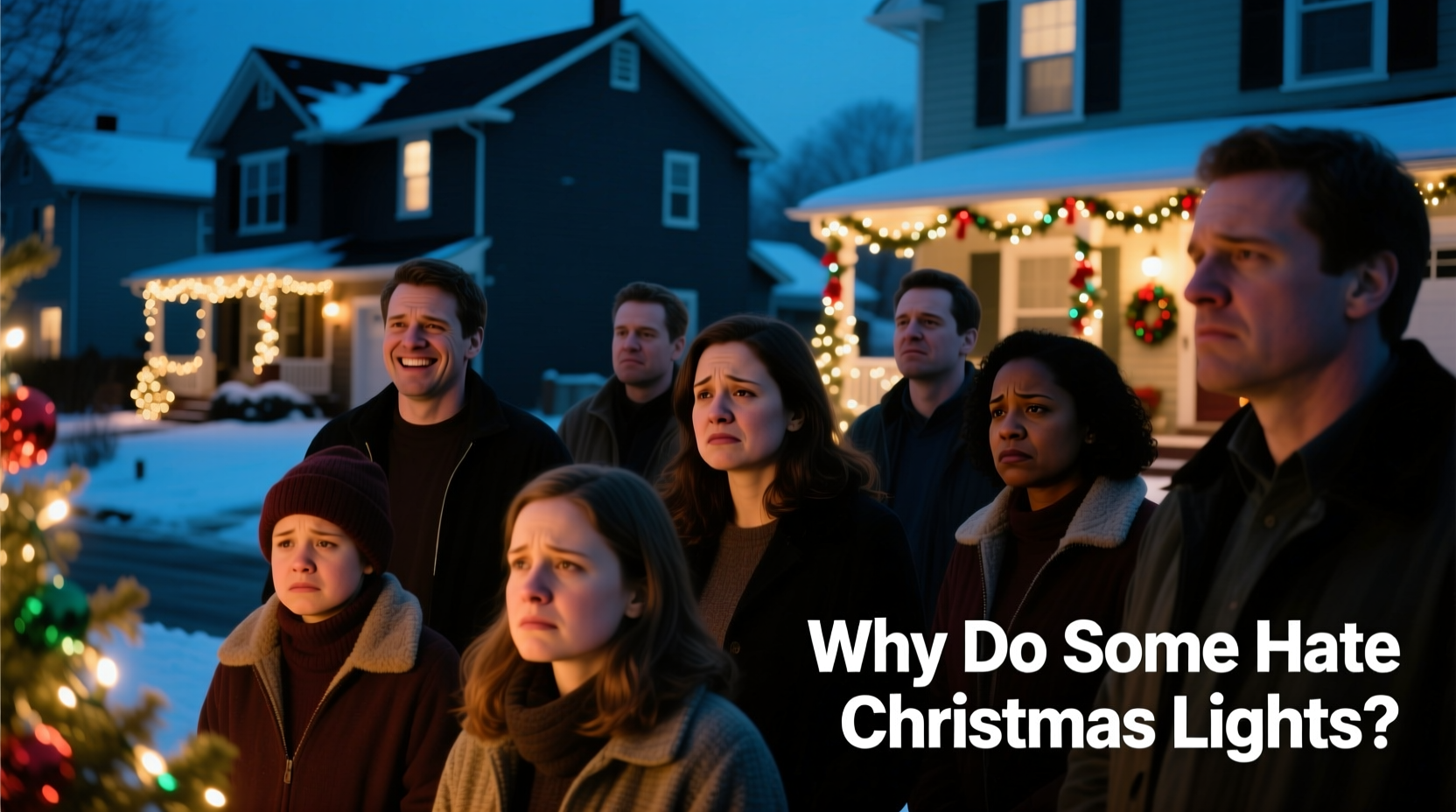
For an increasing number of individuals, especially those with neurodivergent traits such as autism, ADHD, or sensory processing sensitivity, Christmas lights represent more than cheer—they signal sensory overload. Bright, flickering, multicolored displays can be physically uncomfortable or mentally exhausting.
Dr. Lena Peterson, a clinical psychologist specializing in sensory integration, explains:
“Lights that pulse, strobe, or change rapidly can overstimulate the nervous system. What feels joyful to one person may feel chaotic or threatening to another. This isn’t about being ‘Grinches’—it’s about neurological differences in how stimuli are processed.” — Dr. Lena Peterson, Clinical Psychologist
Moreover, the cumulative effect of neighborhood-wide light displays—combined with loud music, crowded streets, and constant social interaction—can create an environment that feels invasive rather than inviting. For someone already managing anxiety or depression, the forced merriment associated with these lights can amplify feelings of isolation.
Cultural and Personal Values at Play
Discomfort with Christmas lights often extends beyond sensory issues into questions of identity, inclusion, and commercialism. In multicultural societies, the ubiquity of Christmas-specific symbols—including elaborate light displays—can feel exclusionary to non-Christian residents.
Consider the experience of Amina Khalid, a Muslim teacher in Toronto:
“I don’t mind seasonal decor, but when entire neighborhoods go all-out with nativity scenes and endless red-and-green lighting, it sends a message: ‘This is whose holiday matters.’ I love winter festivals, but I wish there was more space for Hanukkah, Diwali, Kwanzaa, or secular winter themes.” — Amina Khalid, Educator
This sentiment echoes among many who observe alternative winter holidays or no religious traditions at all. The dominance of Christmas iconography can make public spaces feel less shared and more like declarations of majority culture.
Additionally, critics argue that extravagant light displays reflect consumerist excess. Energy consumption spikes during December, and while LED lights have reduced the environmental toll, massive synchronized setups still draw criticism. Some object not to the lights themselves, but to what they represent: materialism, waste, and performative generosity.
What Disliking Lights Might Reveal About Personality
Psychologically, strong reactions to something seemingly minor like holiday lights can serve as emotional barometers. They often point to underlying values or stressors. Here’s what disliking Christmas lights might suggest about a person:
- A high value on authenticity: Those who resist performative festivity may prioritize genuine emotion over social obligation. They might see lights as symbolic of “forced happiness” during a season that can be emotionally difficult.
- Strong personal boundaries: People who find public displays intrusive may have a heightened need for autonomy and control over their environment.
- Critical thinking about norms: Rejecting widespread traditions can indicate independent thought and skepticism toward unquestioned customs.
- Environmental consciousness: Concerns about energy use, light pollution, and e-waste from discarded strings signal eco-awareness and long-term thinking.
- Sensitivity to social pressure: Feeling obligated to decorate—or judge others for not doing so—reveals how deeply holiday expectations are policed, even informally.
The Social Expectation Trap
One of the most underdiscussed aspects of Christmas light aversion is the pressure to conform. There’s an unspoken rule in many communities: if your neighbors deck the halls, you should too. Failure to participate can lead to side-eye, jokes about being a “Scrooge,” or even complaints to homeowners’ associations.
This social enforcement turns decoration into performance. As sociologist Dr. Marcus Bell notes:
“Holiday decorating has become a form of social signaling. Not putting up lights isn’t neutral—it’s interpreted as disengagement, coldness, or lack of community spirit. That’s a lot of weight for a string of bulbs to carry.” — Dr. Marcus Bell, Sociologist
The expectation to display joy—especially through visible, public acts like lighting one’s home—can alienate those going through grief, financial hardship, or mental health struggles. For them, the glittering houses down the street aren’t inspiring; they’re isolating.
A 2022 survey by the National Alliance on Mental Illness (NAMI) found that 41% of respondents felt increased anxiety during the holiday season due to perceived social expectations, including home decor. One participant wrote: “I lost my mom last January. Seeing every house lit up like nothing’s wrong makes me feel like my grief doesn’t belong.”
Mini Case Study: The Quiet House on Maple Street
In a suburban New Jersey neighborhood known for its competitive Christmas lighting, the house at 47 Maple Street stood out—not for brilliance, but for its absence of lights. For years, neighbors whispered. Was the family broke? Divorced? Angry?
Then, a note appeared taped to their front door:
“Thank you for your beautiful displays. We appreciate the effort. Our son has autism and bright, flashing lights cause him severe distress. We celebrate quietly inside. We’re not unhappy—we just celebrate differently. Happy Holidays.”
The note changed the conversation. Some neighbors dimmed their displays. Others added quiet zones to their yard designs. One installed a motion-sensor path light instead of full-house coverage. What began as judgment transformed into empathy.
This small shift illustrates how understanding can replace assumption. The quiet house wasn’t rejecting joy—it was protecting it in a different form.
Do’s and Don’ts of Holiday Lighting (With Empathy)
| Do | Don't |
|---|---|
| Ask neighbors if strobe effects or loud music affect them | Assume everyone loves bright, flashy displays |
| Use timers to limit display hours (e.g., 5–10 PM) | Leave lights on all night, contributing to light pollution |
| Include inclusive symbols (snowflakes, stars, candles) | Overwhelm public sightlines with religious imagery |
| Choose energy-efficient LEDs and recycle old sets | Dispose of broken lights in regular trash (they contain metals) |
| Respect homes without decorations—don’t shame them | Complain about “boring” houses or call them “sad” |
How to Navigate Your Own Feelings—And Others’ Reactions
If you dislike Christmas lights, you’re not alone—and you don’t need to justify your preference. But navigating the season with integrity requires balance. Here’s a step-by-step approach:
- Identify the root of your discomfort: Is it sensory? Emotional? Ethical? Naming the source helps you respond thoughtfully rather than react impulsively.
- Set boundaries kindly: You don’t have to attend every light-viewing event. Politely decline or suggest alternative activities (“Let’s go for a winter hike instead”).
- Communicate without judgment: If asked why you don’t decorate, try: “It’s not my thing—I enjoy the season in quieter ways.” No defense needed.
- Seek out alternatives: Visit botanical gardens with tasteful light displays, attend non-religious winter festivals, or support local art installations that embrace seasonal themes without dogma.
- Practice empathy in reverse: Just as you’d want your choice respected, acknowledge that others find comfort in tradition. Difference doesn’t require dismissal.
Frequently Asked Questions
Is it normal to feel anxious around Christmas lights?
Yes. Anxiety around holiday lights is common, especially among people with sensory sensitivities, seasonal affective disorder (SAD), or past trauma linked to the holidays. The contrast between external festivity and internal struggle can heighten emotional tension. Recognizing this response as valid—not “overreacting”—is the first step toward self-care.
Can disliking Christmas lights be a sign of depression?
It can be, but not always. While seasonal depression (SAD) often worsens with shorter days and social demands, disliking lights alone isn’t diagnostic. However, if you’re withdrawing from activities you once enjoyed, feeling persistently low, or struggling with sleep and appetite, consider speaking with a mental health professional. The lights may simply be a trigger, not the cause.
Are there eco-friendly alternatives to traditional Christmas lights?
Absolutely. Opt for solar-powered LED strings, which reduce grid dependence. Look for recyclable packaging and brands that offer take-back programs. Some cities now host “light swaps” where residents trade working sets instead of buying new ones. Additionally, minimalist designs—such as a single candle in the window or a potted evergreen—can convey warmth without waste.
Conclusion: Beyond the Glow
The debate over Christmas lights is never really about bulbs and wires. It’s about belonging, expression, and the right to experience the season on one’s own terms. Whether you hang 10,000 LEDs or keep your windows dark, your way of celebrating—or not celebrating—is valid.
What matters most is not the brightness of our displays, but the depth of our understanding. The person who hates the lights may not hate joy—they may simply experience it differently. And the person who spends hours installing a synchronized light show may not be shallow—they may be clinging to tradition as an anchor in uncertain times.
In a world that often demands uniformity, allowing space for difference—even in something as small as holiday decor—is an act of compassion. So this season, whether you illuminate your roofline or sit in peaceful darkness, remember: there’s no single correct way to hold the light.




 浙公网安备
33010002000092号
浙公网安备
33010002000092号 浙B2-20120091-4
Comments
No comments yet. Why don't you start the discussion?