
For many, the holiday season means joy, celebration, and festive tunes playing on repeat. Yet for a growing number of people, the sudden influx of Christmas music—especially in workplaces—triggers discomfort, anxiety, or even full-blown sensory overload. While often dismissed as mere grumpiness, this reaction is rooted in neuroscience, psychology, and individual differences in sensory processing. Understanding why some people dislike holiday music isn’t about dampening cheer—it’s about fostering inclusive, respectful environments where everyone can thrive, especially during high-stress seasons.
The Psychology Behind Disliking Christmas Music
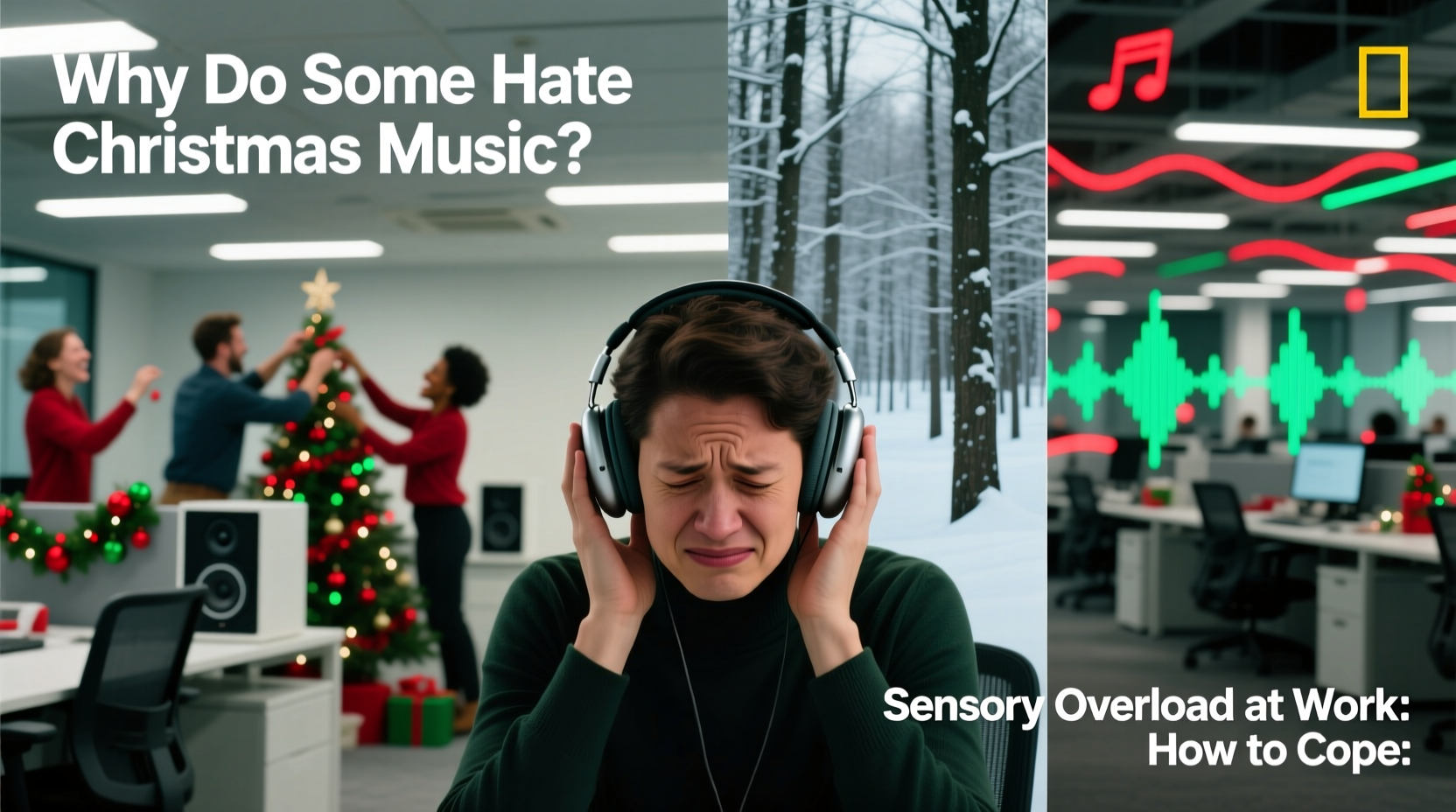
Christmas music isn’t inherently unpleasant. In fact, many classic songs are musically rich and emotionally resonant. However, when played incessantly in public spaces—especially without consent—the experience shifts from enjoyable to oppressive. This phenomenon is known as \"music fatigue\" or \"auditory overexposure.\"
Repetition dulls emotional impact. A 2011 study published in the journal Psychology of Music found that repeated exposure to a song initially increases liking—but only up to a point. After about 10–15 plays, enjoyment sharply declines. In retail or office settings, employees may hear the same holiday playlist hundreds of times over six weeks.
Beyond repetition, cultural and emotional associations play a role. For those experiencing grief, loneliness, financial stress, or mental health challenges, forced merriment can feel alienating. As psychologist Dr. Linda Blair explains:
“Music tied to strong memories can trigger powerful emotions. When someone has lost a loved one during the holidays, hearing 'I’ll Be Home for Christmas' isn’t nostalgic—it’s painful.” — Dr. Linda Blair, Clinical Psychologist
Additionally, not everyone celebrates Christmas. For non-Christian employees, constant holiday music can feel like cultural exclusion—a subtle but persistent reminder that the workplace assumes a default identity they don’t share.
Sensory Overload: What It Feels Like and Who’s Most Affected
Sensory overload occurs when one or more of the body’s senses experiences overstimulation from the environment. In the context of sound, this means too much auditory input—particularly unpredictable, loud, or repetitive noise—leading to cognitive strain, irritability, headaches, or shutdown.
Certain groups are more vulnerable:
- Neurodivergent individuals (e.g., those with autism, ADHD, or sensory processing disorder) often have heightened sensitivity to sound.
- People with anxiety disorders may find background noise increases their sense of unease.
- Employees in open-plan offices have little control over ambient sound, making escape difficult.
- Those recovering from burnout or chronic stress may have lower tolerance for stimulation.
A common misconception is that sensory discomfort is just “being sensitive.” But research shows that auditory hypersensitivity involves measurable neurological responses. Functional MRI scans reveal increased activity in the amygdala—the brain’s threat-detection center—when sensitive individuals hear aversive sounds.
Workplace Realities: When Cheer Becomes Coercion
Many companies play Christmas music to create a festive atmosphere, boost morale, or enhance customer experience. But what feels cheerful to one person can be deeply distressing to another. The key issue? Lack of choice.
Unlike choosing to listen at home, workplace exposure is involuntary. Employees cannot easily mute the soundtrack of their job. This lack of autonomy amplifies stress. According to a 2023 survey by the Sensory Wellness Institute, 42% of neurodivergent workers reported leaving a job due to unmanaged sensory conditions—sound being the top trigger.
Mini Case Study: Emma’s Experience in Retail
Emma, a 28-year-old sales associate at a department store, loves her job—except during November and December. Starting the week after Thanksgiving, her store pipes in nonstop holiday music at moderate volume. By mid-December, she begins experiencing daily migraines, difficulty concentrating, and emotional exhaustion.
She tried asking her manager to turn it down, but was told, “It’s part of the holiday spirit—we all have to get into the mood.” Feeling isolated, Emma started calling in sick more frequently. After three weeks, she consulted an occupational therapist who diagnosed her with sound sensitivity exacerbated by prolonged exposure.
With documentation, she requested a reasonable accommodation: access to noise-canceling headphones and a quieter break area. Her employer complied, and within days, her symptoms improved significantly. Emma stayed through the season—and returned the next year with confidence.
Her story highlights a critical truth: inclusivity doesn’t require eliminating traditions. It requires offering alternatives.
Practical Strategies for Employees and Employers
Creating a balanced workplace doesn’t mean banning Christmas music altogether. It means implementing thoughtful policies that respect diverse needs. Below are actionable steps for both staff and management.
✅ Checklist: Creating a Sensory-Inclusive Holiday Workplace
- Survey employees about music preferences before introducing holiday playlists.
- Limits music to common areas (lobbies, break rooms), not workstations.
- Designate quiet zones or focus rooms free from audio stimuli.
- Provide noise-canceling headphones upon request.
- Offer flexible scheduling so employees can avoid peak sensory hours.
- Train managers on recognizing signs of sensory distress.
- Rotate playlists instead of looping the same songs.
Step-by-Step Guide: Managing Sensory Overload at Work
- Recognize early signs: Irritability, difficulty focusing, headache, restlessness, or feeling emotionally “raw.”
- Remove yourself temporarily: Step outside, visit a stairwell, or go to a quiet room for 5–10 minutes.
- Use noise management tools: Wear earplugs, use noise-masking apps, or put on instrumental music through headphones.
- Communicate your needs: Politely explain to a supervisor or HR that prolonged exposure affects your performance.
- Request accommodations: Under laws like the ADA (in the U.S.), sensory needs may qualify for formal support.
- Advocate for policy change: Suggest seasonal sound guidelines during team meetings or wellness surveys.
Do’s and Don’ts of Holiday Sound Policies
| Do’s | Don’ts |
|---|---|
| Play music at low volume during limited hours (e.g., 10 AM–2 PM). | Play music all day, every day, throughout December. |
| Allow opt-in participation (e.g., “Holiday Music Fridays” voted by staff). | Assume everyone enjoys or tolerates festive tunes. |
| Offer alternatives like silent celebrations or visual decorations. | Use music as the sole marker of holiday spirit. |
| Respect headphone use as a tool, not a social barrier. | Discourage or stigmatize employees wearing headphones. |
| Include non-Christmas winter music (instrumental, global holiday tracks). | Limit playlist to Western Christian songs only. |
FAQ: Addressing Common Concerns
Isn’t disliking Christmas music just being a Grinch?
No. Discomfort with repetitive or culturally specific music is not about attitude—it’s about personal well-being. Emotional reactions to sound are valid, especially when exposure is forced and prolonged. Calling someone a “Grinch” minimizes real sensory and psychological experiences.
Can I legally ask my employer to stop playing holiday music?
You can’t demand a blanket ban, but under disability protections like the Americans with Disabilities Act (ADA) or similar laws in other countries, you can request reasonable accommodations if the music exacerbates a diagnosed condition (e.g., autism, PTSD, migraines). Employers are required to engage in an interactive process to find solutions.
What if I’m the manager? How do I balance team morale and inclusion?
Start by asking your team. Send an anonymous poll: “How do you feel about holiday music in the workplace?” Offer options like “Enjoy it,” “Neutral,” “Find it distracting,” or “Would prefer no music.” Use results to guide policy. Consider rotating themes or designating music-free days. True morale comes from feeling respected—not from enforced cheer.
Conclusion: Celebrating Without Sacrificing Well-Being
The holiday season should be a time of connection, reflection, and kindness—not sensory assault disguised as festivity. Recognizing that Christmas music isn’t universally beloved is not an attack on tradition. It’s an invitation to expand our definition of inclusion.
Whether you’re an employee struggling to concentrate under a loop of “Jingle Bell Rock,” a manager aiming to support your team, or someone who simply never got into Mariah Carey’s high notes, remember: comfort matters. A workplace that respects sensory boundaries is not less joyful—it’s more humane.
This season, let’s shift from “everyone must participate” to “everyone must belong.” Small changes—like volume limits, quiet spaces, and listening to feedback—can make a lasting difference. Let empathy be the most played tune of all.




 浙公网安备
33010002000092号
浙公网安备
33010002000092号 浙B2-20120091-4
Comments
No comments yet. Why don't you start the discussion?