
Walk into any Mexican or Thai restaurant, and you’ll likely find cilantro generously sprinkled over tacos, curries, and salsas. For many, its bright, citrusy freshness elevates a dish. But for others, that same herb tastes like a bar of soap left in the sink. This polarizing reaction isn’t just pickiness—it’s rooted in biology. The aversion to cilantro is one of the most well-documented examples of how genetics influence our sense of taste. Understanding this phenomenon reveals not only how our DNA shapes flavor perception but also how culture, exposure, and environment interact with biology.
The Soapy Taste: More Than Just Imagination
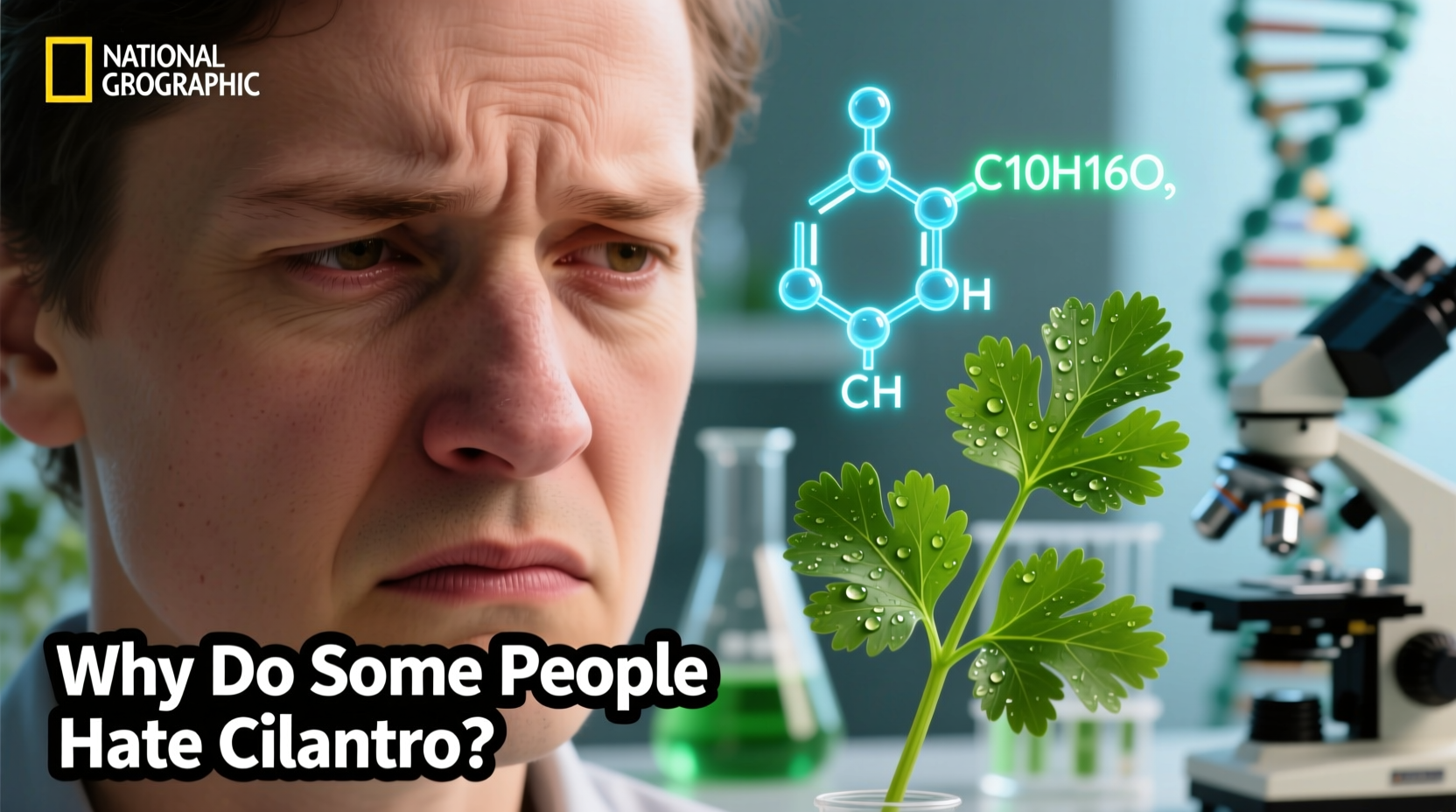
When someone says cilantro tastes like soap, they aren't exaggerating for effect. Thousands of people report a distinct soapy, metallic, or even bug-like flavor when eating fresh coriander leaves (the plant known as cilantro in North America). This isn’t a matter of preference—it’s a sensory experience driven by specific olfactory receptors.
The culprit lies in a group of chemicals called aldehyde compounds. These are organic molecules found both in cilantro and in certain types of soaps and lotions. In fact, some aldehydes used in perfumery are structurally similar to those naturally occurring in cilantro. For individuals with a particular genetic makeup, the brain interprets these compounds as foul rather than fragrant.
“Cilantro aversion is one of the clearest examples we have of how genetics can dictate food preferences. It's not ‘acquired taste’—it's hardwired perception.” — Dr. Sarah Tishkoff, Geneticist at the University of Pennsylvania
Genetic Basis: The OR6A2 Gene Connection
Research has pinpointed a specific gene linked to cilantro dislike: OR6A2. This gene codes for an olfactory receptor highly sensitive to aldehyde compounds. Individuals who carry certain variants of this gene are far more likely to detect the soapy notes in cilantro.
A large-scale study conducted by 23andMe analyzed the DNA of nearly 30,000 participants and found a strong correlation between variations in the OR6A2 gene and self-reported cilantro disgust. Those with the “sensitive” variant were up to three times more likely to describe cilantro as soapy.
Interestingly, the gene doesn’t affect everyone uniformly. Some carriers still enjoy cilantro, suggesting other factors—like repeated exposure or differences in overall smell processing—may modulate the response.
Global Prevalence: Who Is Most Affected?
Cilantro aversion varies significantly across populations. Studies estimate that roughly 4% to 14% of people worldwide find cilantro unpleasant, but the numbers shift dramatically by ancestry.
| Population Group | Percentage Reporting Soapy Taste | Common Cilantro Use in Cuisine |
|---|---|---|
| East Asians (Chinese, Japanese, Korean) | 15–21% | Moderate to low |
| South Asians (Indian, Pakistani) | 3–7% | Very high |
| Europeans (especially Southern Europe) | 10–17% | Moderate |
| Hispanic/Latino populations | 4–8% | Very high |
| African descent | 3–5% | Variable |
The lower rates among South Asian and Hispanic groups may reflect both genetic distribution and cultural adaptation. Even if someone carries the sensitive gene variant, frequent early-life exposure to cilantro-rich dishes might dull the negative association over time.
How Perception Works: Smell, Taste, and the Brain
Taste isn’t isolated to the tongue—it’s a multisensory experience dominated by smell. When we chew cilantro, volatile compounds travel through the retronasal pathway to the olfactory bulb in the brain. For those with the OR6A2 variant, this triggers a signal interpreted as unpleasant, often described as:
- Soapy or detergent-like
- Greasy or metallic
- Fishy or rotten
- Bug-spray-like (due to shared aldehydes in insect repellents)
This phenomenon highlights a key truth: flavor is constructed by the brain based on input from multiple senses. Two people eating the same leaf of cilantro may have entirely different neurological experiences—one perceives brightness and zest, the other repulsion.
Moreover, psychological factors amplify the response. Once someone identifies cilantro as “soapy,” their brain anticipates the taste, reinforcing the aversion. This conditioning can make overcoming the dislike difficult, even when the chemical trigger is reduced.
Case Study: Maria’s Cilantro Dilemma
Maria, a 32-year-old graphic designer born in Mexico City, grew up eating cilantro daily. Her family used it in salsas, soups, and grilled meats. Yet from childhood, she avoided it, describing it as “eating a washcloth dipped in shampoo.” At family gatherings, her refusal was met with disbelief: “It’s tradition! You’ll learn to love it.”
Years later, after taking a DNA test, Maria discovered she carried two copies of the sensitive OR6A2 variant—one from each parent. Armed with this knowledge, she stopped blaming herself for being “picky” and began adapting traditional recipes. She substituted parsley for garnish and added lime juice and chopped green onions to replicate freshness without triggering her aversion.
Her story illustrates how understanding the genetic basis of taste can reduce stigma and empower personal choice in food culture.
Adapting Recipes: Practical Solutions for Sensitive Palates
Whether you’re cooking for yourself or others, accommodating cilantro sensitivity doesn’t mean sacrificing flavor. Here are effective alternatives and techniques:
- Substitute with flat-leaf parsley: Offers a similar texture and mild freshness without the aldehydes.
- Use culantro (recao): A tropical herb with a stronger aroma but less soapy profile for some.
- Add citrus zest: Lemon or lime peel can mimic cilantro’s bright top notes.
- Cook cilantro briefly: Heat degrades aldehydes, mellowing the flavor.
- Blend into sauces: When pureed in chimichurri or chutney, the soapy note may be masked by garlic, vinegar, and oil.
Checklist: How to Handle Cilantro Sensitivity in Your Kitchen
- Ask guests about cilantro preferences before serving
- Label dishes containing cilantro clearly
- Keep a substitute herb on hand (e.g., parsley, dill, or mint)
- Avoid blending raw cilantro into smoothies or dressings for mixed groups
- Educate others that the soapy taste is real and biologically based
Debunking Myths About Cilantro Hatred
Despite growing scientific evidence, misconceptions persist:
- Myth: “You just haven’t tried good cilantro.”
Truth: Even freshly picked, organic cilantro contains the offending aldehydes. Quality doesn’t override genetics.
- Myth: “It’s all in your head—you can train yourself to like it.”
Truth: While some develop tolerance through repeated exposure, others never overcome the innate sensory signal. Forced consumption often increases aversion.
- Myth: “Only Americans hate cilantro.”
Truth: Dislike occurs globally, though prevalence varies. It’s not a cultural flaw but a biological variation.
Frequently Asked Questions
Can cooking cilantro eliminate the soapy taste?
Yes, to some extent. Heating cilantro breaks down volatile aldehyde compounds, reducing their intensity. Many people who dislike raw cilantro find cooked versions tolerable, especially when combined with strong flavors like garlic, chili, or vinegar.
Is there a way to test if I’m genetically sensitive to cilantro?
If you’ve taken a consumer DNA test (like 23andMe or AncestryDNA), you can check your raw data for the rs72921001 SNP near the OR6A2 gene. The presence of the “C” allele correlates with higher sensitivity. Alternatively, a simple taste test—chewing a fresh leaf—can provide immediate feedback.
Are there health benefits to cilantro that make it worth enduring the taste?
Cilantro contains antioxidants, vitamins A and K, and compounds studied for potential detoxifying properties. However, these nutrients are available in other herbs and vegetables. No single benefit outweighs persistent discomfort, and parsley or spinach can serve as nutritious substitutes.
Conclusion: Respecting Biological Diversity in Taste
The debate over cilantro isn’t merely culinary—it’s a window into human diversity. Our genes shape how we experience the world, including something as everyday as flavor. Recognizing that cilantro tastes like soap to some people isn’t about catering to whims; it’s about respecting biological reality.
In kitchens, restaurants, and homes, embracing this variation leads to more inclusive dining. Whether you sprinkle it generously or remove it from your plate, the key is understanding: no palate is wrong, and no preference is imaginary. The next time someone grimaces at a taco garnished with cilantro, remember—it might not be rejection of the food, but a reflex written in their DNA.




 浙公网安备
33010002000092号
浙公网安备
33010002000092号 浙B2-20120091-4
Comments
No comments yet. Why don't you start the discussion?