
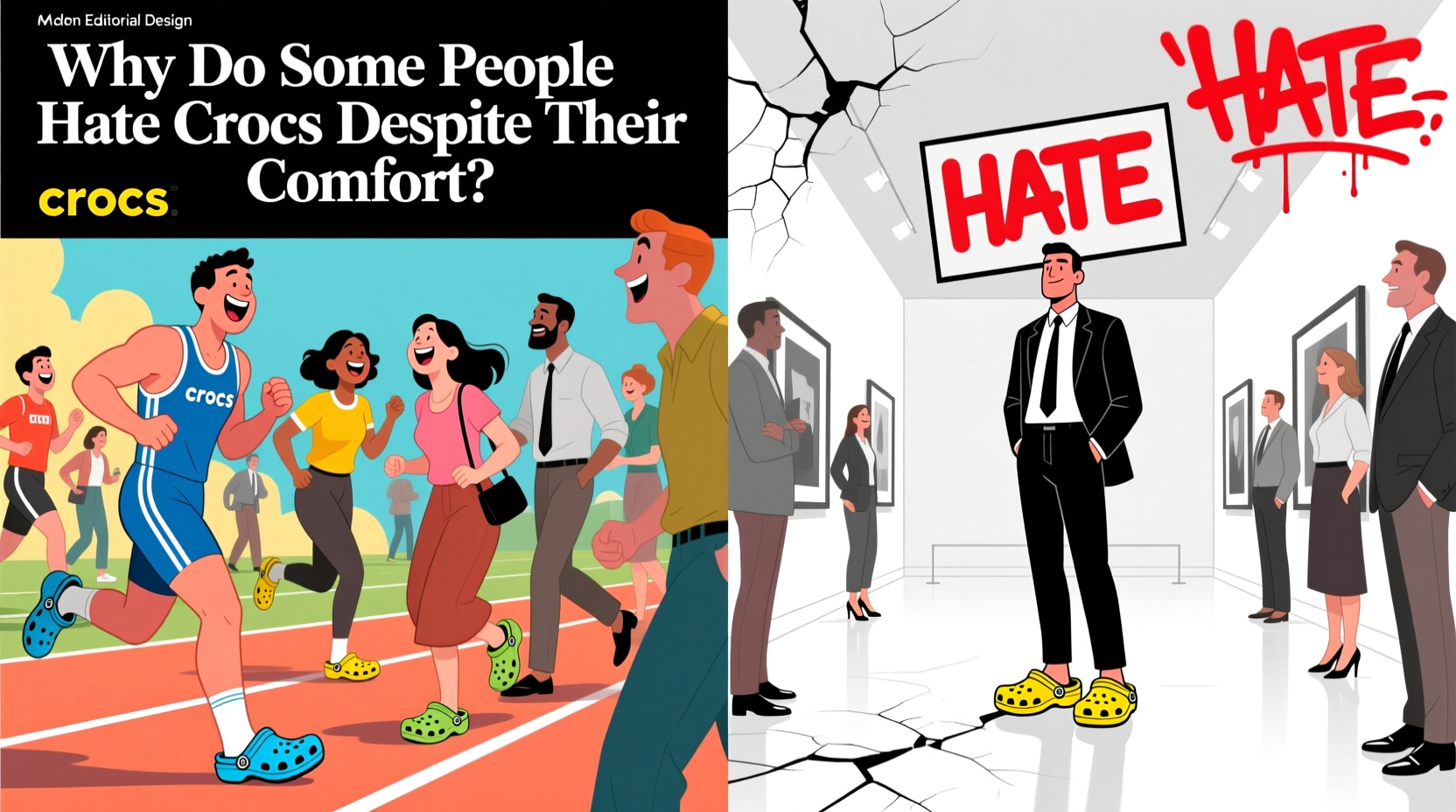
Crocs are one of the most divisive footwear brands in modern history. Loved by healthcare workers, gardeners, parents, and travelers for their lightweight comfort and durability, they’re also mocked on social media, banned in certain workplaces, and frequently cited as a symbol of “anti-fashion.” Despite selling over 1 billion pairs since 2002 and becoming a staple in pandemic-era loungewear culture, Crocs continue to provoke strong reactions. Why do so many people hate them—even as their popularity soars?
The answer lies at the intersection of aesthetics, social signaling, generational taste, and evolving definitions of style. Comfort doesn’t always win against convention, and Crocs have become more than just shoes—they’re cultural lightning rods.
The Rise of Crocs: From Niche Boat Shoe to Global Phenomenon
Originally designed in 2002 by three Colorado entrepreneurs, Crocs were intended as a comfortable, slip-resistant alternative to traditional boat shoes. Their proprietary foam resin material, Croslite™, provided cushioning, odor resistance, and water-friendly durability. Early adopters included boaters and outdoor enthusiasts, but it wasn’t until medical professionals discovered their benefits that Crocs gained real traction.
Hospitals and clinics embraced Crocs for their ease of cleaning, non-slip soles, and all-day support. Nurses, doctors, and technicians began wearing them not just at work but off-duty too. The pandemic accelerated this trend, as居家 lifestyles prioritized comfort over formality. Suddenly, Crocs weren’t just functional—they were ubiquitous.
By partnering with designers like Christopher Raeburn and collaborating with high-profile brands (think KFC, Postmates, and even Balenciaga), Crocs rebranded themselves from utilitarian footwear into fashion statements. Limited-edition releases sold out within minutes, and resale prices skyrocketed. Yet, even as Crocs climbed the ladder of cultural relevance, backlash intensified.
The Aesthetic Backlash: Why Crocs Offend Fashion Sensibilities
To many, Crocs violate fundamental principles of shoe design. They lack arch definition, feature an open heel, and sport a bulbous, almost cartoonish silhouette. Traditional footwear values sleek lines, proportion, and craftsmanship—qualities Crocs deliberately sidestep.
Fashion historian Dr. Lydia Chen observes:
“Crocs challenge centuries of footwear evolution. We’ve moved from sandals to structured shoes to support posture and status. Crocs feel like a regression—a return to pre-aesthetic functionality.”
This isn’t just about looks; it’s about identity. Shoes communicate subtle cues about class, taste, and self-presentation. Wearing Crocs in formal or semi-formal settings can be interpreted as indifference—or worse, defiance. In environments where appearance signals professionalism (offices, restaurants, schools), Crocs may be seen as inappropriate, sloppy, or even disrespectful.
Social Stigma and Generational Divides
The hatred toward Crocs often carries a social stigma. Critics associate them with laziness, poor hygiene, or low socioeconomic status. This stereotype persists despite evidence to the contrary—Crocs are worn by surgeons, celebrities, and athletes alike.
Generational attitudes play a key role. Older demographics, raised in eras where \"dressing appropriately\" was non-negotiable, often view Crocs as a sign of declining standards. Meanwhile, Gen Z and younger Millennials embrace irony, comfort, and individuality—values that align perfectly with Crocs’ unapologetic design.
A 2023 Pew Research analysis found that 68% of adults aged 18–29 saw Crocs as acceptable casual wear, compared to only 32% of those aged 55+. This gap reflects broader shifts in how younger generations approach fashion: less rigid, more personalized, and increasingly detached from traditional rules.
The Comfort Paradox: When Function Clashes with Form
No one denies Crocs are comfortable. Podiatrists routinely recommend them for people with foot conditions like plantar fasciitis or arthritis. Their ergonomic shape reduces pressure points, and the Croslite™ material molds slightly to the wearer’s foot over time.
Yet, comfort alone doesn’t guarantee social acceptance. Consider the orthopedic sandal or the hospital slipper—highly functional, but rarely considered stylish. Crocs occupy a similar space: optimized for utility, not elegance.
This creates what psychologists call the “comfort paradox”—the idea that prioritizing physical ease can come at the cost of social approval. In many cultures, enduring minor discomfort is associated with discipline and respectability. Choosing extreme comfort, especially in public, can be perceived as indulgent or self-centered.
As Dr. Marcus Tran, a behavioral sociologist at the University of Toronto, explains:
“We judge others based on micro-signals. Shoes are among the first things we notice. When someone wears Crocs to a dinner party, it sends a message—whether intentional or not—that comfort trumps shared social norms.”
Cultural Moments That Fueled the Hate
Certain events amplified negative perceptions of Crocs. One infamous moment occurred in 2006 when Vogue editor Anna Wintour reportedly said she’d “fire anyone” who wore Crocs to her office. Though never officially confirmed, the quote went viral and cemented Crocs as fashion pariahs in elite circles.
Another turning point came during the rise of “normcore”—a trend in the early 2010s where bland, unfashionable clothing became ironic fashion statements. Crocs fit neatly into this movement, embraced by hipsters and influencers as a deliberate rejection of glamour. To critics, this felt like mockery—wearing ugly shoes to prove you’re above caring about beauty.
Even today, memes and TikTok videos regularly mock Crocs wearers. Jokes about “dentist vibes,” “poolside disasters,” or “backyard BBQ feet” reinforce negative stereotypes. While some of this humor is lighthearted, it contributes to a broader narrative: Crocs = uncool.
Who Actually Loves Crocs—and Why?
Despite the ridicule, millions swear by Crocs. Their most loyal users include:
- Healthcare workers: Long shifts demand supportive, easy-to-sanitize footwear.
- Parents and caregivers: Quick to slip on, resistant to spills, and durable around kids.
- Outdoor workers: Gardeners, farmers, and fishers appreciate their water resistance.
- Travelers: Lightweight and versatile for airport walks or hotel pool access.
- People with disabilities: Easy to put on and remove, accommodating for swelling or braces.
For these groups, Crocs aren’t a fashion choice—they’re a practical necessity. The emotional attachment runs deep. Many users report feeling genuinely supported, both physically and psychologically, by a shoe that accommodates their lifestyle without judgment.
Tips for Wearing Crocs Without Inviting Side-Eyes
If you love your Crocs but want to avoid criticism, context is everything. Here’s how to wear them strategically:
- Respect dress codes: Avoid Crocs in professional or formal settings unless explicitly permitted.
- Choose minimalist styles: Solid colors (black, white, navy) look cleaner than bright patterns or Jibbitz charms.
- Pair wisely: Wear them with casual, relaxed outfits—shorts, swimwear, or athleisure—not tailored pants or dresses.
- Keep them clean: Scrubbed, unstained Crocs look intentional; dirty ones look careless.
- Know your audience: At a friend’s barbecue? Go ahead. Job interview? Probably not.
Mini Case Study: Sarah, ER Nurse and Crocs Advocate
Sarah Thompson, a 34-year-old emergency room nurse in Chicago, has worn Crocs nearly every shift for eight years. “My feet used to kill me after 12-hour rotations,” she says. “Since switching to Crocs, I barely notice the standing anymore.”
But outside the hospital, she faces constant comments. “People say, ‘You’re a nurse—of course you wear those.’ Or worse, ‘I can’t believe you’d wear those in public.’ It stings. I’m not lazy. I’m just prioritizing my health.”
During the pandemic, Sarah started a small Instagram page (@NurseFeetFirst) sharing tips on foot care and defending practical footwear. Her posts resonated with thousands of frontline workers. “We’re not asking for fashion awards,” she writes. “We’re asking for basic comfort while saving lives.”
Do’s and Don’ts of Crocs Etiquette
| Do | Don’t |
|---|---|
| Wear them for long periods of standing or walking | Wear them to weddings or job interviews |
| Use them in wet or messy environments | Pair them with formal attire |
| Customize with tasteful Jibbitz | Let them become stained or cracked |
| Choose ventilated styles in summer | Assume everyone will understand your choice |
| Advocate for comfort in workplace policies | Wear them barefoot in public (hygiene concern) |
FAQ: Common Questions About Crocs Perception
Are Crocs really bad for your feet?
No—contrary to popular belief, most podiatrists agree that Crocs provide decent arch support and cushioning for short-term use. However, they’re not recommended for running or prolonged walking due to limited heel stability.
Why are Crocs so expensive now?
While classic models remain affordable (~$30–$50), limited editions and designer collaborations (like the $850 Crocs x Balenciaga clog) drive up average price perception. These special releases are fashion items, not functional footwear.
Can Crocs ever be considered fashionable?
They already are—for certain audiences. Streetwear fans, meme culture enthusiasts, and avant-garde designers have reclaimed Crocs as symbols of anti-establishment style. Whether they achieve mainstream fashion legitimacy depends on evolving cultural norms.
Conclusion: Embracing Choice in a Polarized World
The hatred toward Crocs reveals more about societal expectations than about the shoes themselves. At their core, Crocs represent a clash between tradition and change, between conformity and personal freedom. As comfort becomes a higher priority in post-pandemic life, the boundaries of acceptability continue to shift.
There’s no universal rule that dictates what’s “appropriate” to wear. What matters is intention, context, and respect—for oneself and for others. If a pair of Crocs helps someone move through their day with less pain and more joy, that’s a victory worth honoring.
Instead of judging, perhaps we should ask: Why are we so threatened by difference? And could embracing diverse choices—from footwear to lifestyle—make our communities more inclusive?




 浙公网安备
33010002000092号
浙公网安备
33010002000092号 浙B2-20120091-4
Comments
No comments yet. Why don't you start the discussion?