
Cruising is one of the most divisive forms of travel. For some, it’s a dream vacation—a floating resort with endless food, entertainment, and exotic ports. For others, it’s a nightmare: overcrowded ships, hidden fees, and a sense of being trapped in a manufactured bubble. Yet despite vocal criticism, the cruise industry continues to grow, with over 30 million passengers expected annually by 2025. So what explains this stark contrast in perception? The answer lies in personal values, travel preferences, expectations, and past experiences.
Understanding both sides reveals more than just opinions about boats—it uncovers deeper truths about how people define relaxation, adventure, and value in their leisure time. By examining the psychological, logistical, and emotional factors at play, we can better appreciate why cruises inspire such loyalty in some and revulsion in others.
The Allure of the Cruise: Why Millions Keep Coming Back
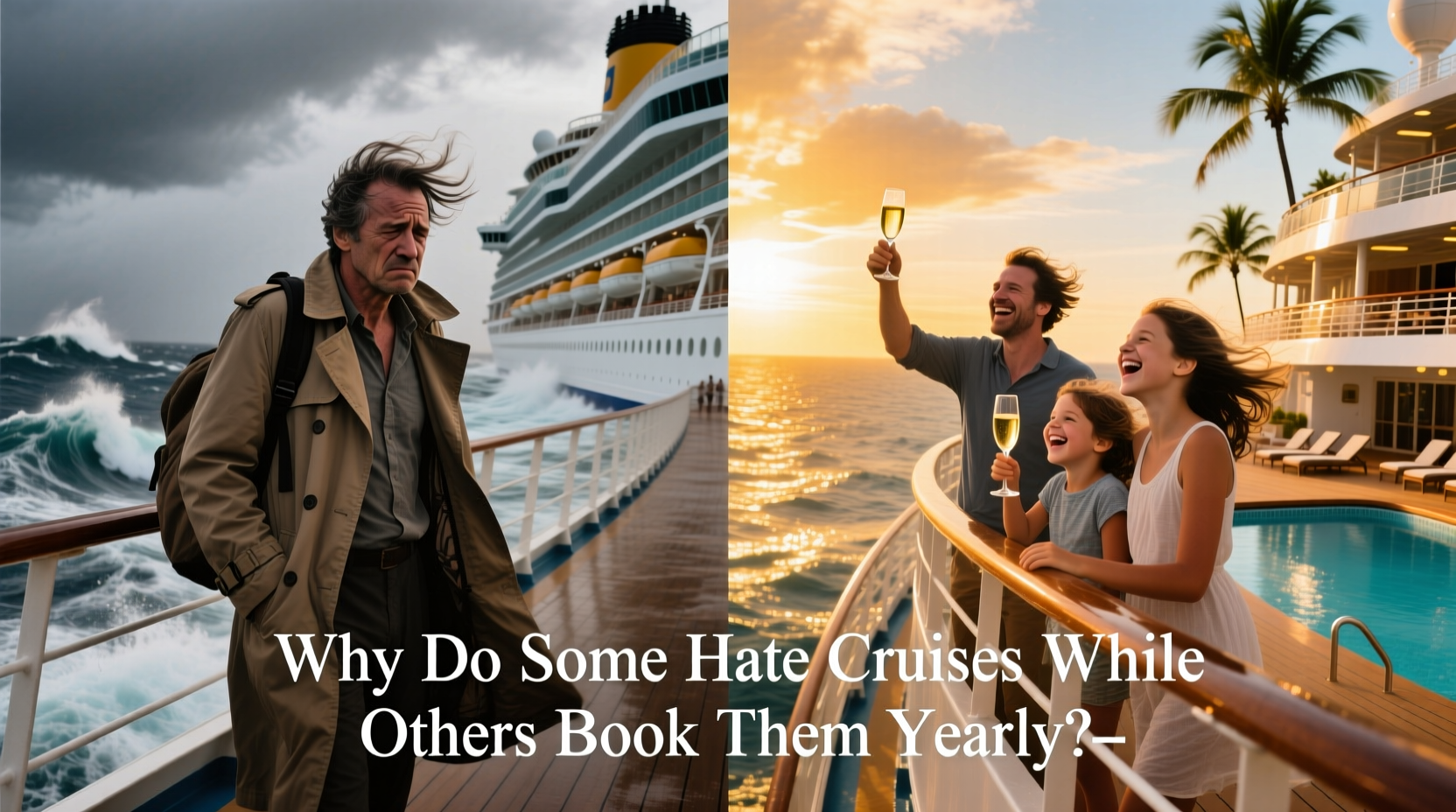
For loyal cruisers, the appeal is multifaceted. The convenience alone makes it attractive: pack once, unpack once, and wake up in a new destination every few days. There’s no need to navigate airports, rental cars, or unfamiliar hotels. Everything—from meals to shows to room service—is included or easily accessible.
Many retirees and families especially appreciate the structured nature of a cruise. Daily schedules list activities ranging from trivia games and dance classes to wine tastings and port excursions. This predictability offers comfort, particularly for travelers who want minimal planning stress.
“Cruising gives me peace of mind,” says Linda Torres, a retired teacher from Florida who has taken 14 cruises in the last decade. “I don’t have to worry about where I’m eating, if I’ll get lost, or whether the hotel will be clean. It’s all handled.”
Beyond logistics, there’s also the social component. Onboard communities form quickly—dinner tables become familiar, staff learn names, and friendships develop over shared sunrises and shore adventures. For solo travelers or those seeking connection, this built-in camaraderie can be invaluable.
The Common Complaints: What Turns People Off Cruises
Despite its popularity, cruising draws consistent backlash. Critics cite a range of issues, from environmental impact to perceived lack of authenticity. One frequent complaint is the feeling of confinement. Being on a massive ship with thousands of strangers can feel claustrophobic, especially when weather delays alter itineraries or medical quarantines occur.
Another major turnoff is cost transparency. While base fares appear affordable, additional charges for drinks, Wi-Fi, specialty dining, and excursions can double the final bill. This bait-and-switch model frustrates budget-conscious travelers who value upfront pricing.
Then there’s the cultural disconnect. Some travelers reject the idea of visiting a foreign country for only six to eight hours, calling it “tourist theater” rather than genuine exploration. They argue that brief stops don’t allow meaningful engagement with local culture, language, or cuisine.
“Stepping off a ship into a port designed for cruise tourism feels like visiting a theme park version of a country.” — Marcus Bell, travel writer and slow-travel advocate
Environmental concerns also weigh heavily. Large cruise ships emit significant pollution, including sulfur oxides and wastewater discharge. According to a 2023 report by Transport & Environment, a single cruise ship can pollute more than 10 million cars per day in terms of air emissions. Eco-conscious travelers often view cruising as incompatible with sustainable tourism.
A Tale of Two Travelers: A Mini Case Study
Consider Sarah and James, a couple in their early 40s who planned a Mediterranean trip together. Sarah booked a 10-day luxury cruise, excited by the promise of effortless travel and gourmet dining. James reluctantly agreed but preferred independent travel.
Onboard, Sarah thrived. She loved waking up to a new city each morning, enjoying breakfast on her balcony, then choosing a guided tour or relaxing by the pool. She appreciated not having to manage logistics and felt safe knowing everything was coordinated.
James, however, grew restless. He disliked the crowds, found the buffet repetitive, and resented paying extra for internet to video call his family. When their scheduled stop in Dubrovnik was canceled due to high passenger volume restrictions, he saw it as confirmation that mass tourism degrades the experience.
After returning home, Sarah immediately began researching her next cruise. James vowed never to set foot on a cruise ship again. Their contrasting reactions weren’t about the quality of the cruise—they were about fundamentally different travel philosophies.
Key Differences in Travel Preferences
The divide between cruise lovers and detractors often reflects broader lifestyle and personality traits. Below is a comparison of common characteristics associated with each group.
| Factor | Cruise Enthusiasts | Cruise Skeptics |
|---|---|---|
| Planning Style | Prefer fully planned itineraries | Enjoy spontaneity and flexibility |
| Value Priorities | Convenience, safety, all-in-one pricing | Authenticity, local immersion, ethical impact |
| Social Needs | Seek structured social interaction | Prefer solitude or small-group experiences |
| Risk Tolerance | Low—prefer predictable environments | High—comfortable with uncertainty and change |
| Travel Pace | Faster, destination-hopping | Slower, deeper stays |
This table illustrates that neither side is inherently right or wrong. Instead, the choice often aligns with how individuals recharge, engage with novelty, and define memorable experiences.
How to Decide If a Cruise Is Right for You
If you're on the fence, consider these steps before booking:
- Assess your travel personality. Do you enjoy structure or prefer open-ended exploration?
- Clarify your goals. Are you seeking relaxation, adventure, cultural depth, or family bonding?
- Research the cruise line. Not all cruises are alike—luxury lines (e.g., Seabourn, Regent) offer quieter, upscale experiences, while mainstream brands (e.g., Carnival, Royal Caribbean) cater to larger, livelier crowds.
- Read unfiltered reviews. Look beyond marketing materials. Check forums like Cruise Critic or Reddit threads for honest feedback.
- Calculate the real cost. Add estimated expenses for drinks, Wi-Fi, tips, and excursions to the base fare.
- Start small. Try a short 3- to 4-night cruise before committing to a week-long voyage.
Expert Insight: Industry Evolution and Perception
The cruise industry has evolved significantly in response to criticism. Newer ships now feature advanced wastewater treatment systems, hybrid engines, and shore power capabilities to reduce emissions. Lines like Hurtigruten and Lindblad focus on eco-tourism and scientific education, appealing to environmentally aware travelers.
“The stereotype of the polluting mega-ship doesn’t reflect the entire industry anymore,” says Dr. Elena Ruiz, maritime sustainability researcher at the University of Gothenburg. “We’re seeing real innovation in cleaner fuels and smarter routing. But transparency and regulation still lag behind public expectations.”
Meanwhile, the rise of expedition cruising—smaller vessels exploring remote regions like Antarctica or the Galápagos—has blurred the line between traditional cruising and adventure travel. These trips emphasize education, conservation, and low-impact landings, attracting travelers who might otherwise avoid cruises.
Checklist: Questions to Ask Before Booking a Cruise
- Does my ideal vacation involve routine and comfort, or unpredictability and discovery?
- Am I comfortable spending several days in a confined space with many people?
- Do I want to visit multiple destinations without changing hotels?
- Can I afford potential add-ons like drinks, Wi-Fi, and excursions?
- Am I concerned about the environmental footprint of large ships?
- Would I prefer deeper stays in fewer places over quick port visits?
- Have I researched health protocols and cancellation policies?
FAQ
Are cruises worth it for solo travelers?
It depends. Many cruise lines charge a single-occupancy fee (often 150–200% of the double rate), which can make solo cruising expensive. However, some lines like Norwegian and Viking offer reduced single supplements or dedicated solo cabins. Social opportunities abound, making it easier to meet people compared to solo land travel.
Do cruises ruin the places they visit?
In some cases, yes. Popular ports like Venice, Santorini, and Barcelona have implemented visitor caps due to overtourism linked to cruise arrivals. When thousands disembark at once, infrastructure strains, local life disrupts, and cultural sites suffer wear. Smaller, regulated cruise operations tend to have less impact.
Can you avoid the \"cruise ship feel\" on certain voyages?
Absolutely. Expedition cruises, river cruises, and boutique sailings with under 200 passengers offer intimate, culturally rich experiences. Lines like Ponant, UnCruise Adventures, and Tauck Bridges focus on authenticity and immersion, avoiding mass-market amenities.
Conclusion: Bridging the Divide
The polarization around cruising isn’t going away—and perhaps it shouldn’t. Different people seek different things from travel. For some, the cruise ship is a sanctuary of ease and indulgence. For others, it represents everything wrong with commodified tourism. Both perspectives are valid.
What matters most is self-awareness. Knowing your priorities—whether it’s stress-free logistics, deep cultural connection, environmental ethics, or family fun—allows you to choose experiences that truly fulfill you. Cruises aren’t for everyone, but for millions, they deliver joy, discovery, and comfort year after year.




 浙公网安备
33010002000092号
浙公网安备
33010002000092号 浙B2-20120091-4
Comments
No comments yet. Why don't you start the discussion?