
Physical affection, especially hugging, is often celebrated as a universal gesture of warmth, care, and connection. Yet for many, the idea of being hugged—even by someone well-intentioned—can trigger discomfort, anxiety, or even distress. While society frequently assumes that \"everyone likes a good hug,\" the reality is far more nuanced. Personal boundaries, neurodivergence, past trauma, and cultural differences all play significant roles in shaping how individuals experience touch. Understanding these factors isn't just about tolerance—it's about empathy, respect, and fostering healthier human interactions.
The Myth of the Universal Hug
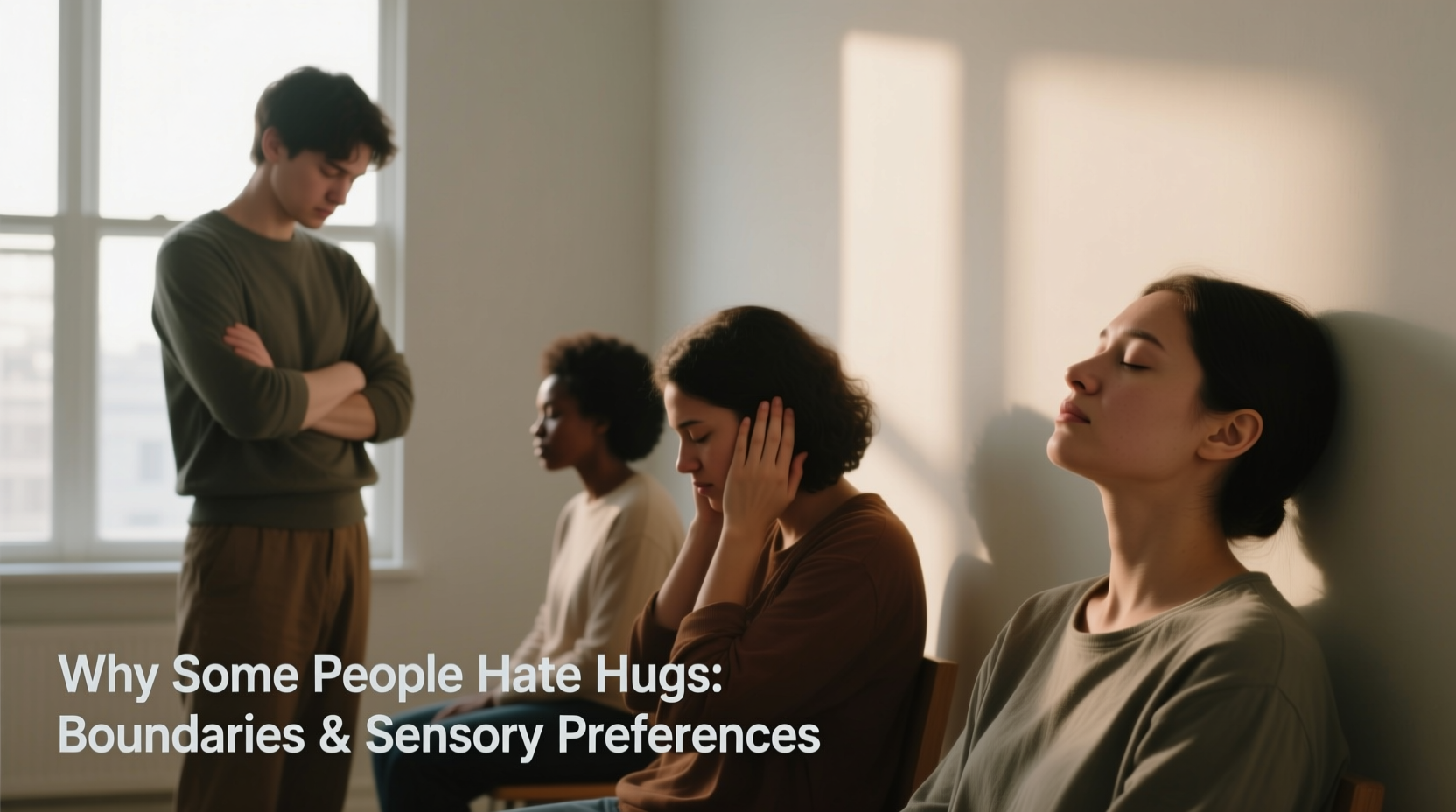
Hugs are commonly portrayed as spontaneous expressions of joy, comfort, or greeting. In workplaces, families, and social circles, people often initiate hugs without asking, assuming goodwill will be received as intended. But this assumption overlooks a crucial truth: physical touch is not universally comforting. For some, it can feel invasive, overwhelming, or even threatening.
Societal norms often pressure individuals into accepting hugs, especially when refusing might be perceived as cold or antisocial. This creates a conflict between internal discomfort and external expectations. The expectation to perform emotional labor—smiling through discomfort, enduring unwanted touch—can lead to long-term stress and eroded trust in relationships.
Personal Boundaries: More Than Just Preference
Boundaries are psychological and emotional lines that define how we allow others to interact with us. They are essential for maintaining self-respect, safety, and mental well-being. When it comes to physical boundaries, they dictate what kind of touch feels safe, welcome, or appropriate.
Some people have naturally higher thresholds for physical intimacy. Others may require more time and emotional safety before feeling comfortable with touch. Respecting these boundaries isn’t about taking rejection personally—it’s about recognizing that everyone has different comfort levels shaped by their life experiences.
Violating someone’s physical boundary, even with good intentions, can reinforce feelings of powerlessness. Over time, repeated disregard for consent around touch can damage relationships and contribute to emotional withdrawal.
“Consent isn’t limited to romantic or sexual contexts. It applies to all forms of physical interaction, including casual hugs. Respecting ‘no’ is the foundation of healthy connection.” — Dr. Lena Torres, Clinical Psychologist & Trauma Specialist
Sensory Processing Differences
A key reason some people dislike hugs lies in how their nervous system processes sensory input. For individuals with sensory processing sensitivity (SPS) or neurodevelopmental conditions like autism spectrum disorder (ASD), ADHD, or sensory processing disorder (SPD), physical touch can be intensely overwhelming.
When someone with high sensory sensitivity is hugged, their brain may interpret the pressure, warmth, and restriction of movement as a threat rather than comfort. This can trigger a fight-or-flight response, leading to increased heart rate, anxiety, or the urge to pull away immediately.
Consider the components of a typical hug:
- Pressure: Firmness can feel crushing rather than reassuring.
- Duration: Even a few seconds may be too long.
- Proximity: Close facial distance can heighten discomfort.
- Surprise: Unannounced hugs remove control over the experience.
For neurodivergent individuals, these elements combine into a sensory overload that no amount of goodwill can override. Their aversion isn’t personal—it’s physiological.
Case Study: Maya’s Experience with Autism and Touch Aversion
Maya, a 28-year-old graphic designer diagnosed with ASD, grew up in a family where affection was expressed primarily through physical contact. Her parents hugged her every morning and evening, and relatives greeted her with tight embraces during holidays. While her siblings responded warmly, Maya consistently pulled away, often retreating to her room afterward.
As a child, she couldn’t articulate why hugs made her anxious. She described them as “too loud,” comparing the sensation to static noise flooding her body. Over time, her resistance led to family tension—being labeled “rude” or “ungrateful.”
Only after her diagnosis did her family begin to understand. With therapy and open conversations, they learned alternative ways to show love—through shared activities, verbal affirmations, or a gentle hand squeeze if Maya initiated it. The shift didn’t eliminate Maya’s sensory challenges, but it restored emotional safety in her closest relationships.
Cultural and Upbringing Influences
Cultural background plays a major role in shaping attitudes toward physical touch. In some cultures, hugging is rare outside intimate relationships. In others, cheek kisses or handshakes are preferred over embraces. Assuming your cultural norm applies to everyone can lead to unintentional boundary violations.
For example:
- In Nordic countries like Sweden or Finland, personal space is highly valued, and physical greetings are often minimal.
- In Mediterranean or Latin American cultures, hugging and kissing on the cheek are common among friends and extended family.
- In Japan, bowing is the standard greeting; unsolicited physical contact may be seen as inappropriate.
Additionally, upbringing shapes comfort with touch. Children raised in emotionally reserved households may not associate physical affection with safety, making adult hugs feel foreign or forced. Conversely, those who experienced touch as conditional or manipulative may develop deep-seated distrust of physical intimacy.
Psychological and Trauma-Related Factors
For survivors of abuse, assault, or neglect, unwanted touch—even a friendly hug—can evoke traumatic memories. The body remembers danger, and physical contact can become a trigger regardless of the current context.
Post-traumatic stress disorder (PTSD) often includes heightened sensitivity to touch. A survivor might dissociate, freeze, or panic when hugged unexpectedly. These reactions aren’t rationalizations—they’re protective mechanisms rooted in survival.
It’s also important to recognize that trauma doesn’t always stem from extreme events. Chronic emotional invalidation, controlling relationships, or coercive affection (“You have to hug your uncle!”) can condition people to associate touch with obligation rather than joy.
How to Navigate Physical Affection Respectfully
Building a culture of consent and awareness around touch starts with small, consistent actions. Whether in friendships, workplaces, or family settings, these practices foster safer, more inclusive environments.
Step-by-Step Guide: Respecting Touch Boundaries
- Pause before initiating contact. Ask yourself: Is this necessary? Am I doing this for their benefit or mine?
- Offer alternatives. Instead of moving in for a hug, extend a handshake, wave, or verbal greeting.
- Ask explicitly. “Would you like a hug?” gives the other person full agency.
- Accept “no” gracefully. No explanation should be required. Respond with kindness, not guilt-tripping.
- Observe nonverbal cues. If someone steps back, stiffens, or avoids eye contact during an embrace, release gently and don’t repeat it.
- Check in periodically. Comfort levels can change. Reassess based on evolving relationships and contexts.
Do’s and Don’ts of Physical Affection
| Do’s | Don’ts |
|---|---|
| Ask before hugging or touching | Assume familiarity grants touch rights |
| Respect a “no” without questioning | Use guilt (“But I just wanted to show I care!”) |
| Offer non-physical greetings | Force or prolong a hug despite resistance |
| Follow the other person’s lead | Mock or label someone for avoiding touch |
| Educate others gently about boundaries | Out someone’s trauma or sensory issues |
Frequently Asked Questions
Isn’t disliking hugs a sign of being antisocial or cold?
No. Discomfort with hugs does not reflect emotional availability or warmth. Many people who avoid physical touch are deeply empathetic and expressive in other ways—through listening, acts of service, or thoughtful communication. Judging someone for their boundaries confuses preference with personality.
Can someone learn to like hugs if they currently dislike them?
Possibly, but only on their own terms. Forced exposure rarely helps and can worsen aversion. With time, therapy, and safe experiences, some individuals may expand their comfort zone. However, the goal shouldn’t be to “fix” someone’s discomfort—it should be to honor their needs while building connection in mutually agreeable ways.
What are some alternatives to hugging for showing affection?
Many meaningful gestures convey care without physical contact:
- Verbal affirmations (“I’m so glad to see you!”)
- Hand waves or high-fives
- Written notes or messages
- Spending quality time together
- Acts of service (making tea, offering help)
Building a Culture of Consent and Care
At its core, the issue isn’t about hugs—it’s about consent, dignity, and recognizing that one-size-fits-all social scripts fail many people. When we assume our way of expressing care is the right way, we risk alienating those who experience the world differently.
Creating inclusive spaces means normalizing check-ins, honoring silence, and understanding that presence matters more than performance. A world where “no” is respected is not colder—it’s kinder. It allows people to show up authentically, without fear of judgment or violation.
Next time you meet someone, consider pausing before reaching out. Offer connection on their terms, not yours. That small act of restraint might be the most loving gesture of all.




 浙公网安备
33010002000092号
浙公网安备
33010002000092号 浙B2-20120091-4
Comments
No comments yet. Why don't you start the discussion?