
In an era where clean lines, neutral palettes, and decluttered spaces dominate interior magazines and digital platforms, minimalist design has become synonymous with modern elegance. Yet, despite its popularity, a growing number of people express resistance—sometimes even disdain—for this aesthetic. They call it cold, sterile, unwelcoming, or worse: unlivable. But is minimalism truly flawed, or are its principles being misapplied and misunderstood?
The backlash isn't against simplicity itself, but rather how minimalism is often executed—or perceived. When reduced to little more than white walls, empty shelves, and furniture that looks better in photos than in real life, the style can feel alienating. The truth is, minimalism was never meant to be about deprivation. At its core, it’s about intentionality. So why does it provoke such strong reactions? And can it evolve to be both beautiful and human-centered?
The Emotional Disconnect: Why Minimalism Feels \"Cold\"
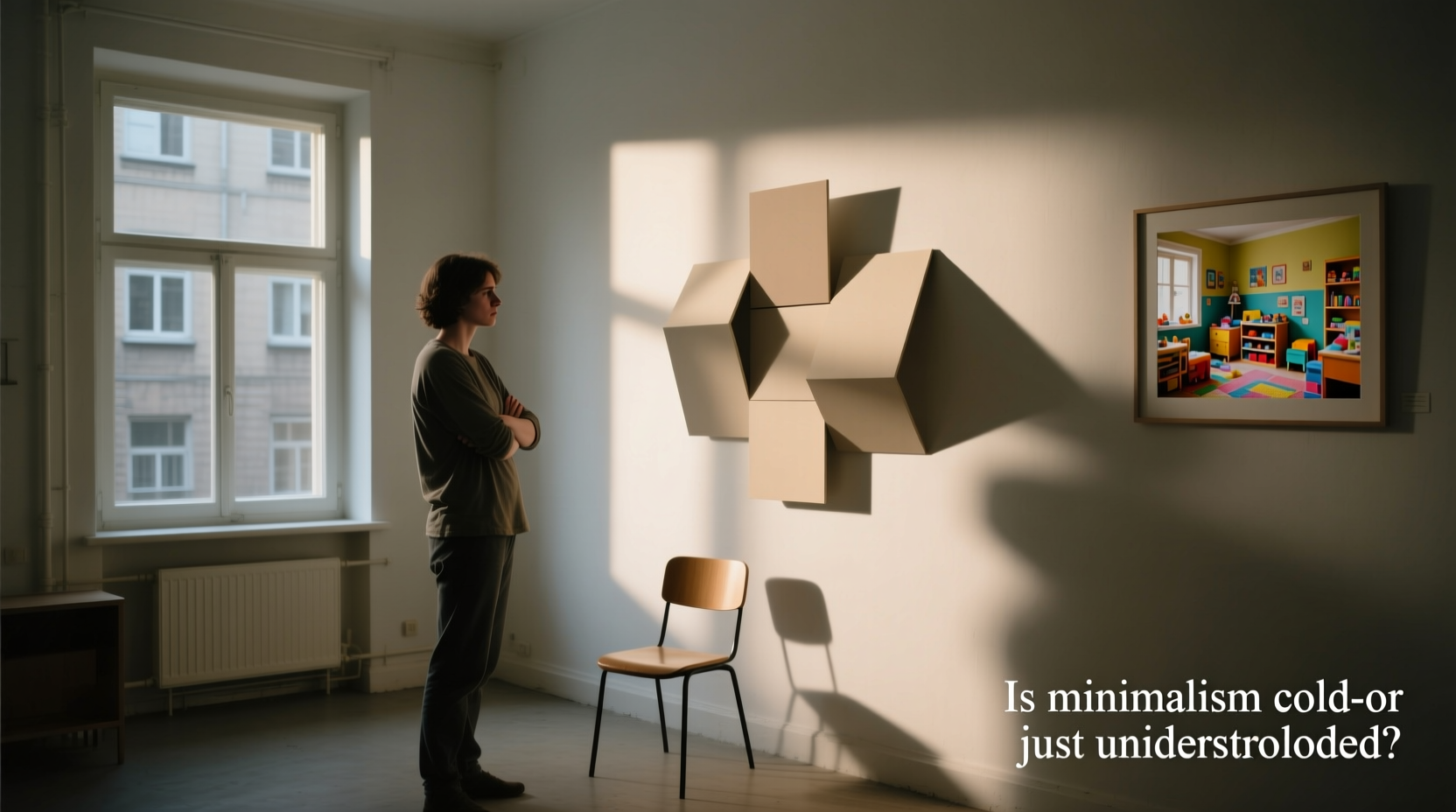
One of the most common criticisms of minimalist design is that it lacks warmth. Critics describe spaces as feeling like “showrooms” or “hospital rooms,” devoid of personality and comfort. This perception stems from a narrow interpretation of minimalism—one that prioritizes visual purity over emotional resonance.
True minimalism, however, is not about emptiness. It’s about removing the non-essential to make room for what matters. The problem arises when designers and homeowners focus solely on aesthetics, stripping away not just clutter, but also personal artifacts, textures, and color. The result? A space that may look serene in photographs but feels inhospitable in daily life.
“Minimalism should serve the person, not the photograph. When we confuse minimalism with sterility, we miss its soul.” — Clara Nguyen, Interior Psychologist and Author of *Designing Calm*
The emotional impact of a space is shaped by sensory cues: texture, scent, sound, and memory. A minimalist room with only a sofa, a table, and a single plant may meet the criteria of “less is more,” but it fails to engage the senses or reflect the inhabitant’s identity. Without soft lighting, layered textiles, or meaningful objects, the environment can feel emotionally barren.
Practicality vs. Aesthetic Idealism
Another reason people resist minimalist design is practicality. For families, pet owners, or anyone with a dynamic lifestyle, maintaining a pristine, clutter-free environment can feel impossible. The expectation to live like a curated Instagram post creates pressure rather than peace.
Consider a home with young children. Books, toys, art supplies, and snacks are part of daily life. Expecting these homes to conform to a minimalist ideal isn’t just unrealistic—it can lead to guilt and frustration. When minimalism is presented as a moral standard (“a tidy space equals a tidy mind”), it becomes exclusionary.
This tension reveals a key misunderstanding: minimalism is often sold as a one-size-fits-all solution, when in reality, it should be deeply personal. What works for a single professional in a downtown loft may not suit a multigenerational household in the suburbs. The failure lies not in the philosophy of minimalism, but in its rigid application.
Minimalism in Real Life: A Case Study
Sarah and James, a couple with two toddlers, tried adopting minimalist design after reading popular blogs and watching YouTube tours of “perfect” minimalist homes. They donated half their belongings, painted the walls white, and bought sleek, low-profile furniture. Initially, they felt proud. But within weeks, stress increased.
Their son’s drawings were deemed “clutter” and stored out of sight. Toys had to be put away immediately after use, leading to constant nagging. Sarah missed her grandmother’s quilt, which didn’t “match” the aesthetic and was now in storage. The home felt less like a sanctuary and more like a performance space.
After six months, they reintroduced color, displayed children’s artwork in rotating frames, and brought back cozy throws and family photos. Their space wasn’t “minimalist” by magazine standards—but it finally felt like home. Their experience highlights a crucial lesson: sustainability matters more than style.
The Cultural and Economic Dimensions of Minimalism
Minimalism is often associated with privilege. The ability to own less assumes financial stability, ample storage, and access to high-quality, durable goods. For many, minimalism isn’t a choice—it’s a necessity born of economic constraint. When middle- and upper-class advocates frame minimalism as a virtue, it risks sounding tone-deaf.
Additionally, minimalism has roots in Japanese aesthetics like *wabi-sabi* and *ma*, which emphasize imperfection, transience, and negative space. These concepts are deeply cultural and spiritual. When Western interpretations strip away that context and reduce minimalism to a visual trend, they lose its depth and authenticity.
As designer Hiroshi Tanaka notes, “In Japan, minimalism isn’t about looking good. It’s about mindfulness, respect for materials, and harmony with nature. When you remove the philosophy, all you have left is emptiness.”
Reclaiming Minimalism: A More Human-Centered Approach
To address the widespread criticism, minimalism must evolve—not be abandoned. The goal shouldn’t be fewer objects, but better ones. Not emptiness, but clarity. Not uniformity, but authenticity.
A human-centered minimalist approach considers:
- Lifestyle needs: Does the space support daily routines, relationships, and well-being?
- Emotional value: Are there objects that bring joy, memory, or comfort—even if they aren’t “minimal”?
- Functionality: Is storage integrated seamlessly, or does it require constant effort to maintain order?
- Sensory richness: Are there varied textures, temperatures, and lighting conditions to create coziness?
This version of minimalism doesn’t demand perfection. It invites reflection: What do I truly need? What brings me peace? What can I let go of—without losing myself?
Checklist: Building a Warmer, More Livable Minimalist Space
- Start with your values—what matters most in your home? (e.g., family time, creativity, relaxation)
- Keep items that serve a purpose or spark genuine joy—not just those that “look clean”
- Use warm neutrals (beige, taupe, soft gray) instead of stark white
- Incorporate natural materials: wood, wool, ceramic, stone
- Add layers: rugs, cushions, curtains, and lighting at different levels
- Display a few meaningful personal items—photos, heirlooms, handmade pieces
- Ensure functional storage solutions are accessible and easy to use
- Allow for flexibility—your space should adapt as life changes
Do’s and Don’ts of Minimalist Design
| Do | Don't |
|---|---|
| Prioritize quality over quantity in furniture and decor | Remove everything just to achieve a blank look |
| Use hidden or built-in storage to reduce visual noise | Force-fit storage solutions that make daily tasks harder |
| Choose a cohesive color palette with subtle variation | Rely solely on bright white and chrome finishes |
| Include plants or natural elements for life and softness | Leave the space completely bare or factory-like |
| Let the space evolve naturally over time | Treat minimalism as a final destination or competition |
FAQ: Addressing Common Concerns
Isn’t minimalism just a passing trend?
While minimalist aesthetics ebb and flow in popularity, the underlying principles—intentionality, simplicity, and focus on essentials—have enduring value. From Scandinavian design to Japanese Zen, cultures have long embraced simplicity as a path to clarity and calm. The trend may fade, but the mindset remains relevant.
Can minimalism work in small spaces?
Absolutely—and often more effectively than in large ones. In compact environments, minimalism helps maximize functionality and prevent visual overwhelm. The key is smart storage, multipurpose furniture, and avoiding overcrowding. However, even small spaces benefit from warmth and personality; minimalism shouldn’t mean sacrificing comfort.
Does loving minimalism mean I have to get rid of all my stuff?
No. Minimalism isn’t about how little you own, but how meaningful your possessions are. If you love books, display them proudly—even if it means full shelves. If family photos bring you joy, hang them. The goal is not emptiness, but alignment between your environment and your life.
Conclusion: Beyond Cold Surfaces to Meaningful Simplicity
The dislike for minimalist design often stems not from the philosophy itself, but from its misrepresentation. When reduced to a rigid aesthetic of white walls and empty surfaces, minimalism loses its heart. But when practiced with empathy, flexibility, and self-awareness, it can foster clarity, reduce stress, and create spaces that truly support how we live.
The future of minimalism lies in inclusivity—not in enforcing rules, but in asking better questions. What does simplicity mean to you? How can your space reflect your values without demanding perfection? Can minimalism be warm, lived-in, and still intentional?




 浙公网安备
33010002000092号
浙公网安备
33010002000092号 浙B2-20120091-4
Comments
No comments yet. Why don't you start the discussion?