
Scratch and sniff stickers have been a nostalgic staple of childhood for decades—brightly colored, playfully scented, and seemingly harmless fun. From banana-scented smiley faces to bubblegum hearts, they’ve adorned school notebooks, birthday cards, and trading cards. Yet for a surprising number of people, these stickers provoke discomfort, irritation, or even anxiety. What seems like a simple novelty can become an overwhelming sensory experience for others. This raises an important question: Why do some people hate scratch and sniff stickers—and is it actually a sensory issue?
The answer lies at the intersection of neurology, psychology, and environmental sensitivity. While many dismiss strong reactions to smells as mere preference, growing research shows that olfactory sensitivity can be deeply rooted in how the brain processes sensory input. For individuals with sensory processing differences, scratch and sniff stickers aren’t just annoying—they can be genuinely distressing.
The Science Behind Smell and Sensory Processing
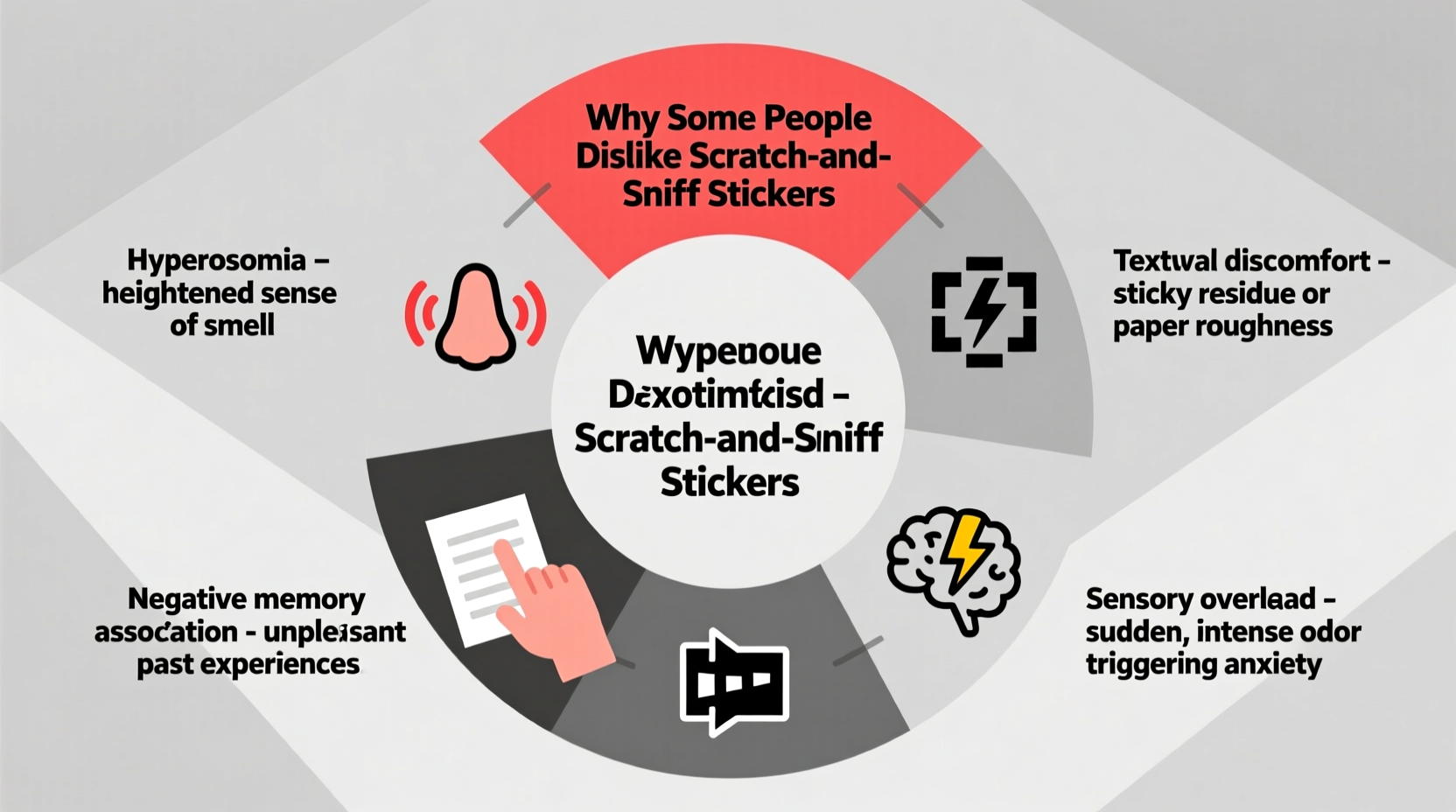
Smell, or olfaction, is one of the most primal and powerful senses. Unlike vision or hearing, which are processed through the thalamus before reaching higher brain regions, scent signals travel directly from the nose to the limbic system—the area responsible for emotion, memory, and instinctual behavior. This direct pathway explains why certain smells can instantly trigger vivid memories or emotional responses, both positive and negative.
For some individuals, this connection is not only strong but hypersensitive. Sensory Processing Disorder (SPD), autism spectrum disorder (ASD), migraines, and conditions like misophonia or osmophobia involve altered sensory thresholds. In these cases, everyday stimuli—lights, sounds, textures, and smells—can feel overwhelming or painful.
Scratch and sniff stickers release concentrated bursts of synthetic fragrances, often composed of volatile organic compounds (VOCs) designed to mimic natural scents. These artificial aromas can be chemically intense, especially when released suddenly and close to the face. For someone with heightened olfactory sensitivity, the experience isn't just unpleasant—it can induce nausea, headaches, dizziness, or anxiety.
“Smell is wired directly into the emotional center of the brain. A sudden or strong odor can trigger a fight-or-flight response in sensitive individuals, especially if it’s unexpected.” — Dr. Lena Reyes, Neurologist & Sensory Research Specialist
Sensory Overload and the Scratch and Sniff Experience
The act of scratching and sniffing introduces unpredictability. You don’t always know what the sticker will smell like until you activate it. That lack of control can be stressful for people who rely on routine and predictability to manage sensory input. Children with autism, for example, may become distressed by sudden smells because their brains struggle to filter out irrelevant sensory data.
Moreover, many scratch and sniff stickers emit sweet, cloying, or “artificial fruit” scents—such as fake strawberry, cotton candy, or synthetic pine. These odors are often perceived as more jarring than natural ones because they don’t match real-world expectations. The brain detects a mismatch between the expected and actual chemical profile, leading to cognitive dissonance and discomfort.
Common Reactions to Scratch and Sniff Stickers
Reactions vary widely depending on individual neurology and past experiences. Some people simply find the scents childish or outdated. Others report physical symptoms. Below are common responses reported by those who dislike or are adversely affected by scratch and sniff stickers:
- Nausea or dizziness – Sudden exposure to strong synthetic fragrances can trigger vestibular responses.
- Headaches or migraines – Certain chemicals in artificial scents are known migraine triggers.
- Anxiety or panic – Unpredictable smells can heighten stress, especially in individuals with PTSD or sensory sensitivities.
- Respiratory irritation – VOCs in fragrances may cause coughing or throat tightness in people with asthma or chemical sensitivities.
- Emotional aversion – Negative associations (e.g., a sticker smelled like medicine during illness) can create lasting disgust.
Who Is Most Likely to Be Affected?
While anyone can dislike scratch and sniff stickers, certain groups are more prone to adverse reactions:
- Individuals with autism spectrum disorder (ASD) – Up to 90% of autistic children experience some form of sensory processing difference, including hyper-reactivity to smells.
- People with migraines or epilepsy – Osmophobia (fear or intolerance of odors) affects up to 50% of migraine sufferers.
- Those with chronic fatigue syndrome (CFS) or multiple chemical sensitivity (MCS) – Often react strongly to synthetic fragrances.
- Neurodivergent adults and children – Including those with ADHD or anxiety disorders, who may have lower sensory thresholds.
- Anyone with a history of trauma involving smell – Scents can become triggers for flashbacks or emotional distress.
Scratch and Sniff in Schools and Social Settings: A Hidden Sensory Hazard
Despite their popularity, scratch and sniff stickers are increasingly being questioned in educational and therapeutic environments. Teachers may use them as rewards or learning tools, unaware that they could be causing distress. A student who recoils from a scented sticker might be labeled as “picky” or “dramatic,” when in fact they’re experiencing genuine sensory overload.
In one documented case, a third-grade classroom introduced scratch and sniff vocabulary charts to help students associate words with scents (e.g., “lemon” next to a lemon sticker). While most children enjoyed the activity, two students began complaining of headaches and asked to leave the room. One was later diagnosed with sensory processing disorder; the other had undiagnosed migraines triggered by fragrance.
“We assumed all kids would love the fun aspect, but didn’t consider that smell isn’t neutral for everyone. After removing the stickers, we noticed improved focus and fewer behavioral incidents.” — Sarah Lin, Elementary School Teacher
This mini case study highlights a broader issue: the assumption that sensory experiences are universally enjoyable. Just as bright lights or loud noises can disrupt concentration, so too can intrusive smells—even seemingly “pleasant” ones.
Do’s and Don’ts When Using Scratch and Sniff Materials
To promote inclusivity and reduce sensory strain, especially in shared spaces, consider the following guidelines:
| Do | Don’t |
|---|---|
| Ask permission before using scented items around others. | Assume that everyone finds artificial scents pleasant. |
| Use scratch and sniff materials in well-ventilated areas. | Apply stickers liberally in enclosed or crowded spaces. |
| Offer non-scented alternatives for activities. | Force participation in scent-based games or lessons. |
| Educate children about sensory differences early. | Dismiss complaints about smells as “being dramatic.” |
| Store scented stickers in sealed containers when not in use. | Leave open packs of stickers on desks or shelves. |
How to Support Someone Who Dislikes Scratch and Sniff Stickers
If you live with, teach, or care for someone who reacts negatively to scratch and sniff stickers, understanding and accommodation go a long way. Here’s a step-by-step guide to creating a more inclusive environment:
- Listen without judgment – Acknowledge their reaction as valid, even if you don’t personally understand it.
- Identify triggers – Note which scents or situations cause discomfort. Keep a log if needed.
- Remove or limit exposure – Replace scented stickers with textured or visual alternatives.
- Communicate boundaries – Let others know that certain materials are off-limits in shared spaces.
- Advocate when necessary – Speak to teachers or event organizers about sensory-safe policies.
- Provide coping tools – Offer access to unscented lotion, a quiet space, or a personal fan to disperse odors.
Frequently Asked Questions
Is hating scratch and sniff stickers a sign of autism?
Not necessarily. While sensory sensitivities are common in autism, many neurotypical people also dislike strong artificial scents due to allergies, migraines, or personal preference. Disliking scratch and sniff stickers alone is not diagnostic, but when combined with other sensory or behavioral patterns, it may warrant further evaluation.
Can scratch and sniff stickers cause health problems?
For most people, occasional exposure is harmless. However, repeated or prolonged contact with synthetic fragrances may irritate the respiratory system or trigger headaches in sensitive individuals. The EPA has classified some fragrance chemicals as potential indoor air pollutants, so moderation and ventilation are key.
Are there hypoallergenic or low-scent versions available?
Currently, most scratch and sniff products are not marketed as hypoallergenic. However, some manufacturers produce “unscented” stickers using encapsulated but inactive fragrance microcapsules. Alternatively, look for tactile stickers (e.g., glitter, foam, or braille-style) that provide sensory engagement without odor.
Action Checklist: Creating a Sensory-Friendly Environment
Whether at home, school, or work, use this checklist to minimize sensory stress related to scents:
- ✅ Audit your space for hidden sources of artificial fragrance (stickers, markers, cleaning products).
- ✅ Replace scented rewards with non-olfactory options (stickers with shiny foil, stamps, or digital badges).
- ✅ Label areas where scents are used and allow opt-outs.
- ✅ Educate peers or staff about sensory diversity and inclusion.
- ✅ Choose fragrance-free art supplies whenever possible.
- ✅ Encourage open dialogue about comfort levels with smells.
Conclusion: Respecting Sensory Differences in Everyday Life
Scratch and sniff stickers may seem trivial, but they represent a larger conversation about sensory inclusivity. What one person finds whimsical, another may experience as invasive or harmful. Recognizing that sensory preferences are not just quirks—but sometimes neurological necessities—is a crucial step toward empathy and accessibility.
By questioning assumptions about “normal” sensory experiences, we create space for everyone to participate comfortably. Whether it’s skipping the scented sticker sheet or choosing a fragrance-free classroom, small changes can make a meaningful difference. Sensitivity isn’t weakness; it’s a reminder that human perception is beautifully diverse.




 浙公网安备
33010002000092号
浙公网安备
33010002000092号 浙B2-20120091-4
Comments
No comments yet. Why don't you start the discussion?