
Scratch and sniff stickers were once a staple of childhood excitement—vividly colored decals that released bursts of artificial banana, bubblegum, or freshly cut grass when scratched. While many remember them fondly, others report an intense aversion. Some find the scents overwhelming, others physically nauseated by them, and a few even describe emotional discomfort. This divide isn't just preference; it's rooted in biology, psychology, and neurochemistry. Understanding why certain people react negatively to these seemingly harmless stickers reveals deeper truths about human sensory processing and individual differences in olfactory perception.
The Science of Smell: How We Detect Scents
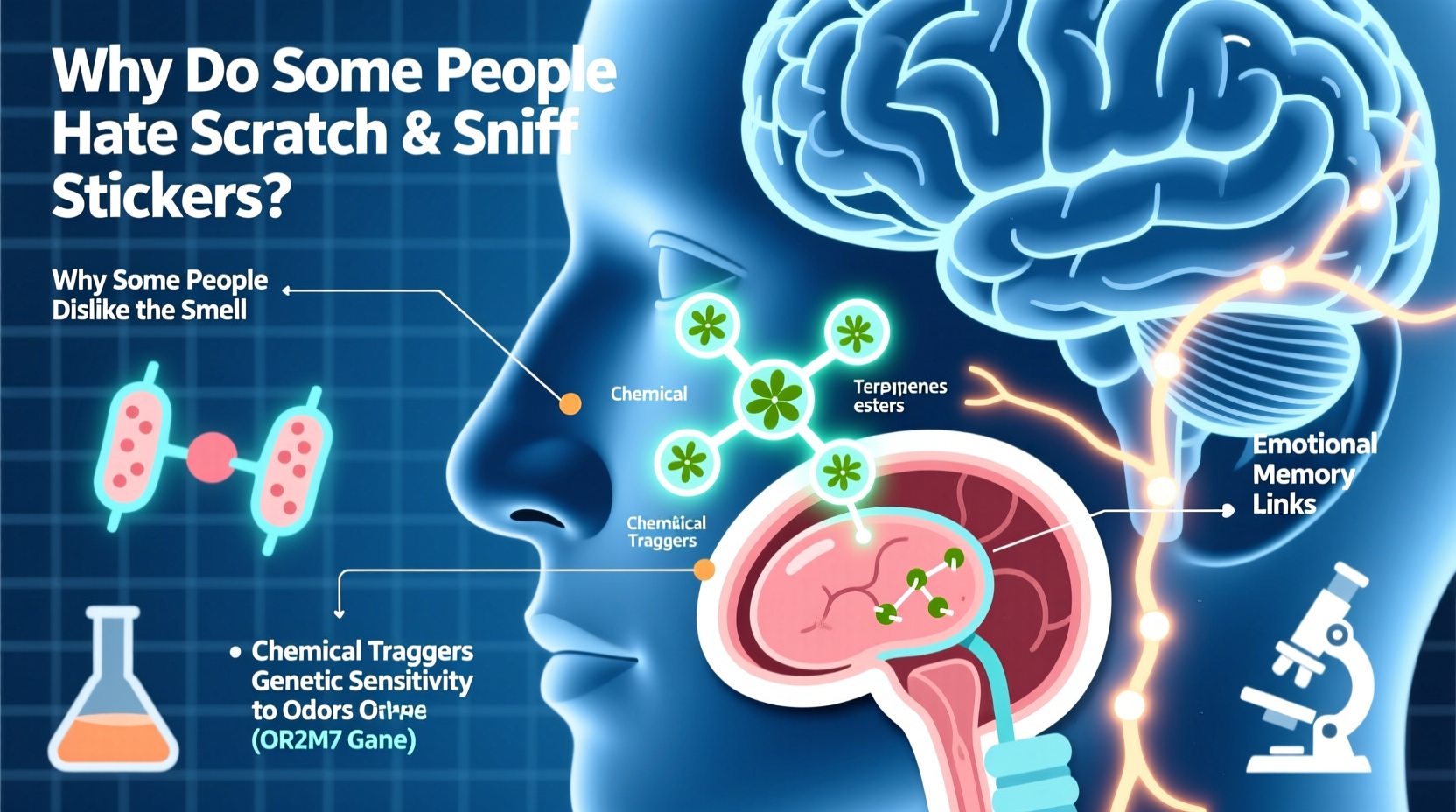
The human sense of smell, or olfaction, begins in the nasal cavity, where odor molecules bind to specialized receptors. These signals travel via the olfactory nerve directly to the limbic system—the brain region responsible for emotion, memory, and instinctual behavior. Unlike vision or hearing, which are processed first through the thalamus, smell has a direct neural pathway to emotional centers. This explains why a scent can instantly evoke a vivid memory or strong feeling, often before conscious thought.
In scratch and sniff technology, microencapsulated fragrance compounds are embedded in the sticker surface. When scratched, the tiny capsules rupture, releasing volatile organic compounds into the air. These chemicals are typically synthetic analogs designed to mimic natural odors—such as esters for fruity notes or aldehydes for floral tones. The brain interprets these signals based on prior associations, genetic predispositions, and current physiological state.
“Olfaction is uniquely tied to emotion because it bypasses higher cognitive filtering. A scent doesn’t need to be ‘understood’—it’s felt.” — Dr. Lena Torres, Cognitive Neuroscientist, MIT Olfactory Research Lab
Biological Factors Behind Negative Reactions
Not everyone processes smells the same way. Genetic variation plays a major role in how we perceive specific odors. For example, the OR6A2 gene influences sensitivity to aldehyde compounds found in citrus and cleaning products—some people detect them as pleasant, while others find them harsh or soapy. Similarly, variations in the OR7D4 receptor affect how individuals perceive androstenone, a compound also present in trace amounts in certain synthetic fragrances used in stickers.
Beyond genetics, neurological conditions can heighten scent sensitivity. Individuals with migraines, autism spectrum disorder (ASD), or post-concussion syndrome often experience hyperosmia—an increased sensitivity to smells. For them, even mild fragrances can become overwhelming, triggering headaches, nausea, or anxiety. In one study published in Chemical Senses, over 30% of migraine sufferers reported that strong odors triggered attacks, with artificial scents being particularly problematic.
Psychological and Emotional Triggers
The aversion to scratch and sniff stickers isn’t always physiological—it can be deeply psychological. Because smell is linked to memory, a particular scent may unconsciously remind someone of a traumatic or unpleasant event. For instance, a sticker emitting a hospital-like disinfectant odor might trigger distress in someone who spent time in medical settings during childhood.
Additionally, the novelty and unpredictability of scratch and sniff stickers can create low-level anxiety. Not knowing what a sticker will smell like until after scratching introduces a sensory surprise element. For neurodivergent individuals, especially those with sensory processing sensitivities, this lack of control over sensory input can be unsettling. The sudden burst of concentrated aroma may feel invasive or jarring.
There’s also a cultural dimension. As children grow older, they associate scratch and sniff stickers with immaturity. Rejecting them becomes a social signal of maturity or sophistication. In adolescence, disliking such items can serve as identity reinforcement—distancing oneself from \"childish\" things.
Chemical Composition and Sensory Overload
The actual chemistry behind scratch and sniff fragrances contributes significantly to negative reactions. Most stickers use highly concentrated, volatile synthetic aromas designed for maximum impact. These aren’t diluted like perfumes; instead, they’re engineered to release a sharp, immediate burst. Common compounds include:
- Ethyl butyrate – Artificial pineapple or fruit scent, can smell overly sweet or fermented at high concentrations.
- Benzaldehyde – Almond or cherry note, pungent in enclosed spaces.
- Linalool – Found in floral scents, known to degrade into skin irritants when exposed to air.
- Phthalates – Often used as solvents to extend scent life, linked to respiratory irritation in sensitive individuals.
When multiple stickers are present—such as in a classroom or sticker book—the cumulative effect creates a “scent soup,” where overlapping odors blend into an indistinct, cloying cloud. This olfactory overload can lead to headaches, dizziness, or irritability, particularly in poorly ventilated areas.
| Common Scratch & Sniff Compound | Perceived Smell | Potential Side Effects |
|---|---|---|
| Ethyl Maltol | Cotton candy, caramel | Sweetness fatigue, nausea in sensitive users |
| Limonene | Lemon, citrus | Respiratory irritation, oxidative breakdown into allergens |
| Vanillin | Vanilla | Headaches at high concentration |
| Indole | Floral (jasmine), fecal at high levels | Strong aversion due to dual perception |
Real-Life Scenario: A Classroom Sensory Crisis
In a third-grade classroom in Portland, Oregon, a teacher introduced scratch and sniff stickers as rewards for completed assignments. Within days, several students began complaining of headaches and stomach discomfort. One child with autism became visibly distressed upon entering the room, covering their ears and nose. The school nurse noted a pattern: symptoms worsened after sticker distribution and improved during outdoor recess.
An occupational therapist evaluated the environment and identified the stickers as a likely culprit. Despite smelling “fun” to adults, the combination of multiple synthetic scents in a confined space created a sensory burden for neurodivergent students. The school replaced the stickers with tactile rewards like rubber stamps and textured badges. Complaints dropped by 90% within a week. This case illustrates how well-intentioned sensory stimuli can unintentionally exclude or harm sensitive individuals.
Who Is Most Likely to Dislike Scratch and Sniff Stickers?
While anyone can find these stickers unpleasant, certain groups are more prone to negative reactions:
- People with migraines or epilepsy – Strong odors are documented triggers.
- Neurodivergent individuals – Including those with autism, ADHD, or sensory processing disorder.
- Individuals with chronic sinus conditions or allergies – Fragrance can exacerbate congestion or irritation.
- Those undergoing hormonal changes – Pregnancy, menstruation, or menopause can heighten smell sensitivity.
- Survivors of trauma involving smell – Such as fire, chemical exposure, or medical procedures.
A 2022 survey by the Environmental Sensitivity Research Network found that 22% of adults reported strong discomfort from scratch and sniff products, with 8% describing physical symptoms like nausea or dizziness. Interestingly, dislike was not age-correlated—many adults enjoyed the nostalgia, while others remained repelled regardless of sentimentality.
Checklist: Minimizing Negative Reactions to Scented Products
If you're introducing scented materials in shared spaces, follow this checklist to reduce adverse effects:
- ✅ Test the product in a small, open area first.
- ✅ Offer non-scented alternatives for those who prefer them.
- ✅ Avoid using multiple scented items simultaneously.
- ✅ Ensure adequate ventilation in the room.
- ✅ Ask participants in advance about scent sensitivities.
- ✅ Store scented items sealed when not in use to prevent passive off-gassing.
- ✅ Choose natural or lightly scented options when available.
Expert Insight: The Role of Context and Control
Dr. Arjun Patel, an environmental psychologist specializing in sensory design, emphasizes that the problem isn’t the scent itself, but the context in which it’s delivered.
“The issue with scratch and sniff stickers isn’t just the chemistry—it’s the lack of consent. You can look away from a bright color, cover your ears from noise, but you can’t easily escape a smell once it’s in the air. When scent is imposed without warning, it feels violating to some people.” — Dr. Arjun Patel, Sensory Environment Consultant
This concept, known as “olfactory consent,” is gaining traction in inclusive design. Just as visual or auditory stimuli are considered in public spaces, scent is now being recognized as a potential barrier to accessibility. Museums, schools, and offices are increasingly adopting scent-free policies to accommodate diverse sensory needs.
Frequently Asked Questions
Can scratch and sniff stickers cause long-term health issues?
There is no evidence that occasional exposure causes lasting harm in healthy individuals. However, repeated exposure to phthalates or degraded fragrance compounds may contribute to respiratory irritation in sensitive populations. Long-term effects are still under study, but moderation and ventilation are recommended.
Why do some people love these stickers while others hate them?
Differences stem from genetic makeup, past experiences, neurological wiring, and cultural attitudes. Positive associations—like childhood joy—can make the scents nostalgic. Conversely, biological sensitivity or negative memories can turn the same scent into a source of distress.
Are there hypoallergenic or non-toxic scratch and sniff options?
A few companies now produce plant-based, phthalate-free scratch and sniff products using essential oil derivatives. These are less likely to trigger reactions but may have weaker scent intensity. Look for labels indicating “non-toxic,” “fragrance-free solvents,” or “ASTM D-4236 compliant” for safer art materials.
Conclusion: Respecting Sensory Diversity
The divide over scratch and sniff stickers reflects a broader truth: human sensory experience is profoundly individual. What brings delight to one person can cause real discomfort to another. As society becomes more aware of neurodiversity and environmental sensitivities, understanding these differences is no longer just scientific curiosity—it’s a matter of inclusion.
Rather than dismissing aversion as mere pickiness, recognizing the biological and psychological roots of scent reactions fosters empathy. Whether designing educational tools, marketing products, or simply sharing stickers with friends, considering sensory impact shows respect for all users. The next time you peel back a scratch and sniff sticker, pause and ask: Who else is in the room, and how might this smell affect them?




 浙公网安备
33010002000092号
浙公网安备
33010002000092号 浙B2-20120091-4
Comments
No comments yet. Why don't you start the discussion?