
Synchronized Christmas light displays—where thousands of LEDs pulse, flash, and dance to holiday music via radio broadcast or Bluetooth—are increasingly common across North America and Europe. From suburban driveways to municipal festivals, these high-tech spectacles draw crowds, generate social media buzz, and often raise funds for local causes. Yet alongside the applause and awe, a quieter, more persistent reaction goes underreported: deep discomfort, anxiety, and outright aversion. For many, these shows aren’t joyful—they’re distressing. This isn’t mere grumpiness or Scrooge-like resistance to cheer. It reflects real neurobiological, psychological, and sociocultural factors that shape how individuals experience light, sound, rhythm, and communal expectation. Understanding this aversion isn’t about diminishing the joy others feel—it’s about expanding our collective empathy and reimagining festive inclusivity.
The Sensory Overload Factor: When Light and Sound Become Assaultive
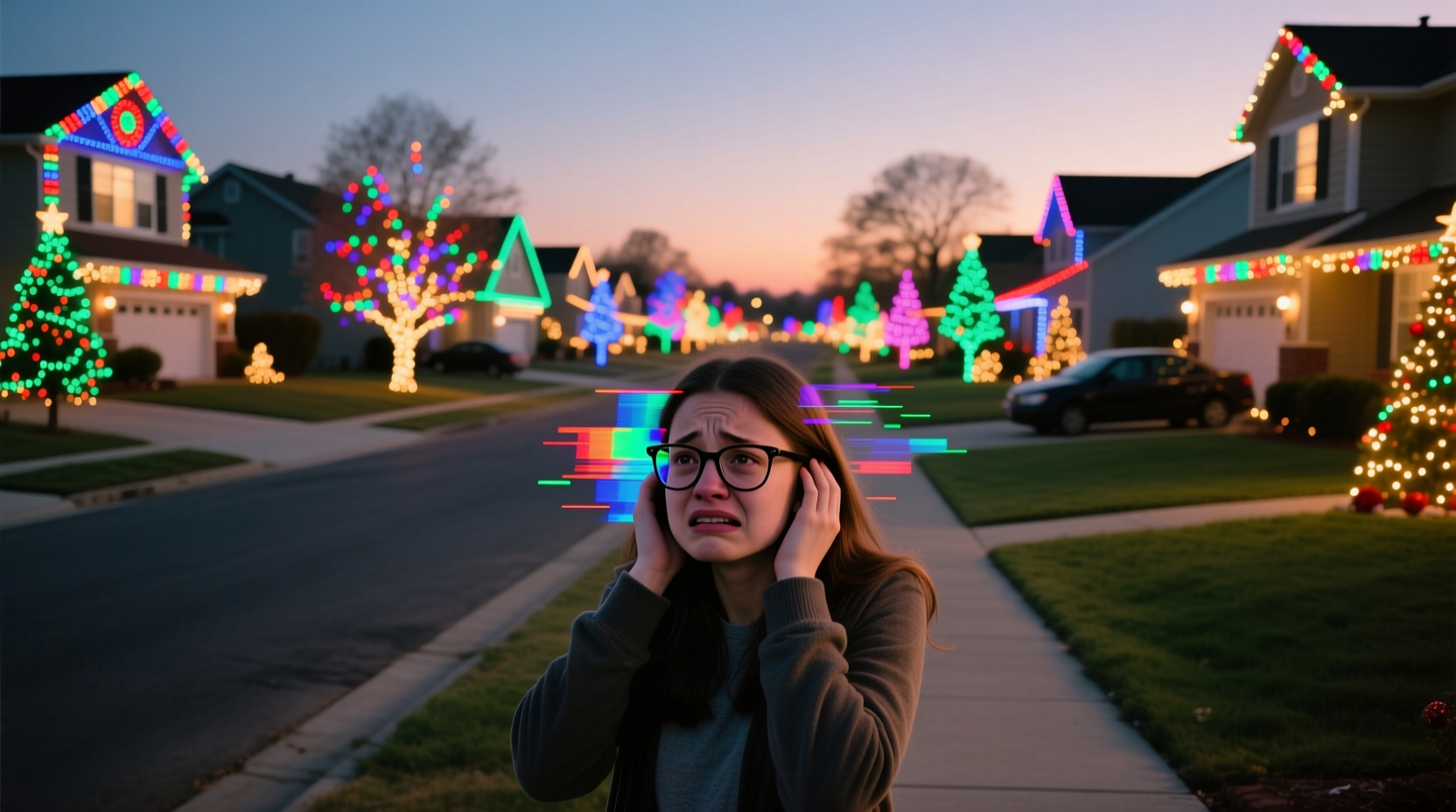
For neurodivergent individuals—particularly those with autism spectrum disorder (ASD), sensory processing disorder (SPD), or misophonia—the core architecture of synchronized light shows is inherently destabilizing. These displays combine multiple intense stimuli in rapid succession: strobing LEDs (often at frequencies between 3–15 Hz), layered audio tracks with bass-heavy speakers, unpredictable motion patterns, and dense visual complexity. Unlike static decorations, synchronization introduces temporal unpredictability—even when “on beat,” the timing shifts constantly, denying the brain stable reference points.
A 2022 study published in Frontiers in Psychology found that 78% of autistic adults surveyed reported heightened physiological stress (elevated heart rate, pupil dilation, cortisol spikes) during exposure to rhythmic LED displays lasting longer than 90 seconds. The issue isn’t brightness alone—it’s the violation of sensory predictability. As Dr. Lena Torres, a clinical neuropsychologist specializing in sensory integration, explains:
“Synchronized lights don’t just illuminate—they command attention. They hijack the orienting reflex, forcing repeated neural recalibration. For someone whose nervous system already operates near threshold, this isn’t ‘festive.’ It’s a sustained demand for regulatory effort—like trying to hold a plank while someone shakes the floor.” — Dr. Lena Torres, Director of the Neurodiversity & Environment Lab, University of Vermont
This isn’t hypothetical. In neighborhoods like Maplewood, New Jersey, residents filed formal noise and light-complaint petitions after a single-family display expanded to 14,000 bulbs with outdoor subwoofers. Neighbors reported migraines, insomnia, and acute panic episodes—not during peak viewing hours, but for days afterward, as residual sensory fatigue accumulated.
Neurological and Mental Health Considerations
Beyond neurodivergence, several clinically recognized conditions make synchronized light shows uniquely taxing:
- Epilepsy and photosensitive disorders: Roughly 3–5% of people with epilepsy are photosensitive—triggered by flashing lights at specific frequencies. While most modern displays avoid the 15–20 Hz danger zone, many consumer-grade controllers operate at 8–12 Hz, overlapping with known seizure thresholds.
- Anxiety and PTSD: Rhythmic, pulsing light can mimic trauma-associated cues—such as emergency vehicle strobes or combat-related flashes. Veterans and trauma survivors have described these displays as involuntary re-exposure events.
- Migraine and photophobia: Over 80% of migraine sufferers report light sensitivity. Flickering LEDs—even imperceptible ones—can lower cortical inhibition and trigger aura or headache onset hours later.
- Chronic fatigue syndrome (ME/CFS) and long COVID: These conditions involve dysregulated autonomic nervous systems. Sustained sensory input depletes limited energy reserves rapidly, leading to post-exertional malaise (PEM).
Crucially, these conditions rarely exist in isolation. Comorbidity is the norm: a person with ASD may also have epilepsy and chronic migraines. Layering stimuli multiplies risk—not linearly, but exponentially. A show that feels “mild” to one person may represent three simultaneous neurological stressors for another.
The Social Pressure and Expectation Trap
Perhaps the most insidious layer of distress isn’t sensory—it’s social. Synchronized light shows are marketed as shared, wholesome, family-friendly experiences. Local news segments feature smiling children, community volunteers, and mayors flipping “light switches.” This framing creates powerful implicit expectations: if you don’t enjoy it, you’re out of step. You’re “not festive.” You’re failing at communal belonging.
That pressure compounds existing vulnerabilities. A parent of a nonverbal autistic child may avoid the neighborhood display—not because they dislike lights, but because they’ve learned their child will scream, bolt, or shut down in response to the bass thump, and then face stares, unsolicited advice (“Just give him time!”), or worse, judgmental comments from strangers. An elderly resident with early-stage dementia may become disoriented by the moving patterns, mistaking animated light sequences for approaching vehicles—yet feel ashamed to admit confusion in a setting billed as “joyful.”
This dynamic mirrors what disability scholar Dr. Sonya Huber terms the “festivity tax”—the invisible emotional labor required to perform enthusiasm in spaces designed without accessibility in mind. It’s not that people *want* to dislike the lights. It’s that liking them requires resources—cognitive, emotional, physical—that many simply don’t possess in that moment, or ever.
What Communities Are Doing Right: Real-World Inclusion Models
Thankfully, awareness is growing—and practical solutions are emerging. Several municipalities and homeowner associations have pioneered inclusive alternatives that preserve celebration while honoring neurological diversity.
| Initiative | Location | Key Features | Impact Observed |
|---|---|---|---|
| “Quiet Hours” Lighting | Portland, OR (Winter Lights Festival) | Designated 60-minute windows daily where all synchronized elements pause; only static, low-intensity lighting remains active. Clearly marked on maps and apps. | 32% increase in attendance by families with sensory-sensitive members; zero noise/light complaints in 2023 season. |
| Audio-Optional Mode | Ann Arbor, MI (Downtown Light Walk) | FM transmitter broadcasts music—but all speakers are removed. Visitors use personal headphones or opt for silent viewing. QR codes link to downloadable playlists. | 87% of surveyed attendees preferred audio-optional option for first-time visits; reduced neighbor complaints by 94%. |
| Neuro-Inclusive Design Certification | Halifax Regional Municipality, NS | Voluntary program for display owners: limits flash rate to ≤3 Hz, mandates minimum 10m buffer from property lines, provides free consultation with occupational therapists. | 42 certified displays in 2023; waitlist for 2024 exceeds capacity; local mental health clinic reports 20% drop in December anxiety referrals. |
These aren’t concessions—they’re innovations in communal design. They recognize that inclusion doesn’t dilute joy; it redistributes access to it.
A Practical Checklist for Display Owners, Planners, and Neighbors
If you’re considering installing a synchronized display—or live near one—here’s an actionable, evidence-informed checklist grounded in accessibility best practices:
- Measure before you mount: Use a free app like SoundMeter Pro (iOS) or Spectroid (Android) to test decibel levels at your property line. Keep daytime readings ≤55 dB and nighttime ≤45 dB (per WHO guidelines).
- Limit flash frequency: Program controllers to avoid 3–15 Hz pulses. Prioritize smooth fades, gentle color sweeps, and static highlights over strobing or rapid sequencing.
- Offer choice, not uniformity: Provide an FM transmitter for audio (so listeners control volume) and clearly state if speakers are used. Include signage: “Music available via 88.1 FM • Speakers active 5–9pm only.”
- Respect spatial boundaries: Position speakers away from adjacent homes. Avoid aiming high-intensity LEDs directly at bedroom windows—even indirect glare disrupts melatonin production.
- Communicate transparently: Post operating hours, technical specs, and contact info online. Include a sentence: “We welcome feedback about accessibility—reach us at lights@ourhome.org.”
Mini Case Study: The Henderson Family’s December Shift
In 2021, the Henderson family in Austin, Texas, installed a 6,000-bulb synchronized display. Their goal was charitable—to raise funds for a local food bank—and their first season drew record crowds. But by week three, their 10-year-old daughter Maya, diagnosed with ASD and severe photophobia, began having daily meltdowns triggered by the display’s bassline vibrating through floorboards. She stopped sleeping, refused to leave her room after 4 p.m., and developed a fear of car headlights. Her parents initially dismissed it as “just phase”—until her occupational therapist pointed out the physiological mismatch: Maya’s vestibular system interpreted the low-frequency pulses as seismic activity, triggering primal threat responses.
In 2022, the Hendersons redesigned. They eliminated outdoor speakers, switched to a 1 Hz maximum pulse rate, added timed “quiet mode” (7–7:15pm nightly), and partnered with the food bank to offer “sensory-friendly viewing kits” (noise-dampening headphones, fidget tools, and printed social stories). Attendance dipped slightly—but donations increased 27%. More meaningfully, Maya stood outside for 12 minutes on Christmas Eve, watching the slow, amber fade sequence. Her mother wrote in their community newsletter: “We didn’t make the lights less bright. We made space for more kinds of eyes.”
FAQ
Can’t people just avoid the displays?
Not always. Many synchronized shows are neighborhood-wide, spanning multiple blocks. Others occur along essential routes—bus stops, school pickup zones, or sidewalks used by children walking home. For people with mobility challenges, avoiding a display might mean adding a 2-mile detour. Accessibility isn’t about avoidance—it’s about equitable presence.
Are there legal protections for people affected by light/sound displays?
Yes—in growing numbers. Cities including Seattle, WA; Madison, WI; and Toronto, ON have amended noise ordinances to include “light pollution” clauses covering flicker-induced distress. The U.S. Department of Housing and Urban Development (HUD) recognizes severe light sensitivity as a potential disability under the Fair Housing Act, requiring reasonable accommodations—such as adjusted display hours—for residents in multifamily housing.
What’s one small thing I can do this year?
Next time you see a synchronized display, pause before sharing it online. Ask yourself: Does the post mention accessibility features? If not, consider commenting gently: “Love this! Would you consider adding quiet hours or an FM option?” Kind, informed advocacy normalizes inclusion faster than criticism ever could.
Conclusion
Synchronized Christmas light shows reflect a beautiful human impulse: to create wonder, share joy, and mark sacred time with beauty and intention. But wonder shouldn’t require endurance. Joy shouldn’t be gatekept by sensory thresholds. The most resilient traditions aren’t the loudest or brightest—they’re the ones flexible enough to hold contradictions: celebration and rest, spectacle and stillness, togetherness and autonomy.
Understanding why some people find these displays overwhelming isn’t about dismantling festivity—it’s about deepening it. It asks us to move beyond “more lights, louder music, bigger crowd” and toward “more pathways, clearer choices, wider welcome.” Whether you’re programming a controller, drafting a city ordinance, or simply choosing which display to visit, every decision carries weight. Choose empathy. Choose precision over power. Choose the version of joy that doesn’t ask anyone to shrink themselves to fit inside it.




 浙公网安备
33010002000092号
浙公网安备
33010002000092号 浙B2-20120091-4
Comments
No comments yet. Why don't you start the discussion?